

African elephants are the largest land animals on Earth. They roam across a huge part of Africa, but sadly, their numbers are falling because of poaching. Conservation groups are working hard to protect them.
The African elephant is found across Africa, and there are many fascinating facts about this animal.
Two Species, One Name
African elephants and Asian elephants are not closely related. They belong to two different groups, or genera. African elephants belong to genus Loxodonta, while Asian elephants belong to genus Elephas. Only Loxodonta species live on the continent of Africa.
There are two species in genus Loxodonta. The first is Loxodonta africana, the African bush elephant, also called the savannah elephant. The second is Loxodonta cyclotis, the African forest elephant. Both get their names from where they live. Scientists once thought they were just subspecies, but genetic research proved they are two completely separate species.
When most people say "African elephant," they mean the bush elephant, the largest land mammal on the planet. Both species live across sub-Saharan Africa.
Geographical Range
African elephants have been traced to as many as 37 African nations. The bush elephant ranges across the grasslands of Botswana, Tanzania, Zimbabwe, South Africa, Zambia, Mozambique, Kenya, Namibia, Chad, Burkina Faso, Uganda, and more. The forest elephant lives in the tropical rainforests of the Congo Basin, mainly in Gabon, Cameroon, the Democratic Republic of Congo (DRC), Ghana, and Ivory Coast.
According to the IUCN SSC African Elephant Specialist Group, over 56 percent of the African elephant population lives in southern Africa. About 27 percent is found in eastern Africa, and 16 percent in central Africa.
Botswana has the largest population of African elephants of any country. This is partly because the Chobe River provides water during the dry season. It is also because elephants from neighboring countries have taken refuge in the Chobe National Park during times of civil unrest.
Test Your Elephant Habitat Knowledge!
5 quick questions about where African elephants really live.
Natural Habitat
The African bush elephant lives across a wide range of environments. Its habitat stretches from the dry, arid regions of western Niger all the way to the savanna grasslands of East Africa. These elephants travel several miles a day looking for food. Because of this, it is not uncommon to spot them at the edges of forests or even in mountainous areas.
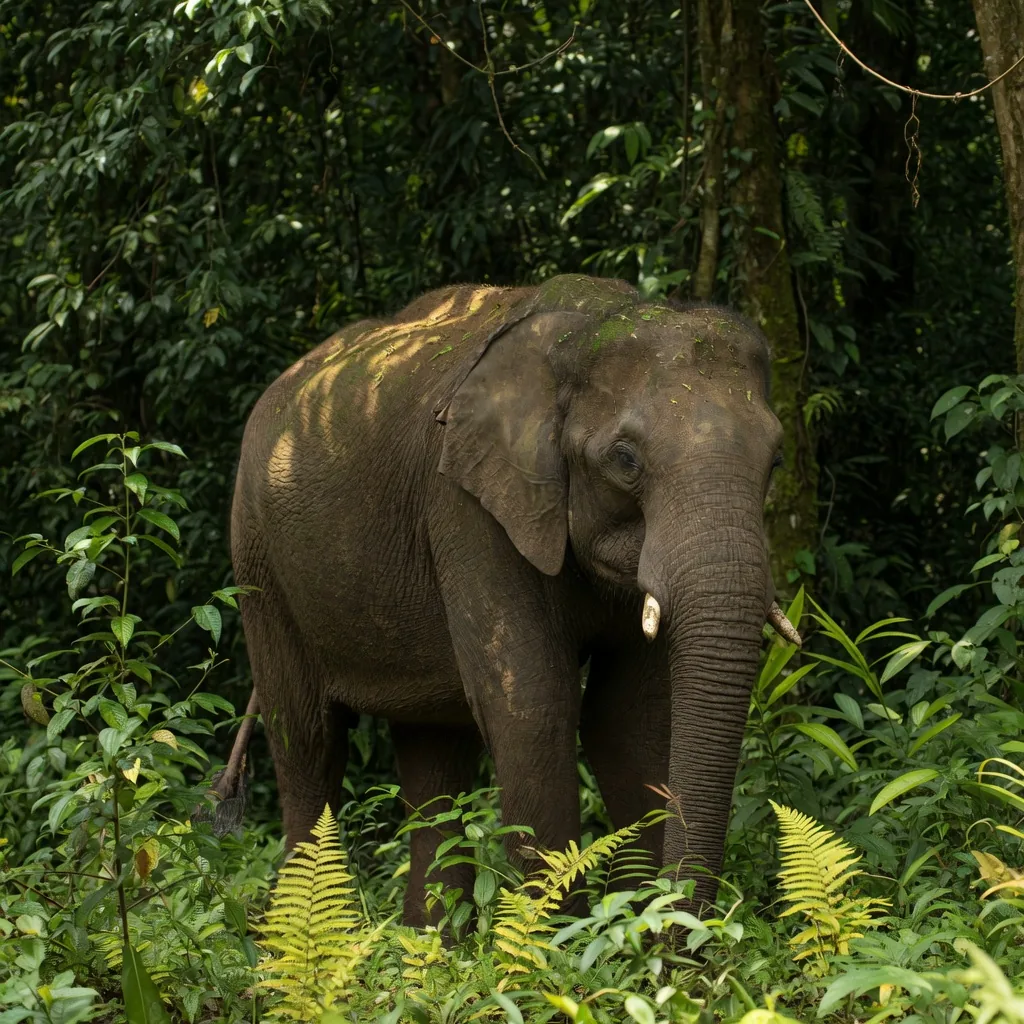
The African forest elephant lives in a very different world. Its population is mostly found in the dense tropical and sub-tropical forests around the Congo Basin. Like the bush elephant, it is herbivorous, it eats grass, shoots, roots, and bark. There is plenty of this food available in the forest.
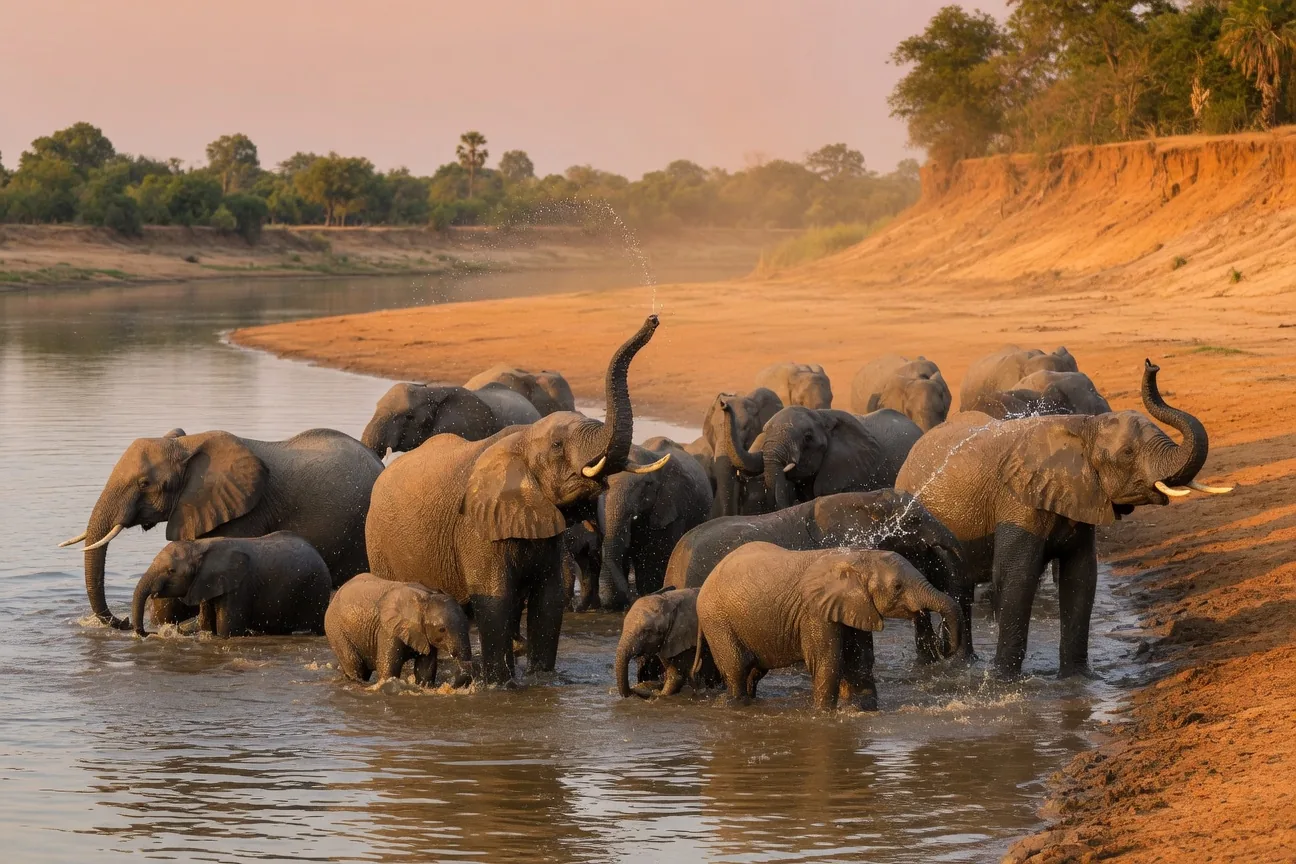
African elephants live in large family groups called herds. They love water and spend a lot of time near rivers and waterholes to cool off from the heat. A herd will usually stay in one area if water is available all year round. If not, they keep moving.
African elephants have a voracious appetite, and food plays a big part in determining where they go. An adult male can feed on approximately 300 lb of food in a single day. Visit the savannas and you will find herds roaming the grasslands in search of food, or cooling themselves in rivers and waterholes.
Frequently Asked Questions
How many countries do African elephants live in?
African elephants have been traced to as many as 37 African nations.
What is the difference between the African bush elephant and the African forest elephant?
They are two separate species. The African bush elephant (Loxodonta africana) lives on savanna grasslands; the African forest elephant (Loxodonta cyclotis) lives in the tropical rainforests of the Congo Basin. They were originally thought to be subspecies but genetics proved they are distinct species.
Which country has the most African elephants?
Botswana has the largest population of African elephants, partly because the Chobe River provides water during the dry season and the Chobe National Park provides refuge.
How much does an African elephant eat per day?
An adult male African elephant can feed on approximately 300 lb of food in a single day.
Explore More Animals
 Really Astonishing Facts About African ElephantsGentle to some, threatening to others, African elephants continue to be a subject of interest for many animal lovers. This AnimalSake post provides some interes
 Differences Between African and Asian ElephantsFor starters, they're both huge and gray, but there are a few telling differences between the African and Asian elephant. Allow this AnimalSake post to explain.
 What Do Elephants Eat? Diet, Habits & Fun FactsElephants consume up to 375 pounds of plants every day. Find out exactly what wild and zoo elephants eat, how they find minerals, and why they spend 80% of thei
 Giraffe HabitatDid you know that the destruction of their native habitat by humans has seriously affected the giraffe population? Explore where giraffes live, how they feed, a
Glossary: Key Elephant Terms
| Term | What it means |
|---|---|
| Loxodonta | The scientific genus name for African elephants. Means "oblique-toothed" in Latin, a reference to the shape of their molar teeth. |
| Sub-Saharan Africa | The part of Africa that lies south of the Sahara Desert. This is the main range of both African elephant species. |
| Herd | A group of elephants that lives and travels together. Elephant herds are usually led by the oldest female, called a matriarch. |
| Herbivore | An animal that eats only plants. African elephants are herbivores, they eat grass, shoots, roots, bark, and fruit. |
| IUCN | International Union for Conservation of Nature, the world's main authority on the conservation status of wild species. The IUCN lists the African bush elephant as Vulnerable and the forest elephant as Critically Endangered. |
| Congo Basin | The vast tropical rainforest and river system in central Africa. It is the second-largest tropical rainforest on Earth and the home of the African forest elephant. |

 Fun fact for today!African elephants can travel several miles a day in search of food, they're always on the move!