

Characteristics
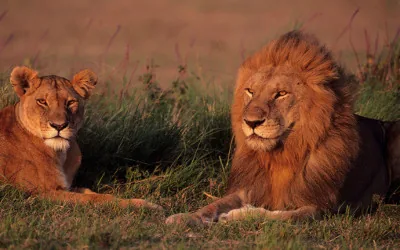
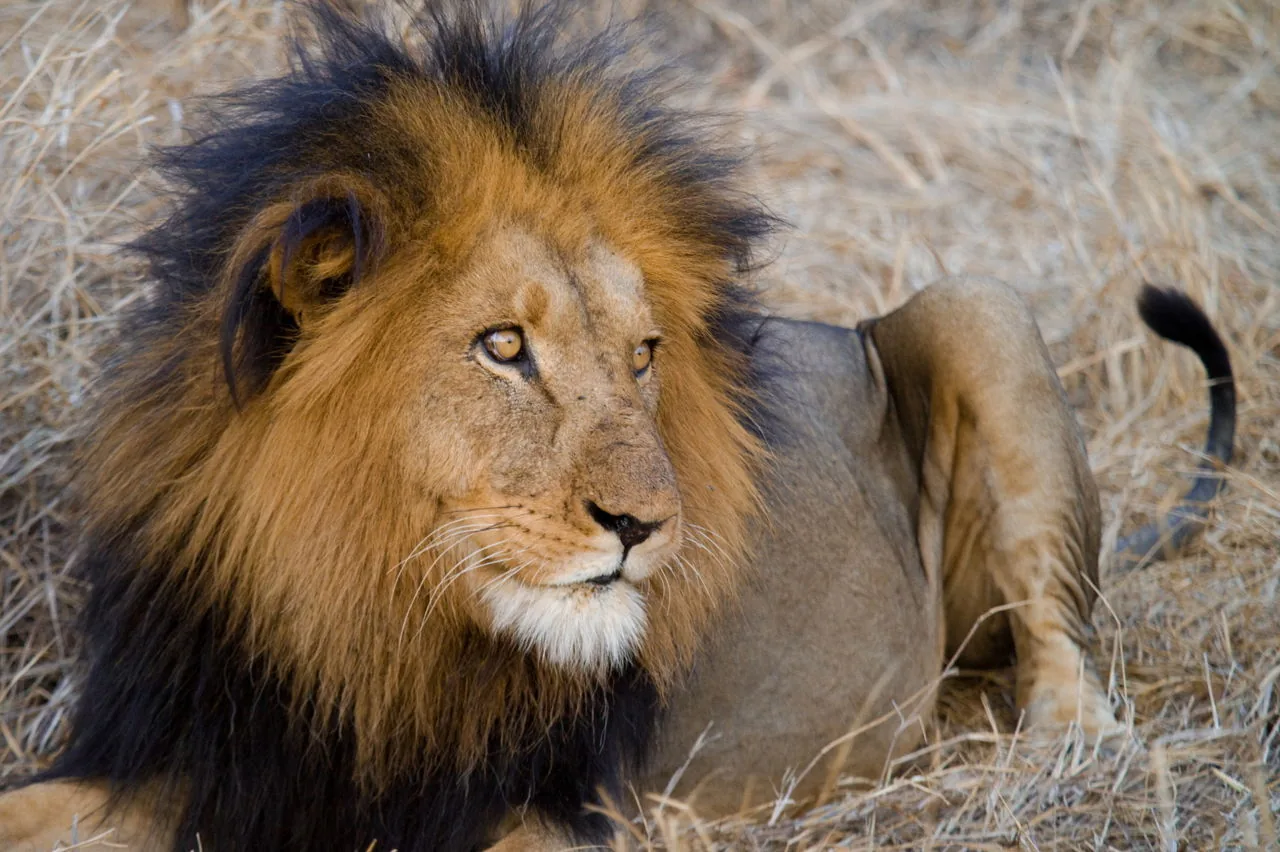
African lions are powerful animals that are also beautiful to look at. Male lions have a yellowish-brown coat and a thick, dark-brown mane that wraps around their neck. Their tails are long, with a bony spine at the tip covered by a tuft of hair.
Lions are the 2nd largest living cat species in the world, only tigers are bigger. A male lion stands about 4 feet tall and measures 6 to 8 feet from nose to tail. Females are a little smaller, at around 3.5 feet tall and 5 to 6 feet long. A male lion can weigh between 350 and 550 pounds, while a female (called a lioness) weighs between 250 and 400 pounds.
Habitat
African lions once lived across most of Africa. Sadly, their numbers have halved since the 1950s, and today only around 20,000 remain. Lions live in savannas, grasslands, dense bush, and woodlands. Today, nearly all of them are found in sub-Saharan Africa, with a very small number living in India.
Diet
Here is a surprising fact, lions are actually big scavengers. More than half the food they eat is stolen from cheetahs, hyenas, and leopards! But they also hunt in groups, which lets them take down large prey like wildebeests, zebras, buffaloes, young elephants, rhinos, impalas, wild hogs, hippos, and giraffes.
Lions will also hunt smaller animals like lizards, mice, tortoises, antelopes, crocodiles, and warthogs. In captivity, they are mostly fed chickens, rabbits, beef, and mutton.
Behavior
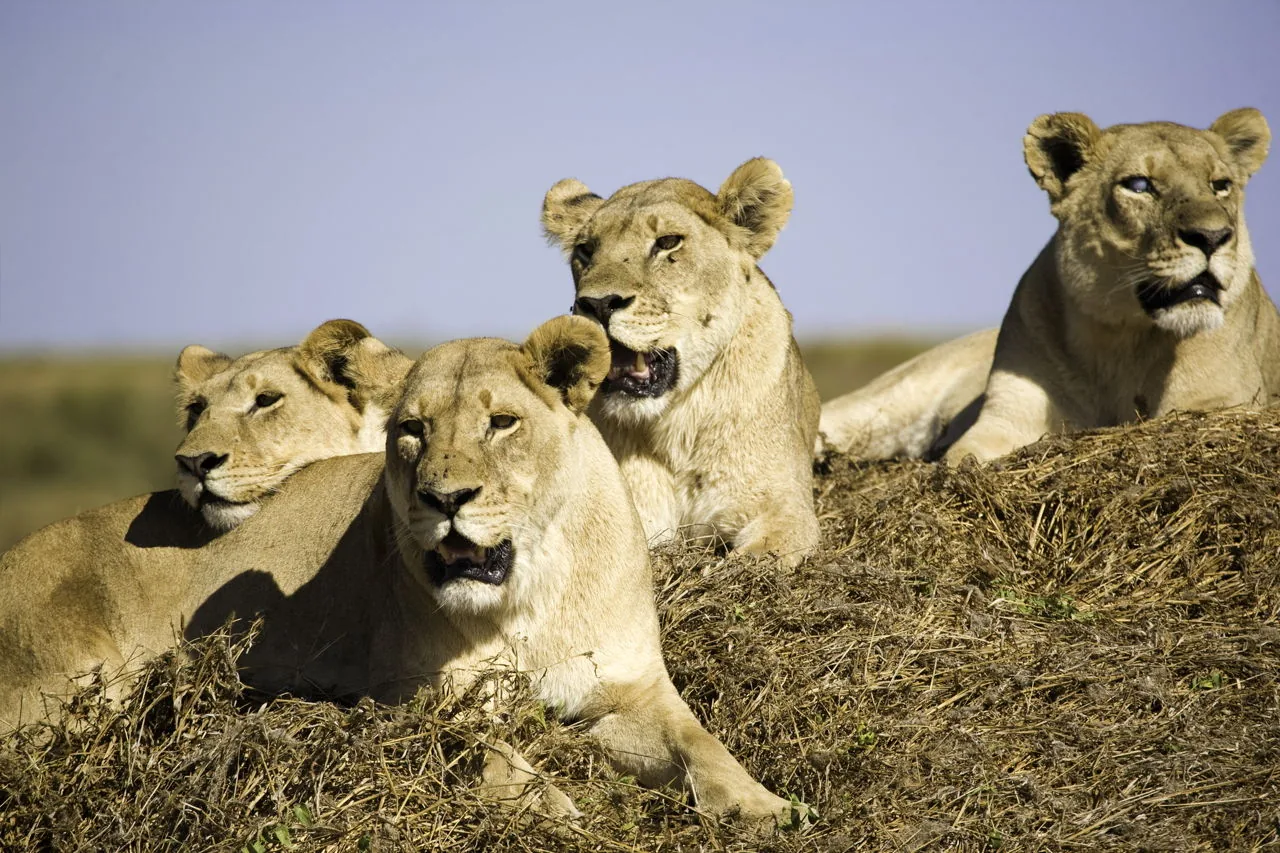
Lions live in groups called prides, with about 15 lions in each. A pride usually has one to three males, who stay for around three years before a new group of males takes over. The rest of the pride is made up of females and young cubs.
Lions are surprisingly affectionate, they love touching, licking, purring, and rubbing against each other. Most of the hunting is done by the females. They creep quietly toward their prey, then suddenly ambush them. The males' main job is to protect the territory. Interestingly, the males eat first and take most of the prey, followed by the females and young.
Lions are also pretty lazy! They spend 16 to 20 hours of the day resting or sleeping.
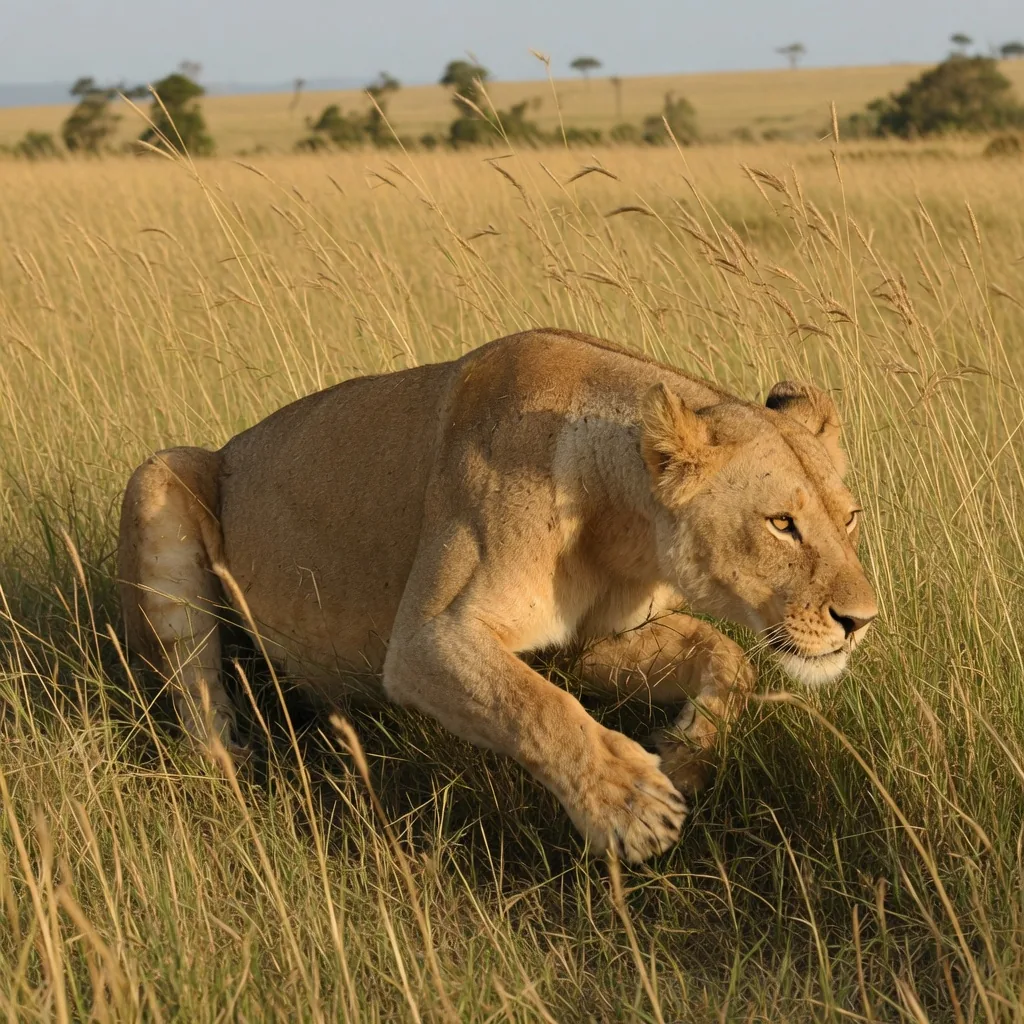
The females work as a team. They sneak up on the prey, use short bursts of speed, and surround the herd. Then they rush in and kill the nearest animal by strangulation. See more about how African lions' adaptations make them perfect hunters.
Take the African Lion Facts Quiz!
5 quick questions. How much do you really know about the king of the savanna?
Reproduction
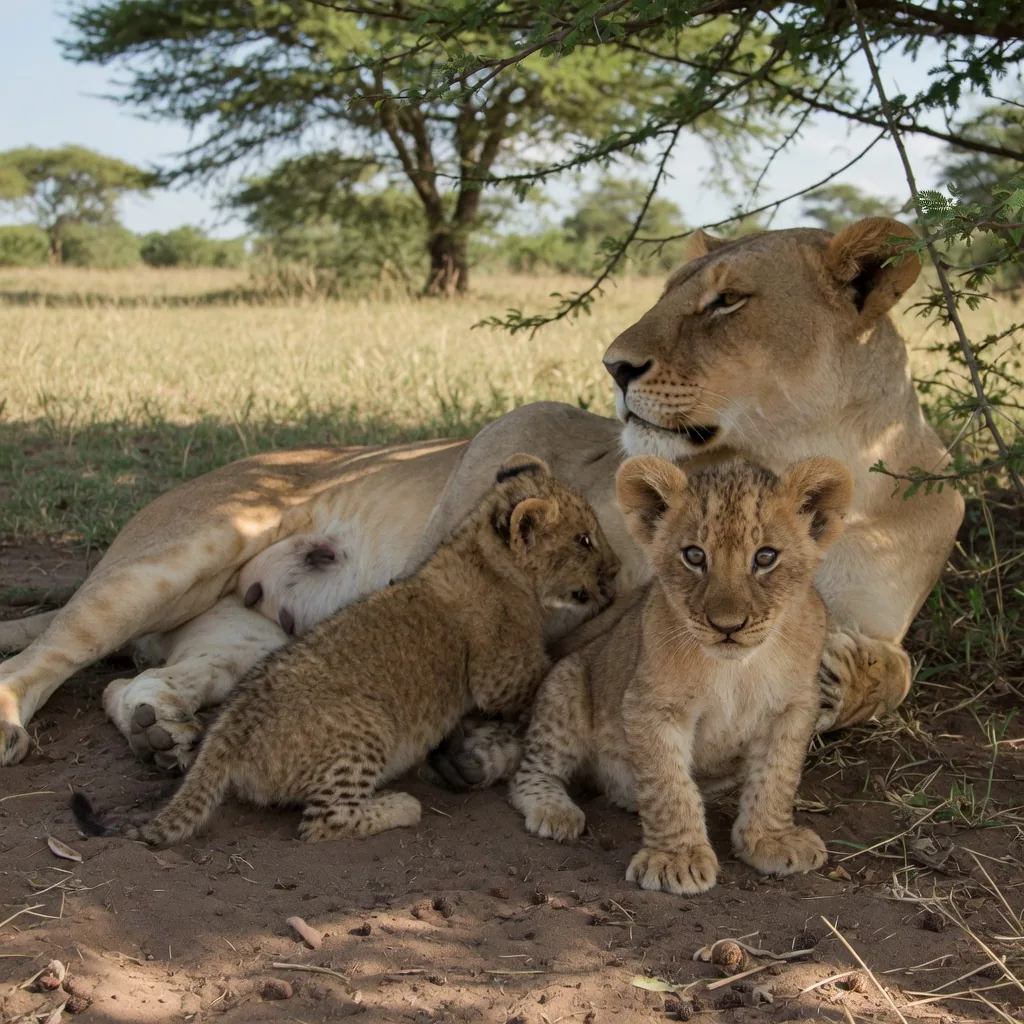
African lions can mate all year round. The mother carries her cubs for 110 days before giving birth. A female usually has a litter of three to four cubs, and each one weighs about 3 pounds at birth.
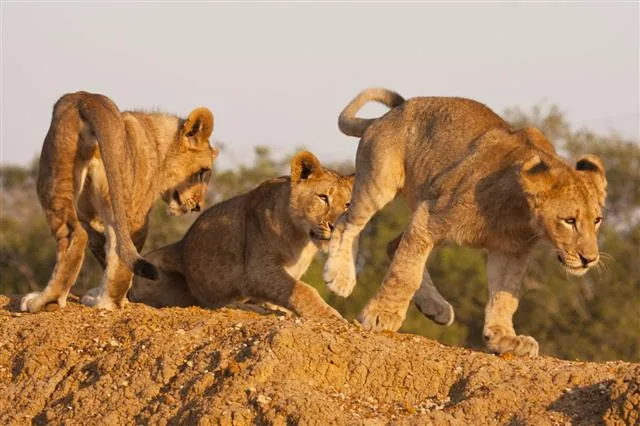
Young lions begin joining hunts when they are nearly a year old, and they stay with their mother until they are two years old. Life is tough for cubs, predators like hyenas, leopards, and black-backed jackals are a constant danger. Less than half of all cubs born make it past their first year.
Predators
Humans are the main predators of lions. For centuries, these magnificent animals have been killed as hunting trophies or for their body parts, which some people wrongly believe have medicinal value. Loss of habitat has also caused their numbers to drop sharply, which is why lions are now classified as "vulnerable."
Frequently Asked Questions
What is the scientific name of the African lion?
Panthera leo
What is a group of lions called?
A pride
What is the conservation status of the African lion?
Vulnerable
How long do lions sleep each day?
16 to 20 hours
How fast can a lion run?
Up to 50 mph for short distances
Other Interesting Facts
- Male lions guard their territory fiercely. They mark it with urine to show other lions where their land begins and ends. A lion's territory can cover 100 square miles (259 square kilometers) of grasslands or open woodlands. When intruders approach, lions roar as a warning, and their roar can be heard up to 5 miles away.
- Lions love shade on a hot day. They rest in dense vegetation during the afternoon and become active after dusk. Most hunting happens at night or just before dawn. Even when not hunting, lions can walk close to 15 miles in a day if needed. A pride will stay in one area as long as there is enough water and prey.
- Lions are usually tawny (yellowish-brown), but their color can range from silvery yellow to gray or dark brown, with paler undersides. Young cubs are born with faint spots, like a leopard's, which usually fade as they grow up, though some adults keep faint spots too. The tip of the tail is usually black.
- Lions are surprisingly expressive. They use a wide range of facial expressions and sounds to communicate. Their sounds include snarling, hissing, coughing, roaring, and purring. Lionesses use soft grunts to call their cubs. A female's roar is slightly softer than a male's. Young lions can only produce a full, deep roar once they reach adulthood.
- Lions prefer large prey because it feeds the whole pride. Favorite meals include zebras, impalas, wild boars, deer, and giraffes. The females do the hunting, they creep up quietly, then use bursts of speed to surround the herd before rushing in to make the kill.
- When new males take over a pride, they often kill the existing cubs. This causes the females to become ready to have new cubs sooner, so the new males' own offspring can be born.
- If a lion breeds with a tiger, the result is called a liger or tigon. If it breeds with a leopard, the offspring is called a leopon, and with a jaguar, it is called a jaglion.
- Lions can sprint as fast as 50 mph over short distances, and they can leap as far as 35 feet in a single bound.
- A male lion's mane protects his neck and head in fights with rivals.
- When a lion walks, its heels never touch the ground, it moves on its toes, like a ballet dancer! This is part of what makes it so quiet and stealthy.
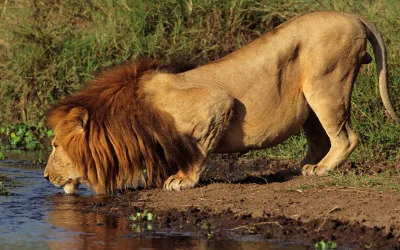
- Lions love to drink water every day, but they can survive up to 5 to 6 days without any water if they have to.
The lives of African lions in captivity have improved a lot in recent years. Modern zoos work hard to give lions naturalistic spaces that better match their needs. Even so, nothing replaces the freedom of the wild, and that is why protecting their natural habitat matters so much.
Explore More Animals
 Lion Habitat: Where Do Lions Live?The numbers of the gracefully majestic Asiatic and African lions have been plummeting at a rapid rate. Discover where lions actually live, how their territories
 Amazing Physical and Behavioral Adaptations of African LionsAfrican lions are one of the biggest cats in the world. To ensure survival, their body has been going through several changes to fight difficult situations and
 Marvelous Facts About Lions That Kids Will Relish ReadingAnimals are getting extinct day by day. Knowing about them can help preserve what we have today. One such magnificent creature is the lion, king of his pride a
 8 Different Species of Lions, With PicturesLions belong to the genus Panthera, but there is only one species (Panthera leo) split into many subspecies. Meet the 8 different lion subspecies, plus the ra

 Fun fact for today!Lions are the only cats that live in groups, called prides!