

Alligators and crocodiles are not the same animal, not even close. They belong to completely different taxonomic families. On top of that, both reptiles have many physical differences that make it possible to tell them apart once you know what to look for.
How to Tell Them Apart
Here are the clues a wildlife spotter checks first. You almost never need all of them, the snout alone usually gives the answer.
| Clue | 🐊 Alligator | 🐲 Crocodile |
|---|---|---|
| Snout shape | Broad and rounded, a wide U shape. | Narrow and pointed, a slim V shape. |
| Teeth (mouth closed) | Lower teeth tuck out of sight; only the top teeth show. | The big 4th lower tooth still pokes up outside the jaw. |
| Color | Usually dark, gray to black. | Usually lighter, olive-green to sandy tan. |
| Habitat & range | Freshwater rivers, swamps, and marshes (mainly the southeastern USA and a small part of China). | Salt glands let them live in saltwater bays, estuaries, and coasts across Africa, Asia, Australia, and the Americas. |
| Behavior | Shyer; not known to hunt people, and tends to retreat. | Generally bolder and more aggressive toward intruders. |
| Living species | Just 2, the American and the Chinese alligator. | About 13-14 species worldwide. |
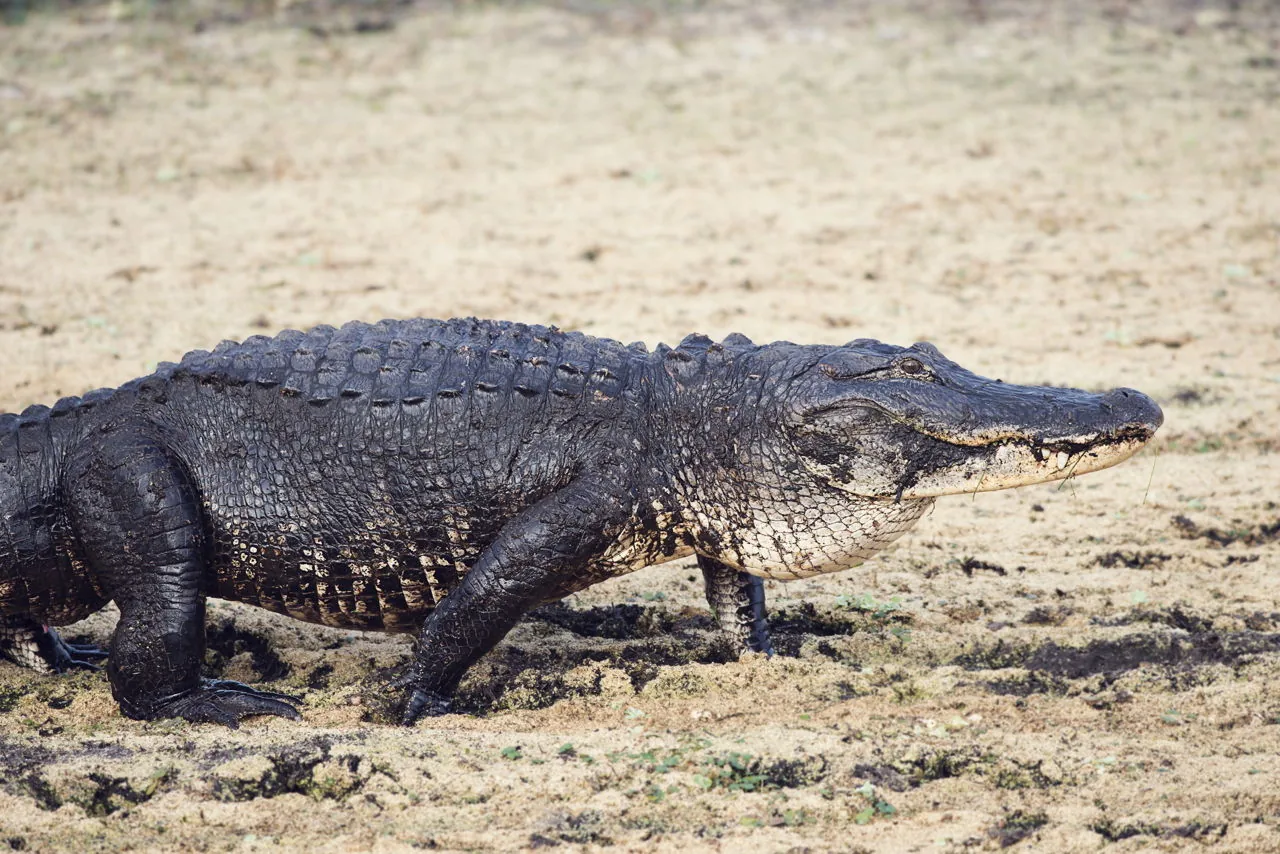
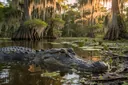
Notice the wide, blunt, U-shaped snout, and how the lower teeth stay hidden.
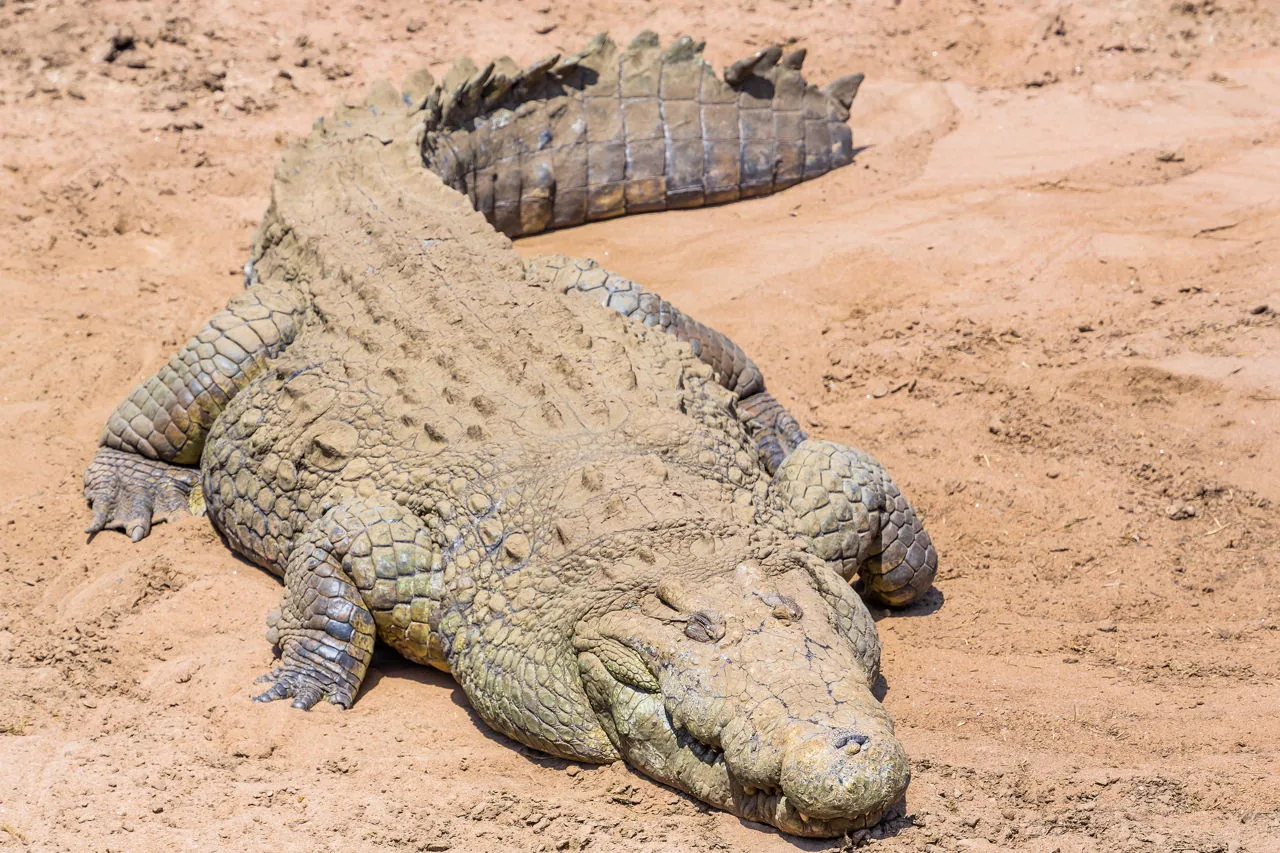
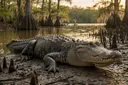
A slimmer, more pointed V-shaped snout, and a lighter olive-tan color.
Scientific Classification
Both animals belong to the same order, Crocodylia, but they split into separate families from there. Scientists group their key differences under four headings: Jaw Shape, Snout Shape, Habitat and Range, and Behavior and Diet. Keep those four clues in mind as you look at the classification table below.
| Classification | Alligator Vs Crocodile | |
|---|---|---|
| Kingdom | Animalia | |
| Phylum | Chordata | |
| Class | Reptilia | |
| Order | Crocodylia | |
| Family | Alligatoridae | Crocodylidae |
| Subfamily | Alligatorinae | Crocodylinae |
| Genus | Alligator | Crocodylus |
| Superfamily | - | Crocodyloidea |
- Jaw Shape
- Snout Shape
- Habitat and Range
- Behavior and Diet
Frequently Asked Questions
What is the easiest way to tell an alligator from a crocodile?
Look at the snout. An alligator has a broad, rounded, U-shaped snout, while a crocodile has a narrow, pointed, V-shaped snout.
Why can you see a crocodile's teeth when its mouth is closed?
A crocodile's large fourth lower tooth sticks up outside its jaw even when the mouth is shut. An alligator's wider upper jaw hides its lower teeth.
Do alligators and crocodiles live in the same kind of water?
Not usually. Alligators prefer freshwater rivers, swamps, and marshes. Crocodiles have salt glands, so many of them live in saltwater bays, estuaries, and coasts.
Are alligators and crocodiles in the same animal family?
No. They share the order Crocodylia, but alligators belong to the family Alligatoridae and crocodiles to the family Crocodylidae.
What are the black dots on a crocodile's skin?
They are Dermal Pressure Receptors, tiny nerve-packed sensors that feel ripples in the water. Crocodiles have them all over the body; alligators have them only on the jaw.
Dermal Pressure Receptors
Dermal Pressure Receptors (DPR) are tiny black spots in the skin of crocodiles and alligators. They are packed with nerve fibers. These sensors pick up even the slightest ripples on the water's surface. Because of that, the reptile can track prey and hunt even in complete darkness.
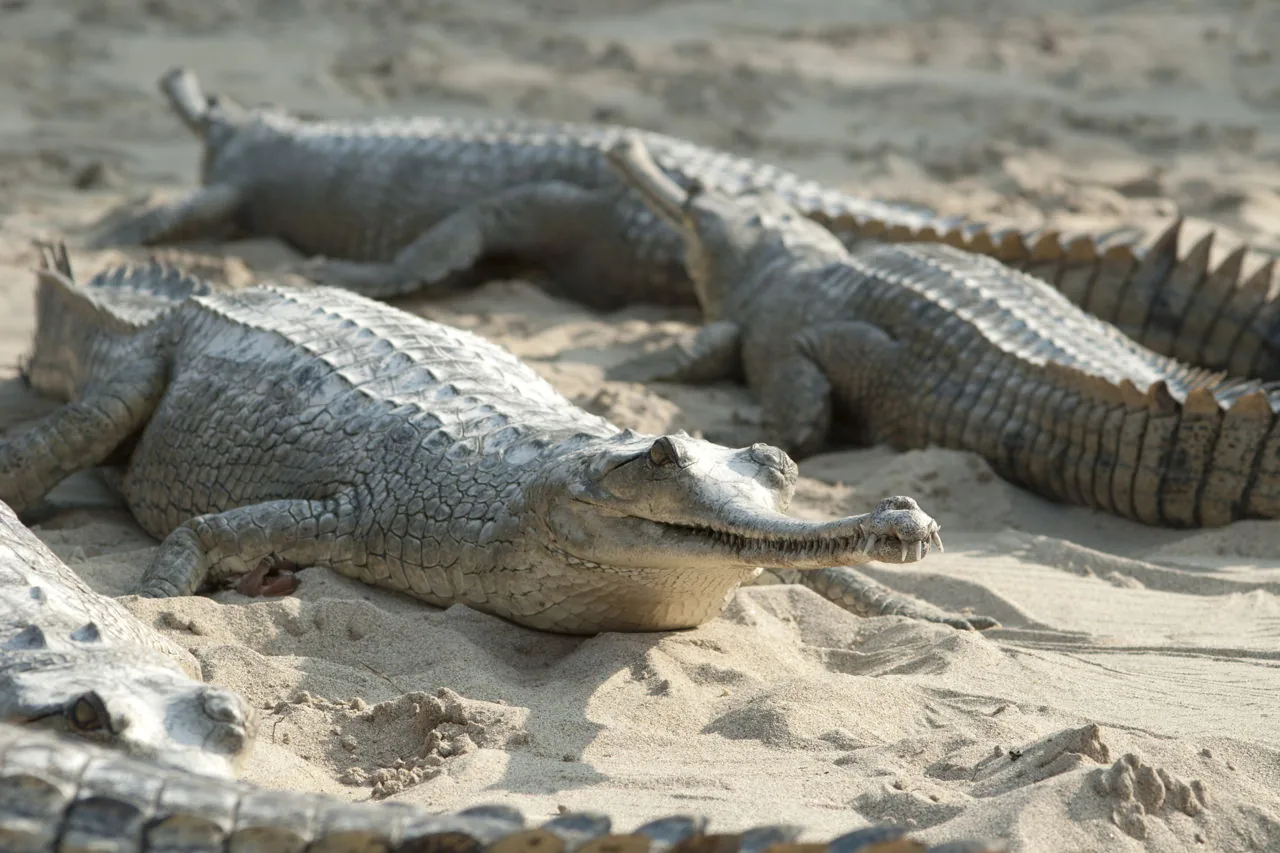
- Alligators possess the DPRs only on the jaw.
- These sensory organs are located on the entire body of a crocodile.
Spot the Difference: Gator or Croc?
5 quick questions. Can you tell them apart just by looking?
There are many crocodile species in the world, and a few of them might not tick every box on the list. But in most cases, the clues above (snout shape, teeth, color, and habitat) will help you tell an alligator from a crocodile quickly and confidently.
Explore More Animals
 Where Do Crocodiles Live? Habitat, Species & Amazing FactsCrocodiles live near swamps, marshlands, brackish waters, lakes, and rivers across five continents. Meet all the species, learn where each one lives, and discov
 What Do Alligators Eat? It's Not What You ImaginedAn alligator's jaw can snap the neck of prey weighing more than 900 kg in one bite. Discover what alligators eat, how often they hunt, and the terrifying death
 Facts About the Largest Alligator Ever Recorded That'll Blow You AwayLouisiana has the highest population of alligators in the United States, and it is no surprise that the largest alligator ever recorded was also found here. An
 Characteristics of Reptiles Explained with PicturesWhat do snakes, turtles, crocodiles, and lizards have in common? Discover the unique characteristics that define all reptiles, from scaly skin to cold-blooded b

 Fun fact for today!It's a crocodile in the photo, you can spot the pointed snout and the big lower tooth poking out!