

Try listing animals whose names begin with "N" and most people can only think of 1 or 2, because we rarely learn animal names in alphabetical order. There are actually hundreds of them. They can be sorted by habitat (ocean animals, farm animals, rainforest animals, or zoo animals) but we have made things simpler by gathering a list that covers birds, rodents, and insects.
There are hundreds and thousands of animals whose names begin with N if you count their scientific names or every separate species. The animals listed below are all different from one another, none of them are subspecies of another. At the end, there is a second list of animals named after a place, like North America or Norway. Their names happen to start with N, but they might be very different types of animals.
List of Animals
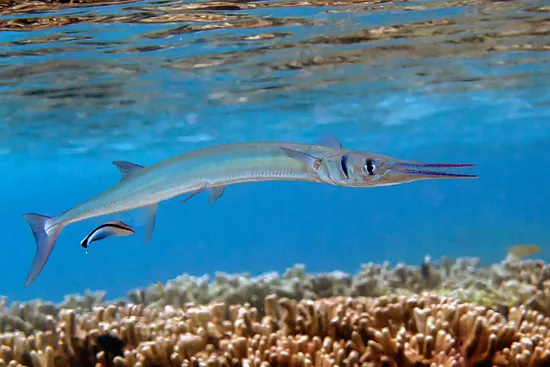
Needlefish
Needlefish have long, slender bodies with a narrow jaw and very sharp teeth. Young needlefish look like they have only half a beak. Most species live in subtropical waters, but some are found in cooler, temperate seas too. Different species live in different water bodies. They swim in schools and are sometimes spotted alongside tuna.
Interesting Fact: In some regions, needlefish can pose a greater threat than sharks because of their jumping. They are attracted to light, and many cases have been recorded where they have jumped or flown toward a light source and injured (or even killed) people nearby.
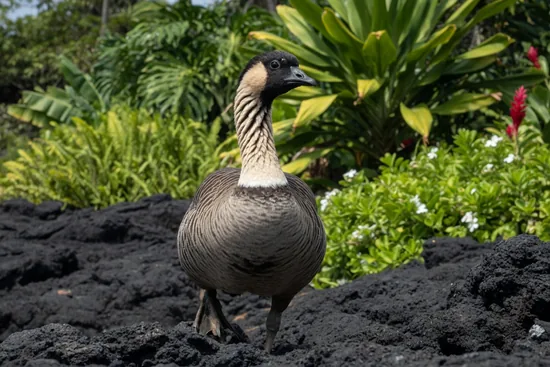
Nene
The nene has a black face, cap, and hind neck, but its cheeks are a warm buff color. Diagonal rows of white feathers run along its neck, with black skin showing in between. This gives the impression of black and white stripes on the front and sides of the neck. Males and females look almost identical.
Interesting Fact: The nene nearly went extinct in the 1940s because of hunting during the breeding season in winter. Many efforts were made to save it. It was made Hawaii's State Bird in 1957, and it now has a stable population.
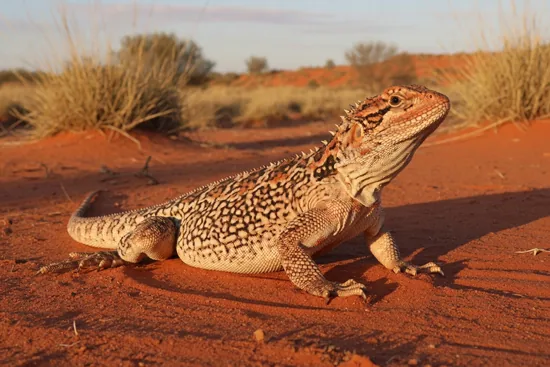
Netted Dragon
Netted dragons come in two kinds: the Central netted dragon and the Western netted dragon. These lizards are found in large numbers in dry areas. Their name comes from the net-like pattern on their skin, which helps them hide from predators. They have adapted well to changes in their habitat, so their numbers have not declined.
Interesting Fact: Netted dragons live in sandy and desert areas. They start each day by basking in the sun, because they need warmth and energy to digest their food.
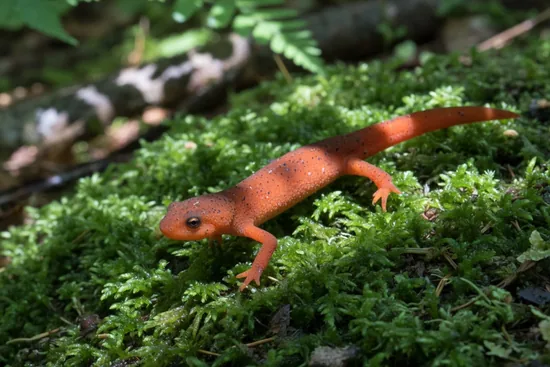
Newt
The newt is an aquatic amphibian with three life stages: larva, eft (juvenile), and adult. It should not be confused with a salamander, even though the two look alike. A newt has a lizard-like body and can live permanently in water, live on land and breed in water, or do both. Some people keep newts as pets, but their skin can produce toxins that are dangerous if swallowed.
Interesting Fact: Newts can regenerate their eyes, spinal cord, intestines, heart, limbs, and upper and lower jaws.
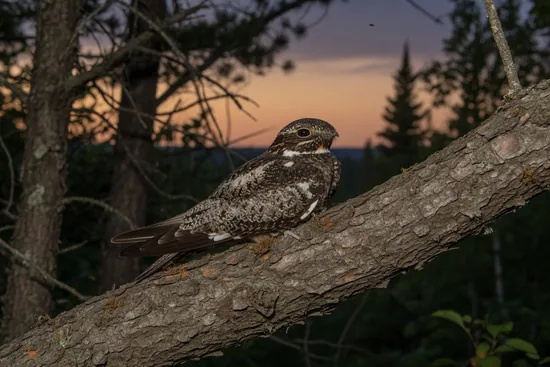
Nighthawk
Nighthawks belong to the family of nightjars, but they can be less nocturnal than the others in that family. They have long, pointed wings, short legs, and very short bills. Their brown-black patterned plumage helps them hide among the trees.
Interesting Fact: Some species of nighthawk sit facing along the branch rather than across it, unlike most other birds. This keeps them perfectly camouflaged.
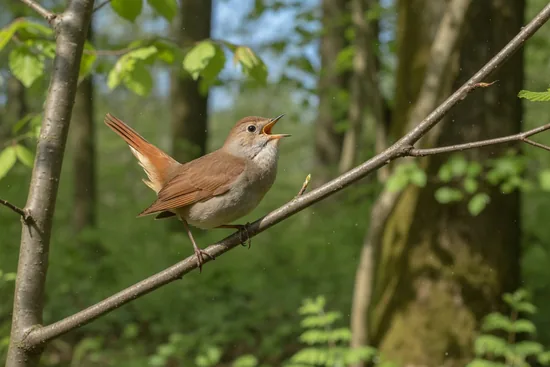
Nightingale
Nightingales are small brown birds famous for their beautiful songs. Their name means "night songstress," and it suits them well, they sing both during the day and at night. The songs are mostly used to attract mates, and sometimes to defend a territory.
Interesting Fact: Many people used to think the females were the singers, but it is actually the males who sing. Male nightingales are much better singers and are the ones most often heard and recorded.
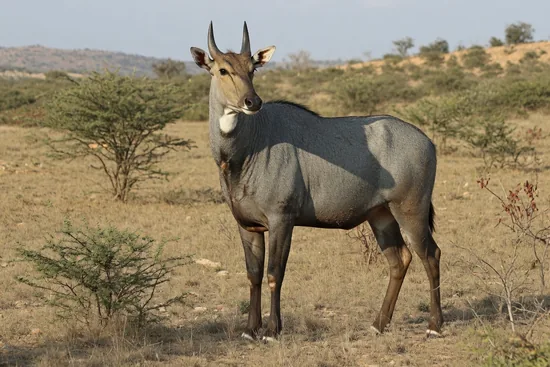
Nilgai
The nilgai is the largest Asian antelope. It is commonly found on farmland or in scrub forests. It has become extinct in Bangladesh, but still lives in India, Pakistan, and Nepal. It has thin legs and a white throat bib. Males can be identified by their short, cone-shaped horns.
Interesting Fact: The male nilgai is also called the blue bull. In Hindi, nil means blue and gai means a bovine animal, so the name simply means "blue cow."
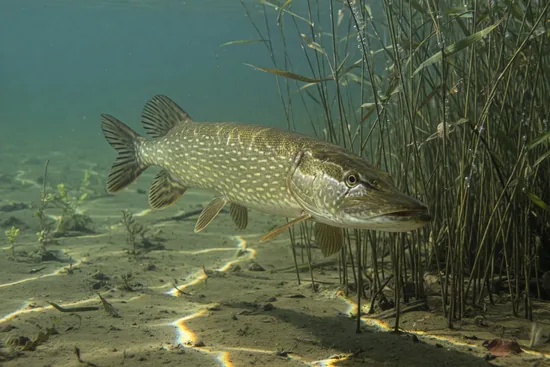
Northern Pike
The northern pike is a carnivorous fish found in fresh and brackish waters of the Northern Hemisphere. These fish grow big and are usually olive green in color, with yellow to white shading on the belly. The fins are sometimes reddish, and the body has small light spots.
Interesting Fact: In May 2004, an exceptionally long northern pike was caught and released in Apisko Lake, Manitoba, Canada. It measured 60.5 inches (154 cm) in length.
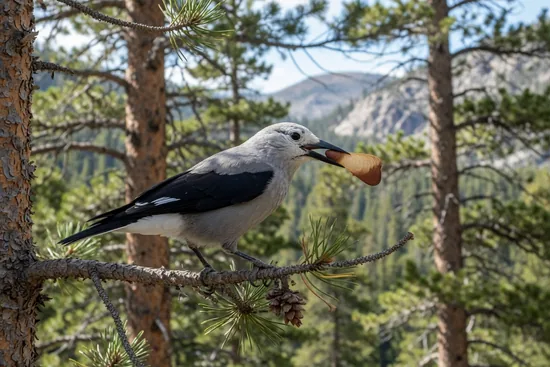
Nutcracker
Nutcrackers are a group of birds that includes three species. They get their name from their strong bills, which are perfect for pulling seeds out of pine cones. When pine is not available, they eat spruce and hazelnut seeds instead. The three species are the Spotted nutcracker, the Large-spotted nutcracker, and Clark's nutcracker (shown above).
Interesting Fact: Nutcrackers can store about 30,000 pine nuts in a single season. This helps naturally re-establish forests, since any buried seeds that go unfound can sprout into new trees, even after a fire or clear-cut.
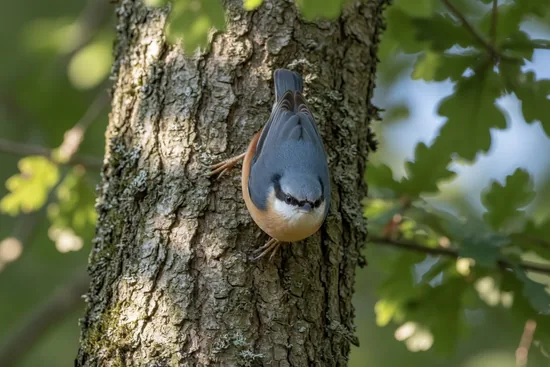
Nuthatch
Nuthatches belong to the genus Sitta. They are small birds with large heads, short tails, and strong bills and feet. They sing loud songs, sometimes to mark their territory. These birds are remarkable climbers: they can move along a tree trunk, including upside-down. They feed on insects hidden in bark, and nest in tree cavities or old woodpecker holes.
Interesting Fact: The white-browed nuthatch is endangered and no recovery measures have been taken yet. The Algerian nuthatch has a population of fewer than 1,000 individuals. Sadly, habitat loss is the main cause for both.
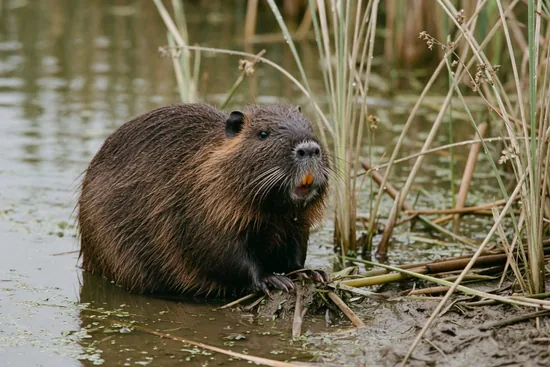
Nutria
The nutria is a large, semi-aquatic rodent also known as the river rat or coypu. It is found across a huge range of countries, but is usually considered an invasive species wherever it goes. It looks like a very large rat with a round, scaly tail. Its fur is mostly dark brown, though some individuals are paler.
Interesting Fact: Nutria are herbivores. An average adult eats almost 25% of its body weight every day, all year round. They eat the base stems of plants, which can be a problem for other animals and for farmers.
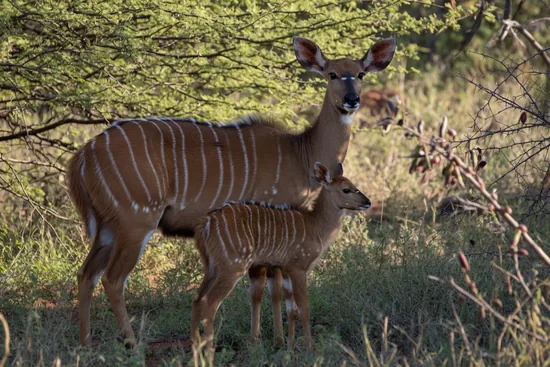
Nyala
The nyala is an antelope known for its spiral horns. It is native to southern Africa. Females and juveniles are brown, but males are darker with a bluish tinge. There are 10–12 thin white lines running down the sides of the body. Nyala are herbivores that feed on leaves and other plant matter.
Interesting Fact: The nyala has a loud, dog-like bark that females use to warn others of danger. They also respond to the alarm calls of kudu, impala, and baboon, listening out for each other across the bush.
Take the N-Animals Quiz!
5 quick questions. Find out how much you really know about the animals that start with N.
🦏 Nyala or nilgai? How to tell them apart
Both are antelopes whose names start with N, but they are easy to separate once you know the trick. The nyala lives in southern Africa, wears thin white body stripes, and the male grows long lyre-shaped spiral horns. The African antelopes page has many of its striped relatives. The nilgai is Asia's biggest antelope, has a smooth bluish-gray coat with no stripes, and the male carries short, straight, cone-shaped horns, which is why he is nicknamed the blue bull.
Frequently Asked Questions
What animals start with the letter N?
Animals whose names begin with N include the needlefish, nene, netted dragon, newt, nighthawk, nightingale, nilgai, northern pike, nutcracker, nuthatch, nutria, nyala, nabarlek, naked mole-rat, noolbenger and numbat.
What is the nene?
The nene is a goose with a black face and buff cheeks. It was made Hawaii's State Bird in 1957 after nearly going extinct in the 1940s.
Why is the naked mole-rat special?
The naked mole-rat is the first mammal known to show eusociality, where only one female and one to three males breed. It can live about 31 years and is known for its resistance to cancer.
Is a newt the same as a salamander?
No. A newt is a type of amphibian with three life stages, larva, eft and adult, and should not be confused with a salamander, though the two look similar.
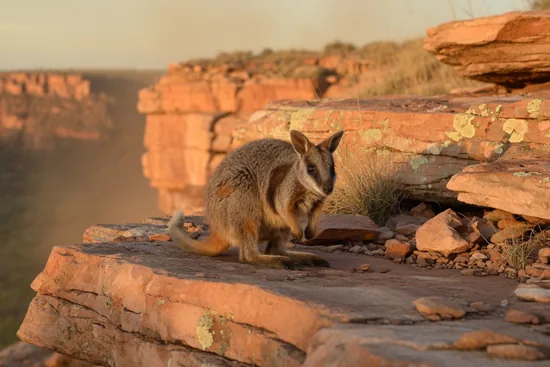
Nabarlek
The nabarlek is a very small macropod also known as the pygmy rock-wallaby or little rock-wallaby. It is mostly gray and may have rufous (reddish-brown) patches and black markings on its body. It lives in a very small area of northern Australia. It is active at night and feeds on grasses and other plants.
Interesting Fact: For a long time it was thought to be the smallest rock-wallaby, until the monjon was discovered in 1978 and took that title.
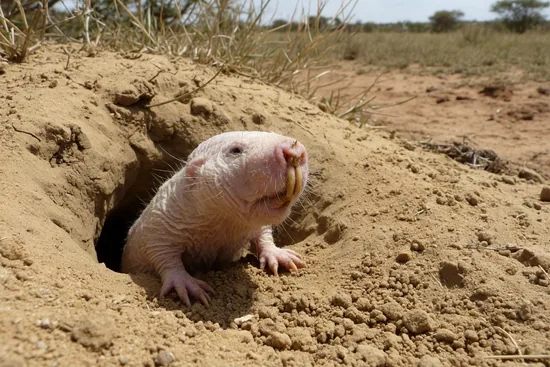
Naked Mole-rat
The naked mole-rat is a very unusual-looking burrowing rodent native to East Africa. It has almost no hair (just pink or yellow skin) along with tiny eyes and large, protruding front teeth for digging. It is well adapted to harsh desert conditions. It is a long-lived animal, reaching about 31 years, and is famous for its resistance to cancer.
Interesting Fact: The naked mole-rat has almost no pain sensation in its skin. It is unaffected when exposed to substances (like acids) that would cause pain in most other animals.
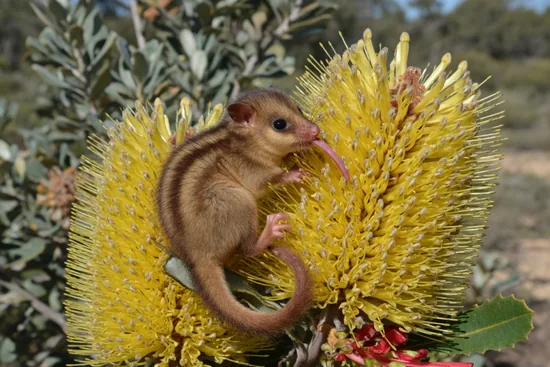
Noolbenger
The noolbenger is a tiny marsupial found only in a small area of western Australia. It is smaller than a mouse and has a distinctively long, pointed snout. It also has a long tongue that it uses to gather pollen and nectar from flowers. It is mostly active at night, but can be spotted in daylight too.
Interesting Fact: Noolbengers have specially shaped front and back feet that can grip and grasp. This means they are excellent climbers, able to scale plants and reach flowers with ease.
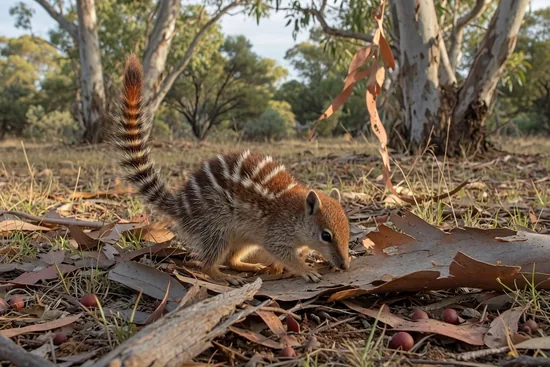
Numbat
The numbat is a small marsupial that lives in Western Australia. It has a pointed muzzle and a bushy tail about as long as its body. Its color ranges from gray to reddish-brown, and it has bold black stripes running across its back. It feeds mainly on termites.
Interesting Fact: There were once two subspecies of numbat. One of them (the rusty numbat) went extinct in the 1960s. The remaining subspecies is currently endangered.
Some More Animals
These animals also have names that begin with N. Many are named after a place, like North America or Norway, so you will spot the pattern straight away.
- Narwhal
- Neapolitan Mastiff
- Neotropic Cormorant
- Newfoundland Dog
- Nile crocodile
- Nine-banded armadillo
- Noctule
- North American beaver
- North American porcupine
- North American river otter
- North Atlantic right whale
- Northern Cardinals
- Northern Carmine Bee-eater/Nubian bee-eater
- Northern elephant seal
- Northern Flying Squirrel
- Northern Fur Seal
- Northern Hairy-Nosed Wombat
- Northern phalarope
- Northern Sea Horse
- Northern Spotted Owl
- Norwegian Buhund
- Norwegian Elkhound
- Norwegian Forest Cat
- Norwegian Lundehund
- Norwich Terrier
- Nova Scotia Duck Tolling Retriever
Explore More Animals
 52 Animals with the Weirdest NamesEvolution has played cruel games with certain animals, making them the target of man's sense of humor. Here are some birds, animals, and insects with funny and
 28 Amazing Blue-colored Animals (With Pictures)Blue is one of the rarest colors in the animal kingdom. Meet 28 amazing blue-colored animals (ocean creatures, birds, frogs, lizards and bugs) with a stunnin
 An A-Z List of Herbivore Animals, With Pictures | Animal SakeFrom antelopes and bison to zebras: meet 28 amazing plant-eating mammals in this A-Z herbivore animals list, with their family, diet, habitat and photos.
 A Complete List of Desert Animals (With Pictures)Meet the hardy animals that survive the world's hot and cold deserts: camels, fennec foxes, meerkats, rattlesnakes, polar bears and dozens more, plus a close-up
Glossary: Animal Words
| Word | Meaning |
|---|---|
| Amphibian | An animal, such as a newt, that lives part of its life in water and part on land. |
| Marsupial | A mammal, like the numbat or noolbenger, that carries its tiny babies in a pouch. |
| Nocturnal | Active at night and resting by day, like the nabarlek and the netted dragon's cousins. |
| Invasive species | An animal living where it does not naturally belong, like the nutria, often causing problems. |
| Eusocial | Living in a colony where only a few animals breed and the rest help, as the naked mole-rat does. |
| Endangered | A species at serious risk of dying out, like the numbat and the white-browed nuthatch. |

 Fun fact for today!The naked mole-rat barely feels pain in its skin, can live for about 31 years, and is famous for resisting cancer, amazing for an animal the size of your thumb!