

As its name suggests, the Arctic fox is a species of fox native to the Arctic region of the world. Also known as the White fox or Snow fox, the Arctic fox is found throughout Alaska, north Canada, and some parts of Greenland. The fact that this small fox species manages to survive the harsh winters that the tundra region boasts of may come as a surprise for many. But once you realize that nearly every feature of this animal helps it to adapt and survive in this climate, it makes perfect sense.
Arctic Fox Physical Adaptations
In the freezing conditions of tundra, the most important thing that the Arctic fox needs to do is to ensure that its core body temperature does not fall below a certain point. For this, the entire body of the Arctic fox is covered with thick fur. In fact, the fur of this species is said to be the warmest of any mammal on the planet, including the polar bear with whom it shares its habitat.
The Arctic fox also has a clever heat-saving system inside its body. Warm blood flowing out through arteries heats up cold blood returning through the veins, a process called countercurrent exchange of heat. On top of that, a good layer of adipose tissue (body fat) sits under the skin, adding extra insulation.
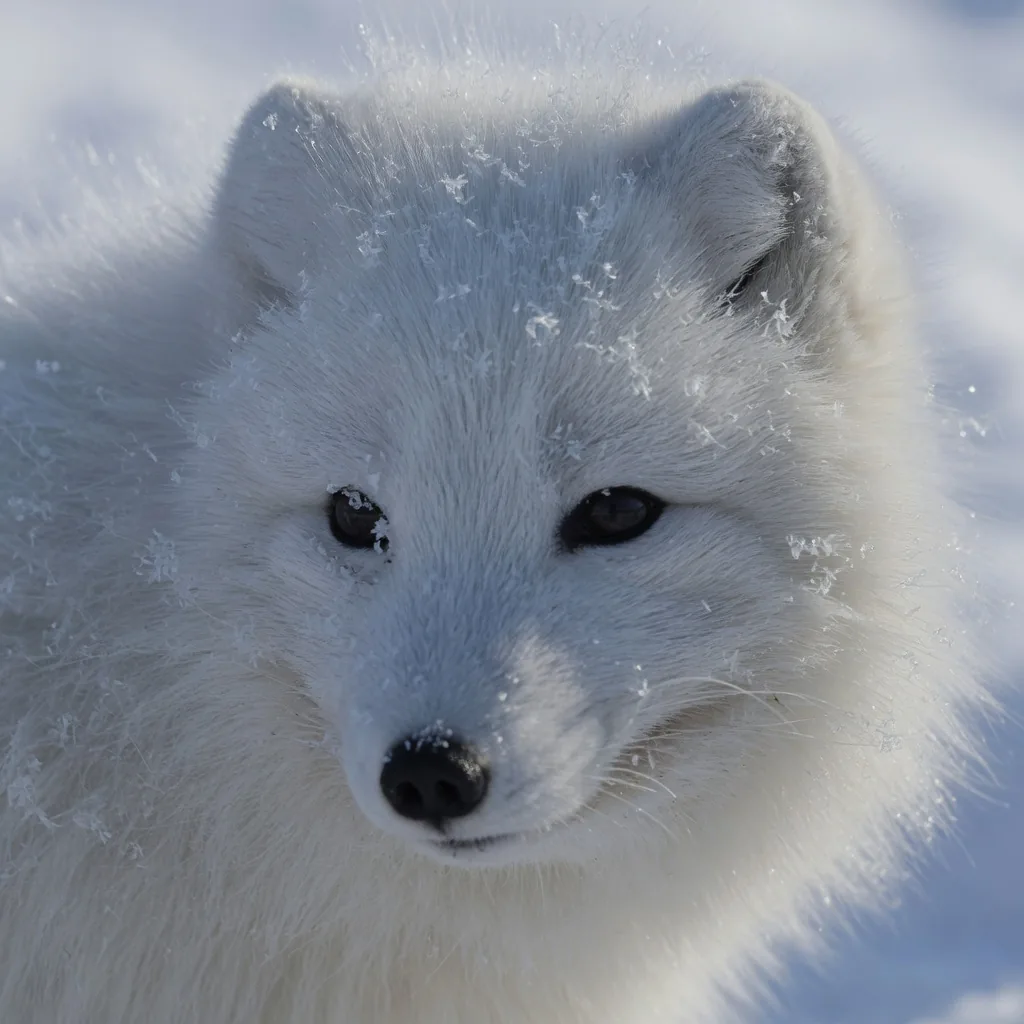
The size and body shape of Arctic fox have a crucial role to play in maintaining its body temperature. It has a small and round body, with a short muzzle and thick ears, which reduces its exposure to cold and minimizes heat loss. Its furry tail doesn't just help it with balance and camouflage, it also acts as a warm blanket when the fox sleeps. The Arctic fox has even adapted its feet for the harsh winter climate. Thick fur on the bottom of its feet protects it from the ice while walking or digging the ground.
The Arctic fox puts its coat to good use all year round. In summer, it camouflages itself against the melting snow by shedding its white coat and growing a brown one instead. The process reverses in winter, and by November its coat is back to snow-white, its most well-known characteristic. One of the most amazing physical adaptations in this species is their heavily pigmented eyes. These help reduce the damage caused by strong light reflected from the ice.
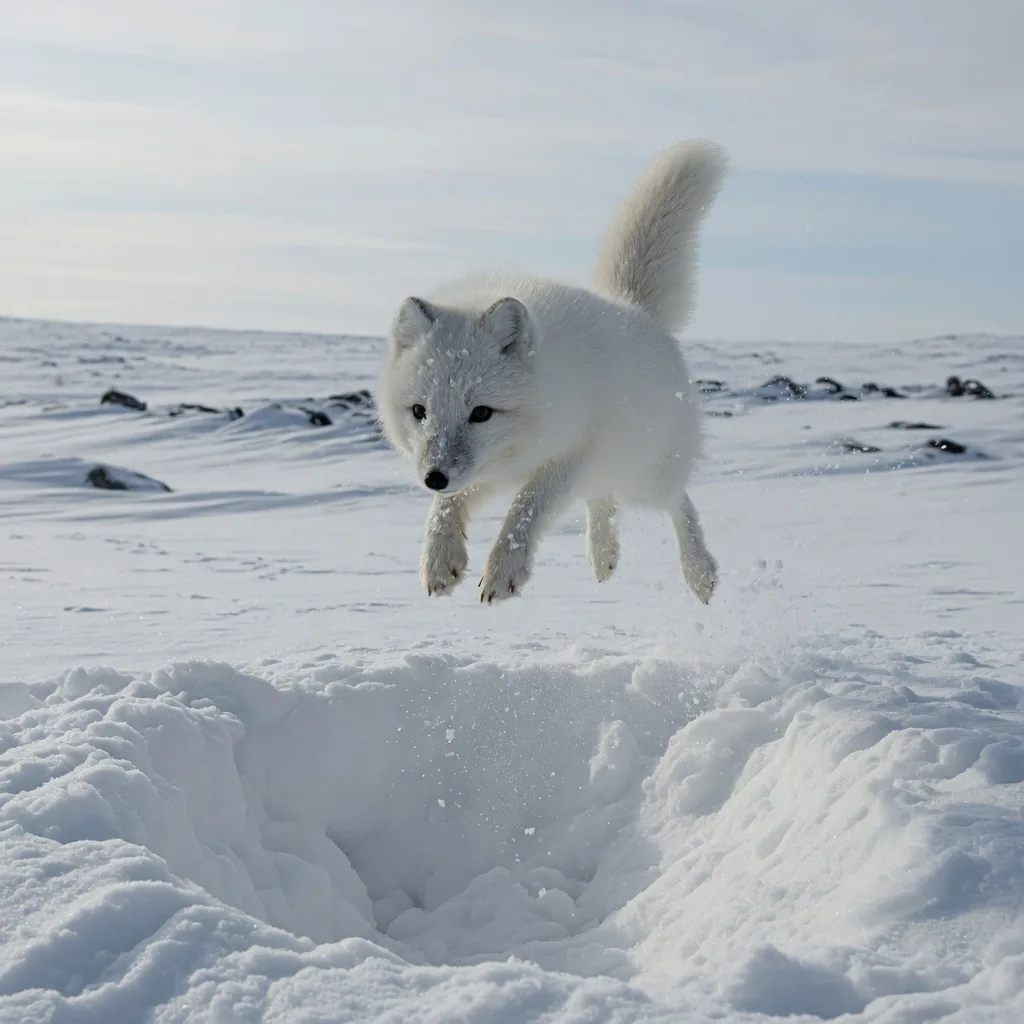
This species relies on its keen sense of hearing when it comes to hunting. Once it locates prey just below the ice, it leaps and dives straight down to break through. It also has sharp claws that help it dig into the ground for prey without slipping.
Take the Arctic Fox Adaptations Quiz!
5 quick questions. How well do you know the fox built for the freeze?
Arctic Fox Dietary Adaptations
Over the course of time, this species has adapted to a diet that helps it survive both the summer and winter of the Arctic. The Arctic fox is basically an opportunistic predator, it feeds on small mammals like lemmings and ground squirrels, as well as insects and eggs.
In winter, when conditions are harsh and food is scarce, the Arctic fox follows polar bears and caribou instead of hunting alone. When it follows the polar bear, it scavenges on whatever is left after the bear has had its fill. That is risky, since polar bears do sometimes hunt and feed on Arctic foxes. But the fox's superb camouflage skills come to its rescue. When it follows the caribou, it feeds on insects that come to the surface when caribou forage the ground for food.
More importantly, this animal is shrewd enough to use the thick sheets of ice to store food. At times, it digs a hole in the permafrost and stores food there for the future. Instead of building its own den, it enlarges squirrel burrows and uses those as its home. This helps it save energy and go without food for a considerable amount of time.
For survival in the harsh and incredibly frigid, subzero conditions of the Arctic, such adaptations are truly a blessing. Even though the Arctic fox is not considered endangered as a whole, there do exist two subspecies of this animal which are considered endangered by the International Union for Conservation of Nature (IUCN). While these adaptations of the Arctic fox have helped it survive the wrath of nature, whether they will help it survive the human wrath is harder to say. Loss of habitat and large-scale hunting for fur continue to fuel the decline of this species in the wild.
Frequently Asked Questions
What is the Arctic fox's warmest adaptation?
Its fur, the warmest of any mammal, warmer even than a polar bear's coat
Why does the Arctic fox change color?
To camouflage, white in winter against snow, brown in summer against rocks and soil
What does the Arctic fox eat in winter?
Lemmings, ground squirrels, and scraps scavenged from polar bear kills
Is the Arctic fox endangered?
The species overall is Least Concern, but two subspecies (the island fox and the Medny Arctic fox) are Endangered

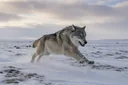

 Fun fact for today!The Arctic fox's fur is warmer than a polar bear's, the warmest of any mammal on Earth!