

About the Arctic Fox
Scientifically known as Alopex lagopus, the arctic fox is also called the white fox. It lives in the northern hemisphere, mainly in Northern Canada, Alaska, and around the Arctic Circle in the tundra and some coastal areas. It weighs around 2.5 to 9 kg and measures about 75 to 115 cm from nose to tail.
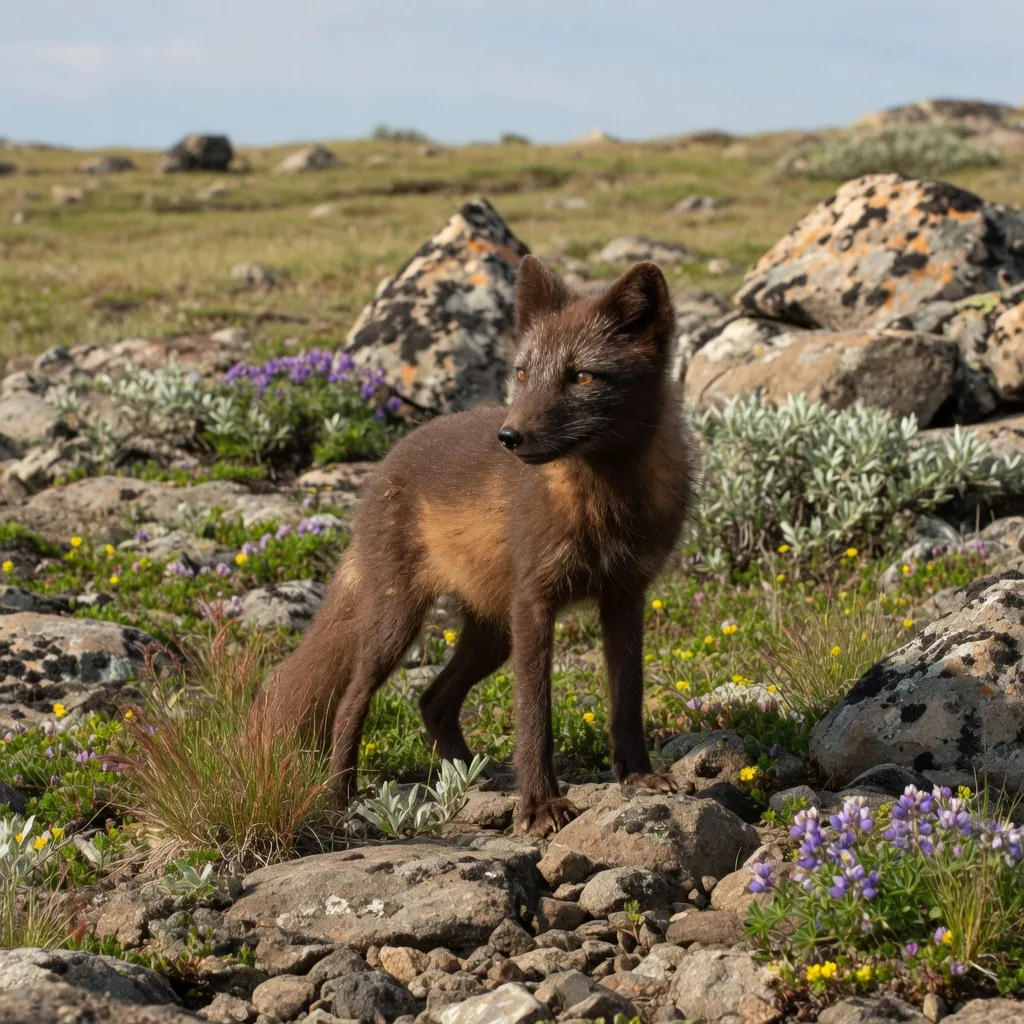
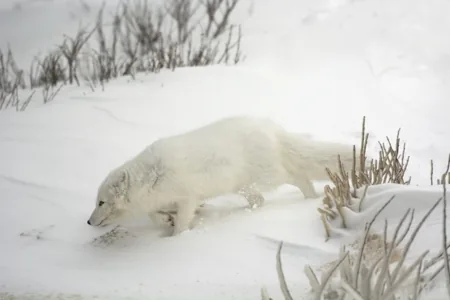
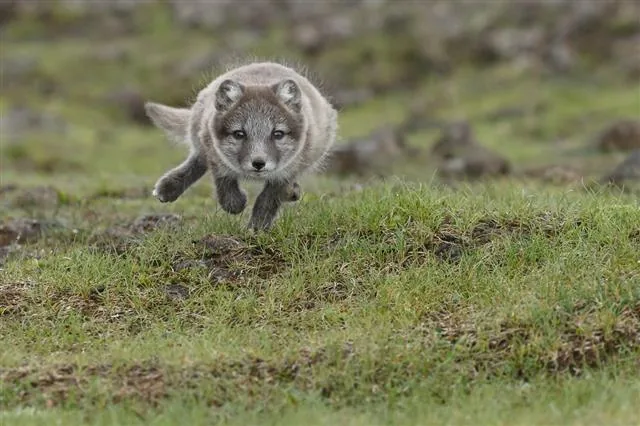
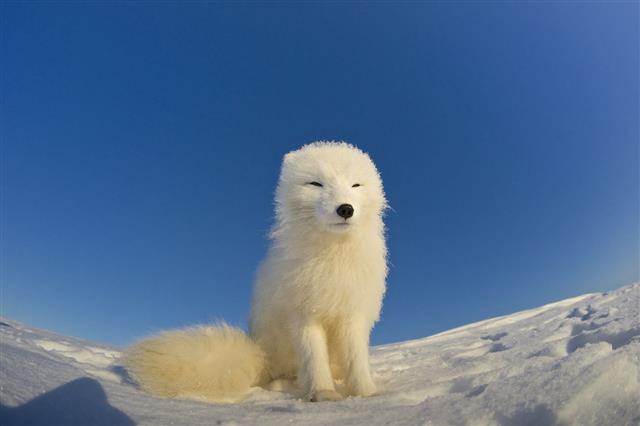
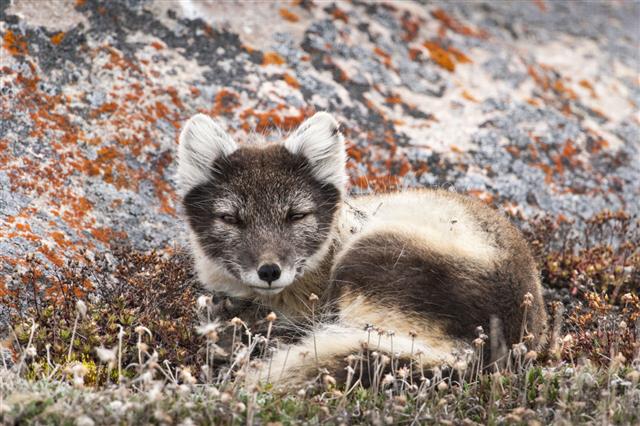
The name "white fox" comes from its coat. In winter, the fur is mostly white. When spring and summer arrive, the coat gets thinner and turns brown and black. The legs, back, and tail all become clearly brown. Some arctic foxes even have a bluish coat in winter, which grows darker in summer. These color changes help the fox blend in perfectly with its surroundings all year round.
Shelter & Survival
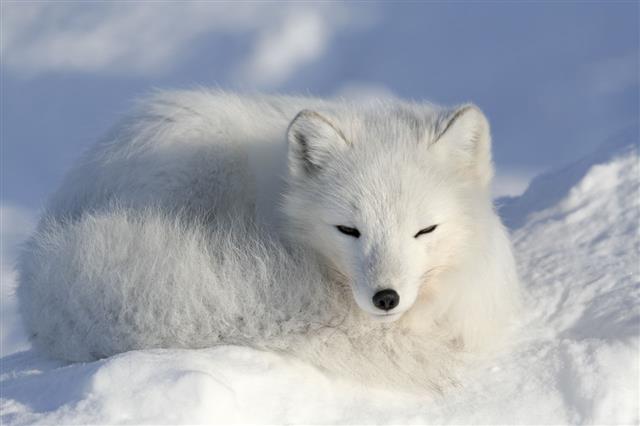
The arctic fox digs deep burrows in the side of cliffs to live in. It also shelters in dens or caves. When caught in a storm, it can even bury itself in the snow for warmth, then wrap its thick, bushy tail around its body like a blanket to stay warm.
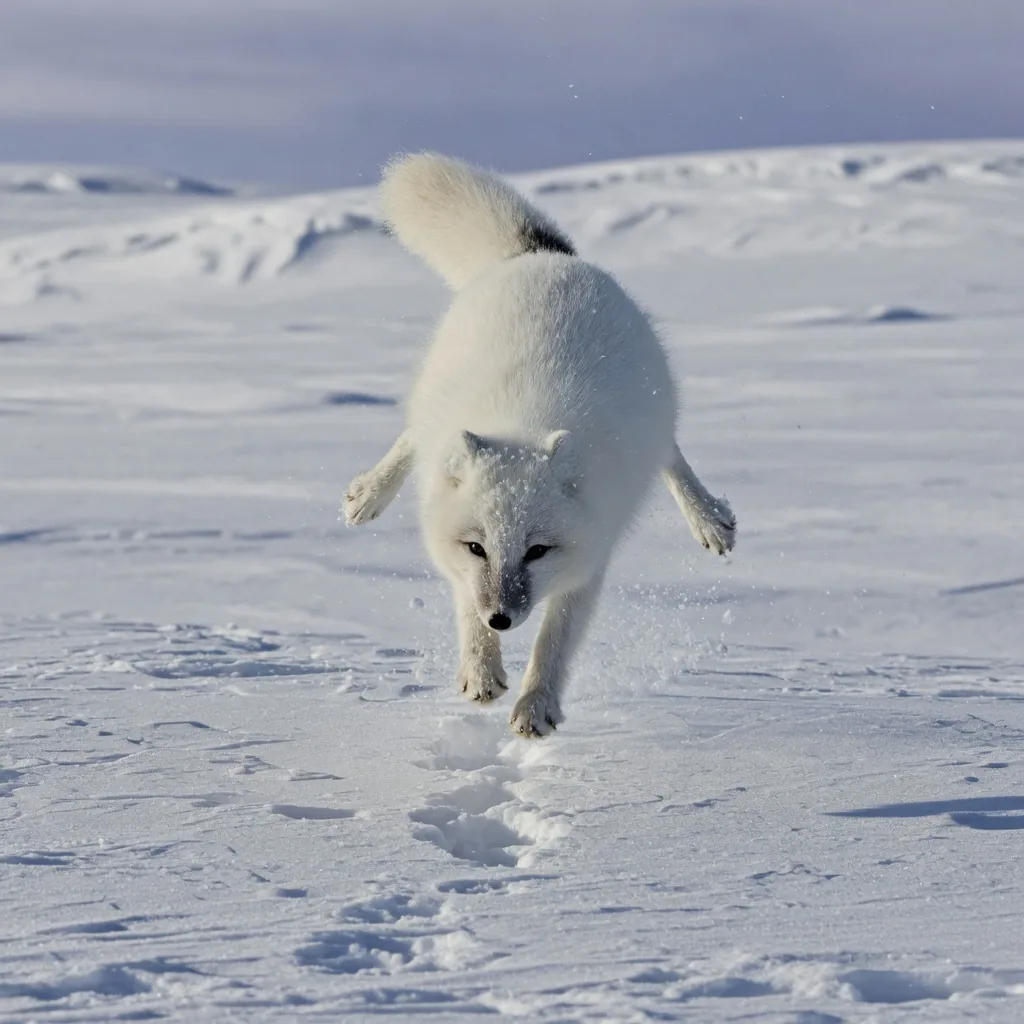
That bushy tail does two jobs: it helps the fox keep its balance, and it acts as built-in insulation against the freezing cold. The arctic fox has an excellent sense of smell. It uses this to track prey that is hiding under a blanket of snow. Once it zeroes in on the target, it punches straight through the snow to catch it.
Arctic foxes are nomadic, they travel widely in their search for food. In summer, they live in small groups with mostly males, a few females, and the kits (baby foxes). The arctic fox grows up fast, reaching sexual maturity as early as 10 months. They are sexually active from September to May.
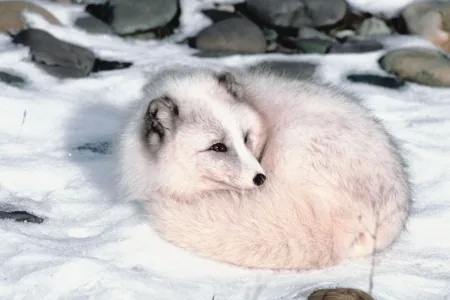
This species has the warmest fur of any canid. Its compact, dense body reduces the surface area exposed to freezing temperatures. Short legs and thick fur also help it cope with extreme cold. Even the footpads have dense hair to protect them from ice and snow during hunts.
The arctic fox also has a clever trick inside its body. The arteries and veins in its legs run right next to each other. This means warm blood flowing out to the paws heats up the colder blood flowing back to the heart.
The result: although the paws stay cold, blood keeps circulating without a problem. The fox never loses too much body heat through its feet. It is one of nature's neatest built-in heating systems.
Hunting & Diet
Like most canids, arctic foxes are omnivores, they eat both meat and plants. Their menu includes arctic hares, lemmings, and ground squirrels. In summer, they also eat seaweed and berries. In hard winters, when hunting alone is tough, they follow wolves or polar bears and scavenge the leftover meat from their kills.
The polar fox is also a natural food-hoarder. It digs into the ground to bury extra food, using the frozen earth like a natural freezer to keep meals fresh for later. Its keen nose makes finding those buried stashes easy.
Snow foxes also regularly go after bird eggs and unguarded chicks, a quick, easy meal when other prey is scarce.
Take the Arctic Fox Facts Quiz!
5 quick questions. How much do you really know about the world's frostiest fox?
Coat & Camouflage
The snow fox or the arctic fox is also the only one from the dog family to change the color of its coat seasonally.
Behavior & Family Life
New litters are born in early spring, after a gestation period of 52 days. A litter can have more than 20 kits, though the number is normally below 10. Both the male and the female look after the young ones. While males tend to wander off as the kits grow up, females usually stay with the family.
Like most canids, arctic foxes have a strong sense of family and togetherness. They use a wide range of sounds to communicate. Over long distances, a loud yowl carries the message. When there is danger nearby, a sharp, high-pitched yelp tells the kits to get to safety fast.
Arctic foxes can run at around 30 mph. Unlike gray wolves, they don't chase prey over long distances, they rely on stealth and a lightning pounce instead.
Frequently Asked Questions
What is the scientific name of the arctic fox?
Alopex lagopus
Why does the arctic fox change color?
It changes from white in winter to brown-black in summer for camouflage, it is the only member of the dog family that does this
How many babies can an arctic fox have at once?
Up to 25 kits in a single litter, the largest litter of any canid
How fast can an arctic fox run?
Around 30 mph, though unlike wolves they don't engage in long chases
What do arctic foxes eat?
They are omnivores, lemmings, arctic hares, ground squirrels, bird eggs, berries, seaweed, and winter carrion from wolves or polar bears
Predators & Threats
Because of its small size, the arctic fox has quite a few enemies. Polar bears and gray wolves are constant threats. Grizzly bears are also known to go after arctic foxes. And for the kits, danger can come from the sky too, wolves and snowy owls are known to attack young pups.
Humans are another serious threat. Arctic foxes have been heavily hunted for their fur, and the slate-shaded coats are particularly prized by hunters.
These were some fascinating facts about the arctic fox, also known as the polar fox. From its color-changing coat to its built-in heating system, it is one of the most remarkable survivors in the animal kingdom!
Explore More Animals
 Arctic Fox Adaptations: How This Tiny Fox Survives the TundraIf Arctic fox is able to survive the harsh conditions of tundra, it is only because of its adaptations. Discover the physical and dietary tricks that keep this
 Tundra Animals: Arctic, Antarctic & Alpine WildlifeIf you thought survival in the tundra was impossible, think again. Meet the remarkable animals of the Arctic, Antarctic, and Alpine tundra, from the polar bear
 Polar Bear Facts for KidsPolar bears are some of the most majestic, beautiful, and dangerous creatures on Earth. The Inuits call polar bears, Nanook. Today, there are an estimated 20,00
 Jaw-dropping Facts About the Red FoxBuilt for speed and known for its clever opportunistic behavior, the red fox is one of the world's most widespread mammals. Discover its habitats, diet, amazing

 Fun fact for today!Arctic foxes have the largest litters among canids, one litter can contain as many as 25 babies!