

Conflicting Situation
We think of sloths as tree-huggers, and they are. But here's a surprising fact: long ago, ground sloths and even aquatic sloths walked and swam across the Earth. Most people have no idea those animals ever existed.
Today's sloths are medium-sized mammals that live in the rainforests of Central and South America. They are famous for being incredibly slow. Three-toed sloths, for example, can only move at a maximum speed of 2 m/min. Sloths move as little as possible, and that "lazy" lifestyle is exactly how they got their name.
There are six extant species of sloths: the pygmy three-toed sloth, the maned three-toed sloth, the pale-throated sloth, and the brown-throated sloth all belong to the genus Bradypus (three-toed sloths). The Hoffmann's two-toed sloth and Linnaeus's two-toed sloth belong to the genus Choloepus (two-toed sloths). All six species live in trees. Their closest relatives are anteaters.
Are Sloths Endangered?
Of the six living species, one is Critically Endangered and one is Vulnerable according to the International Union for Conservation of Nature (IUCN). The other four are Least Concern, which means they're doing okay for now. Because sloths are so slow and hide high in dense rainforest canopies, scientists find them very hard to count and study. Let's look at each species and find out who's in trouble.
Conservation Status of Sloths
Pygmy Three-toed Sloth Critically Endangered
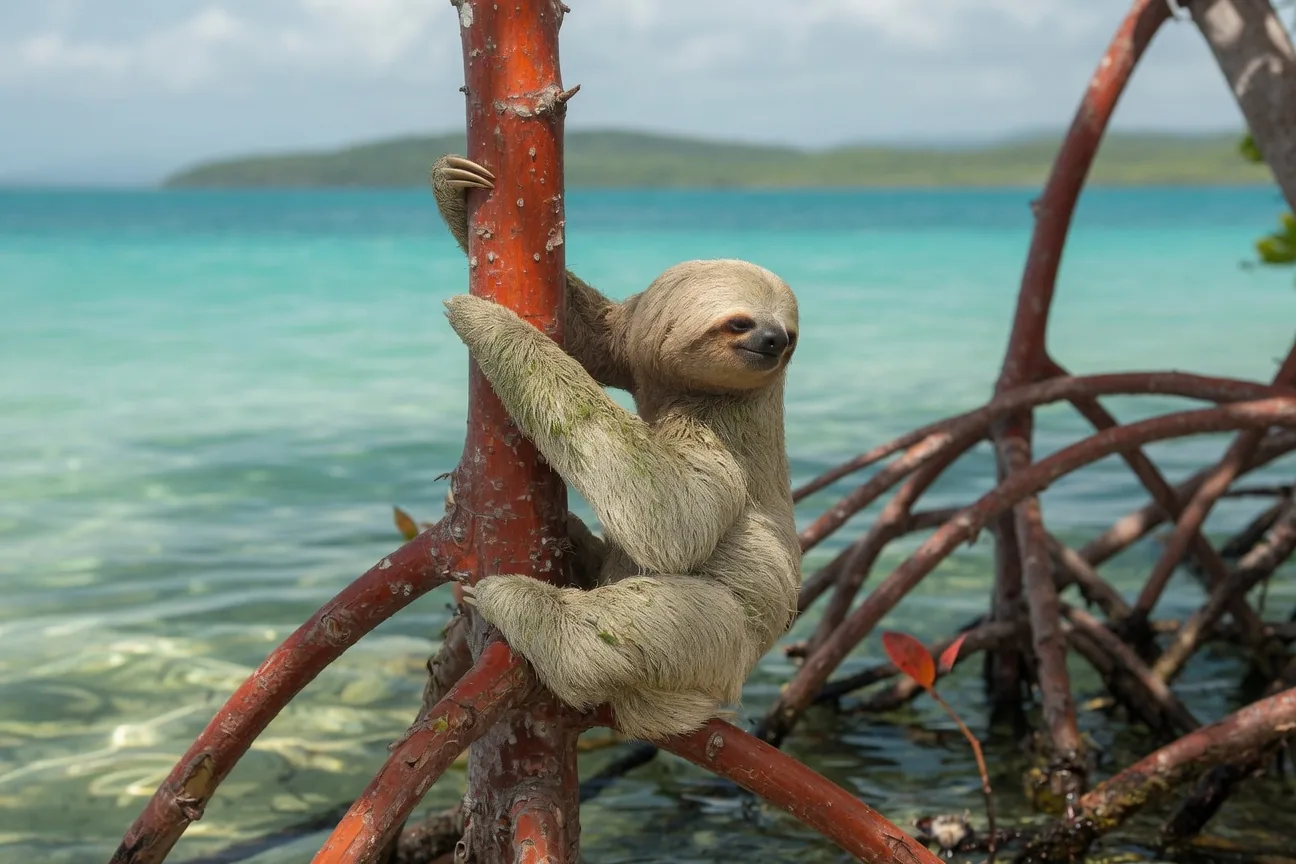
The pygmy three-toed sloth (Bradypus pygmaeus) lives only on Isla Escudo de Veraguas, a small island off the coast of Panama. It makes its home in the island's mangrove trees. Scientists only formally described this species in 2001, making it one of the most recently discovered mammals. Even though it has no known predators, its population has always been small because it can't go anywhere else. A 2011 survey found only 79 pygmy three-toed sloths living in the wild, far fewer than researchers had expected.
Threats: The biggest danger is habitat destruction. Even though the island has few human residents, lumbering is widespread there. When trees are cut down, the sloth's habitat breaks into fragments, making it hard for sloths to find each other and breed. Inbreeding is also a serious concern. With so few animals left, experts worry that a lack of genetic diversity could eventually lead to the species' extinction.
Maned Three-toed Sloth Vulnerable
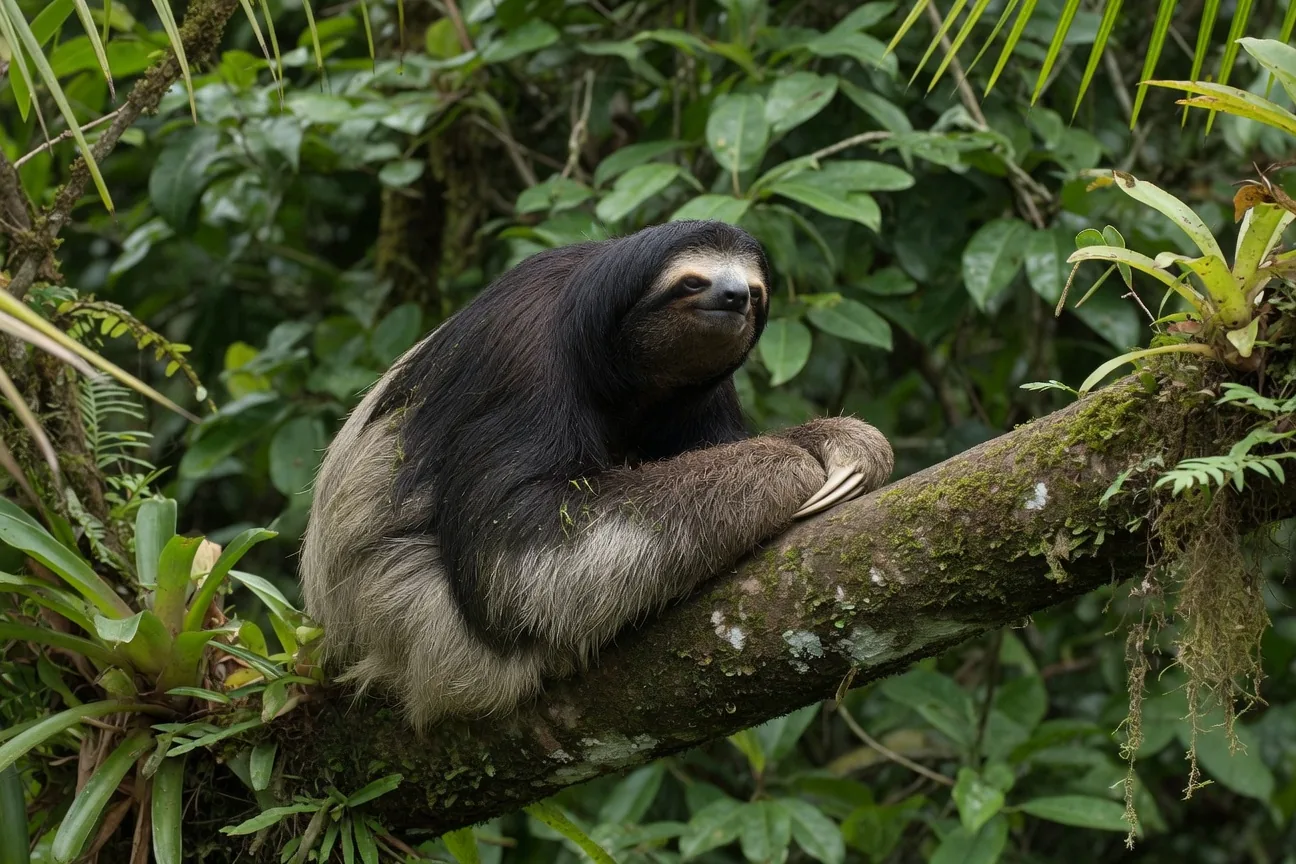
The maned three-toed sloth (Bradypus torquatus) is found only in Brazil and gets its name from the thick mane of dark fur around its neck. In 2008, it was listed as Endangered, but by 2009 its status was improved to Vulnerable. Its home (the Atlantic coastal rainforest of southeastern Brazil) has been reduced to less than ten percent of its original size. That makes its already limited range even more worrying.
Threats: Logging and land clearance for plantations are the main causes of habitat loss. Beyond that, the maned sloth is sometimes killed for food by local hunters, not as a main target, but if they come across one. There is also a rare chance of sloths being hit by vehicles. Deforestation in the Atlantic forest has slowed, but it has not stopped, and every tree that falls makes things harder for this sloth.
Take the Sloth Conservation Quiz!
5 quick questions. Find out how much you really know about sloths and how to help them.
Brown-throated Sloth Least Concern
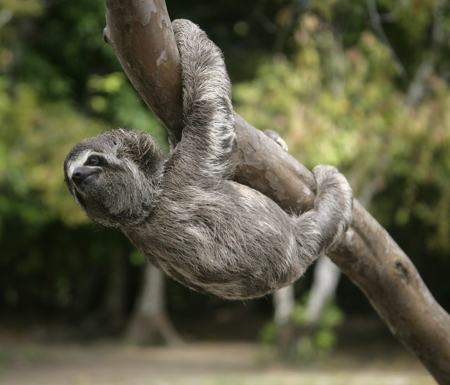
The brown-throated sloth (Bradypus variegatus) is the most widespread and common species in its genus. It lives across the forests of South and Central America. The IUCN lists it as Least Concern, but that doesn't mean it's free from danger.
Threats: Deforestation and habitat fragmentation are the main threats. Brown-throated sloths are also hunted for food, used in traditional medicine, and captured for the illegal pet trade.
Pale-throated Sloth Least Concern
The pale-throated sloth (Bradypus tridactylus) covers a wide range, just like the brown-throated sloth. The two species look so alike that people often mix them up. The pale-throated sloth lives in tropical forests across several South American countries, from Guyana all the way to Brazil.
Threats: This species faces no major threats in the wild. Local people do occasionally hunt it for food, but such cases are rare.
Hoffmann's Two-toed Sloth Least Concern
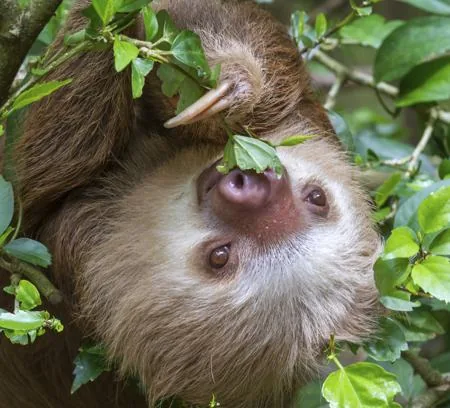
Hoffmann's two-toed sloth (Choloepus hoffmanni) lives in Central and South America. It was named after the renowned German naturalist Karl Hoffmann.
Threats: This species deals with habitat degradation and habitat fragmentation. It is also hunted for food and sold in the pet trade. Despite these pressures, Hoffmann's two-toed sloth has managed to hold its ground in its native habitat.
Linnaeus's Two-toed Sloth Least Concern
Finally, there is Linnaeus's two-toed sloth (Choloepus didactylus). This species lives in the dense forests of northern South America, in countries like Venezuela, Colombia, Ecuador, Peru, and Brazil.
Threats: It does fall prey to subsistence hunting from time to time. But because it spends most of its life high up in the forest canopy, it stays largely out of reach of human activity.
The conservation story of sloths should make us pay attention. Of the five sloth families that have ever existed on Earth, three have been completely wiped off. Those ancient sloths thrived on the planet about 10,000 years ago. Scientists believe their extinction was triggered by climate change at the end of the last Ice Age, combined with human activities as people first spread across the Americas. It seems unlikely to be a coincidence that animals which survived for millions of years suddenly disappeared when humans arrived. Today, every living sloth species is threatened by habitat destruction caused by humans. It looks like history may be repeating itself.
PS: If you ever visit Costa Rica, make sure to visit the Sloth Sanctuary. It is the best place to see different types of sloths up close, and the people there are doing outstanding work for the conservation of this animal.
Explore More Animals
 A List of Endangered Animals From Every ContinentFrom the Bengal tiger and giant panda to the mountain gorilla and polar bear: a continent-by-continent list of the world's endangered animals, with photos.
 Endangered Monkeys ListMeet the world's endangered monkeys: a full list of around 80 threatened species, from snub-nosed monkeys to tiny tamarins, plus why they are vanishing and how
 Endangered Rainforest Animals That Will Really Shock YouThough rainforests hold 40-75% of all organisms on Earth, many species face extinction. Meet the gorilla, Javan rhino, giant panda, and more, with IUCN status
 Forest Animals List: A Field Guide to Who Lives in the WoodsFrom rainforest to taiga, meet the mammals, birds, reptiles, insects and amphibians of the world's forests, plus the endangered species fighting to survive.
Frequently Asked Questions
Are sloths endangered?
Of the six living sloth species, one (the pygmy three-toed sloth) is Critically Endangered and one (the maned three-toed sloth) is Vulnerable. The other four are Least Concern, but all face habitat loss.
Which sloth is the most endangered?
The pygmy three-toed sloth, found only on one small island off Panama. A 2011 survey counted just 79 in the wild.
How many kinds of sloth are there?
There are six living species, four three-toed sloths and two two-toed sloths. Three other sloth families went extinct long ago.
What is the sloth's closest relative?
The anteater. Sloths and anteaters belong to the same ancient group of mammals from the Americas.

 Fun fact for today!A sloth can take a whole month to digest one leaf, and it only climbs down from its tree about once a week!