

The Sonoran Desert stretches across Arizona and California in the United States, and into Sonora and Baja California in Mexico. At 120,000 square miles, it is the largest and hottest desert in North America. You might think nothing could live in such extreme heat, but you'd be wrong. This desert is full of life, and some of the most amazing animal adaptations on Earth happen right here.
Arizona's wildlife is incredibly varied. The state has deserts, pine forests, and mountainous regions, and each kind of land supports different animals. You can find mammals, reptiles, birds, and many more species living here. Let's meet some of Arizona's toughest desert survivors first, then explore the wider wildlife of the Grand Canyon State.
Mexican Gray Wolf
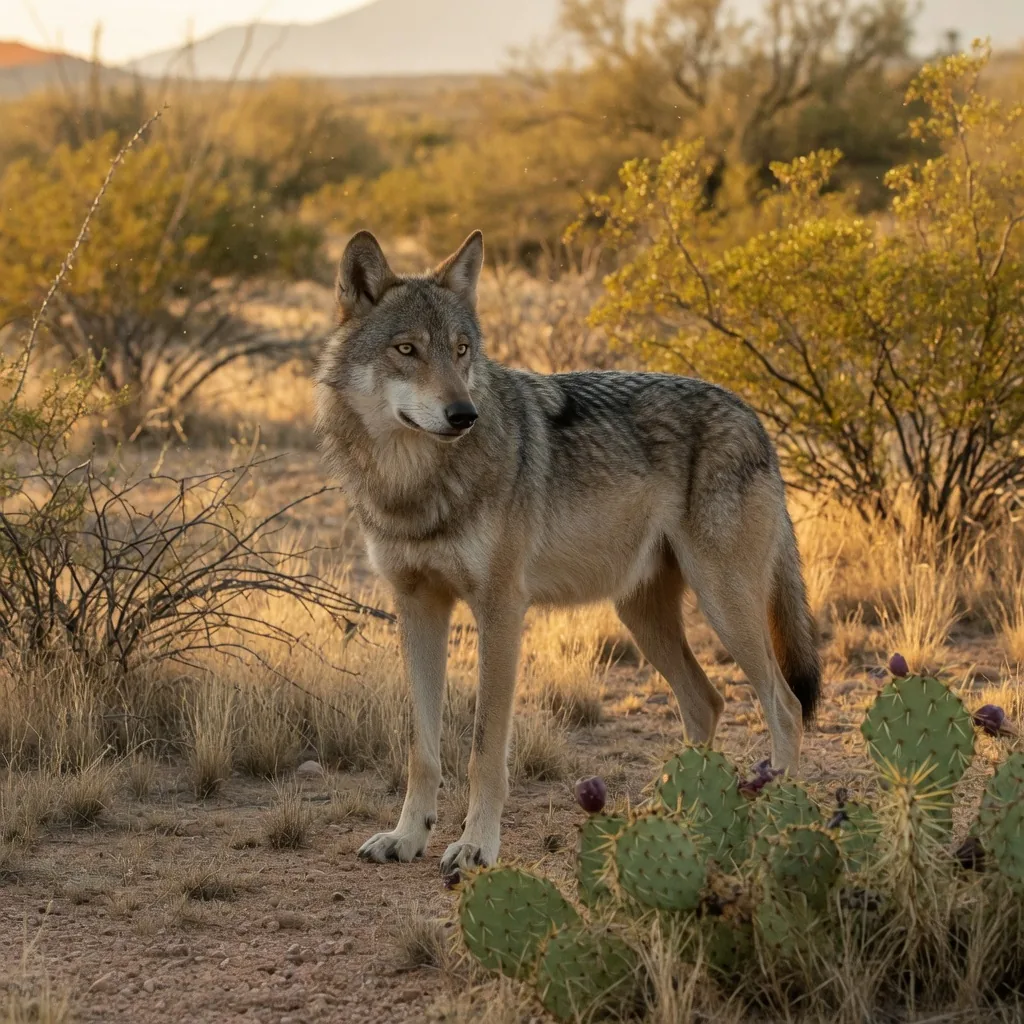
The Mexican gray wolf (Canis lupus baileyi) is the smallest subspecies of the gray wolf. It is native to the Sonoran and Chihuahuan deserts in North America. This wolf is approximately 1.5 meters long and 31 inches tall, and weighs about 60 to 80 lbs.
It mostly hunts small animals like squirrels and mice. When small prey is hard to find, it will go after larger animals like deer, usually the young or weak ones. In tough times, it will also eat carrion (the bodies of animals that are already dead).
Long ago, Mexican gray wolves were common in this region. But from the early 1900s, farmers began killing them to protect their livestock. By 1976, the species was declared endangered. Near the end of the 20th century, the United States Fish and Wildlife Service (USFWS) began bringing them back to Arizona. A survey by officials in 2006-07 estimated that around 60 wolves had returned to the area.
Mountain Lion
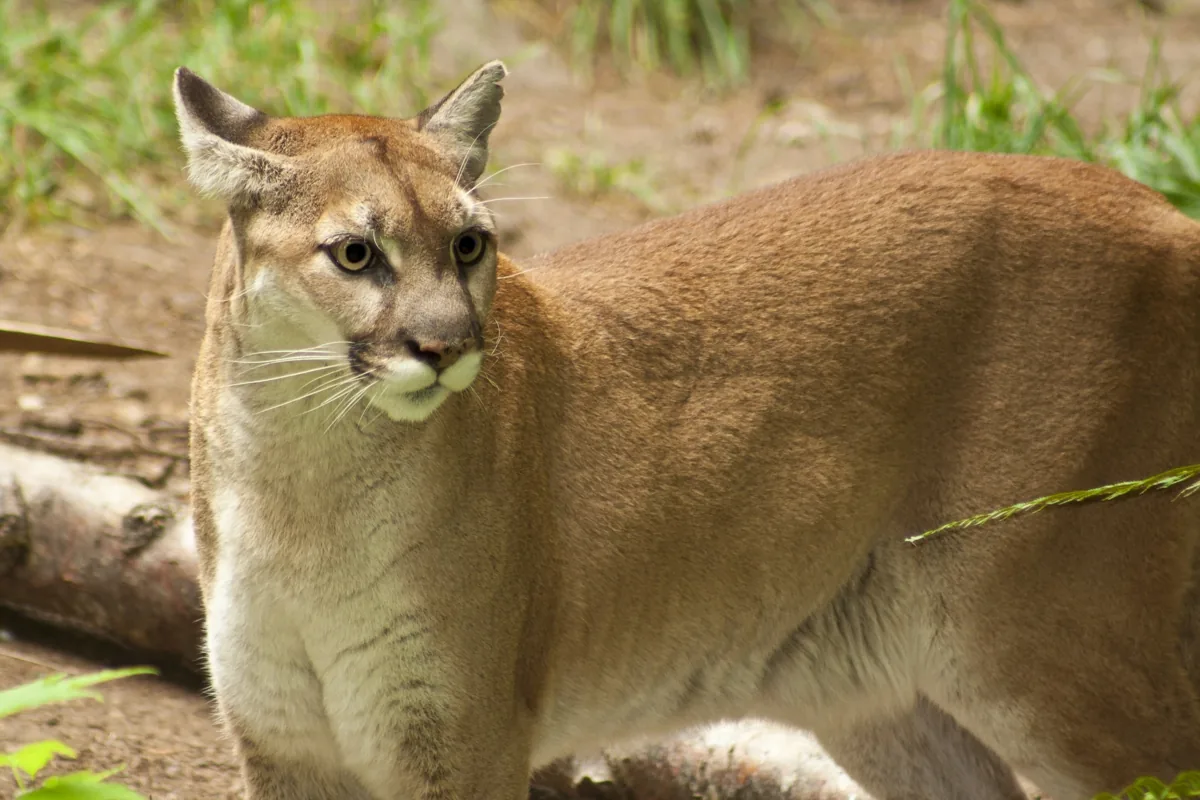
The mountain lion (Puma concolor), also called a puma or cougar, belongs to the cat family (Felidae). It is found across the Americas and has adapted well to the Sonoran Desert. An adult measures 2.4 meters in length, stands 2 feet tall, and weighs around 120 to 160 lbs.
Mountain lions eat a wide range of prey, from rodents and rabbits to cattle and deer. They are solitary animals and will travel miles on their own to find a meal. They are nocturnal, meaning they hunt at night and rest in caves or rocky crevices during the day. Their favorite hunting method is to stalk quietly and ambush their target, perfect for the rocky desert landscape.
Despite living in one of the harshest environments on Earth, the mountain lion is listed as the least vulnerable big cat species by the International Union for the Conservation of Nature (IUCN).
The mountain lion is the fourth-largest animal in the cat family, after tigers, lions, and jaguars. Pumas stand about 2.7 feet tall at the shoulder, with a body length of around 8 feet, and adults weigh roughly 115 to 160 lbs. They have a tawny (golden-tan) coat. Beyond rabbits and deer, they hunt antelopes, elk, wild horses, bighorn sheep, and other livestock. These cats are amazing athletes: they can jump up to 18 feet high, and a single horizontal leap can cover 40 feet. They roam diverse habitats (rimrock canyons, high-elevation forests, and mountainous deserts) and come together only to mate. Their territory can be large or small depending on how much prey is nearby.
Great Horned Owl
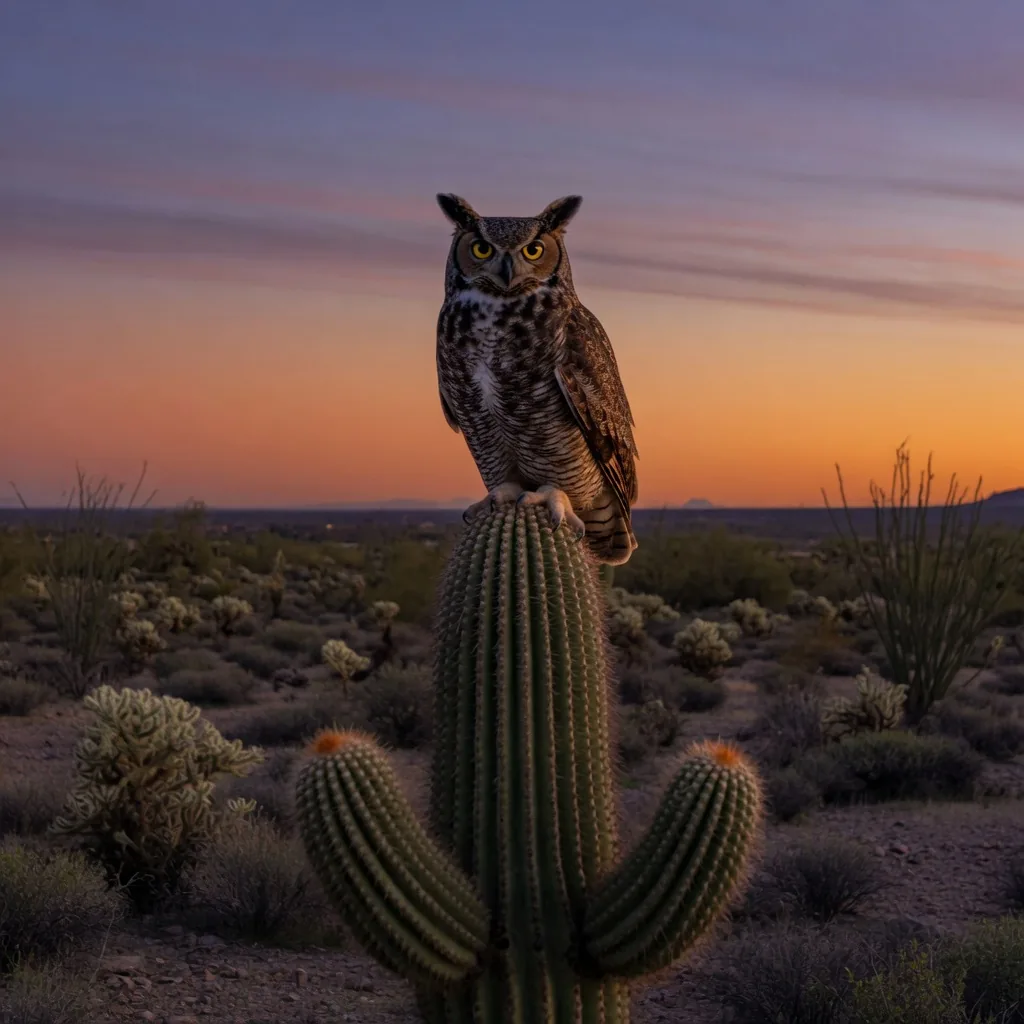
The Great Horned Owl (Bubo virginianus) is one of North America's most widespread owls. It stands approximately 18 to 27 inches tall, with a wingspan of 40 to 60 inches. Females are larger than males. This owl can weigh up to 3 lbs and lives for about 5 to 15 years.
Like the mountain lion, this owl is nocturnal, it hunts at night using its powerful eyesight to spot prey in near-darkness. When it locks onto a target, it swoops down and snatches it up with strong claws. Incredibly, it can lift animals heavier than itself. Its prey includes rabbits, raccoons, squirrels, and even other owls.
The Great Horned Owl also has a remarkable digestive system. It swallows prey whole, then spits out the bones and fur as a compact pellet. The species is widespread and listed as least vulnerable by the IUCN.
Take the Arizona Animals Quiz!
8 quick questions. Find out how much you know about Arizona's toughest survivors and wildest residents.
American Golden Eagle
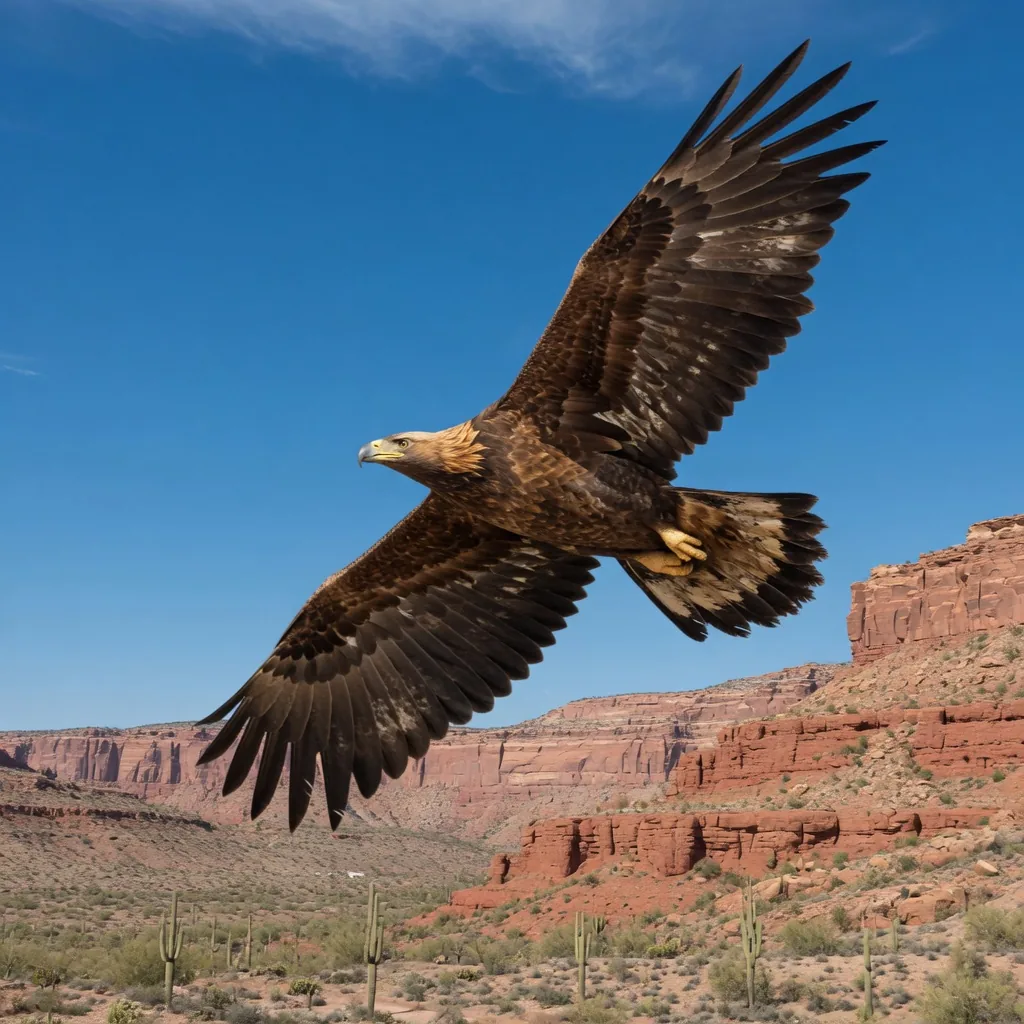
The American Golden Eagle (Aquila chrysaetos canadensis) is a large bird of prey found in the Arizona Desert. It belongs to the Accipitridae family. This eagle can grow to 3 ft in length, weigh around 9 to 12 lbs, and has a massive wingspan of 7 ft.
Those huge wings are built for soaring. The eagle rides rising columns of warm desert air (called thermals) to climb high into the sky without even flapping. Once it spots prey far below, it tucks its wings in and dives at incredible speed. It hunts prairie dogs, cottontail rabbits, reptiles, and even small birds mid-flight. Like the wolf, it will also eat carrion when live prey is scarce.
The Golden Eagle nests in the crevices of high cliffs, where it can keep watch over its territory and young ones. It actively defends its space by swooping at any intruder that comes too close.
Western Diamondback Rattlesnake
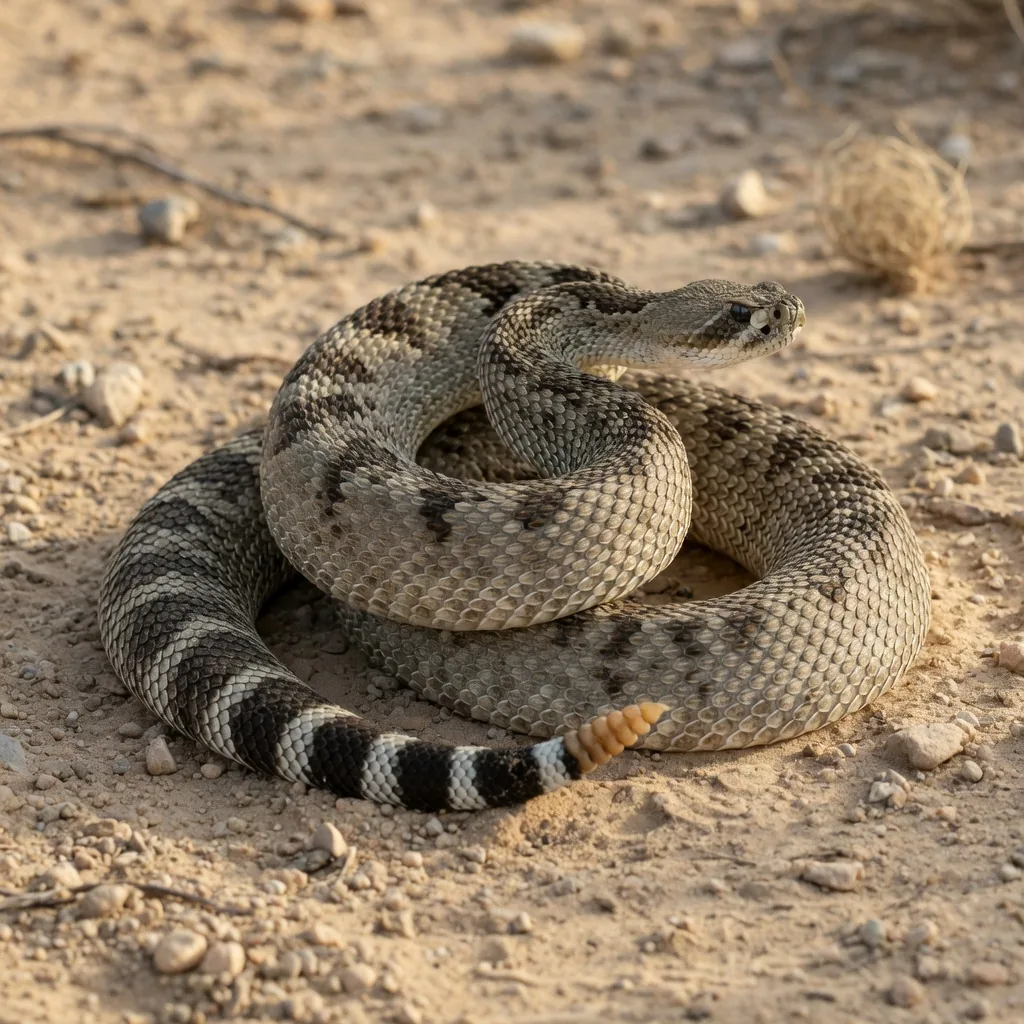
The western diamondback rattlesnake (Crotalus atrox) is a venomous snake native to the United States and Mexico. You might also hear it called the Arizona diamond rattlesnake or desert diamondback. It is responsible for a majority of snakebite deaths in Mexico every year, a reminder to always watch your step in the desert.
On average, it grows up to 4 ft long, though some individuals reaching 5 ft have been reported. Its body is grayish brown with around 20 to 25 irregular diamond-shaped spots, which helps it blend into the dusty desert floor. It is an ambush predator: it hides in the sand at dawn or at night, completely still, and waits. When prey comes within range, it strikes fast and injects its deadly venom.
Its menu includes prairie dogs, rats, whiptail lizards, Texas banded geckos, birds, and even small snakes.
Beyond the Desert: Arizona's Wider Wildlife
The desert is only part of the story. Climb up into Arizona's cooler pine forests and mountains and you'll meet a whole different cast of animals, giant elk, shy black bears, and clever coyotes. Here are some of the state's most impressive land mammals.
Arizona Elk
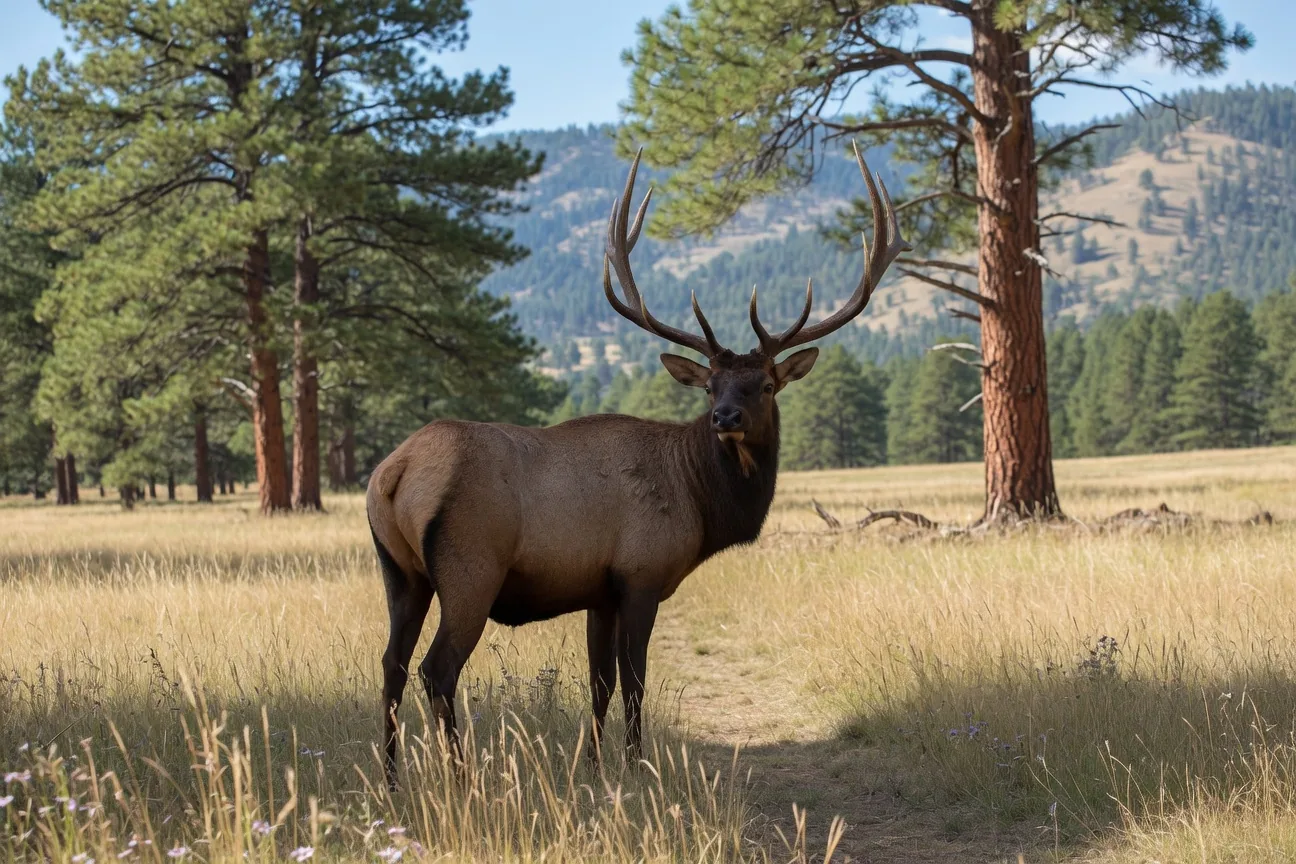
Arizona elk are the second-largest animals in the deer family. Male elk, called bulls, weigh between 600 and 800 pounds. Female elk, called cows, weigh around 450-600 lbs.
These big animals are surprisingly fast. They can reach a top speed of 40 miles per hour. They can also run long distances at a steady speed of 30 miles per hour. Elk can swim too, and they can jump up to a height of 10 feet.
Elk eat foliage and grasses. Their main predators are coyotes and mountain lions. Adult elk shed their antlers between January and March. Younger elk shed theirs a bit later, between March and May. Elk live for around 14-16 years.
Arizona elk prefer forested land at high altitudes, usually between 7,000 and 10,000 feet. In winter, they move down to lower, warmer areas. You can spot them most often in the Mogollon Rim, the White Mountains, and the Kaibab forest. Towns like Payson, Williams, Flagstaff, Overgaard, Heber, and Pinetop Lakeside are all near good elk habitat.
Black Bear
The black bear is the only bear species found in Arizona. Male black bears weigh between 115 and 600 lbs, and females weigh between 90 and 400 lbs. They can grow up to 7 feet in length.
Black bears are shy animals. They usually live alone, the only group you'll see is a mother with her cubs. They eat mostly berries, roots, cactus fruit, and insects. Sometimes they also hunt livestock animals.
Black bears hibernate (deep winter sleep) from November through March. Females start having cubs at around age 4. Newborn cubs weigh less than 1 pound, and they are usually born in pairs.
Black bears can live in both forests and desert regions. Their home range can stretch from 5 to 50 square miles. In Arizona, they are most often seen in the Mogollon Rim, the White Mountains, and areas near Phoenix.
Coyotes
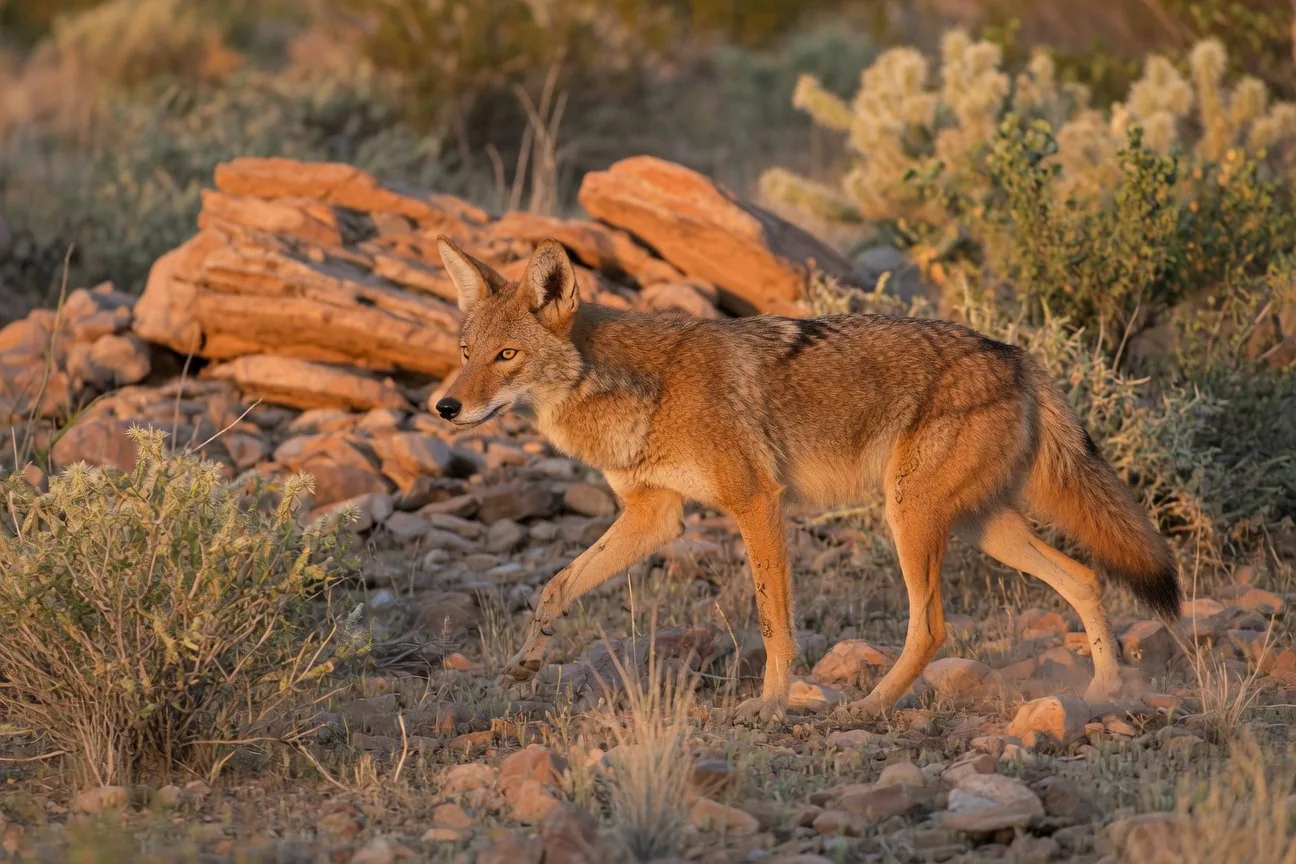
Coyotes look a bit like dogs, but they are wild animals. They are smaller than wolves and larger than most dogs. Coyotes can grow up to 40 inches tall and weigh an average of 50 lbs. They are fast runners, reaching speeds of 40 miles per hour.
Coyotes live in groups and hunt mostly at night. They patrol a territory of about 15 miles across, with their den near the center. Their main food is rabbits, voles, squirrels, and mice, but they will also eat birds, snakes, lizards, and even deer.
Coyote pregnancies last about 60 days, and litter sizes can range from 1 to 19 pups. Coyotes are at home in many different habitats, from mountain forests to open desert.
Venomous Animals of Arizona
Arizona has many venomous animals. They can be split into two groups: vertebrates (animals with a backbone) and invertebrates (animals without one).
Vertebrates
Snakes, lizards, and toads are the venomous vertebrates found in Arizona. The rattlesnake is one of the most important Arizona snakes, and one of the most venomous snakes in the USA. The coral snake is smaller and its venom is milder, so it is not considered a serious danger to people. The rear-fanged snake is also small and produces only mild venom.
Toads have poisonous glands behind their eyes and on top of their heads. These glands produce a neurotoxic (nerve-affecting) venom called bufotenine. The Gila monster lizard also produces venom, which it uses for defense and to help with digestion.
Invertebrates
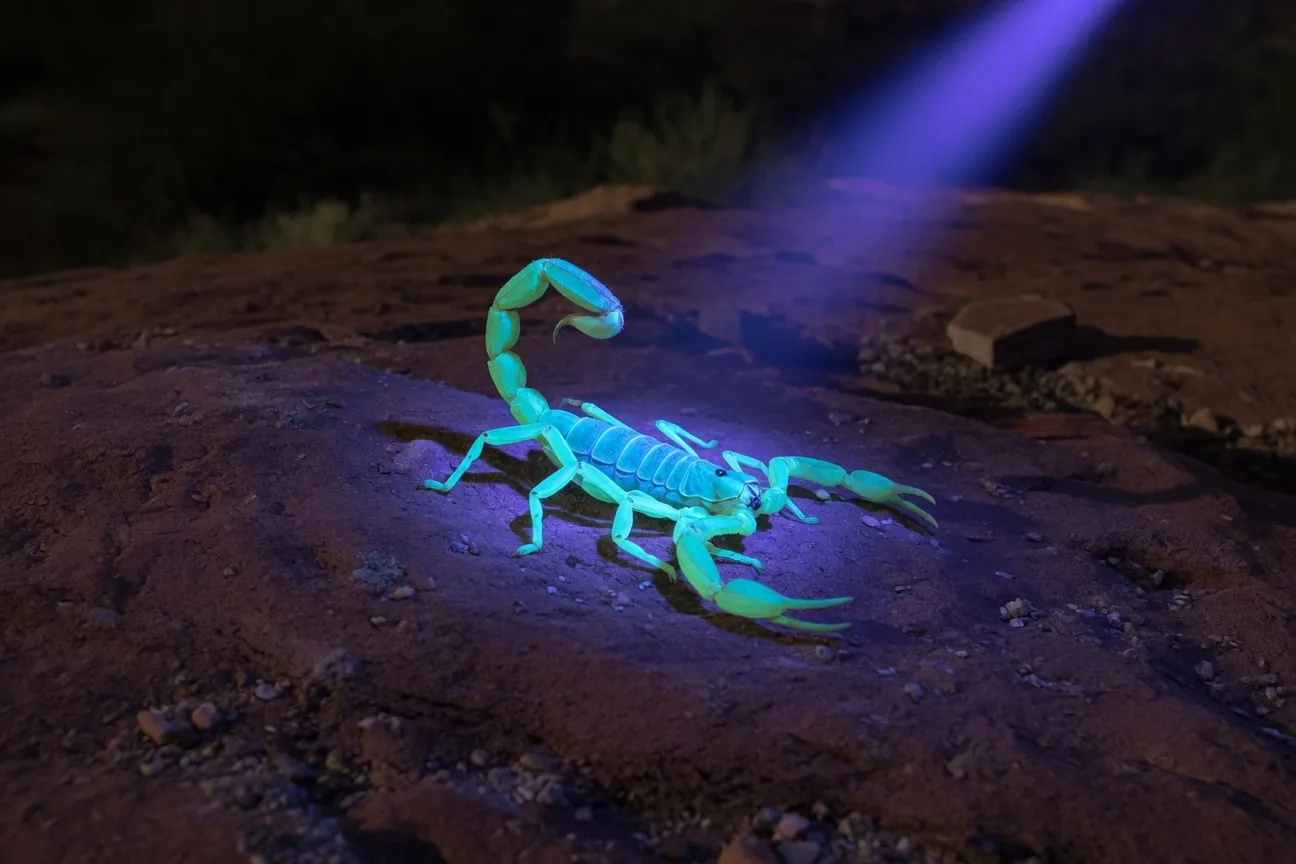
Arizona is famous for its scorpions. There are 56 scorpion species in the state. The bark scorpion (Centruroides exilicauda) is the most venomous scorpion in the entire USA.
Spiders are also venomous, they use their venom to catch other invertebrates for food. Bees use venom to defend themselves and protect their hive. Other venomous invertebrates found in Arizona include ants, wasps, blister beetles, conenose bugs, centipedes, and caterpillars.
Endangered Animals of Arizona
Here is a list of animals from Arizona that are on the verge of extinction.
| Animal | Animal |
|---|---|
| Jaguar | Grizzly Bear |
| Lesser Long-Nosed Bat | Kanab Ambersnail |
| Yaqui Catfish | Gila Chub |
| Eskimo Curlew | California Condor |
| Black-Footed Ferret | Northern Aplomado Falcon |
| Chiricahua Leopard Frog | Southwestern Willow Flycatcher |
| Loach Minnow | Sinaloan Jaguarundi |
| Sonoran Pronghorn | Mexican Spotted Owl |
| Ocelot | Yuma Clapper Rail |
| Desert Pupfish | Sonora Tiger Salamander |
| Spikedace | Beautiful Shiner |
| Mount Graham Red Squirrel | Little Colorado Spinedace |
| Razorback Sucker | Apache Trout |
| Gila Topminnow | Gray Wolf |
The different animals found in Arizona give us an idea of the diverse fauna of this state. There are a few Arizona animal species which have become endangered. It is very important to protect the remaining species from becoming extinct.
It's amazing to think that life not only exists but thrives in a place where humans could barely survive for a day. Without their incredible ability to adapt, none of these animals would make it through the brutal heat of the Arizona desert.
Explore More Animals
 Sonoran Desert AnimalsThe Sonoran Desert is North America's hottest desert, and one of its most wildlife-rich. Explore the full animals list, surprising adaptations, and a 5-questio
 A Complete List of Desert Animals (With Pictures)Meet the hardy animals that survive the world's hot and cold deserts: camels, fennec foxes, meerkats, rattlesnakes, polar bears and dozens more, plus a close-up
 Animals of the Gobi DesertGobi Desert is home to some of the most fascinating animals on Earth. Discover the Bactrian camel, Gobi bear, snow leopard, jerboa, and more, plus how they sur
 Adaptations in Desert AnimalsHigh temperatures and scarcity of water makes sustenance very difficult in the desert. Adaptations help desert animals to acquire and retain water, and to regul

 Fun fact for today!The Sonoran Desert covers 120,000 square miles, bigger than the entire state of Arizona!