

Who Are the Banana Spiders?
Golden silk orb-weavers are the spiders most people call banana spiders. You might also hear them called heather banana spiders or giant wood spiders.
Brazilian Wandering Spiders share the "banana spider" nickname too, they live in banana plantations and sometimes hitch a ride to other countries inside bunches of bananas. The Hawaiian Garden Spider, Argiope appensa, also gets this name. But the golden silk orb-weaver is the true banana spider. Read on for some fascinating facts about these creatures.
Classification
- Kingdom, Animalia
- Phylum, Arthropoda
- Class, Arachnida
- Order, Araneae
- Family, Nephilidae
- Genus, Nephila
The name Nephila comes from Ancient Greek. Nen means "to spin" and philos means "love", so Nephila literally means "love to spin."
Appearance
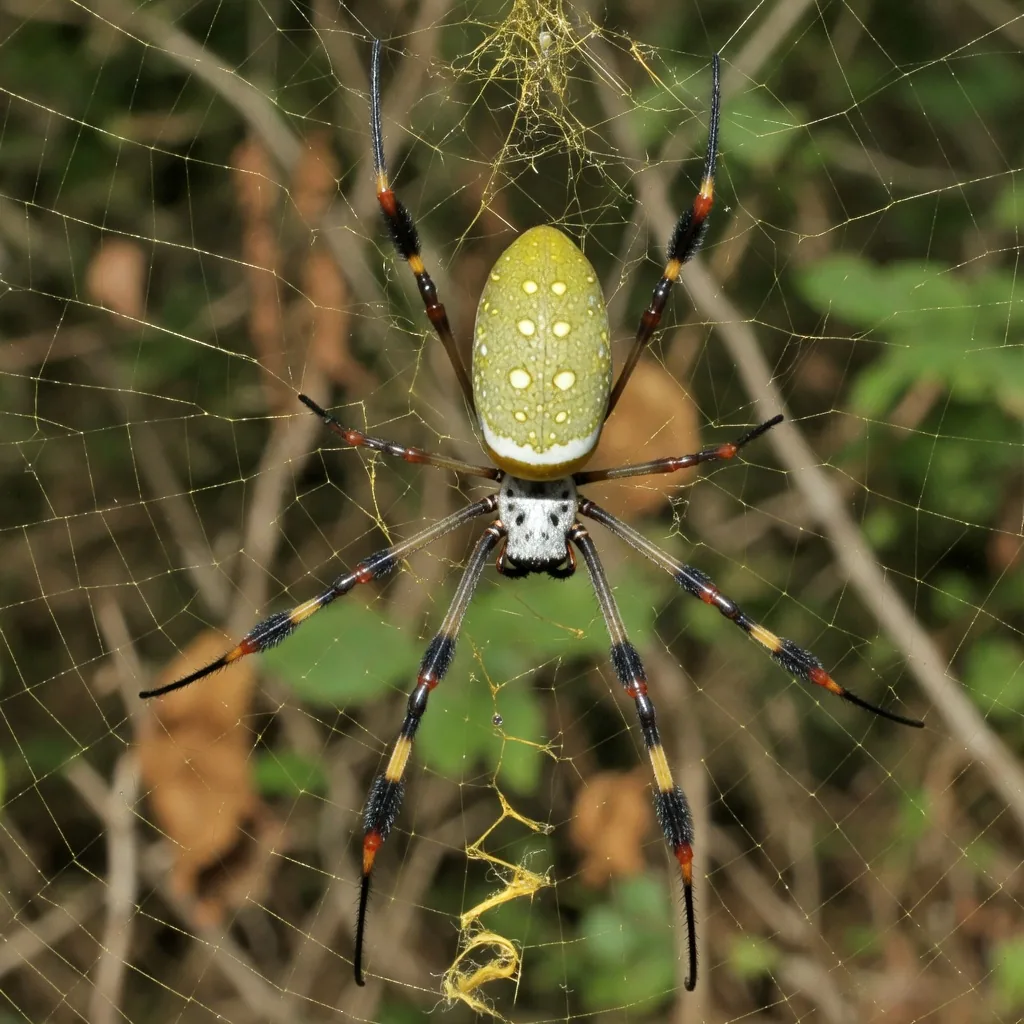
A banana spider's body can range from yellowish-green to reddish-brown. Their legs are long and striped, and they have white patches on their abdomen.
Females are much bigger than males. A female's body (not counting the legs) is about 1.5 to 2 inches long, while a male is no more than an inch long. The leg span of these spiders can be as big as 5 inches.
Both males and females have black tufts of hair on the first and last pairs of legs. The female is not only larger than the male, but also much more colorful. That vivid coloring helps scare away predators. From time to time, banana spiders molt, they shed their outer skin so they can grow.
Habitat and Distribution
In the US, banana spiders are most common in the coastal southeast and inland areas, from North Carolina to Texas, and throughout Florida. You can also find them in Asia, Africa, and Australia.
They love warm climates. Their favorite spots include coastal areas, swamps, open fields, and forest edges. They are also often spotted on fences and under building overhangs.
Reproduction and Diet
The male courts the female by staying on her web and performing mating rituals. One ritual involves the male gently stroking the female's leg. There can be more than one male on the web at a time. If the female becomes unhappy, she can kill the male and eat him.
A female banana spider has 2 insemination ducts, each ending in a sperm storage organ. The male has 3 penises, all of which break off during mating. Mating usually happens just after a female has molted. A dominant male will stay close to the female before she molts, then mate with her right after. Once the eggs are laid, the female dies within a month. That means the baby spiderlings are on their own as soon as they hatch.
Banana spiders eat small insects like flies, butterflies, mosquitoes, locusts, and grasshoppers. Some species can even catch small birds and snakes. Their diet changes depending on what food is available, and also with the season. To find out more, see our article on what do spiders eat.
Take the Banana Spider Quiz!
5 quick questions. How well do you know the golden silk orb-weaver?
Webs
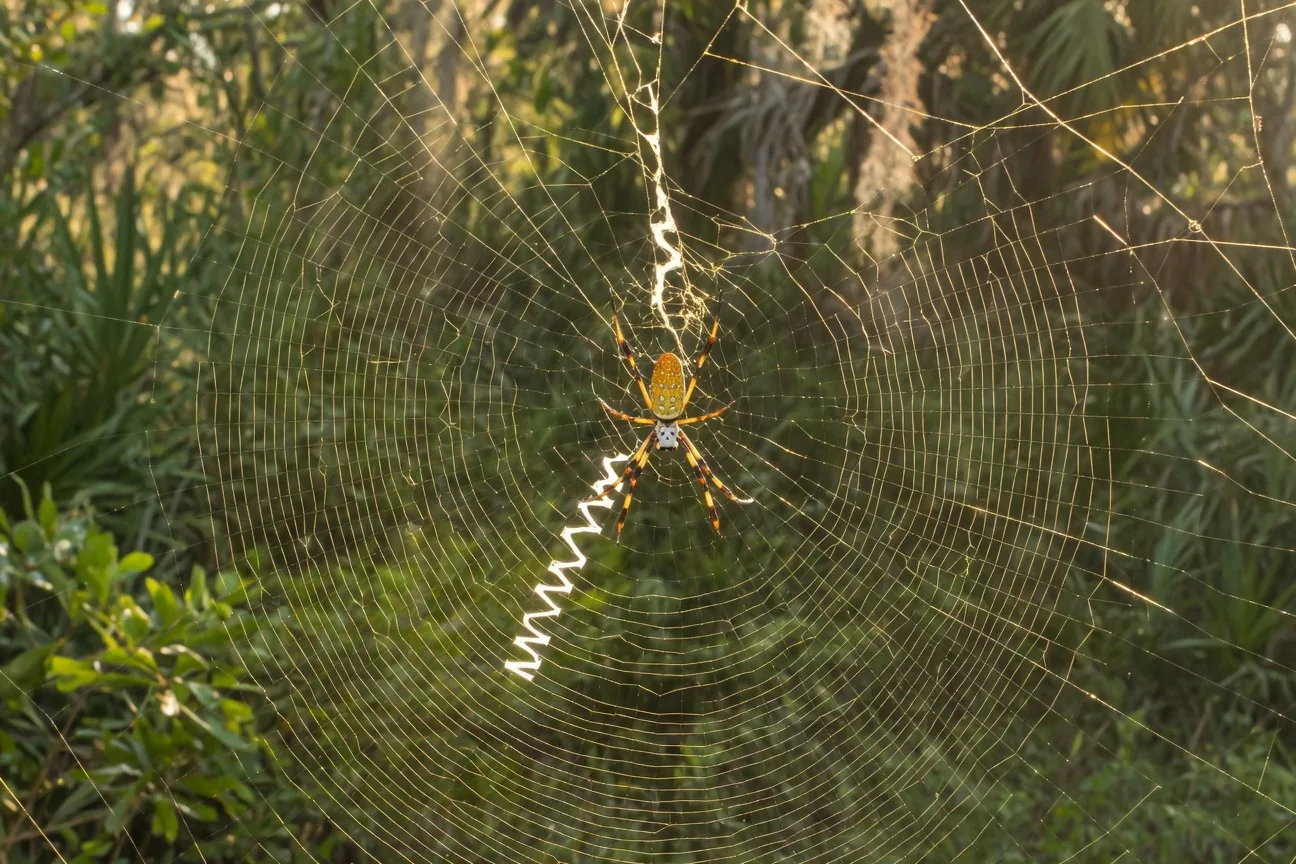
Banana spiders are famous for the impressive webs they weave. The silk threads shine bright gold in sunlight, which helps lure flying insects straight into the trap. Young spiders don't start weaving the golden web right away, they work up to it.
The webs are surprisingly complex. At the center is a round spiral orb, held in place by a maze of non-sticky barrier webs all around it. The sticky orb slowly loses its stickiness over time, so the spider rebuilds it regularly. The old silk it removes? The spider often eats it to recycle the protein.
Spider Bite and Treatment
Banana spider venom is mildly poisonous, and they don't produce large amounts of it. Their bites are not lethal to humans.
A bite can cause blistering, some intense pain, and maybe nausea or dizziness. In most cases, no medical attention is needed. The pain usually fades within a day. However, if a person has trouble breathing or muscle spasms, those can be signs of an infection setting in, and that does need a doctor.
Frequently Asked Questions
Are banana spiders dangerous to humans?
Banana spider venom is mildly poisonous but not lethal to healthy humans. A bite causes blistering and some pain, possibly nausea or dizziness, but usually subsides in a day without medical treatment.
Why is the banana spider's web golden?
The silk produced by golden silk orb-weavers is naturally yellow-gold. In sunlight the web threads shine brilliantly, which helps attract insect prey.
What does Nephila mean?
Nephila is derived from Ancient Greek, 'nen' means to spin and 'philos' means love. So Nephila literally means 'love to spin'.
Where do banana spiders live in the USA?
In the US, banana spiders are most common in the coastal southeast, from North Carolina to Florida and across to Texas. They prefer warm, humid climates, coastal areas, swamps, and forest edges.
How old is the Nephila fossil record?
A recently discovered fossil of the Nephila genus was found to be approximately 165 million years old, making Nephila the longest surviving spider genus in the fossil record.
For a comparison with truly dangerous species, see our article on the world's most poisonous spiders.
Golden Silk Garment Production
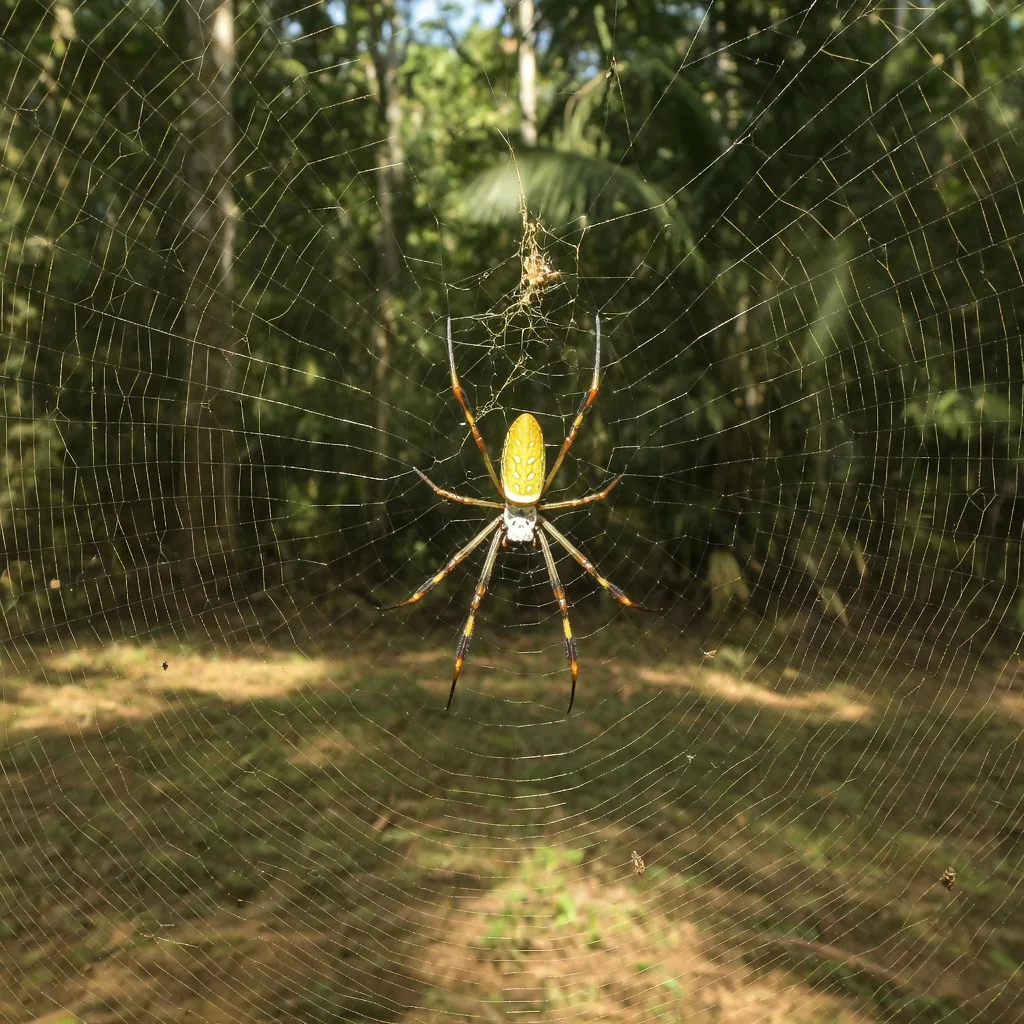
People have tried to make clothing from Nephila silk for centuries, but it has never been possible to do commercially, because the spiders can't be farmed like silkworms. Still, a handful of extraordinary garments have been made.
Two silk bed hangings were exhibited at the Exposition Universelle of 1900 in Paris.
In 2009, the American Museum of Natural History displayed a shawl made from the silk of 1.2 million golden orb-weavers. It was created by textile designer Simon Peers and entrepreneur Nicholas Godley.
The same team later made an even bigger piece (a golden cape) which was shown at the Victoria and Albert Museum in London in 2012.
Other Amusing Facts
- Webs are usually several feet long, and are at eye level.
- The female banana spider is the largest non-tarantula spider species in North America.
- The webs have a unique and complex zigzag pattern.
- A fossil of this genus, that was recently discovered, was found to be about 165 million years old. Hence, Nephila is the longest surviving spider genus.
- These spiders build small webs around the main one as barriers to prevent it from getting destroyed by birds getting caught in it.
- The golden silk orb-weaver makes the strongest and biggest web among all spider species.
- The female lays her eggs in a silk sac and hides them in curled leaves, leaving them away from the web.
Banana spiders are helpful to the environment. By eating pests like fruit flies, they help keep insect populations under control. So if you find one near your home, there's no need to kill it, just knock down the web with a stick or broom, and the spider will move on and build a new one elsewhere.
Explore More Animals
 An Exceptionally Brilliant Guide to Identifying SpidersOther than the 40,000 odd spiders on the planet, there exist thousands of arachnids which are often confused for spiders. Being well-versed with spider traits m
 Gripping Facts About the Largest Spiders in the WorldTwo spiders share the title of world's largest: the Goliath birdeater (heaviest) and the giant huntsman (longest leg span). Discover the facts, quiz, and more.
 Unexpectedly Shocking Facts About Black Widow SpidersThe black widow spider is considered the most venomous spider in North America. Discover how to identify them, where they live, how they hunt, and what to do if
 20 Species of Spiders Found in GeorgiaMeet the 20 spider species found in Georgia, from fishing spiders that walk on water to venomous black widows. Explore their habits, sizes, and habitats, plus

 Fun fact for today!Banana spiders have been observed to have a great fear of cockroaches!