

Widow spiders belong to the Latrodectus genus. There are 31 species of widow spiders living all over the world. The best known of these (and the most infamous) are the black widow spiders found in North America. Black widows are famous for their powerful neurotoxic venom. The good news is that a spider can only inject a tiny amount with each bite.
North American Black Widow Spiders
There are three types of black widows that occur in North America.
- Latrodectus mactans, The southern black widow. It lives in the southeastern United States, from New York down to Florida and west across Oklahoma and Texas. L. mactans is often called the "original" black widow.
- Latrodectus variiolus, The northern black widow. It is found in the northeastern United States and the southeastern parts of Canada.
- Latrodectus hesperus, The western black widow. It lives in western North America, including most of Mexico and the southwestern parts of Canada.
It is common for these three species to overlap in the same areas. All of them share many characteristics and are considered to be the most venomous spiders in North America. The venom of the black widow spider is 15 times more potent than rattlesnake venom.
Identifying Black Widow Spiders
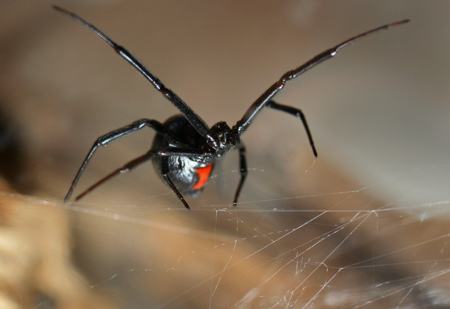
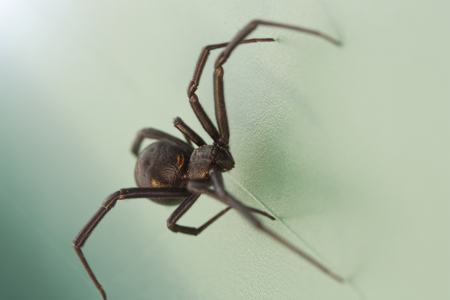
The most distinctive mark on a black widow is the two triangular shapes on its belly, together they form a red hourglass. Because of this, the spider is also called the Hourglass Spider. The marking is usually red, but can sometimes be orange or yellow.
The female's abdomen is round, about half an inch long, and jet-black, giving rise to another nickname: the Shoe Button Spider. With her legs spread out, the female measures about 1.5 inches across.
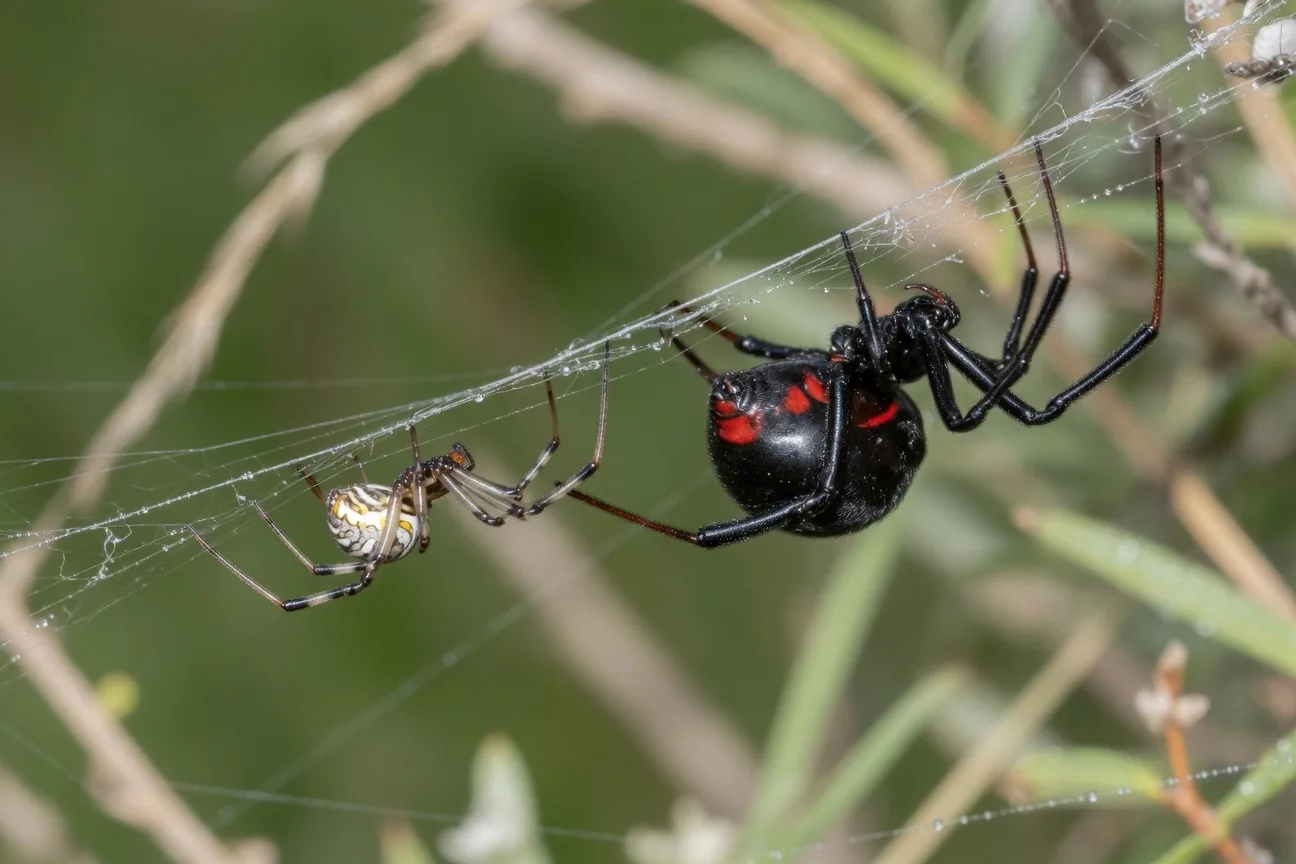
The male black widow is about half the size of the female. He has a smaller body, longer legs, white lines along his sides, and red spots along his upper midline. The female's fangs are small but sharp enough to pierce skin and deliver venom. The male's fangs are even smaller and carry less venom, they are not considered dangerous to humans.
Habitat
Black widows prefer quiet, undisturbed spots. Outside, they build webs in woodpiles, rubble heaps, inside rodent burrows, hollow tree stumps, and under rocks. Indoors, they favor cluttered basements, crawl spaces, storage sheds, and garages. Once a black widow has built its web, it tends to stay in the same spot. The web itself is tough and irregularly shaped, with a chaotic crisscross pattern.
Feeding Habits
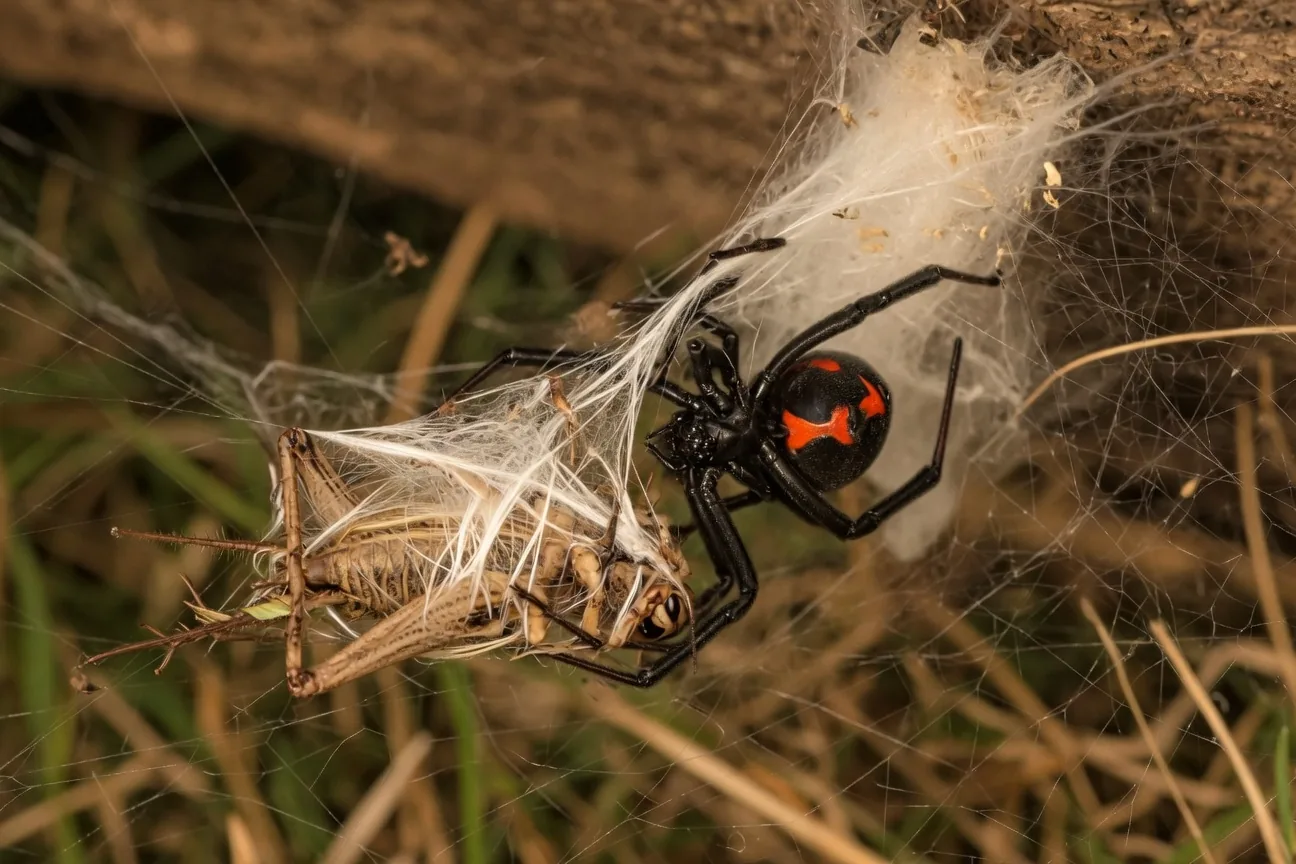
During the day, the black widow hides in a covered section of its web. At night it hangs motionless at the center, belly-up, waiting for prey. Black widows eat a variety of insects: beetles, roaches, wood lice, crickets, millipedes, centipedes, and even other spiders.
When prey gets caught in the web, the black widow rushes out, wraps it in silk, and bites it to inject venom. Once the prey stops moving, the spider uses its cheliceral teeth to chew the wound, pumps in digestive enzymes, and carries the meal back to its hiding spot. Here is the fascinating part: digestion happens outside the spider's body. The spider simply sucks up the liquefied prey.
Take the Black Widow Spider Quiz!
5 quick questions, find out how much you really know about these infamous spiders.
Reproduction
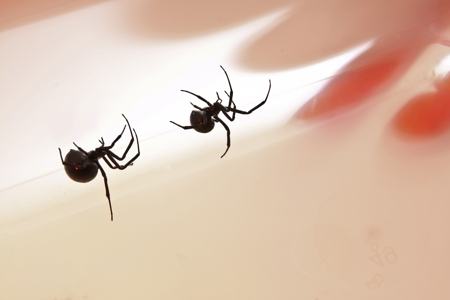
Black widow reproduction is fascinating. The male first spins a small "sperm web" and deposits semen onto it. He then coats his palps with sperm and goes looking for a female. When he finds one, he begins courtship by vibrating her web, this is his way of introducing himself and encouraging her to accept him as a mate.
Mating happens when the male inserts his palps into the female's reproductive openings, releasing sperm onto her eggs. The female then lays her eggs into a small silk web, wrapping them with more silk until she has made a round cocoon roughly ⅓, ½ inch in diameter. She camouflages and guards the sac, or carries it on her back. The eggs hatch inside the cocoon, and the tiny spiderlings crawl out.
The popular idea that the female always eats the male after mating is not always true. This behavior has been observed in some species, but males can escape, especially if the female has recently eaten or if the male leaves quickly after mating.
Black Widow Spider and Humans
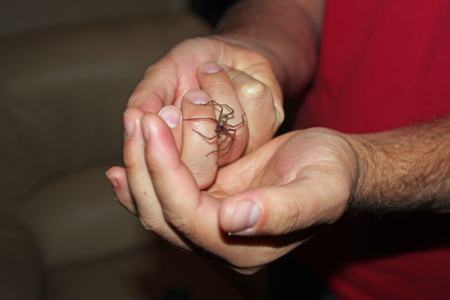
Almost all black widow species have venom glands, which they use to subdue prey. Most spiders don't produce enough venom to seriously harm a person. Black widows are also naturally shy, when a human comes near, their first instinct is to run. They only bite people when they feel trapped or when they are protecting their eggs.
Finding a black widow in your home is not something you want. They tend to hide in places that don't get cleaned often, like basements and attics. What makes them particularly dangerous is their venom: it is exceptionally powerful.
Black widow venom is neurotoxic, it attacks the nervous system. When a black widow bites, it releases a chemical called acetylcholine. This chemical overstimulates the muscles, causing prolonged, severe cramping in the area around the bite.
Frequently Asked Questions
What makes a black widow spider so venomous?
Its venom is neurotoxic, it attacks nerve cells, releasing acetylcholine and causing severe muscle contractions. The venom is 15 times more potent than rattlesnake venom, though the spider can only inject a small amount.
How can you identify a black widow spider?
Look for the distinctive red hourglass marking on the underside of the jet-black, spherical abdomen. The female is about 1.5 inches across with her legs spread.
Are black widows dangerous to humans?
A bite can cause severe muscle pain and contractions, but only 1% of bites are fatal if prompt medical attention is sought.
Do female black widows always eat the male?
Not always. This behavior has been observed in some species, but the male may escape, especially if the female has been well fed or if the male leaves quickly after mating.
What do black widow spiders eat?
Black widows feed on a variety of insects including beetles, roaches, wood lice, crickets, millipedes, centipedes, and other spiders.
How to Control Black Widow Spiders
To keep your home spider-free, make it a less welcoming place for black widows. Clean thoroughly at least twice a week and let daylight into every room. Keep things well-aired and clutter-free. Because black widows are nocturnal, you may need to check with a flashlight at night to find them. Other helpful steps include installing door screens, vacuuming regularly, and using insecticides carefully. When working outdoors near woodpiles or storage areas, wear long-sleeved shirts and gloves, and always shake out shoes and clothing before putting them on.
How to Avoid and/or Tend to Black Widow Spider Bites
Even with the best precautions, no home is 100% spider-proof, you may still find a black widow inside. If one bites you, apply an ice pack to the area, try to collect the spider for identification, and get medical attention right away. Most people recover fully with prompt treatment. Only 1% of bites are fatal.
Like every species on Earth, the black widow has its rightful place in nature. With a little knowledge, you can identify these spiders and remove them safely, mostly by keeping your home tidy and clutter-free.
Explore More Animals
 An Exceptionally Brilliant Guide to Identifying SpidersOther than the 40,000 odd spiders on the planet, there exist thousands of arachnids which are often confused for spiders. Being well-versed with spider traits m
 Tiny But Deadly: The World's Most Poisonous SpidersAlmost all spiders possess venom, but only a few can seriously harm humans. Meet the Brazilian Wandering Spider, Sydney Funnel-web, Black Widow, Brown Recluse,
 Startling Facts About Daddy Long-legs SpidersDaddy long-legs spiders are characterized by exceptionally long legs, in proportion to their tiny bodies. They are among the most widely found spiders in any ho
 Extremely Rare and Unique Desert Insects You Didn't Know ExistedThe silent surroundings of the desert may give us a feeling that no living thing exists there, but there are various kinds of insects living in the desert that

 Fun fact for today!Black widow venom is 15 times more potent than rattlesnake venom, yet bites are rarely fatal!