

Blowfish is one of the common names for marine and estuarine fish that belong to the family Tetraodontidae. This family has 19 genera, which contain around 120 species of fish. These fish go by many names: puffer fish, balloon fish, bubble fish, globe fish, swell fish, toad fish, toadies, and honey toads. All these names hint at their amazing defense trick, inflating themselves like a ball to scare predators away. Another striking fact about blowfish is that they are highly poisonous. Read on for a close look at these incredible fish.
The puffer fish is one of the most interesting and unusual species of fish, with several unique characteristics to its credit. When it feels threatened, it puffs up to double its size by swallowing water or air. The puffer fish is widely known for its ability to inflate itself, but it is important to understand that this is an adaptation which compensates for its inability to swim fast. Some puffer fish species also have tiny spines which only become visible when they inflate themselves.
Blowfish Looks
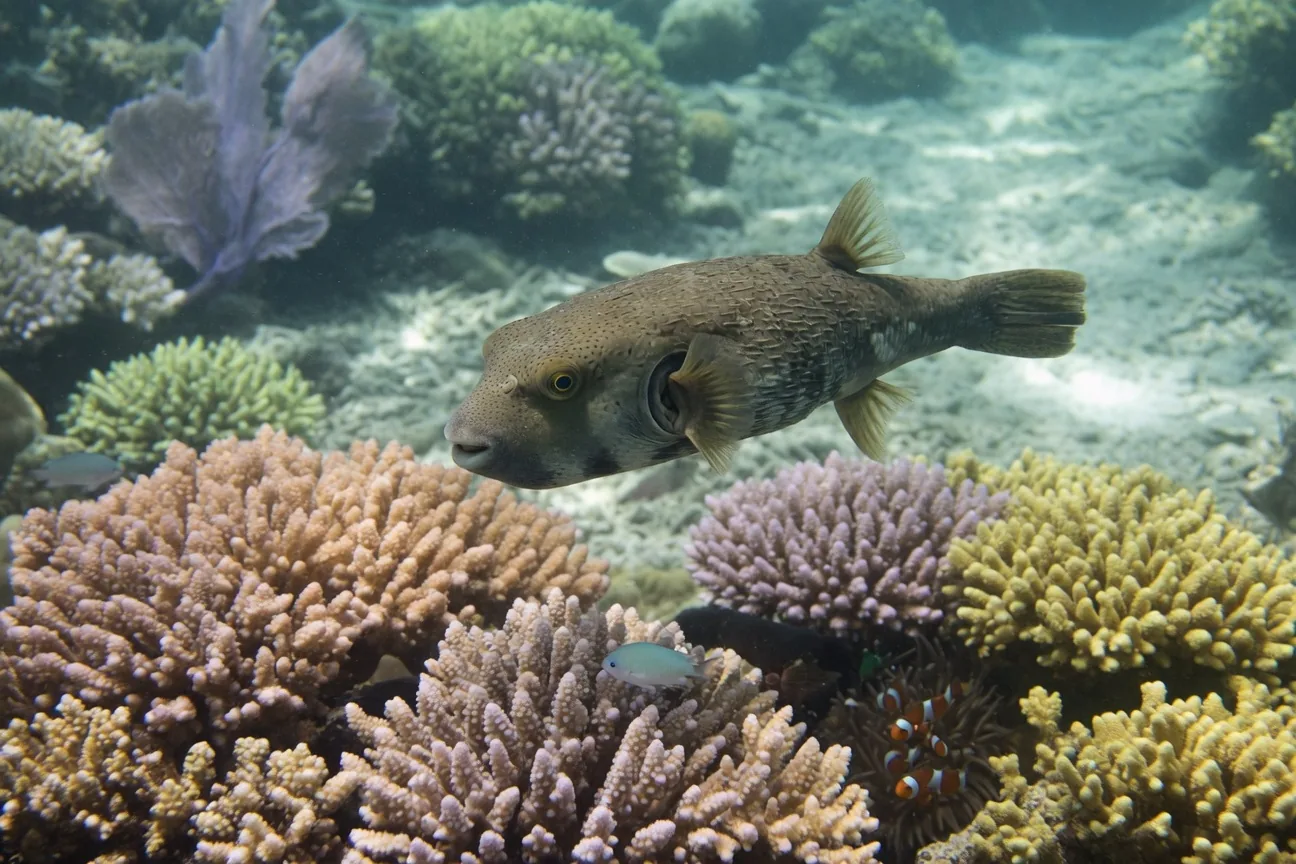
The puffed-up look blowfish are famous for is not something they show all the time. It only appears when the fish feels threatened. In everyday life, a blowfish actually looks a bit like a large tadpole. It has big, bulging eyes that can each move on their own. The body is tube-shaped with a long snout and small fins. The round, plump body is one of the puffer fish's main distinguishing features. The skin is leathery and elastic. It is thick, with tiny spines instead of scales. These spines are set deeply into the pores. As long as the fish is not alarmed, the spines are not visible.
Blowfish have a unique beak-like jaw formed from fused teeth. Tetraodontidae, their scientific name, refers to four large teeth that are fused together to form a lower and an upper plate. This strong beak is used to crunch through the shells of mollusks and other hard-shelled prey. The size of blowfish varies a lot between species. The dwarf puffer fish (the smallest) has a body length of around 2.5 centimeters. Larger species grow to around 60 centimeters long. Some individuals reach around a meter in length. Most blowfish are found in shades of gray, brown, yellow, blue, and white.
Size & Body
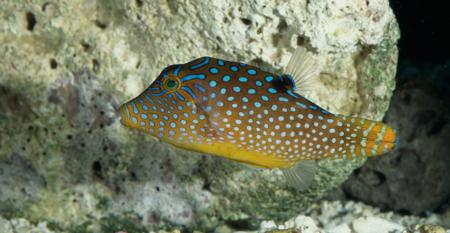
Most puffer fish species are 3 to 20 inches in size, though some can grow up to 3 feet in length. The puffer fish has a very ancient lineage. It is thought that it once looked like the sunfish. Over time, it evolved to look more like fish from the perch family, particularly the surgeonfish, which are said to be the puffer's ancestors.
This fish has a single dorsal fin, located directly opposite its anal fin. It uses these two fins to actively move around, since it has no pelvic fins. The moment it spots a predator, it immediately inflates itself, making the spines stand erect.
How Many Are There?
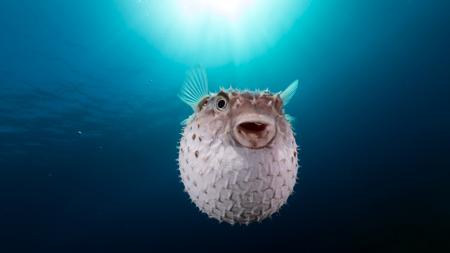
There are somewhere more than 120 species of puffer fish. Most of them live in the tropical and sub-tropical regions of the world. The coral reefs in the Indian, Pacific, and Atlantic Oceans are home to several species, but they are seldom found in cold waters. Even though they generally dwell in coastal areas, some can be found in open oceans and deep seas too.
They are also found in freshwater sources and brackish waters. Around 39 species that live in marine waters will swim into fresh or brackish waters for breeding or feeding. Similarly, around 25 species live entirely in freshwater without ever entering the sea.
Habitat and Diet
Blowfish are mainly found in the warm coastal waters of the Pacific, Indian, and Atlantic Oceans. They love hiding among coral reefs and rocks. Some species live in estuaries, where rivers meet the sea. Others spend their whole lives in fresh water.
Blowfish eat mollusks, coral, sponges, and echinoderms. They use their specialized fused teeth to crush the shells of mollusks and crustaceans, which are their natural sources of food. They also munch on algae that grows on rocks and coral. Scientists believe the deadly toxin inside blowfish comes from certain bacteria found in the things they eat.
Defense Mechanisms
Tail Fin Movement: Blowfish are slow swimmers, which makes them an easy target for predators. They normally use their pectoral, dorsal, anal, and caudal fins to get around. When a predator shows up, they switch to their tail fin to sprint away. Their excellent eyesight also helps them spot danger early.
Stomach Inflation: This is the most famous trick blowfish have, and the one that gave them their name. If a fast escape doesn't work and the predator keeps following, the blowfish inflates. It gulps down huge amounts of water (or air) to blow up its stomach. The stomach is extremely elastic and expands in a matter of seconds.
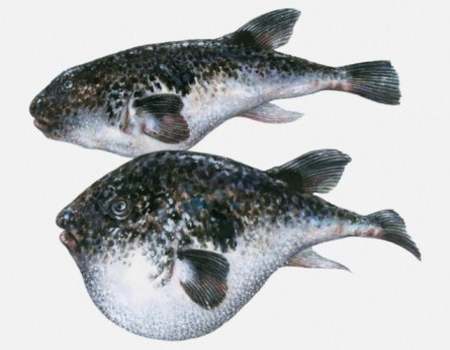
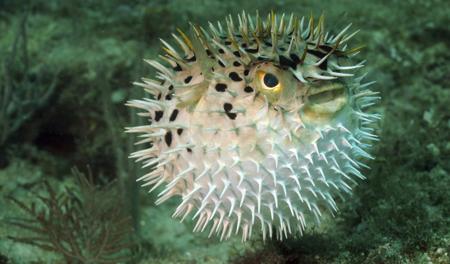
Scary Spines: Some species have spines on their body. These spines are normally hidden, but they stick out when the fish puffs up. A fully inflated, spiky blowfish is very difficult to swallow, and could choke a predator to death. Even so, tiger sharks are known to eat blowfish without any trouble.
Deadly Poison: Blowfish are the second most poisonous vertebrates in the world. Not all species are toxic, but many carry a deadly poison called tetrodotoxin. The poison is not spread evenly through the body. The highest concentration is found in the ovaries and liver. Smaller amounts are present in the intestines, skin, spines, and muscles. This toxin makes blowfish taste terrible and is deadly to predators. The fish can even release the toxins as they die inside a predator's stomach.
Warning Coloration: Blowfish with dark colors and bold markings tend to be more poisonous. This is an example of warning coloration, nature's way of telling other animals "stay away." Blowfish can also change their body color in response to changes in their surroundings.
How Inflation Really Works
Once the body of the puffer fish is fully bloated, predators can neither grip it nor bite through its skin. Its tough body remains unscathed even after a grown man stands on it. It is more difficult for the fish to expel air than water, so it usually inflates its body with water instead of air. This is because it can expel water more easily, by releasing muscular valves that allow water to be ejected through the gills and mouth.
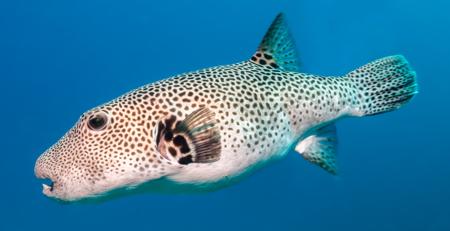
It can inflate its body in just a few seconds by swallowing big gulps of water or air, usually at the water's surface. The puffer fish achieves this because of a sac attached to its intestines. It uses a muscular valve to shut off its esophagus and stomach. Then its specialized gills act like a suction pump to fill up the sac. Since it has no pelvic bones or ribs, it can expand itself to a great extent.
Take the Blowfish & Puffer Fish Quiz!
9 quick questions. Find out how much you know about the ocean's most explosive fish.
Just How Deadly Is the Poison?
The amount of toxin a puffer fish carries is enough to kill 30 adult humans. Surprisingly, tiger sharks are immune to this toxin. Because of that, they can swallow a puffer fish even when it is in its inflated state.
Many parts of the fish (including the skin, ovaries, muscles, and liver) contain a very potent and paralyzing poison called tetrodotoxin. This toxin is around a thousand times more deadly than cyanide. There is no antidote for it. However, some species are not poisonous, like Takifugu oblongus and specially farmed puffer fish.
Frequently Asked Questions
How does a blowfish inflate itself?
It swallows large amounts of water (or air) into a special sac attached to its intestines. It shuts a muscular valve over its esophagus and stomach, then uses its gills like a suction pump to expand in seconds.
How poisonous is a blowfish?
Very. Many carry tetrodotoxin, which is around a thousand times more deadly than cyanide. The toxin in a single puffer fish is enough to kill about 30 adult humans, and there is no antidote.
Is blowfish safe to eat?
Only when prepared by a specially licensed chef who carefully removes the toxic organs. Even so, about a hundred diners die every year after eating it.
What family do blowfish belong to?
Family Tetraodontidae, with about 120 species across 19 genera. The name means four-toothed in Greek.
How big do blowfish get?
From about 2.5 cm (dwarf puffer) to around 60-100 cm for the largest species. Most species are 3 to 20 inches, though some grow up to 3 feet long.
Reproduction
Blowfish eggs are spherical and float on the water's surface. Males sometimes guide females up to the surface for spawning. The eggs take around four to five days to hatch. Baby blowfish (called fry) are tiny, but they already look like miniature adults.
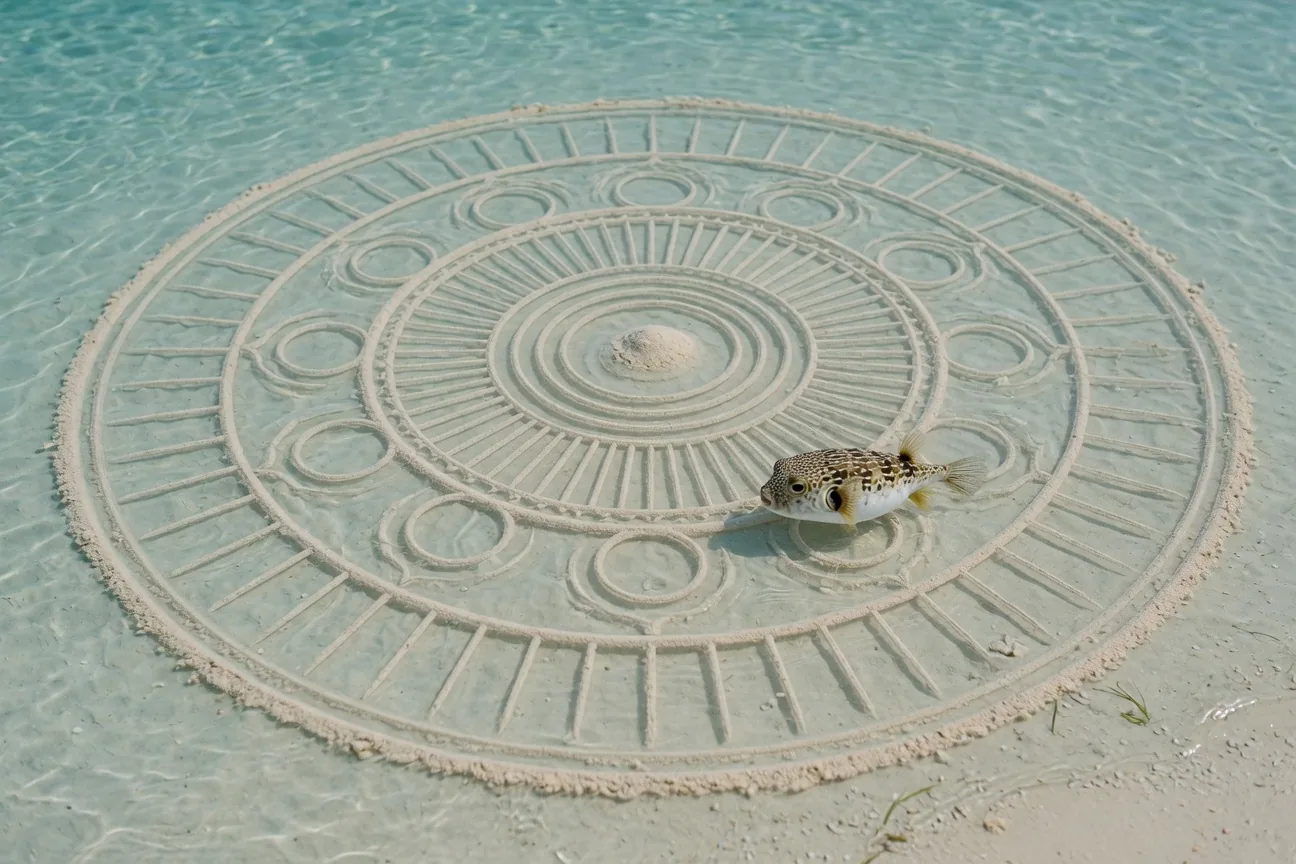
Some freshwater blowfish species have fascinating courtship behavior. Males sometimes court other males as a way to attract females. In some species, males create beautiful circular depressions in the seabed to impress a mate. Once a female is won over, those same sand circles are used as a nest for the eggs.
Explore More Animals
 Unbelievably Fascinating Facts About LionfishVividly striped, armed with venomous spines, and invading the Atlantic, discover where lionfish live, what they eat, the Red, Black, Freshwater and Dwarf speci
 Truly Incredible Facts about CuttlefishThe cuttlefish is not a fish. In fact, it is a mollusk, and is well-known for its chameleon-like behavior. Discover the anatomy, camouflage, ink, diet, mating,
 Interesting Facts About Swordfish You Probably Didn't KnowThe swordfish is one of the ocean's fastest and most powerful hunters. Discover fascinating facts about its sword-like bill, brain heater, incredible speed, and
 Types of JellyfishJellyfish are mysterious ocean creatures, a complete kids' guide to the most popular types, plus how jellyfish live, eat, sting, and survive. From the deadly S
Humans and Blowfish
Some blowfish carry a powerful neurotoxin that is lethal to both predators and humans. Research shows that the toxin is not made by the fish itself. Instead, it comes from a type of bacteria that enters the fish through its food. This is backed up by the fact that blowfish raised in a controlled tank on a different diet can grow up completely non-poisonous.
As a Delicacy: Despite the danger, blowfish are eaten in Japan, China, Korea, and other countries. They are considered a delicacy and are used in dishes like blowfish sushi. In Japan, blowfish are called fugu, and in Korea they are called bogeo. The most popular Japanese dishes include sashimi, chirinabe, Kara-age, and puffer soup. Because the fish is so dangerous, chefs need a special licence to prepare it. The toxic organs must be removed with great care so that no poison gets into the edible parts. Fugu dishes are also very expensive.
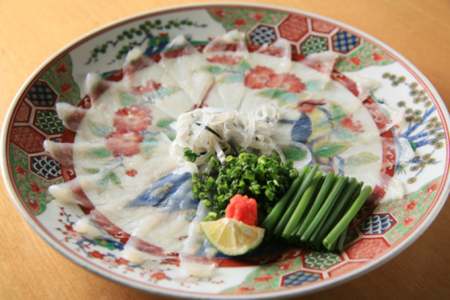
Poisoning: Incorrectly prepared blowfish can make people very sick or worse. Even so, studies show that around 40 types of blowfish are used for human consumption in Japan, and the country eats approximately 10,000 tons of blowfish every year. About a hundred diners die every year after eating this delicacy. The risk depends on the species and the dish. Dishes like sashimi and chiri are most often linked to poisoning cases. Symptoms can include dizziness, vomiting, numbness, tingling, muscle paralysis, a rapid heart rate, nerve damage, and low blood pressure, and in serious cases, coma or death. There is no antidote for tetrodotoxin. Some species cause only mild problems, but others can be truly deadly.
The Puffer Fish as a Pet
Although the puffer fish is poisonous, it is a popular aquarium fish because it becomes quite tame and displays individuality. Do not hand-feed them, as they have very sharp teeth. A few aquarium owners try to get their puffer fish to puff up to show it off to friends, but this causes a lot of stress to the fish and should not be done.
One of the most remarkable fish on the planet, blowfish can even be found in aquariums today. Porcupine fish from the Diodontidae family are also sometimes called blowfish. They have large, clearly visible external spines and can inflate themselves the same way, but they belong to a completely different family.

 Fun fact for today!Blowfish are the second most poisonous vertebrates in the world, only the golden poison dart frog beats them!