

The Menelaus Blue Morpho butterfly is an iridescent species of butterfly which is predominantly found in the tropical forests of Central and South America. The iridescent nature that this species boasts of is one of the numerous adaptations which help it survive the harsh realities of its natural habitat. (While the term blue morpho is often used to refer to this species, at times it is also used in context of other Morpho butterfly species which are typically characterized by their blue color.)
Blue Morpho Butterfly
As we mentioned earlier, the Menelaus Blue Morpho butterfly (Morpho menelaus) is found in Central and South America. Its natural habitat spans across the tropical rainforests of this region. With a wingspan of somewhere around 5-8 inches, the blue morpho happens to be one of the largest butterflies you are likely to come across.
As its name suggests, it is typically characterized by its blue wings with black edges and a brown underside. This unique color combination makes its flight a sight to watch out for. The flutter of its wings creates a mix of blue-brown color. That mix isn't just a treat for your eyes, it also acts as an adaptation that helps this large butterfly species stay off the radar of its predators.
Adaptations of the Blue Morpho Butterfly Species
Predators of the blue morpho species in its natural habitat exist in plenty. They include various species of birds, fish, and some large insects which hunt them for food, as well as jaguar cubs who kill them for the sheer fun when they are in a playful mood. Owing to its large size, this butterfly species is easily noticeable. That can turn out to be dangerous with several opportunistic predators looming at large in the wild.
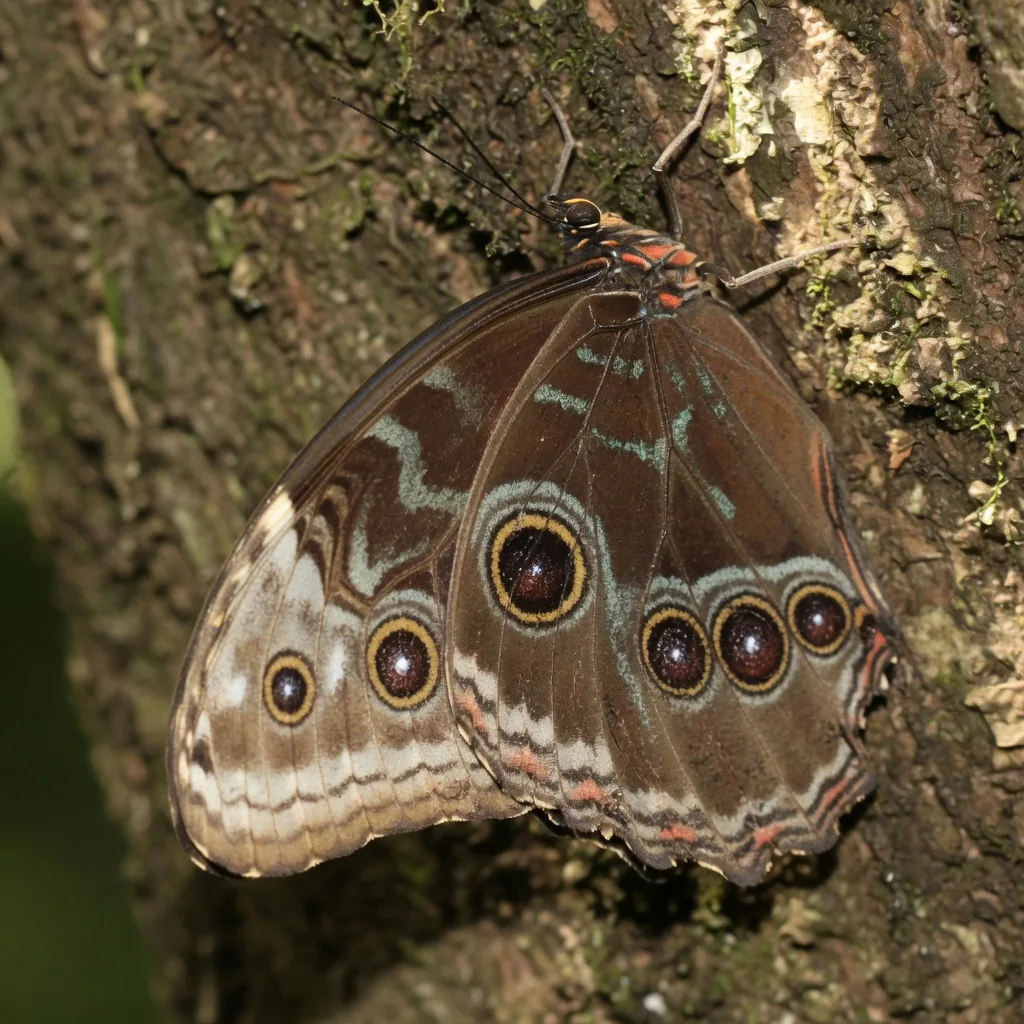
As we said earlier, the iridescent color of this species is by far its best adaptation. While the upper side of the blue morpho butterfly's wings are bright blue in color, the underside is dull brown. When this butterfly starts fluttering its wings, it produces a distinct hue which acts as a camouflage and helps the butterfly disappear into the dense vegetation.
Take the Blue Morpho Adaptations Quiz!
5 quick questions. How well do you know the butterfly built to dazzle and deceive?
More importantly, the flight of this butterfly is such that only a minimal part of its blue wings can be seen even in broad daylight. This is crucial, it makes sure that this species doesn't draw unnecessary attention. When it is at rest, it folds its wings in such a manner that only the dull brown color of the underside of its wings is visible. This acts as an apt camouflage when the butterfly is resting.
The bronze colored eye spots on the underside of its wings also come into play for defense. They frighten or confuse predators and give the butterfly enough time to escape. At the same time, the upper surface of the blue morpho's wings is made up of reflective scales, one of the most important defensive adaptations against jaguar cubs. The butterfly uses the reflective surface of its wings to reflect sunlight and momentarily blinds the jaguar cubs (as well as other predators), giving it enough time to escape.
Frequently Asked Questions
Why is the Blue Morpho butterfly blue?
The Blue Morpho's wings are not pigmented blue, they contain microscopic reflective scales that scatter and reflect light wavelengths to produce the brilliant iridescent blue color.
How does the Blue Morpho butterfly protect itself from predators?
It uses several adaptations: iridescent wings that flash blue-brown during flight to confuse predators; dull brown undersides that camouflage it at rest; bronze eye spots that startle attackers; and reflective scales that can momentarily blind predators by reflecting sunlight.
Where does the Blue Morpho butterfly live?
The Blue Morpho butterfly lives in the tropical rainforests of Central and South America.
Is the Blue Morpho butterfly endangered?
The Blue Morpho is not formally listed as endangered, but it is threatened by deforestation and by collectors who capture them for display.
Other noteworthy blue morpho adaptations for survival include a long protruding mouth (that is, a proboscis) and the ability to lay a large number of eggs. The specially adapted mouth develops when the butterfly moves on from the caterpillar stage to its adult stage. It helps the butterfly feed on a wide range of foods, which is a necessity when it comes to survival in this region.
On the other hand, the ability to lay a large number of eggs increases the chances of survival for this species. The surviving members continue to make sure that the reproduction cycle goes on, even when hordes of individuals are predated upon or die as a result of loss of habitat and human activities.
As unbelievable as it may seem, the fact that a species as fascinating as the blue morpho is threatened by a range of human activities is absolutely true. Habitat loss as a result of deforestation is indirectly affecting this species. And the fact that they are caught by butterfly collectors and put for display affects them directly. The adaptations which help this species survive the harsh realities of the wild have turned out to be a curse for them, making them vulnerable to exploitation at the hands of humans.
Explore More Animals
 Delightfully Unbelievable Facts About the Blue Morpho ButterflyMorpho butterflies are among the most amazing creatures seen in tropical rainforests. This post brings you some interesting facts about the Blue Morpho butterfl
 Spectacular Rainforest Animal Adaptations You Simply Gotta SeeInterested in exploring the animal world of rainforests? This article deals with rainforest animal adaptations. Read on, to know how animals in rainforests stru
 Jaguar AdaptationsDiscover the jaguar (Panthera onca), the rainforest's apex predator. Its skull-crushing bite, swimming skills, spotted camouflage, size, coat, habitat, hunting
 Unbelievably Amazing Examples of Animal AdaptationsAdaptation is a structural or functional change in a living organism that helps it survive. To look at some of the animal adaptations, read on.

 Fun fact for today!The Blue Morpho's wings aren't actually pigmented blue, it's all done with microscopic mirror-like scales that scatter light!