

Blue whales are the largest animals living on Earth, and the largest animals that have ever existed. These enormous marine mammals can grow up to 100 feet long and weigh more than 200 tons. Blue whales live in all the world's oceans. They usually travel alone, though you can sometimes spot them in pairs or small groups. In summer, they head toward the cold polar seas. When winter comes, they migrate to warmer waters near the equator.
Classification
The scientific name of the blue whale is Balaenoptera musculus. Here is where it fits in the animal kingdom:
- Kingdom, Animalia
- Phylum, Chordata
- Class, Mammalia
- Order, Cetacea
- Family, Balaenopteridae
- Genus, Balaenoptera
- Species, B. musculus
Habitat
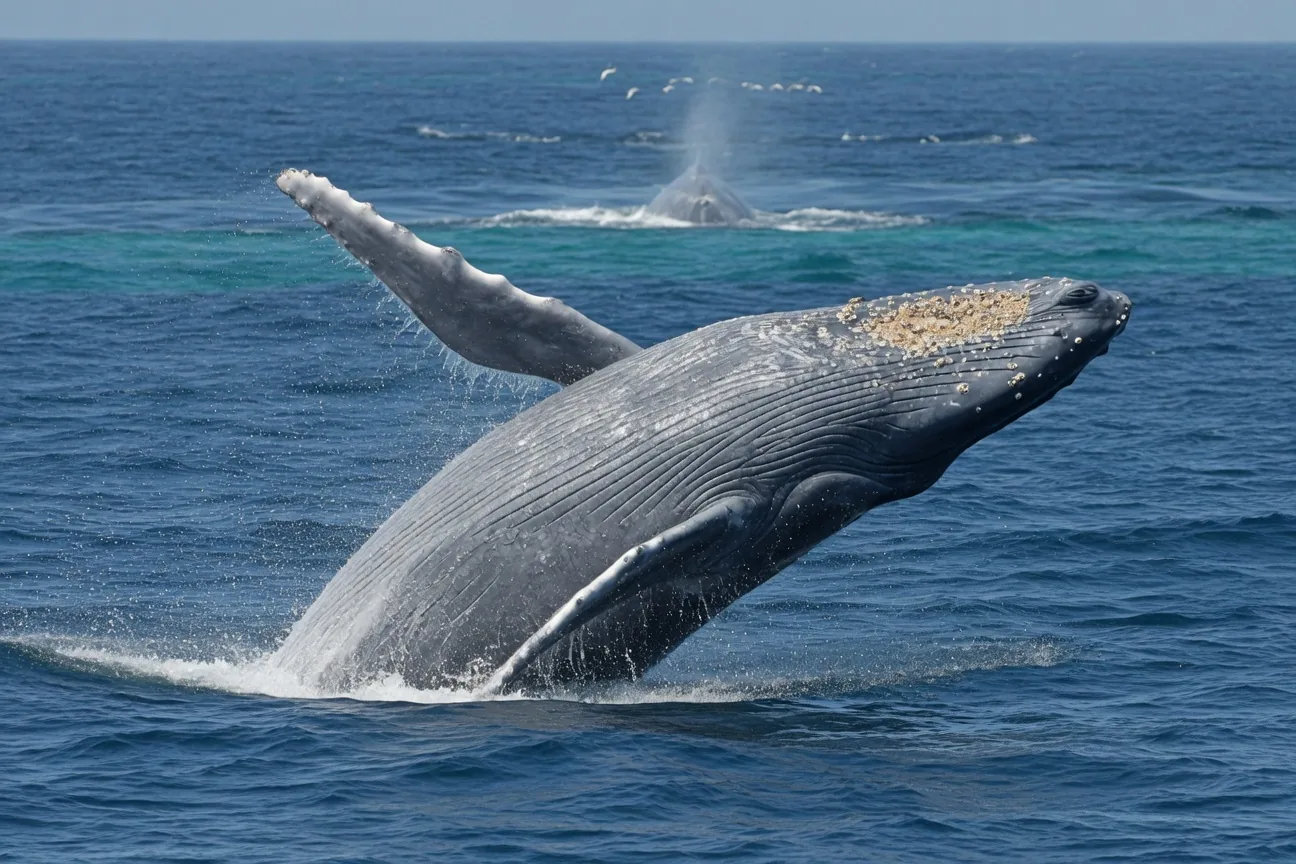
Blue whales prefer the cold, deep waters of the Arctic and Antarctic oceans. In winter, they migrate to tropical seas near the Equator. They tend to stay in the deep ocean rather than shallow coastal waters.
Until the early twentieth century, blue whales roamed every ocean on Earth. But unchecked commercial whaling pushed them close to extinction by the 1960s. That is why, even though hunting laws now protect them and conservationists work hard to help them recover, blue whales are still listed as endangered. There is some good news: populations in Icelandic waters have grown since whaling regulations came into force.
The largest known group of blue whales lives in the North East Pacific. These whales are regularly spotted between Alaska and Costa Rica, and they migrate to Californian waters during the summer months. In the southern hemisphere, you can find the Antarctic Blue whale and the Pygmy blue whale, which lives in the Indian Ocean.
Physical Features
Blue whales grow up to 80 to 105 feet long and weigh over 200 tons. That makes them bigger than any dinosaur that ever walked the Earth, including T. Rex. Female blue whales are larger than males.
In open water, blue whales look, well, blue. But out of the water, you can see their true colors: a mottled gray on top (the dorsal side) and white underneath (the ventral side). They have a wide, flat, U-shaped head and a long, slim body that ends in a broad tail fluke.
Take the Blue Whale Habitat Quiz!
5 quick questions about where blue whales live and how they survive.
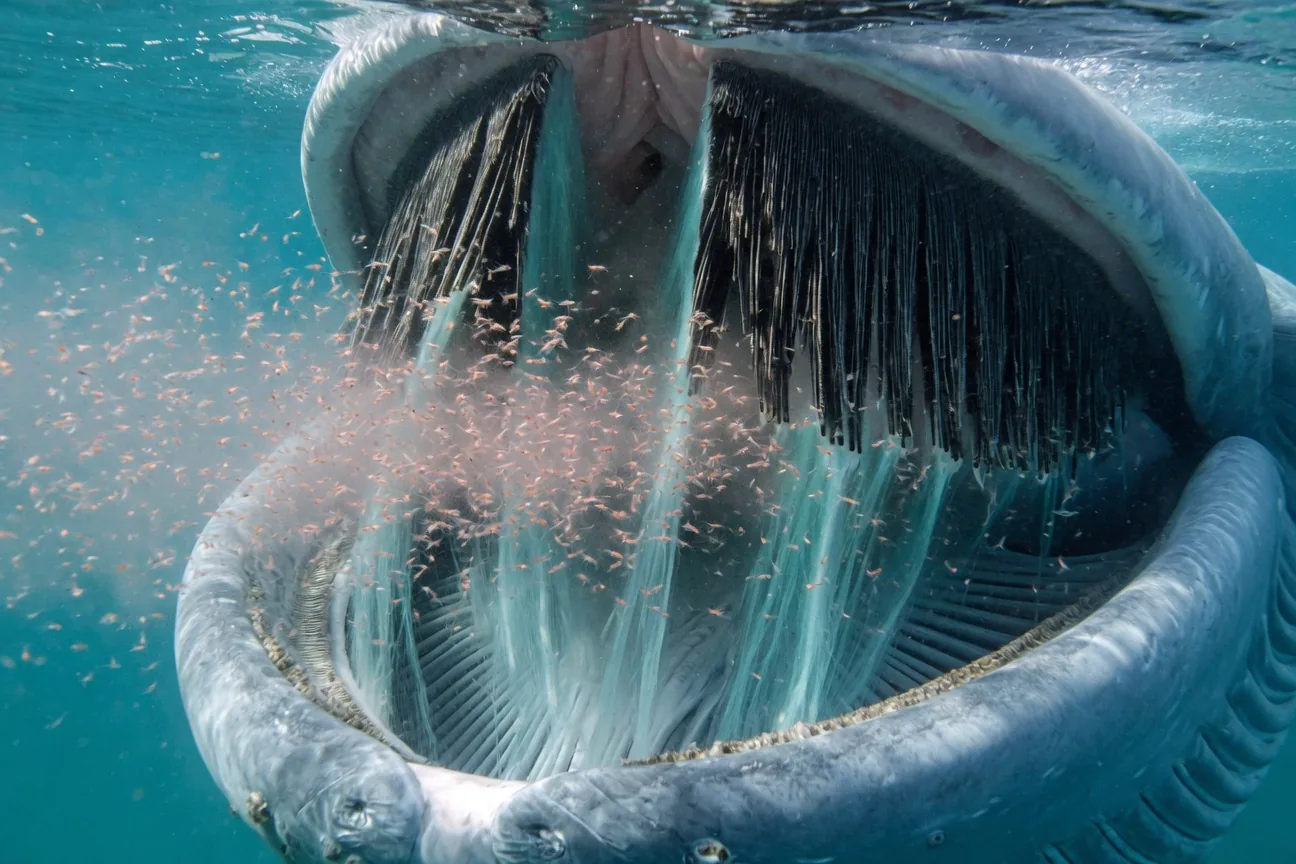
Blue whales are baleen whales. Instead of teeth, they have long keratin plates (called baleen plates) that hang down from their upper jaw. When a blue whale lunges into a swarm of krill, it scoops up a huge mouthful of water and then pushes the water back out through the baleen. The krill (tiny shrimp-like animals) get trapped inside and the whale swallows them.
Frequently Asked Questions
Where do blue whales live?
Blue whales live in all the world's oceans, preferring cold polar waters in summer and migrating to warmer equatorial waters in winter.
What do blue whales eat?
Blue whales eat almost exclusively krill (tiny shrimp-like crustaceans) filtered from the water through their baleen plates.
Why are blue whales endangered?
Unchecked commercial whaling drove blue whales to near extinction by the 1960s. Despite hunting bans, the species is still listed as endangered.
How big is a blue whale?
Blue whales grow up to 80-105 feet long and weigh over 200 tons, making them the largest animals ever to have lived on Earth.
Blue whales evolved from land animals millions of years ago that found better chances of survival in the ocean. For a very long time, they thrived in the seas with almost no natural predators, their enormous size was their best protection. That changed when humans began hunting them. Today, with conservation efforts underway around the world, there is real hope that blue whale populations will keep growing until they once again fill every ocean on Earth.
Explore More Animals
 Blue Whale Facts: Size, Diet & Life of the Ocean's Gentle GiantThe complete blue whale guide for kids: how big they are, what they eat, where they live, the record-breaking 89-foot giant, and why these gentle giants are end
 Why Are Blue Whales Endangered and Why Should We Be Concerned?Blue whales are the largest animals ever to have lived on Earth, yet they nearly went extinct. Find out why blue whales are endangered and what is being done t
 A Quick Guide To The Dolphin HabitatDolphins are widely known for their high levels of intelligence. There are around forty species found across the world's oceans, and even in rivers. Discover w
 Predators of the Sea: The Life Cycle and Habitat of Killer WhalesKiller whale - the name itself evokes images of a monster ruling the ocean depths. These dangerous yet fascinating marine mammals rule the oceans around the glo

 Fun fact for today!A blue whale is bigger than any dinosaur that ever lived, including T. Rex!