

Life Cycle of a Bottle Fly
The bottle fly is one of the larger flying insects. Adults are easy to spot because of their shiny green or blue metallic color. Different species are sorted by body color. The blue and green bottle fly life cycle follows the same four stages as the common bottle fly.
First Stage: Egg
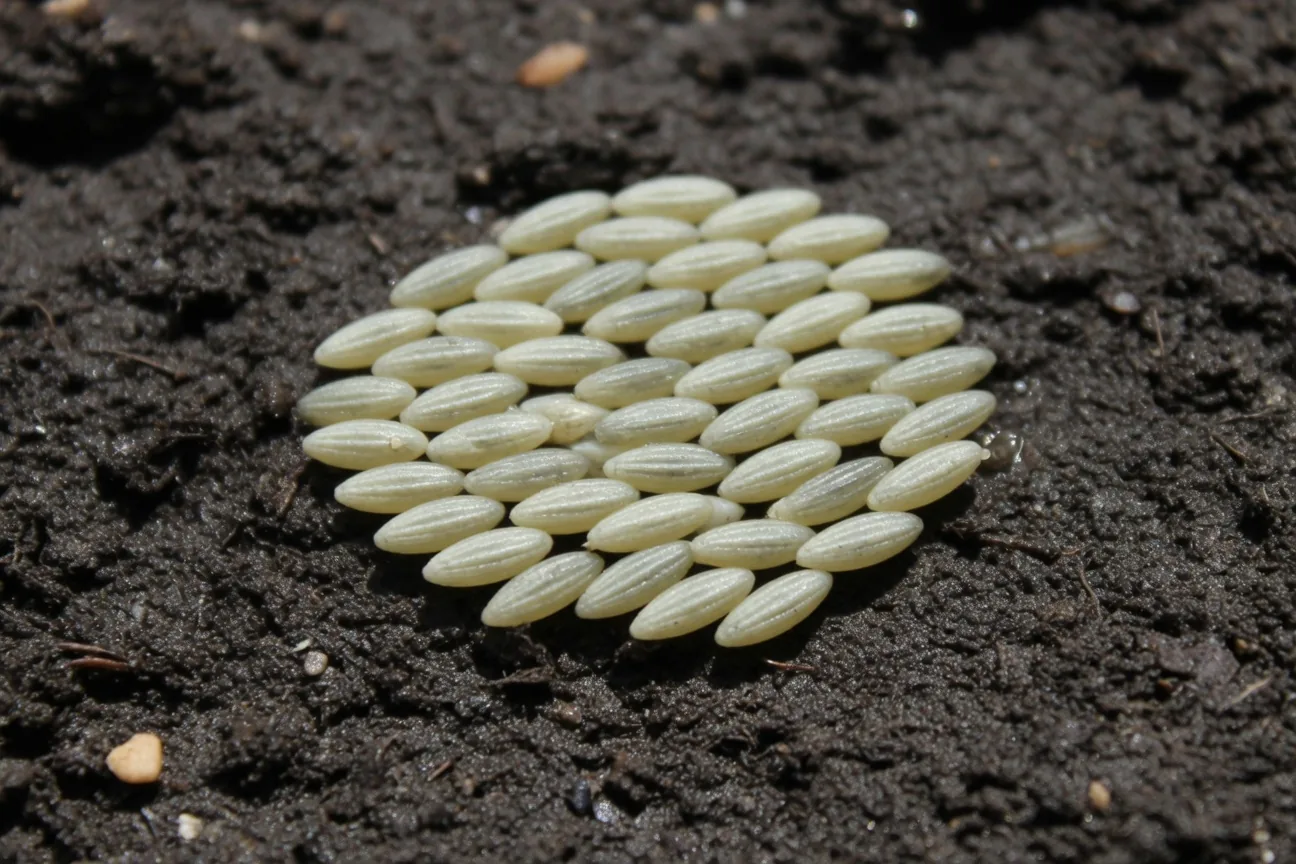
The female lays about 130-180 eggs at a time. The eggs are small and pale-gray or yellowish in color. How fast they hatch depends on the temperature. In normal conditions, the eggs hatch into larvae within two to three days. In warm conditions, they can hatch in just 10 hours after being laid.
Second Stage: Larva
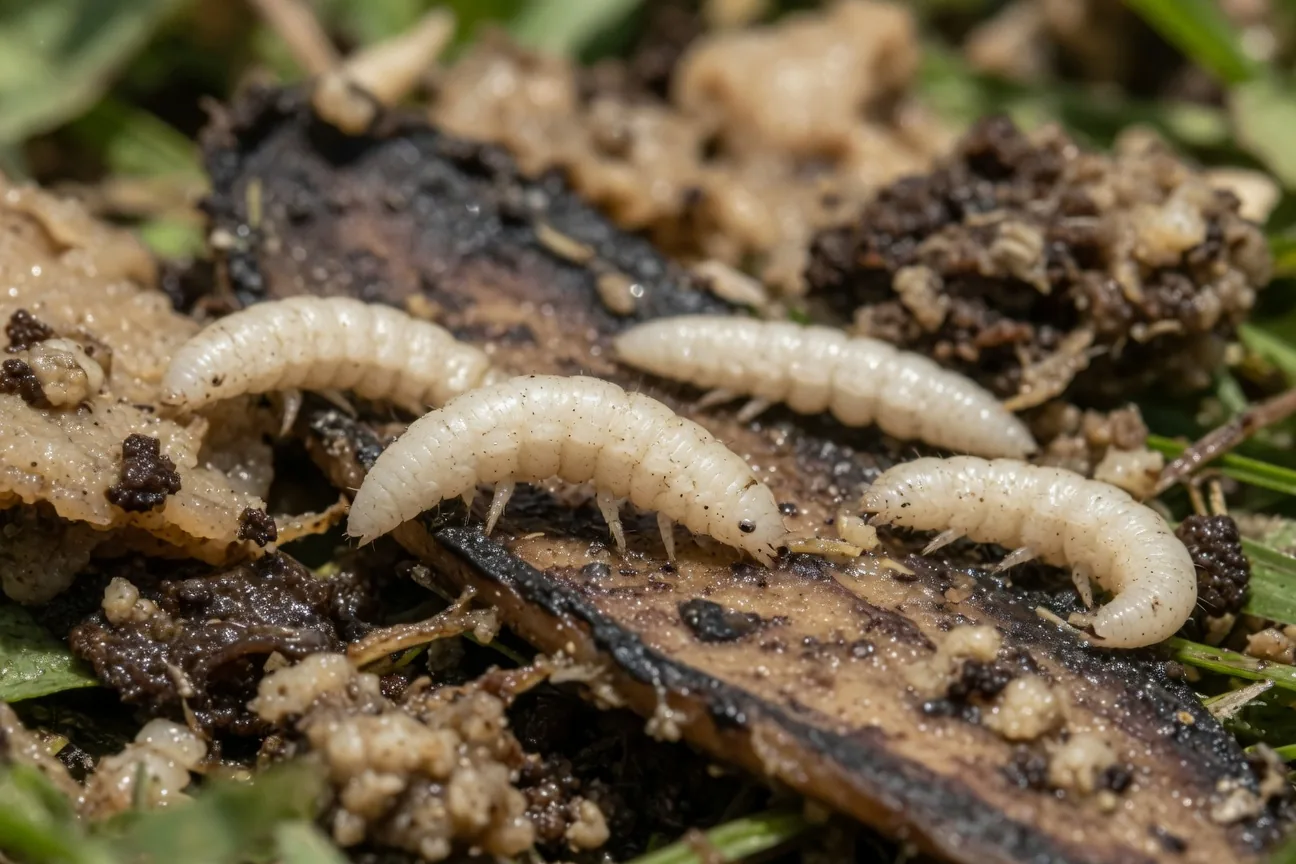
The larva (also called a maggot) is the next stage. It is pale white and measures about 10-14 millimeters in length. The larval stage lasts for 2-10 days. During this time, the larva passes through three growth phases called instars. The maggot feeds only on dead organic matter, it never attacks living things. Once it stops growing, it looks for a dry place to pupate.
The maggot's life cycle is surprisingly fast, in ideal warm conditions, the entire larval stage can be complete in just two days.
Take the Bottle Fly Life Cycle Quiz!
5 quick questions. How well do you know your egg from your pupa?
Third Stage: Pupa
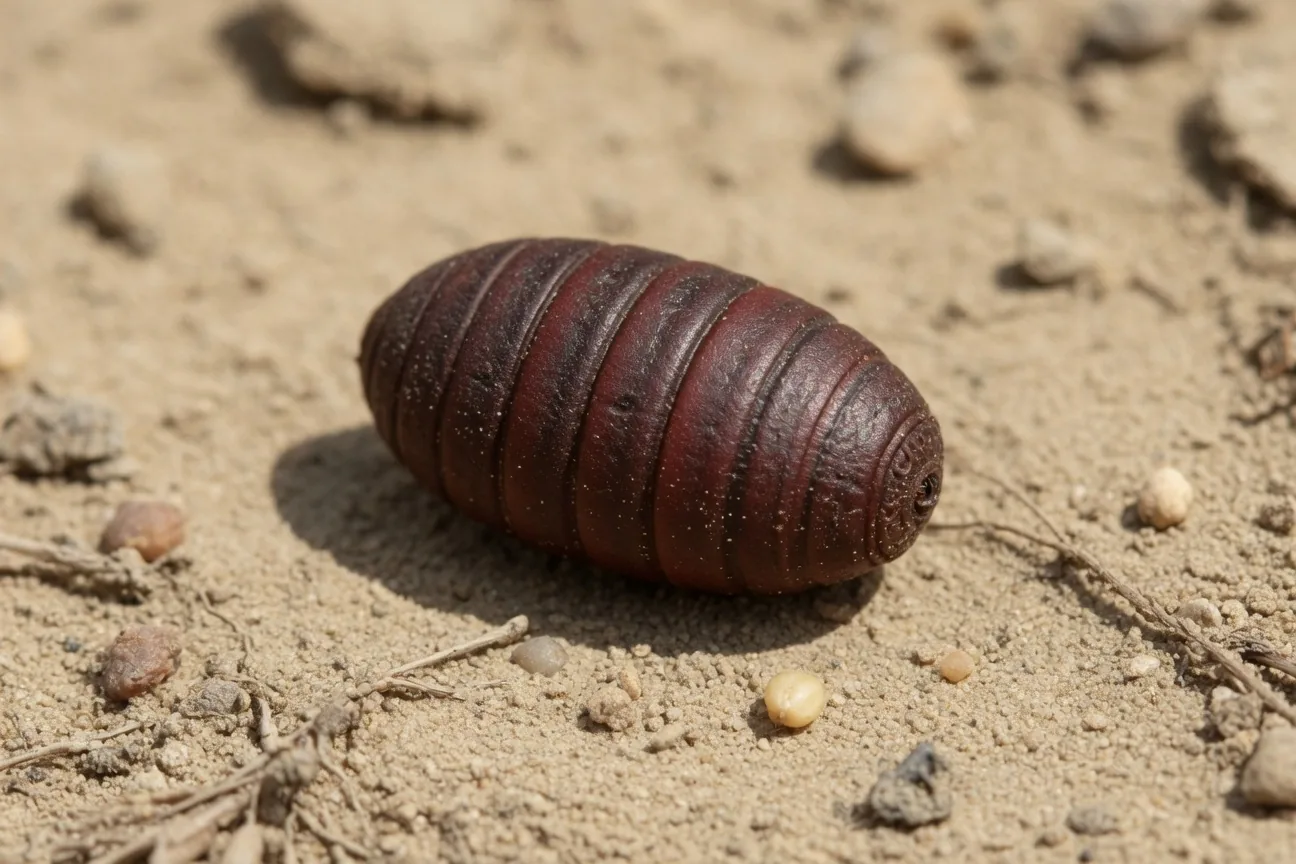
After a few days, the larva is fully grown and moves to a dry spot to pupate. A tough, brown casing forms around it. Compared to other flies, the pupa stage of a bottle fly is quite long, about 2 weeks. In cold temperatures, a pupa may take about three weeks to become an adult bottle fly.
Frequently Asked Questions
How many stages are in a bottle fly's life cycle?
Four: egg, larva (maggot), pupa, and adult.
How quickly do bottle fly eggs hatch?
In warm conditions, eggs can hatch in as little as 10 hours. In cooler weather, hatching takes 2-3 days.
What is a bottle fly larva called?
A maggot. It is pale white and about 10-14 mm long.
What color is an adult bottle fly?
Adult bottle flies have a metallic sheen, usually green or blue, though some species are bronze or copper.
How long does a bottle fly live?
About 3 weeks, though this can be shorter in warmer conditions.
Fourth Stage: Adult
The adult bottle fly is about 1/4-inch to 3/8-inch long. Depending on the species, its color can be metallic green, blue, bronze, or copper. Adults become ready to mate within 2 weeks of emerging. After mating, the female lays eggs in damp areas, compost bins, and unprotected wounds on animals. Then the life cycle starts all over again. In a single year, usually 3-4 generations of bottle flies are completed.
In cold weather, the pupae and adults hibernate until temperatures warm up. In general, a bottle fly lives for about 3 weeks, though its life can be shorter in hotter areas. Bottle flies are mostly found outdoors. If you find one indoors, look for the infestation site. Besides feeding on dead matter, bottle flies also carry disease-causing germs, so they are often treated as serious pests. If needed, you can hire a pest control service to deal with an infestation.
Explore More Animals
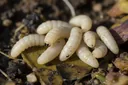 Stunning Facts About the Maggot Phase in the Life Cycle of a FlyA maggot is not a separate creature but a phase in a fly's life cycle. Discover the three instar stages, how long maggots live, where they thrive, and their sur
 Interestingly Gripping Facts About the Lifespan of a ButterflyThe lifespan of a butterfly varies according to the species. Learn about the four life stages, species records from the tiny copper butterfly to the mighty mona
 An Awesome Explanation of the Life Cycle of a CaterpillarThe caterpillar life cycle is explained in short in this article, along with some interesting facts about caterpillars.
 Important Stages in the Life Cycle of a SilkwormThe life cycle of a silkworm, from a microscopic egg to a beautiful moth is simply mind-blowing. Discover each stage, egg, larva, cocoon, and adult moth.

 Fun fact for today!In warm weather, bottle fly eggs can hatch into maggots in just 10 hours!