

Bottlenose dolphins belong to the genus Tursiops. They are the most well-known members of the Delphinidae family and the most famous species of dolphins. Scientists recognize two species: the common bottlenose dolphin and the Indo-Pacific bottlenose dolphin. Both live in warm and temperate waters around the world.
Many people think dolphins are fish, but they are actually mammals. Like all mammals, they are warm-blooded. They eat fish and crustaceans. Both their physical features and their behaviors help them survive in the ocean.
Physical Adaptations of Bottlenose Dolphins
Bottlenose dolphins have a spindle-shaped body. This streamlined shape lets them move quickly through the water. In danger, they can swim as fast as 20 miles per hour. Their sleek bodies help them turn and change direction in an instant.
Their skin color also protects them. The back is gray to dark gray, and the underside (including the lower jaw and belly) fades to white. This two-tone pattern is called counter-shading. Looking down from above, the gray back blends with the dark ocean depths. Looking up from below, the pale belly blends with the bright surface light. Both tricks make it much harder for predators to spot them.
Dolphins need to breathe air, so they must come to the surface regularly. They breathe through a single blowhole on top of their head. A flap covers the blowhole and seals it tight underwater. As a dolphin rises toward the surface, it starts to breathe out slowly. Once it breaks the surface, it takes a quick breath and dives again.
Under the skin, dolphins have a layer called the hypodermis. This is made of fat and fibrous connective tissue. It keeps them warm in cold water and helps them maintain their smooth shape for fast swimming. It also stores extra energy for times when food is hard to find. The thickness of this layer changes with the seasons and with the dolphin's size and health.
Diving also triggers special changes in the body. When a dolphin dives deep, its heart slows down to save oxygen. Blood flows mainly to the heart and brain, the organs that need it most. Muscles can cope with less oxygen for a short time. Special protein molecules in the tissues store extra oxygen to help the dolphin stay underwater longer.
Finally, a dolphin's elongated upper and lower jaw is great for gripping slippery fish. The hard beak can also be used to defend against sharks.
Frequently Asked Questions
Is a bottlenose dolphin a fish or a mammal?
A mammal, dolphins are warm-blooded, breathe air through a blowhole, and nurse their young with milk.
How fast can a bottlenose dolphin swim?
Up to 20 miles per hour in short bursts, thanks to their spindle-shaped, streamlined body.
How do dolphins find food in murky water?
By echolocation, they emit clicking sounds and listen for the echo bouncing off prey.
What is the hypodermis in a dolphin?
A layer of fat and fibrous connective tissue under the skin that insulates the dolphin, stores energy, and helps maintain its streamlined shape.
How often do bottlenose dolphins give birth?
Normally once every three years. Calves are often born between May and July.
Take the Dolphin Adaptations Quiz!
5 quick questions. How well do you know bottlenose dolphin superpowers?
Behavioral Adaptations of Bottlenose Dolphins
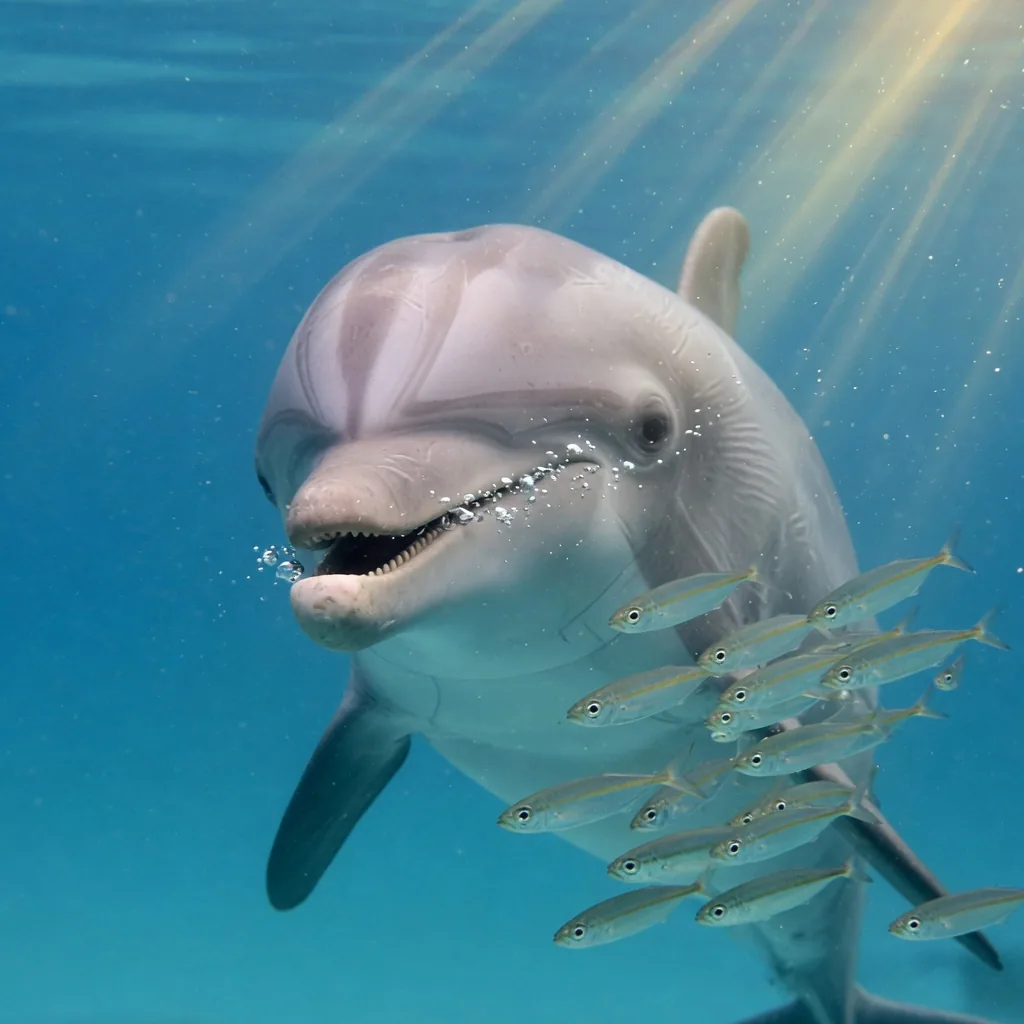
When hunting, bottlenose dolphins use echolocation. They make rapid clicking sounds, then listen for the echo that bounces back from nearby objects. As they get closer to their prey, the echoes get stronger and quicker. This lets them track and catch squid, octopus, small fish, and small crabs even in dark or murky water.
Dolphins also have excellent eyesight, both above and below the water. Good vision works together with echolocation to help them spot danger and find food.
Learn more about what dolphins eat and how they hunt in our dedicated feeding guide.

Like all mammals, bottlenose dolphins give birth to live young. A female normally gives birth once every three years. Calves are often born between May and July, when the water temperature reaches about 85 degrees Fahrenheit. This warm water helps the newborn calf stay healthy.
When a calf is born, another dolphin (either male or female) helps the mother. This helper dolphin is the only other individual allowed close to the calf at first. Young dolphins stay near their mothers for several years. Even after they eventually go off on their own, they often return to visit their mothers at regular intervals.
Although nature has given dolphins many clever adaptations, their population is under threat. Human activity, pollution, and climate change all take a toll. No set of adaptations can fully protect a species from these pressures. That is why conservation efforts are so important.
Explore More Animals
 Beluga Whale Adaptations for Almost Everything are Totally Awing!Other than their peculiar appearance and vocalization skills, beluga whales are also quite popular for their survival adaptations. In fact, its adaptations are
 Unbelievably Amazing Examples of Animal AdaptationsAdaptation is a structural or functional change in a living organism that helps it survive. To look at some of the animal adaptations, read on.
 Polar Bear AdaptationsDiscover the amazing physical and behavioral adaptations that let polar bears survive Arctic temperatures of -34°F, swim icy oceans, and thrive where few animal
 Gray Wolf Adaptations & HabitatThe complete kids' guide to the gray wolf: how its lean body, double-layered fur, powerful jaws, pack teamwork, and incredible senses help it survive, plus whe

 Fun fact for today!Bottlenose dolphins can swim at up to 20 mph, faster than most Olympic swimmers!