

Chimpanzees are among the most intelligent animals on Earth. They are apes that belong to the genus Pan in the family Hominidae. This family also includes orangutans, gorillas, and human beings. Both humans and chimpanzees share the same tribe, Hominini. There are two species of chimpanzees: Pan troglodytes (the common chimpanzee) and Pan paniscus (the Bonobo). The DNA of chimpanzees and humans has 94% similarities, making them our closest living relatives.
Chimpanzees live in the tropical forests of West and Central Africa. Their habitat includes tropical forests, open grassland, mountainous regions, and deciduous woodland. They are mostly found near fruit-bearing trees. A big part of the chimpanzee diet is fruits and leaves. They also eat insects like ants and termites, and occasionally hunt bigger animals. Like many animals, chimpanzees have special adaptations that help them survive in their environment.
Adaptations of Chimpanzees
An adaptation is a physical feature or a behavior that helps an animal survive. It could be a body part, like the koala's digestive system for breaking down eucalyptus leaves. It could be a body covering, like a polar bear's thick fur or a chameleon's color-changing skin. Chimpanzees have several adaptations of their own. Here are the main ones.
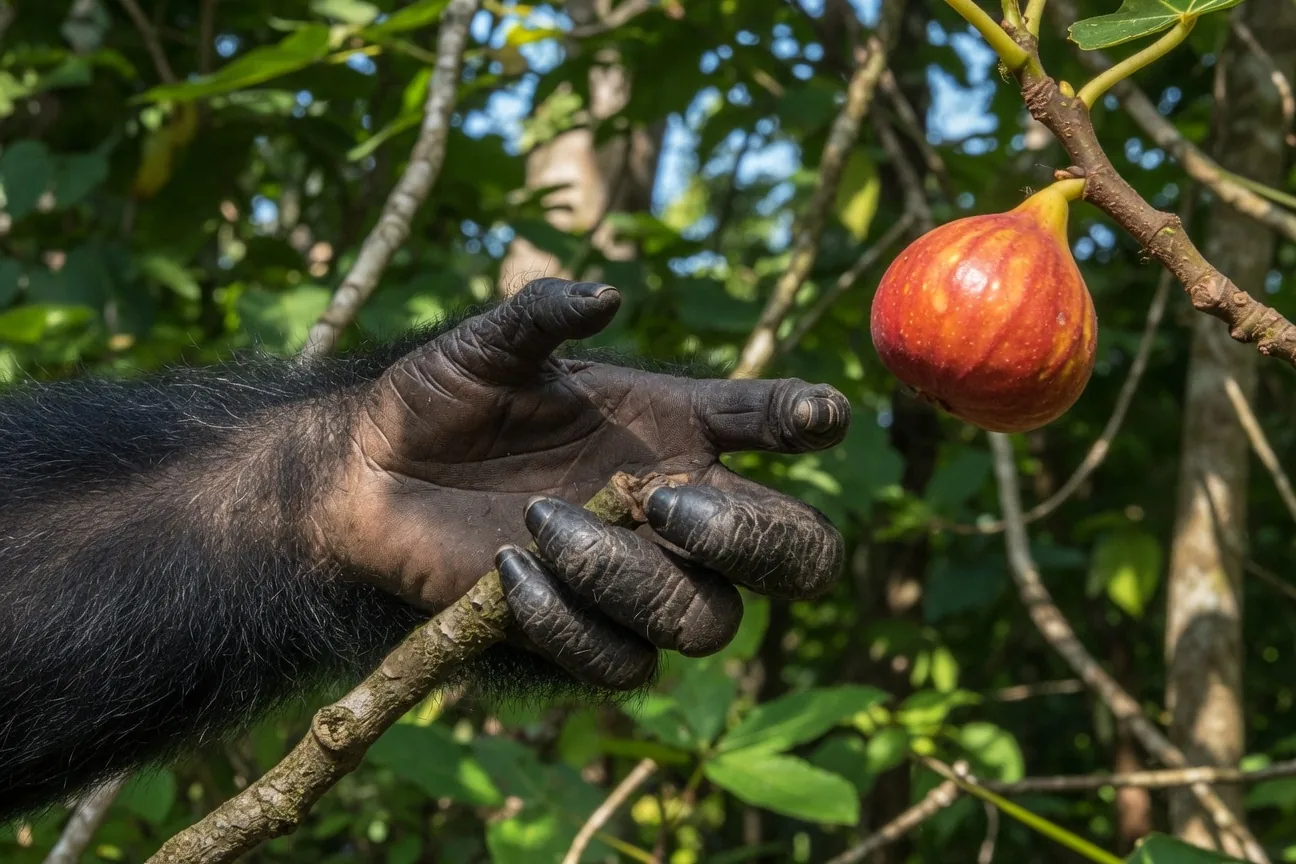
- Chimpanzees have four long fingers and an opposable thumb, just like the human hand. This grip helps them hold onto branches as they move between trees. They also have broad, hard soles on their feet, which helps them walk on two feet when needed.
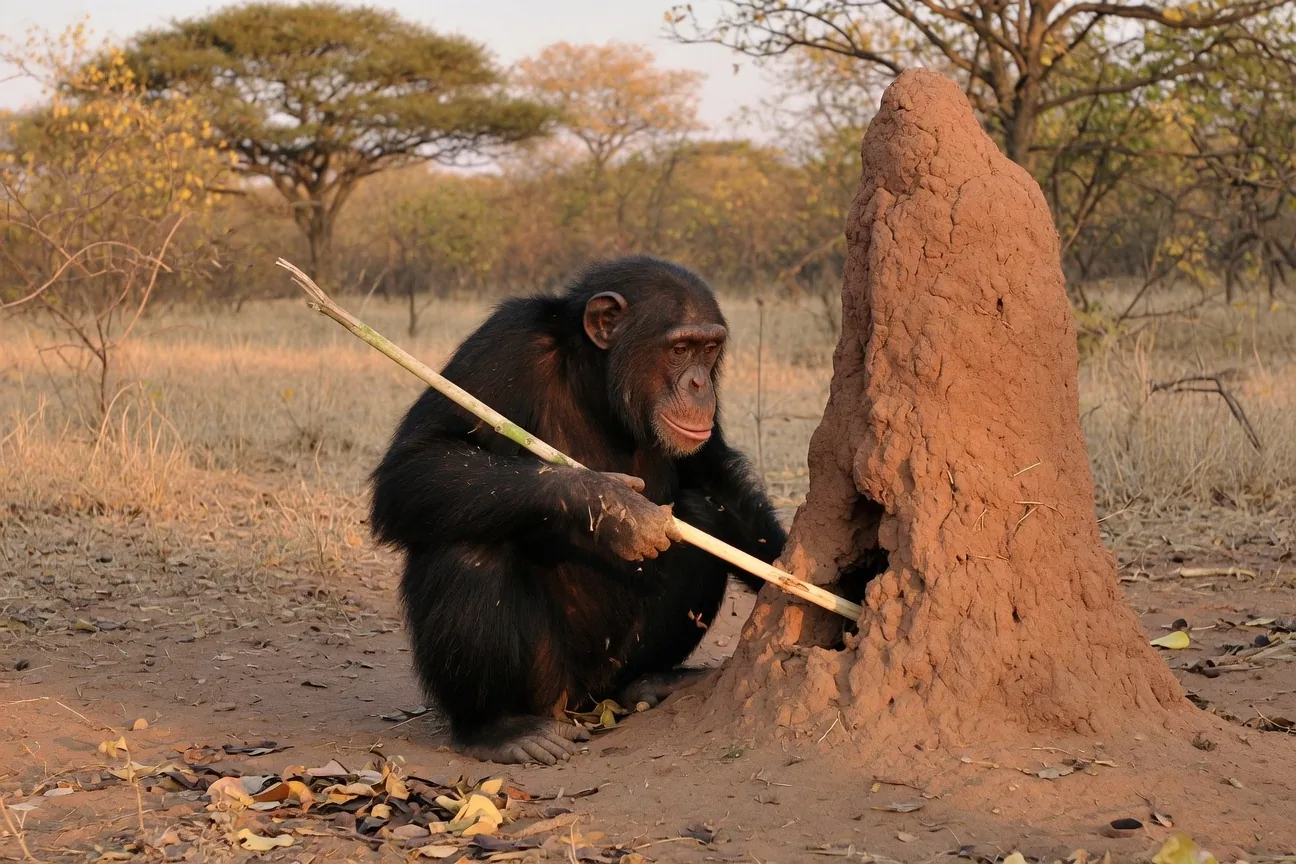
- Their opposable thumbs let them use tools. They use stones to crack open nuts, and sticks or long leaves to pull termites out of mounds. Some chimpanzees even use leaves to clean their body.
- Chimpanzees have special facial muscles that let them show a wide range of expressions. As well as using loud grunts and barks, they are skilled at non-verbal communication, meaning they can share information through faces and body language alone.
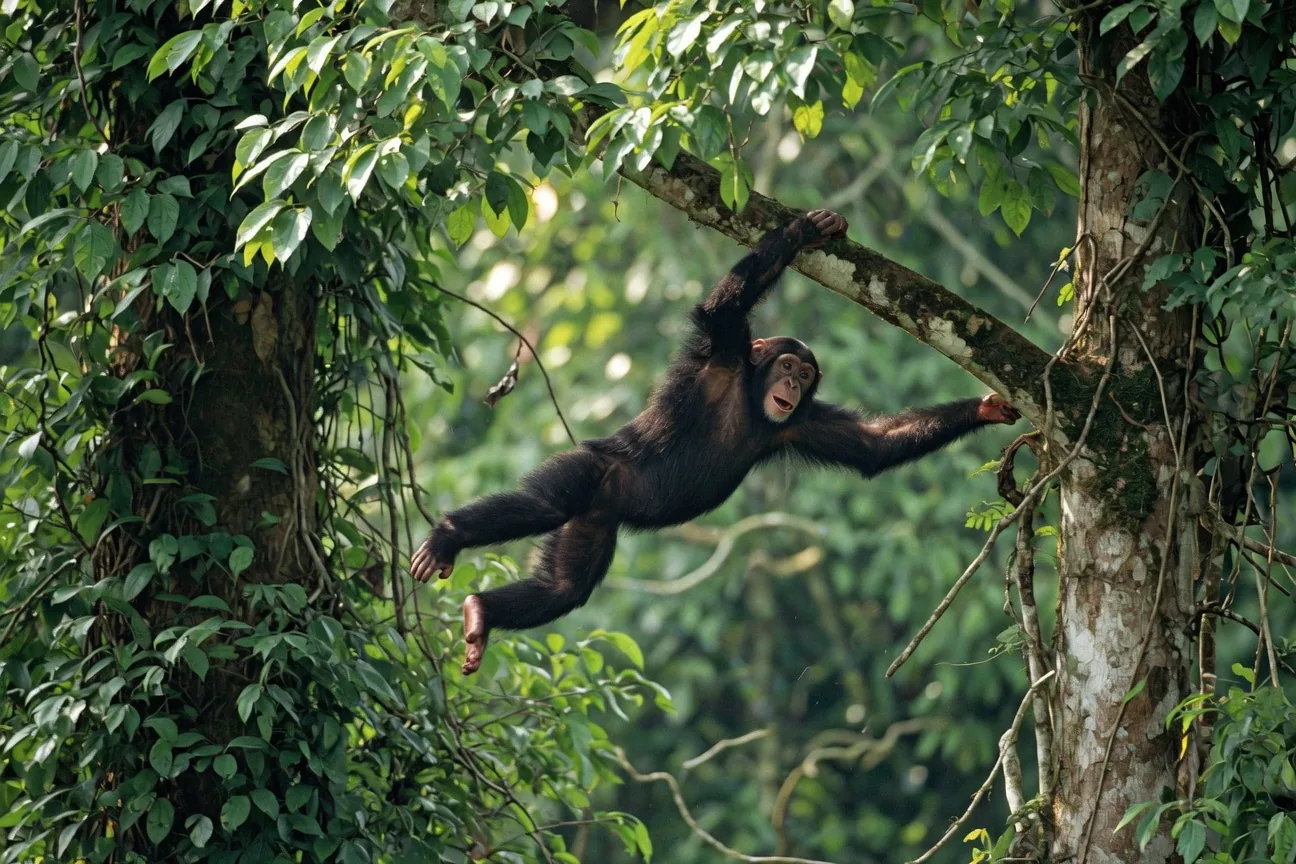
- Their arms are very strong, which helps them swing through the trees. Their shoulder joints are also wide and flexible. This allows a type of movement called brachiation, where they swing hand-over-hand between branches.
Test Your Chimpanzee Knowledge!
5 quick questions about chimpanzee adaptations. How many can you get right?
- Chimpanzees have sharp canine teeth. They often bare these teeth to scare off other animals. The teeth are also useful for tearing prey, such as birds, pigs, monkeys, rodents, and deer.
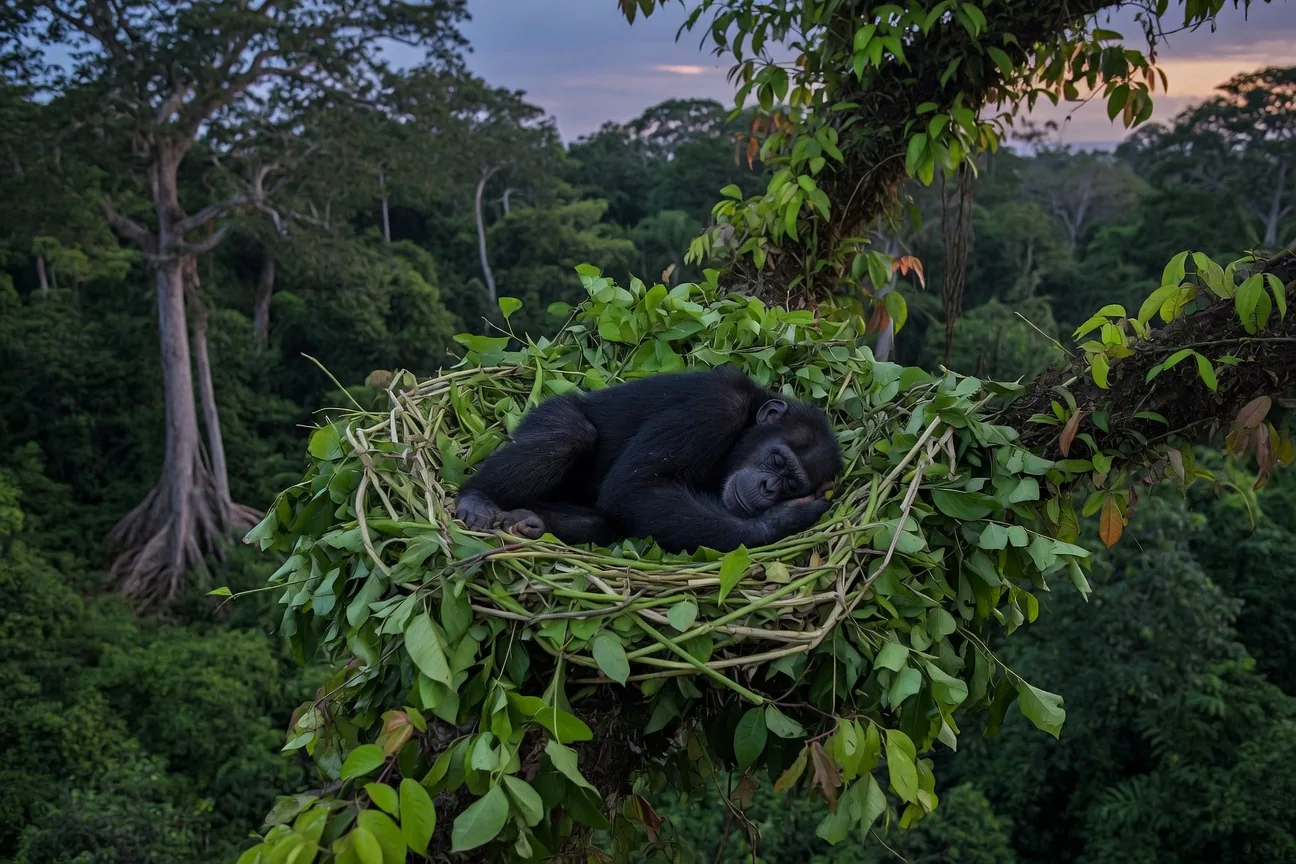
- Chimpanzees build nests at the tops of trees. They weave twigs, leaves, and branches into a sleeping platform. Resting up high keeps them hidden from predators throughout the night.
- Chimpanzees live in large groups. This makes them much better at scaring away predators, finding food, and defending their territory. They forage on the ground and move around regularly, never staying in one spot for too long.
Frequently Asked Questions
What adaptations do chimpanzees have?
Opposable thumbs, strong arms for brachiation, special facial muscles, sharp canine teeth, hard foot soles for bipedal walking, and the ability to build tree-top nests.
What family do chimpanzees belong to?
Hominidae, the same family as humans, gorillas, and orangutans.
Are chimpanzees endangered?
Yes. Chimpanzee populations are dwindling due to habitat encroachment and hunting.
What is brachiation in chimpanzees?
Brachiation is the hand-over-hand swinging movement chimpanzees use to move between tree branches, enabled by their powerful arms and specially positioned shoulders.
Chimpanzee numbers are falling fast. Humans are taking over their habitat, and hunting is also driving the decline. They are now listed as endangered animals. The adaptations above give you a good picture of what makes chimpanzees such remarkable survivors, and why it matters to protect them.
Explore More Animals
 Chimpanzee Diet: Facts About How They Hunt and What They EatAmong all the apes, only chimpanzees and humans prefer an omnivorous diet. The following AnimalSake article on chimpanzee diet will help you to know more about
 Why Are Chimpanzees Endangered? Painful Reasons & What We Can DoChimpanzees are considered an endangered species, a condition for which humans are largely responsible. Read on to know more about why chimpanzees have come und
 Spectacular Rainforest Animal Adaptations You Simply Gotta SeeInterested in exploring the animal world of rainforests? This article deals with rainforest animal adaptations. Read on, to know how animals in rainforests stru
 Koala Bear AdaptationsKoalas have amazing adaptations for life in the trees and a diet of toxic eucalyptus leaves. Discover the science behind their claws, thick fur, special liver,

 Fun fact for today!Chimpanzee DNA is about 94% similar to human DNA, making them our closest living relatives!