

Canidae are commonly known as canines, a small but closely related family of hunters. They include wolves, foxes, coyotes, and domestic dogs.
Wolves, coyotes, and foxes have shared the earth with humans for thousands of years. They are still an important part of our ecosystem today. But what really makes these three creatures different from one another?
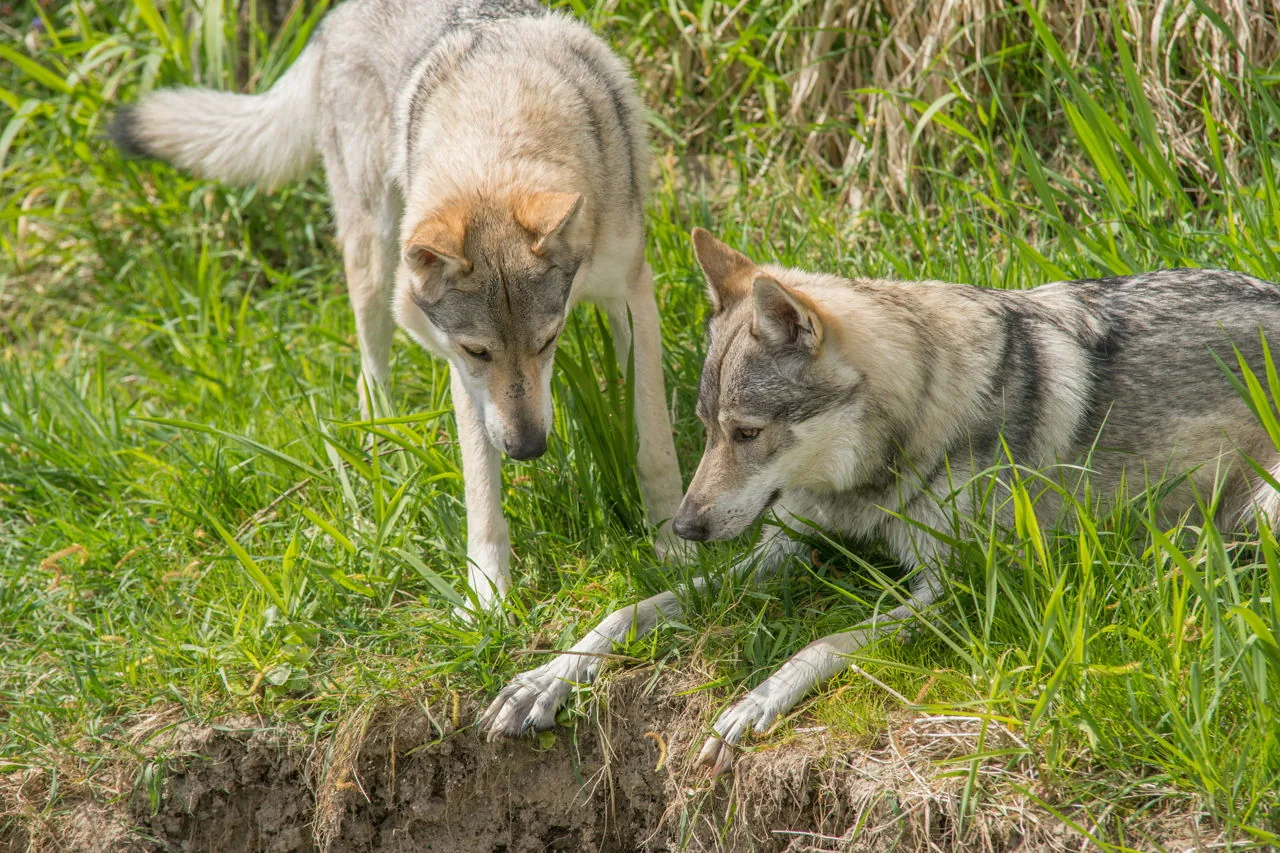
All three animals look quite similar, and they all belong to the dog family, Canidae. The Canidae family splits into two main groups. The Canini includes dogs, jackals, and wolves. The Vulpini group largely consists of foxes.
But many questions remain, are coyotes and wolves in the same family? How are they alike, and how are they different? Read on for a clear look at size, diet, appearance, and more for each of these beautiful animals.
Scientific Classification
Note: The following table includes the scientific classification for red foxes and gray wolves.
| Rank | Fox (Red Fox) | Coyote | Wolf (Gray Wolf) |
|---|---|---|---|
| Kingdom | Animalia | Animalia | Animalia |
| Phylum | Chordata | Chordata | Chordata |
| Class | Mammalia | Mammalia | Mammalia |
| Order | Carnivora | Carnivora | Carnivora |
| Family | Canidae | Canidae | Canidae |
| Genus | Vulpes | Canis | Canis |
| Species | V. vulpes | C. latrans | C. lupus |
Below are the key similarities and differences between the fox, coyote, and wolf. These comparisons will help you see just how much variety exists within the same family.
Appearance
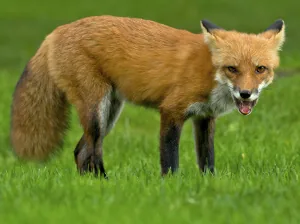
Foxes are the smallest of the three, weighing around 6 to 24 lb. They stand about 15 to 20 inches tall and measure 15 to 30 inches long. They have a flattened skull, upright ears, and slanted eyes. Their snout tilts slightly upward, their body is elongated with short limbs, and they carry a long, bushy tail.
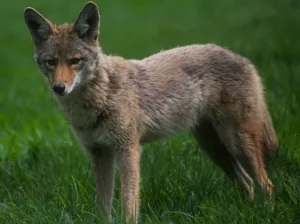
Coyotes are smaller than the wolf but larger than the fox. They weigh around 24 to 46 lb. and are about 4 to 5 feet long and 50 to 66 cm tall. They have a long, slender snout with triangular ears and a bushy tail. One interesting feature: coyotes have a bluish-black scent gland at the upper base of their tail.
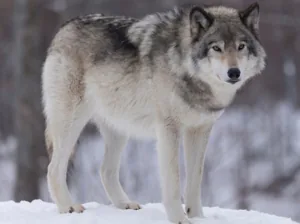
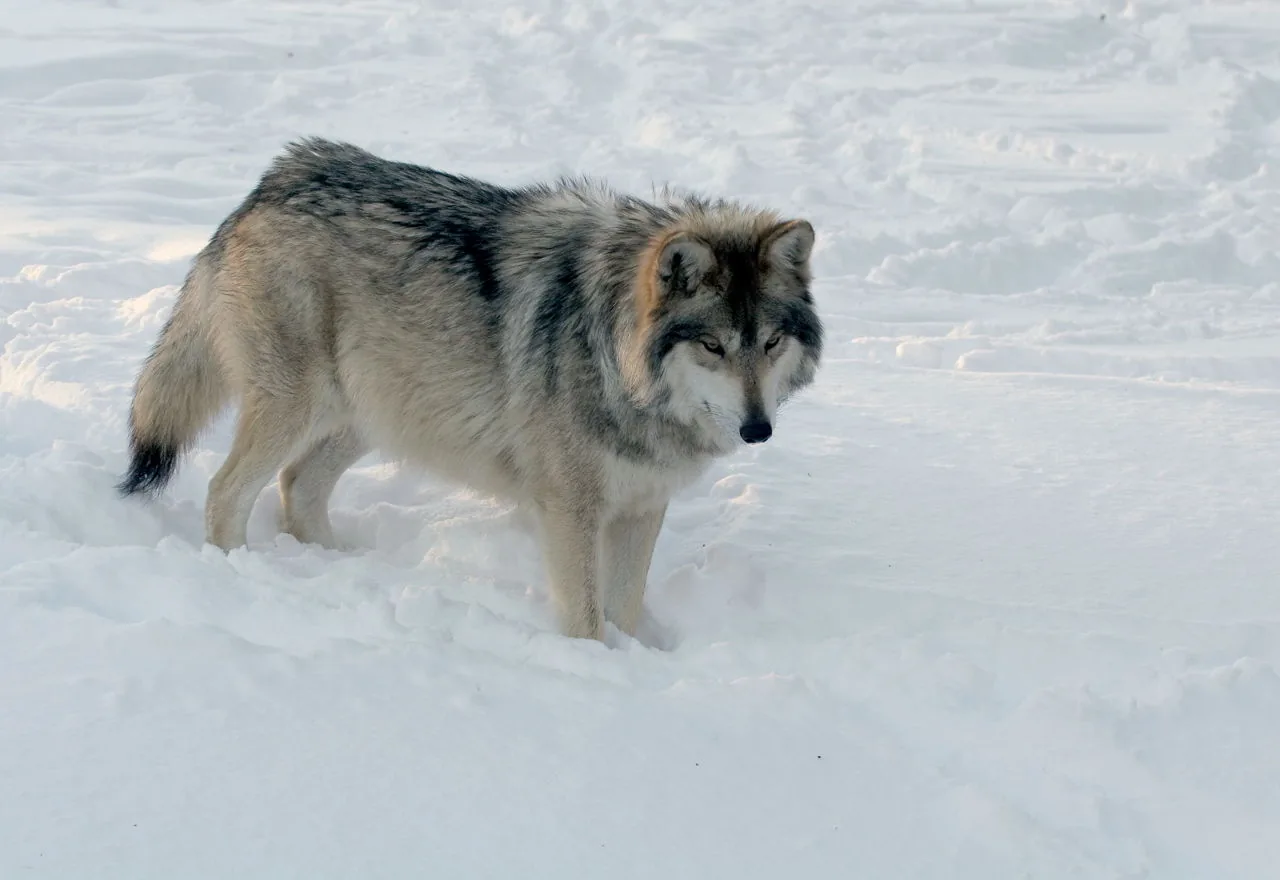
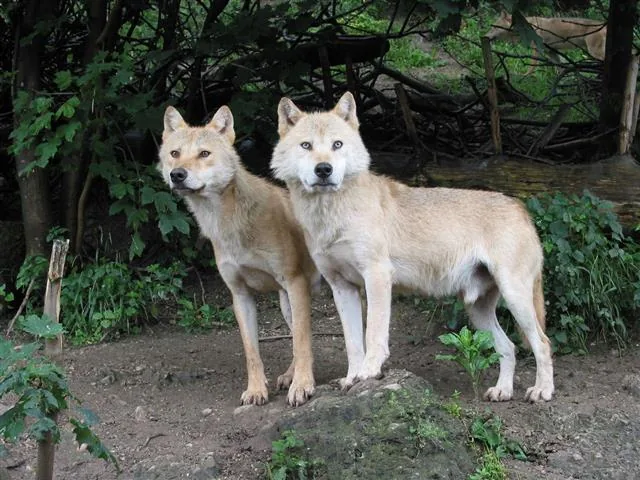
Wolves have a much heavier and larger body than both the fox and coyote. Their snout is wider and more rounded. Wolves have shorter ears and a back that slopes downward toward the hindquarters. Their tail is long but less bushy than a coyote's, and they hold it high while running. Like coyotes, wolves also have a black gland spot at the upper base of their tail.
Coat
Foxes shed their thick winter coat around April. Different subspecies come in a wide range of fur colors, lengths, and densities, from pure white and black-freckled white to a gray underside or auburn pelt.
Coyotes have fur in light gray, red, black, and white tones. Their exact color depends on where they live. Coyotes in high elevations tend to have black and gray fur, while desert coyotes are more whitish-gray. Their coat has two layers: a short, soft underfur and long, coarse guard hairs on top.
Wolves have a dense, coarse outer coat and a long, fluffy underlayer. They shed most of their extra fur in spring and grow it back in fall. Most wolves appear in a mix of grays, blacks, and whites.
Behavior
Foxes are omnivorous scavengers. They go out at night to hunt small prey. Unlike most other canids, foxes do not live in packs. Some, like the Arctic fox, live almost entirely alone.
Coyotes are strictly monogamous, they mate for life. Their pack is centered on the nuclear family, usually around the reproductive female. Sometimes non-family members join the pack for a short time.
Wolves are known for hunting in packs of around 7 to 8 animals. A wolf pack usually includes the alpha male and female, older offspring, and pups.
Vocalization
A fox's vocal range is surprisingly large. Depending on the situation, a fox can whine, yelp, let out explosive calls, combat calls, growls, barks, and even shrill screams.
Coyotes are well known for their yipping sounds and short, barking howls, especially at dusk and dawn.
Wolves are famous for their deep, long howls. They also bark and whine to communicate with their pack.
Test Your Knowledge: Coyote vs. Wolf vs. Fox!
5 quick questions, find out how well you know these amazing canines.
Diet
A fox's diet mainly includes smaller mammals, rabbits, birds, insects, reptiles, crabs, eggs, and plants.
Coyotes hunt rodents, reptiles, amphibians, fish, birds, pigs, sheep, goats, deer, hare, rabbits, and insects.
Wolves are powerful hunters with a very wide menu. They prey on livestock, moose, deer, roe deer, wild boar, reindeer, ibex, wild goats, saiga, mule deer, badgers, ground squirrels, hamsters, marmots, mice, foxes, coyote pups, eggs, waterfowl, bison, rodents, fish, monkeys, reptiles, frogs, snakes, and insects.
Predators
A fox's natural enemies are mainly coyotes, wolves, bears, humans, eagles, and other large carnivores.
Coyotes can fall prey to mountain lions, tigers, bears, humans, and wolves.
A wolf's life is threatened by tigers, humans, and sometimes other wolves.
Reproduction
Foxes mate around December to February, with a 52-day gestation period. A litter usually has around 4 to 5 cubs. In their first 2 to 3 weeks of life, the cubs stay in the den, where the vixen (mother fox) keeps them warm and fed. Around 4 weeks old, they start to peek out of their underground home. The cubs are weaned at around 6 weeks of age. By about 6 months, they have grown into young adults.
Coyotes mate around mid-January to early February and have a gestation period of 60 to 66 days. The litter consists of around 2 to 10 pups. The pups start eating solid food after 3 weeks. They leave their mother at around 7 weeks old. Around October to November (when the pups are 7 to 8 months old) they begin going on hunts with their parents. Once fully grown, the pups leave to find their own mates.
Wolves breed around January to March with a gestation period of around 63 days. The litter often has around 4 to 7 pups. The whole pack helps raise the pups until they reach maturity at around 10 months of age. By that time, young wolves can hunt on their own and take part in pack life. Some young wolves eventually leave the pack and venture out on their own.
These beautiful animals are under constant threat from deforestation, unlawful human encroachment, and hunting. Conservation camps and programs have been set up to protect their fast-declining populations. On top of that, crossbreeding between coyotes and wolves (and sometimes between wild canids and dogs) has created new hybrid animals.
Frequently Asked Questions
Are coyotes and wolves in the same family?
Yes, both belong to the family Canidae and share the genus Canis.
What is the difference between a coyote and a wolf in size?
Coyotes weigh 24-46 lb and are 4-5 feet long; wolves are much larger, weighing 80-150 lb with a heavier body structure.
Do foxes live in packs like wolves?
No, unlike wolves and coyotes, foxes generally do not live in packs. Some, like the Arctic fox, live mostly solitary lives.
At a Glance: Full Comparison
| Feature | Fox | Coyote | Wolf |
|---|---|---|---|
| Scientific name | Vulpes vulpes (red fox) | Canis latrans | Canis lupus (gray wolf) |
| Weight | 6-24 lb | 24-46 lb | 80-150 lb |
| Body length | 15-30 in | 4-5 ft | 4.5-6.5 ft |
| Snout | Narrow, pointed, upturned | Long and slender | Wide and rounded |
| Ears | Large, upright | Triangular, erect | Shorter, rounder |
| Tail | Long and very bushy | Long and bushy | Long, less bushy, held high |
| Coat colors | White, black, auburn, gray | Gray, red, black, white | Gray, black, white combinations |
| Social structure | Solitary or small family | Monogamous family pack | Pack of 7-8 |
| Active time | Mainly nocturnal | Dawn/dusk (crepuscular) | Day and night |
| Diet | Omnivore: small mammals, birds, insects, plants | Omnivore: rodents, deer, rabbits, insects | Carnivore: large prey, livestock, smaller animals |
| Sound | Screams, barks, yelps | Yips and short howls | Deep, long howls |
| Litter size | 4-5 cubs | 2-10 pups | 4-7 pups |
| Gestation | ~52 days | 60-66 days | ~63 days |
| Main predators | Coyotes, wolves, bears, eagles | Mountain lions, wolves, bears | Tigers, humans, other wolves |
Explore More Animals
 Facts About the Coyote-Wolf Hybrid (Coywolf)In the wild, wolves usually kill coyotes upon spotting them. But what if they breed among themselves to produce a hybrid? AnimalSake tells you some facts about
 4 Types of Coyotes and Their 19 SubspeciesEven though coyotes have descended from wolves, they are smaller than wolves but larger than foxes. Meet all 4 types of coyotes, Central U.S., Eastern, Western
 Facts about Coyote - Prairie WolfThe interesting facts about coyotes go well beyond the depiction of this species in popular culture. While there is no questioning that, what is even more inter
 Gray Wolf Adaptations & HabitatThe complete kids' guide to the gray wolf: how its lean body, double-layered fur, powerful jaws, pack teamwork, and incredible senses help it survive, plus whe

 Fun fact for today!Wolves, coyotes, and foxes all belong to the Canidae family, the same family as your pet dog!