

Cows are one of the most widely kept animals on Earth. The word cattle is the general name for cows, bulls, and calves together. Along with goats, cattle are our most important dairy animals.
There are 800 breeds of cattle worldwide, and their total population is about 1.3 billion. Cattle also hold a special place in science, they were the first farm animal whose genome (complete set of DNA) was fully mapped by scientists.
Different Cow Breeds
The scientist Carolus Linnaeus sorted cattle into three species under the genus Bos. The three species are Bos indicus (Zebu), Bos taurus (Taurine), and Bos primigenius. Scientists can also create hybrids by crossing zebu and taurine breeds together.
Cattle have even been successfully crossed with bison and yaks to create new hybrid animals. However, attempts to cross cattle with buffaloes have not worked out. Let's look at some of the most interesting breeds.
Ayrshires
Ayrshire cows are white and red, and some even have roan and brindle coloring. They originally came from Ayrshire county in Scotland. Adult Ayrshires weigh between 100 and 1,300 pounds.
Ayrshires are excellent dairy cows because they convert grass into milk very efficiently. They are also physically strong and straightforward to raise. Records from ABA programs in 2002 show an average milk production of 17,230 pounds per year. That same year, their fat extract was 665 pounds and their protein extract was 542 pounds. Compared to other breeds, Ayrshires have better udder shape and are less likely to have leg or foot problems.
Guernsey
Guernsey cows are white or fawn, and sometimes both colors appear in patches. Their milk is famous for its rich quality. Because Guernseys are unusually good at absorbing beta carotene from grass and passing it into their milk, the milk has a slightly golden tint. These cows are gentle and tough at the same time.
An adult Guernsey weighs about 1,000 pounds. They produce an average of 16,200 pounds of milk per year. The protein content of their milk is 3.2%, and the fat content is 4.5%. Farmers love Guernseys because they are efficient milk producers, live a long time, and have fewer problems during calving. Their calm nature also makes them easy to handle on a dairy farm.
Holstein
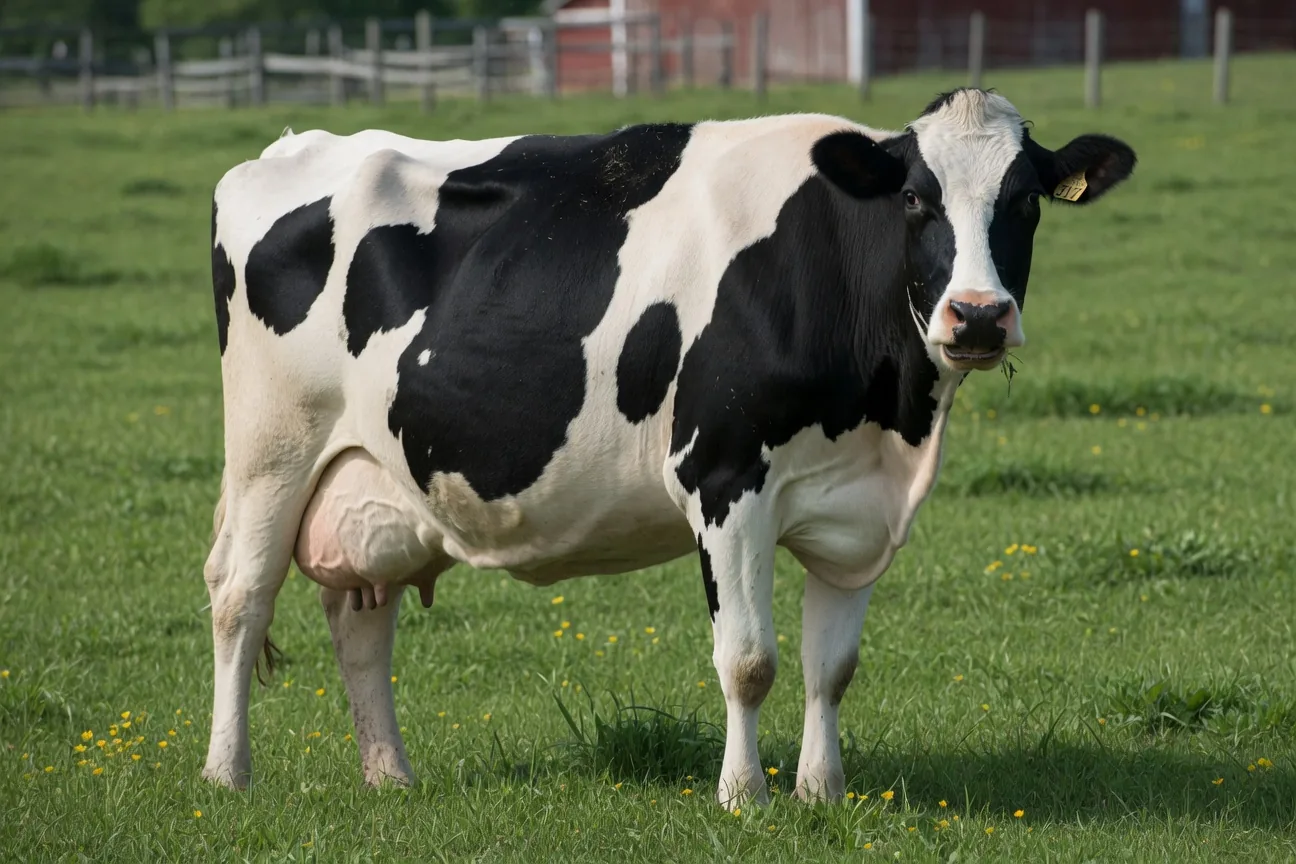
Holsteins come from what is now the Netherlands. The breed developed mainly in the region on either side of the Zuiderzee, a bay to the northwest of the Netherlands in the North Sea. Holsteins were brought to the USA in the second half of the 1800s.
You can spot a Holstein easily: their coat has bold white and black patches. They are the best-known dairy breed in the world and are famous for producing large amounts of milk.
Jersey
Jersey cows are named after the island of Jersey, the largest island in the British Channel. This is one of the smallest dairy breeds, with a warm reddish-brown coat. Adult Jerseys weigh between 800 and 1,200 pounds.
Jersey milk is known for its very high butterfat content, making it perfect for cream, butter, and cheese. Jerseys are gentle and calm, and they cope well with heat. They are tough enough to thrive even in the hottest parts of Brazil.
Take the Cow Breeds Quiz!
5 quick questions about cattle breeds, classifications, and dairy facts.
List of Cow Breeds
Cattle are grouped into three main categories: Taurine, Zebu, and miniature breeds. The tables below list the breeds in each group.
You can also explore closely related reading on Texas Longhorn cattle and Limousin cattle for deeper dives into specific taurine breeds.
Taurine Cattle
| Abigar | Agerolese | Alderney |
| Angeln | Aulie-Ata | Australian Friesian Sahiwal |
| Belgian Red Cattle | Blaarkop | Burlina |
| Chinese black pied | Danish Jersey | Danish Red and variants |
| Dutch Belted | East Anatolian Red | Evolene Cattle |
| German Black Pied Cattle | Groningen | Red Holstein |
| Icelandic | Illawarra Cattle | Israeli Holstein |
| Kerry Cattle | Lineback | Milking Shorthorn |
| Murnau-Werdenfels Cattle | Northern Shorthorn | Swedish Freisan |
| Swedish Red Cattle | Ringamala Cattle | Tux Cattle |
| Abondance | Adamawa | Ala Tau |
| Albanian | Allmogekor | American White Park |
| Anatolian Black | Angeln Cattle | Angus Cattle |
| Argentine Criollo | Armorican | Arouquesa Cattle |
| Asturian Mountain | Asturian Valley | Aubrac Cattle |
| Aulie-Atta | Aure et Saint-Girons | Avilena |
| Balancer Cattle | Barrosa Cattle | Beef Freisan |
| Belgian Blue | Belgian Red | Berrenda |
| Betizu | Blonde d’Aquitaine | Blanca Cacerena |
| Braunvieh | British Friesian | British White |
| Bue Lingo | Busa Cattle | Cachena |
| Caldelana | Camargue | Canadienne |
| Canaria | Cardena andaluza | Carinthian Blondvieh |
| Carora | Chianina | Charolais |
| Corriente Cattle | Danish Red | Devon |
| Dexter | Dolafe | Dulong’ |
| Dutch Belted | Dutch Friesian | Eastern Finncattle |
| English Longhorn | Ennstal Mountain Pied Cattle | Fighting bull |
| Finnish Cattle | Fjall Cattle | Fleckvieh |
| French Simmental | Galician Blond | Galloway Cattle |
| Gascon Cattle | Gelbvieh | Georgian mountain Cattle |
| German Red Pied | Glan Cattle | Gloucester |
| Greek Shorthorn | Harton del Valle | Harz Red mountain Cattle |
| Herens | Highland Cattle | Hinterwald Cattle |
| Holando-Argentino | Hungarian Gray | Irish Moiled |
| Istoben Cattle | Jutland Cattle | Kalmyk |
| Kazakh Whiteheaded | Kerry Cattle | Kholmogory |
| Kostroma Cattle | Kurgan | Latvian Brown |
| Levantina | Limiana | Limousin |
| Lithunian Red | Lourdais | Maine Anjou |
| Mantequera Leonesa | Maremmana | Maronesa |
| Mashona | Marchigiana | Menorquina |
| Meuse-Rhine-Issel | Milking Devon | Milking Shorthorn |
| Mirandesa Cattle | Monchina | Mongolian Cattle |
| Montbeliard Cattle | Morucha | Murboden Cattle |
| N’Dama | Negra Andaluza | Normande Cattle |
| Northern Finncattle | Norwegian Red | Pajuna |
| Palmera | Parda Alpina | Parthenais |
| Pasiega | Pembroke Cattle | Philippine Native Cattle |
| Pie Rouge des Plaines | Piedmontese | Pineywoods |
| Pinzgauer | Pirenaica | Polish Red Cattle |
| Qinchaun | Ramo Grande | Randall |
| Ratische Grauvieh | Red Poll | Red Polled Ostland |
| Red Angus | Reina | Retinta |
| Romagnola cattle | Russian Black Pied | Yanbian Cattle |
| Salers | Shetland Cattle | Shorthorn |
| Simmental | South Devon | Swedish Red-and-White |
| Swedish Red Poll | Tarentaise | Telemark Cattle |
| Texas Longhorn | Toro de Lidia | Tswana Cattle |
| Tudanca | Tuli Cattle | Turkish Gray Steppe Cattle |
| Tyrolese Gray Cattle | Vestland Fjord | Vorderwald Cattle |
| Vosges | Wagyu | Western Finncattle |
| Western Red Polled | White Caceres | White Park |
Zebu
Zebu cattle (Bos indicus) are easy to recognize by the large hump on their shoulders. They also have drooping ears and a fold of loose skin under their chin called a dewlap. Zebu are built for hot weather and are widely farmed across Africa, South Asia, and South America.
| Achham | Red Sindhi | Butana and Kenana | Gobra |
| Vechoor cow | Sahiwal | Ankole-Watusi | Gir |
| Afrikander | African Boran | Brahman | Fulani Sudanese |
| Dajal | Dhanni | Gudali | Guzerat |
| Halikar | Hariana | Horro | Kangayam |
| Kankrej | Krishna Valley Cattle | Lohani Cattle | Madagascar Zebu |
| Masai Cattle | Nelore Cattle | Ongole Cattle | Rath |
| Rathi | Vianesa | Rohjan | Tharparkar |
Hybrids
Hybrid cattle are created by crossing zebu and taurine breeds. The aim is to combine the best of both, the heat tolerance and disease resistance of zebu, plus the high milk or meat production of taurine breeds.
| Amerifax | Brahmousin | Estonian Red cattle | Groningen |
| Hybridmaster | Illawara | Israeli Red | Jamaica Black |
| Karan Swiss | Limpurger | Madura Cattle | Nguni |
| Sanhe | Selembu | Siboney | Xingjiang Brown |
| Jamaica Hope | Australian Milking Zebu | — | |
Miniature Cow Breeds
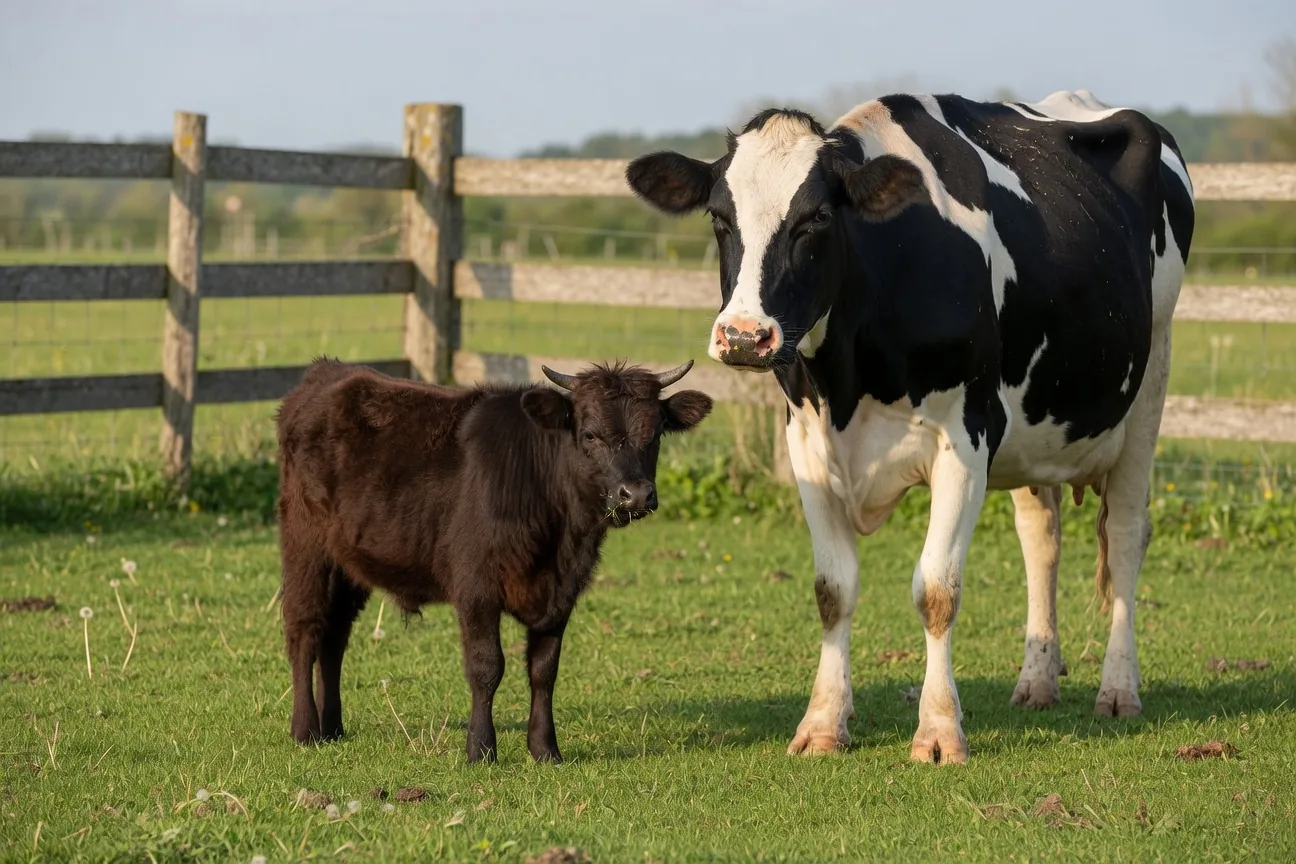
Miniature cow breeds are growing in popularity on small farms. They are created by crossing cattle with Dexter and Zebu strains to produce smaller animals. The International Miniature Cattle Breeders Society and Registry keeps official records of these miniature breeds. The table below shows the categories they recognize.
| American Beltie | Auburnshire | Australian Kyrhet |
| Miniature Angus | Barbee | Belmont |
| Black Baldie | Burienshire | Covingtonshire |
| Dexter | Belted Milking Dexter | Durham/Shorthorn |
| Four Breed Grad-Wohl | Five Breed Grad-Wohl | Happy Mountain |
| Hereford | Highland | Lessor Jersey |
| Belted Lessor Jersey | Kentshire | Red Kentshire |
| Kingshire | Panda | Zebu |
| Texas Longhorn | Open Breeds | — |
The many breeds of cattle provide us with important nutrients, especially through their milk. Sadly, in many developing countries, old, injured, or sick cows are sent to slaughterhouses because their owners cannot afford to care for them.
It is important to look after these gentle, harmless animals in their old age so that different cow breeds can be preserved for the future. Caring for them is also a way of giving back to creatures that have served people so well for thousands of years.
Explore More Animals
 Facts You Must Know (But Perhaps Don't) About Highland CattleHighland cattle facts: the ancient Scottish breed with a double shaggy coat, curved horns, and the leanest beef around. Discover what makes Highlanders so remar
 Farm Animals List: A Field Guide to the Animals of the FarmA complete farm animals list for kids: dairy, poultry, working and meat animals and what each is raised for, plus the surprising hybrids like the mule and beefa
 A Full List of Draft Horse BreedsA kid-friendly field guide to the world's draft horse breeds: Clydesdale, Belgian, Shire, Percheron, Fjord and more, with each breed's origin, height, colors a
 Fascinatingly Crazy Facts About Texas Longhorn CattleTexas Longhorns are renowned the world over for their remarkably long horns and lean meat, which has less saturated fat compared to other breeds. AnimalSake lis

 Fun fact for today!Cattle were the first livestock animal whose entire genome was mapped by scientists!