

In the animal kingdom, crustaceans belong to the subphylum Crustacea of the phylum Arthropoda. They form a very large group of aquatic creatures. This group includes animals like lobsters, crabs, barnacles, and shrimp. Crustaceans have unique characteristics that set them apart from every other animal group in nature.
About 50,000 species belong to the group of crustaceans in marine biology. Their sizes range from about 0.1 mm to 12.5 ft. That is an enormous range! Most common characteristics of crustaceans are described in the following sections, read on to find out some fascinating facts.
General Characteristics
Crustaceans share the phylum Arthropoda with three other groups: insects, chelicerates, and myriapods. These groups all look very different from crustaceans, but they share a few basic features because they belong to the same phylum.
Most crustaceans are marine animals, meaning they live in the sea. Some, however, can be terrestrial (living on land) or even parasitic in nature. Whether they live in water or on land, crustaceans share a unique set of features. They have typical digestive systems, and typical ways of reproducing and moving around.
Head and Body
The most distinctive features of crustaceans are found in their body structure. They have two compound eyes and a very well-built head. The head segment bears two pairs of antennae, plus the mandibles and maxillae.
The antennae are the first two pairs of appendages. They detect food, water temperature, and nearby dangers. Behind the antennae, the next pair of appendages forms the mandibles (or jaws) used for gripping and tearing food. The next two pairs are the maxillae, which are used for feeding.
Each body segment is called a somite, and each somite bears a pair of appendages. The rest of the body is divided into the thorax and the abdomen. The thoracic segments carry legs, both pereiopods (walking legs) and maxillipeds (feeding legs). The abdomen bears pleopods and ends in a telson, which contains the anus. Many crustaceans also have extra abdominal legs used for swimming, called swimmerets. Thin whisker-like projections called setae also extend from the head.
Test Your Crustacean Knowledge!
5 quick questions about these armoured ocean animals.
The Exoskeleton
One of the most important crustacean characteristics is the exoskeleton. It covers the entire body, head, appendages, thorax, and abdomen. These animals have no internal skeleton. Instead, they are covered by a hard, calcified shell made of chitin (a material similar to limestone).
The exoskeleton exists because a crustacean's internal organs are very delicate. Those organs sit just beneath the shell surface, so the hard covering protects them. Crustaceans also have an open circulatory system and a two-part nervous system, one ventral nerve cord and a system of ganglia.
As the animal grows, a new soft exoskeleton forms underneath the old hard one. Then the old shell is shed. This process is called molting.
Reproduction and Sexuality
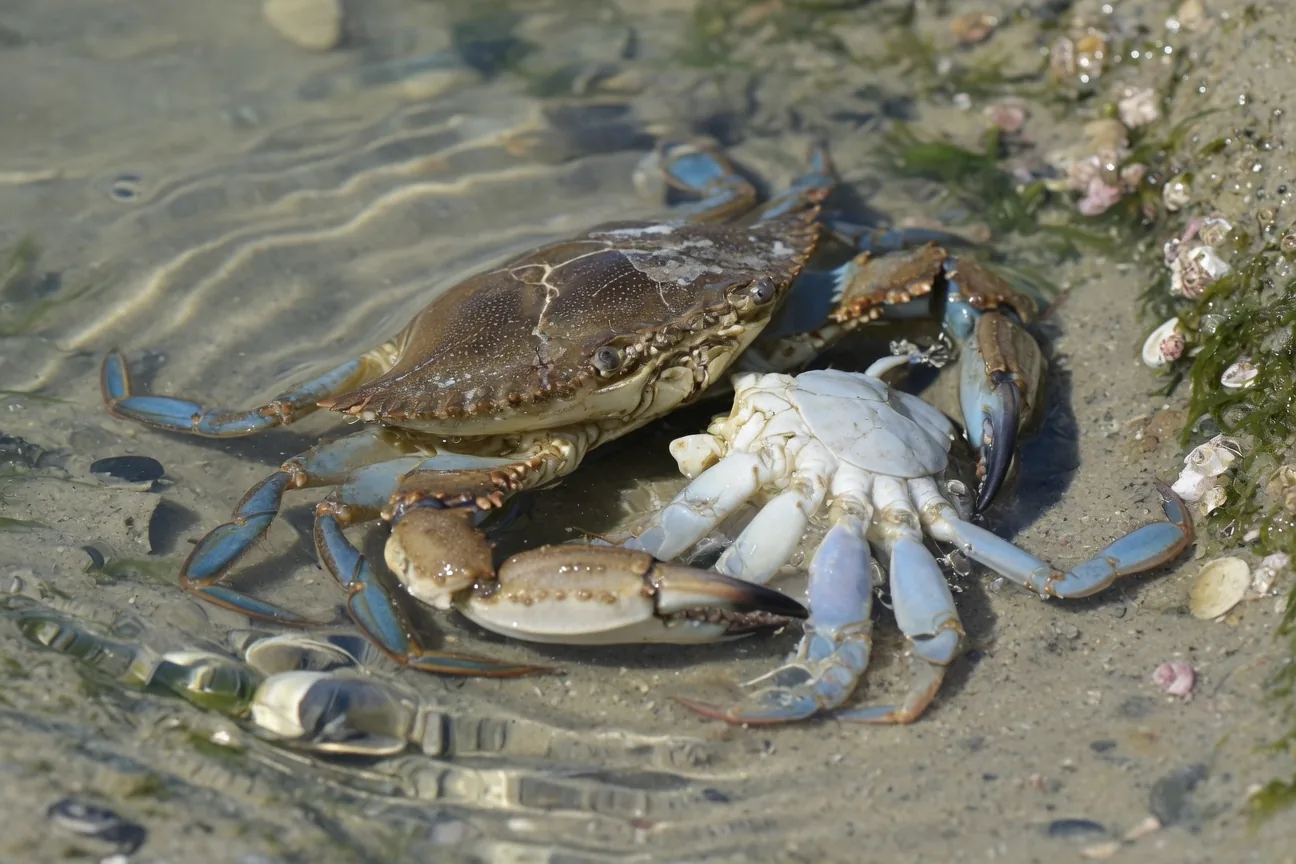
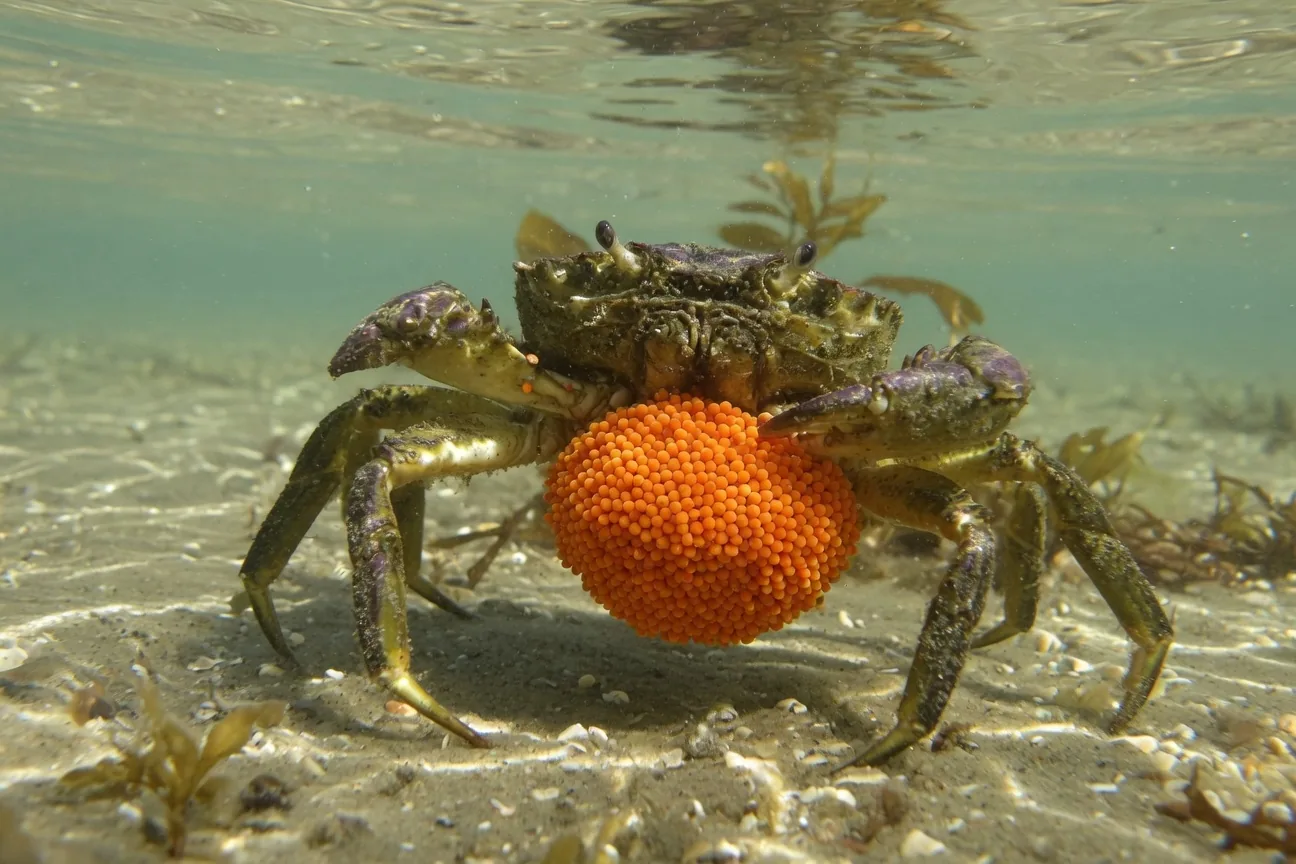
Crustaceans reproduce sexually, males and females mate and produce offspring through eggs, which makes them oviparous (egg-laying). The female usually carries the eggs under her abdomen until they hatch. The young then go through a series of metamorphoses before reaching adult form.
You can tell the two sexes apart by looking at their swimmerets, or pleopods. In males, the first pair of pleopods is used for sperm transfer. A few crustaceans are also hermaphrodites, they have both male and female reproductive organs. Barnacles are the most well-known example.
Frequently Asked Questions
What phylum do crustaceans belong to?
Crustaceans belong to the phylum Arthropoda, subphylum Crustacea.
What is molting in crustaceans?
Molting is when a crustacean sheds its old hard exoskeleton so it can grow. A soft new shell forms beneath before the old one is shed.
Are barnacles hermaphrodites?
Yes, barnacles are a well-known example of hermaphroditic crustaceans, meaning each individual has both male and female reproductive organs.
How many species of crustaceans are there?
About 50,000 species of crustaceans are known to science.
Feeding and Diet
Crustaceans are hunters, like most other animals. They catch their prey using their appendages and hunt for small fish or other aquatic animals. Smaller crustaceans, however, are often scavengers, they feed on dead material on the seabed.
These animals also use their setae to create small currents in the water. This stops prey from escaping and steers it straight into their mouth! Their diet can include smaller animals and sometimes plankton.
Explore More Animals
 What Do Shrimp Eat and How Are They Different from PrawnsShrimp are at the very bottom of the ocean food chain. Find out exactly what shrimp eat at every stage of their life cycle, plus how to tell them apart from pr
 What Do Crabs Eat? Diet, Body, Food & Amazing Crab FactsWhat do crabs eat, and what makes them so strange? Explore the crab's chewing stomach, body plan, diet, how humans eat crabs, and the weirdest crabs in the ocea
 Crayfish Habitat: Where Do Crayfish Live?Crayfish are freshwater crustaceans that are used for many purposes, which includes keeping them as pets. This article provides information on crayfish habitat,
 Facts About Spider Crabs That are Insanely BizarreWhat exactly is a spider crab? Discover the giant Japanese spider crab, European spiny crabs, portly crabs, sheep crabs, and more, with facts, a quiz, and glos

 Fun fact for today!Crustaceans range from just 0.1 mm to over 12 feet long, one of the widest size ranges of any animal group!