

Introduction
Daddy long-legs spiders are common house spiders. You can spot them easily because their legs are incredibly long compared to the size of their body. They belong to the family Pholcidae, which has about 80 genera and 1000 species.
The most common species is Pholcus phalangioides, also called the daddy long-legs spider or cellar spider. Confusingly, the name "daddy long-legs" is also used for crane flies, but crane flies are insects in the family Tipulidae, not spiders at all.
Species Sharing the Name
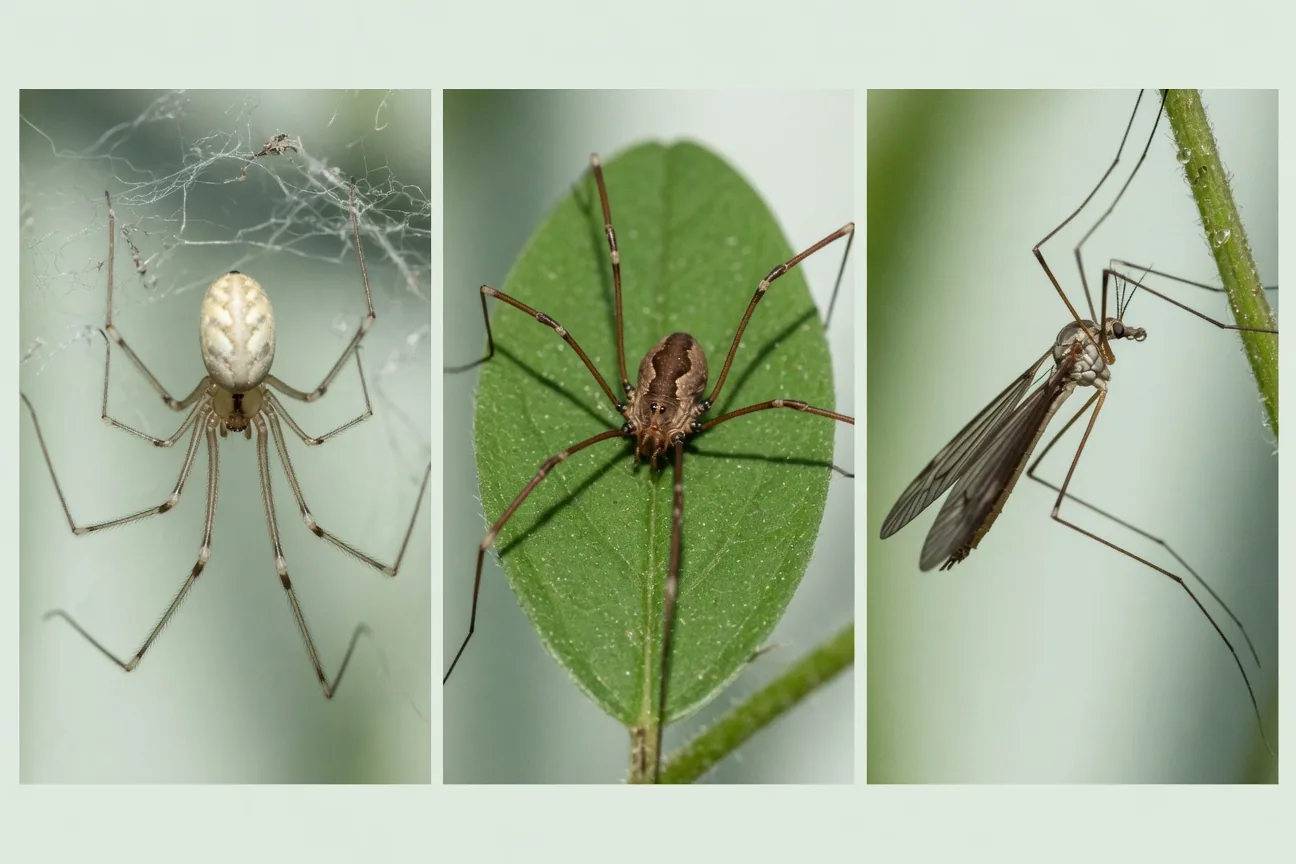
Crane flies aren't the only mix-up. Long-legged harvestmen also get called daddy long-legs. Harvestmen are arachnids, but they are not true spiders. You can tell them apart by their body shape. A harvestman has only one body section, its abdomen and cephalothorax are fused into a single piece. But daddy long-legs spiders have two clearly separate sections: a distinct abdomen and a distinct cephalothorax.
Local Names of Daddy Long-legs Spider
This spider goes by several other names. You might hear it called the vibrating spider, granddaddy long-legs spider, house spider, or daddy long-legger.
Facts about Daddy Long-legs Spider
1. A daddy long-legs spider is usually 2 to 10 mm long. Its legs, however, can grow up to 50 mm, much longer than its body. The male spider is slightly smaller than the female.
2. The body is usually light gray or brown. Some cellar spiders have brown stripes or a chevron marking on the underside of their body.
3. Like other spiders, the body is divided into two parts: the cephalothorax and the abdomen. The abdomen is usually round or cylindrical in shape.
4. Cellar spiders usually have eight eyes. Six of those eyes are arranged in two groups on the sides, with three eyes clustered closely in each group. The remaining two are small median eyes in the center.
5. Some species of daddy long-legs spiders have only six eyes, with no median eyes at all. Spider eyes are also called ocelli.
6. Cellar spiders have eight legs with dark knee segments. All eight legs connect to the cephalothorax. The long, skinny legs contain sensors that pick up movements and vibrations nearby.
7. Daddy long-legs spiders are found all over the world, except Antarctica. They prefer damp places to live, but they can also survive in deserts.
8. You are most likely to find these spiders in dark, damp spots, caves, rocks, buildings, and the corners of garages, basements, and cellars. Look for them hanging upside down in their webs.
9. Fragile as they look, daddy long-legs spiders are actually useful. They help control the number of insects and other spiders inside your home.
10. These spiders spin irregular, messy webs out of silk. Their webs do not have a sticky coating. Even so, the tangled shape makes it very hard for trapped insects to escape.
11. An interesting fact about cellar spiders is that they never clean their webs. Instead, when a web gets too dirty, they simply weave a new one.
How Daddy Long-legs Spiders Hunt
12. When a prey walks into the web, the spider acts fast. It throws out long strands of silk from a distance to pin the prey down. Then it wraps the prey in more silk before going in for the fatal bite. This trick lets a daddy long-legs spider kill prey many times larger than itself.
13. Daddy long-legs spiders can attack and kill redback spiders, which are known to be quite dangerous.
14. Huntsman spiders, jumping spiders, and spiders of the Tegenaria species can also fall prey to daddy long-legs spiders.
15. Sometimes a daddy long-legs spider will eat its own kind, especially when food is scarce.
16. Cellar spiders have both venom glands and fangs. They use venom to kill and digest their prey. They bite the prey in a soft spot and inject venom into it.
17. The fangs of a daddy long-legs spider are very short, about 0.25 mm in length. This fang shape is known as an "uncate" fang structure.
18. This spider sometimes raids the webs of other spiders to find food. It can eat the trapped prey, the host's eggs, and even the host spider itself.
Take the Daddy Long-legs Spider Quiz!
5 quick questions. How much do you really know about this sneaky cellar spider?
The Vibrating Defense
19. Daddy long-legs spiders are called vibrating spiders for a reason. When they feel threatened, they spin rapidly in their webs, vibrating so fast that their body becomes a blur. This makes them very hard to grab.
20. They also use this vibrating trick when invading another spider's web. By shaking the web, they mimic the struggle of trapped prey. This lures the owner over, and then the daddy long-legs attacks.
21. The species Pholcus phalangioides is also known as the skull spider, because its cephalothorax region resembles a human skull.
22. The pedipalps are small appendages found at the front of the cephalothorax. They are the secondary reproductive organs of these spiders. Male daddy long-legs spiders have much larger pedipalps than females.
Life Cycle of Daddy Long-legs Spiders
Mating: Season and Behavior
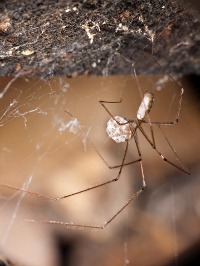
Male cellar spiders reach the age of reproduction in about one year and usually die after mating. Females can live for about 3 years. These spiders can breed throughout the year.
Male spiders do not transfer sperm directly to the female. Instead, the male makes a small web and deposits sperm on it. He then sucks the sperm up into a cavity inside his pedipalps, ready for mating.
Copulation
During mating, the male deposits his pedipalps into the female's epigynum. The female can store the sperm inside her body until she is ready to lay eggs. About 20 to 30 eggs are fertilized at a time. These are clumped together with a few silk strands. The mother carries this bundle of eggs gripped between her chelicerae, the fang-like appendages near her mouth.
Offsprings
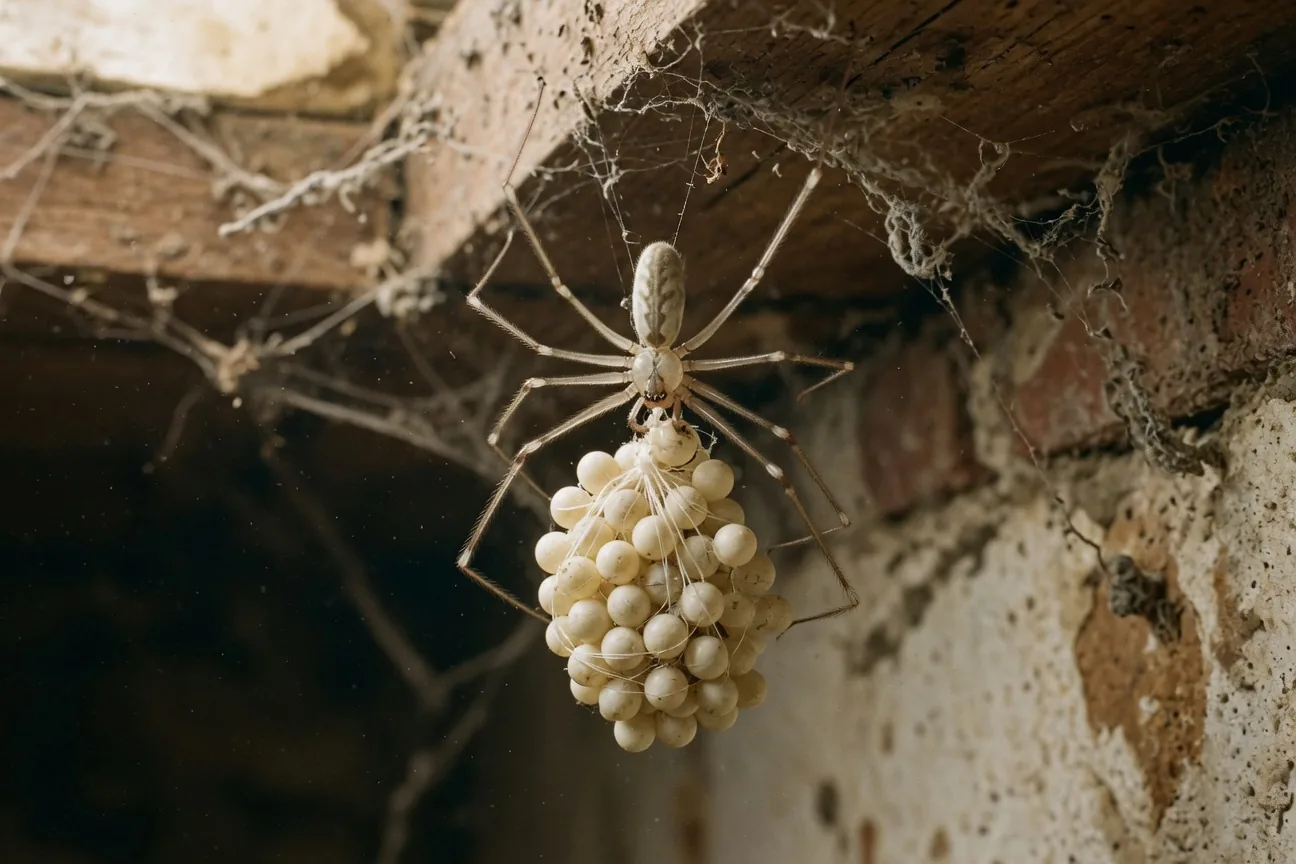
When she feeds, the mother attaches the egg bundle to the web. It takes about 2 to 3 weeks for the eggs to hatch. Even after hatching, the mother carries her young spiderlings between her jaws for a while.
The spiderlings must go through a series of molts, shedding their skin each time, before they reach adulthood. They leave their mother once they have learned to catch prey on their own.
Explore More Animals
 Are Daddy Longlegs Poisonous? You'd Be Beyond Surprised to KnowIt is a common belief that daddy longlegs are venomous. But, did you know that these are three kinds of creatures under different orders of kingdom Animalia? Th
 Unexpectedly Shocking Facts About Black Widow SpidersThe black widow spider is considered the most venomous spider in North America. Discover how to identify them, where they live, how they hunt, and what to do if
 An Exceptionally Brilliant Guide to Identifying SpidersOther than the 40,000 odd spiders on the planet, there exist thousands of arachnids which are often confused for spiders. Being well-versed with spider traits m
 Gripping Facts About the Largest Spiders in the WorldTwo spiders share the title of world's largest: the Goliath birdeater (heaviest) and the giant huntsman (longest leg span). Discover the facts, quiz, and more.
Are Daddy Long-legs Spiders Venomous?
The Myth
The most widespread myth about daddy long-legs spiders is that they are the most venomous spiders in the world, but that their fangs are too short to pierce human skin.
There is no scientific evidence to support this myth. It is true that daddy long-legs spiders have venom glands and fangs. But there are no known records of a person dying from their bite. So far, no toxicological studies have tested what effect their venom has on humans or other mammals.
Brown Recluse Spider Vs. Daddy Long-leg Spider
Even though the fangs are short, they might still be able to pierce human skin. Other spiders with the same uncate fang type (like brown recluse spiders) are known to bite people. Some scientists suspect the difference lies in muscle strength. The muscles around the fangs in brown recluse spiders are much stronger than the muscles around the fangs in daddy long-legs spiders.
In 2004, the Discovery Channel programme MythBusters demonstrated that daddy long-legs spiders can actually bite humans. The venomous myth is thought to have started because these spiders can kill dangerous redback spiders. But the daddy long-legs wins that fight through clever technique, not through a powerful venom.
Frequently Asked Questions
Are daddy long-legs spiders venomous?
They have venom glands and fangs, but there is no scientific evidence that their venom is dangerous to humans.
What is the scientific name of the daddy long-legs spider?
The most common species is Pholcus phalangioides, in the family Pholcidae.
Why is it called a vibrating spider?
When threatened, it vibrates rapidly in a spinning motion in its web, becoming blurred and hard to catch.
Is a harvestman the same as a daddy long-legs spider?
No, harvestmen are arachnids but not true spiders. Their body is a single fused section, unlike a spider's two distinct parts.
Where do daddy long-legs spiders live?
Except Antarctica, they are found worldwide. They prefer dark, damp places like cellars, basements, garages, and caves.

 Fun fact for today!Daddy long-legs spiders eat the ends of their own legs when they grow too long!