

So That's How the Confusion Took Root…
The bobcat and the Canadian lynx may share a common ancestor, the Eurasian lynx. They have developed as separate species over thousands of years, but they still share many features in how they look and behave.
Both wild cats are shy and reclusive. Neither one looks for trouble. Both are mostly nocturnal, so people almost never spot them in the wild. On top of that, they are masters of stealth, and their ranges overlap in parts of North America. No wonder people mix them up!
Below are the key differences that will help you tell them apart if you are ever lucky enough to see one.
Canadian Lynx vs. Bobcat
First, meet the two cats. Both belong to the genus Lynx, that's why they look so similar. But their scientific names are your first clue that these are two very different animals.
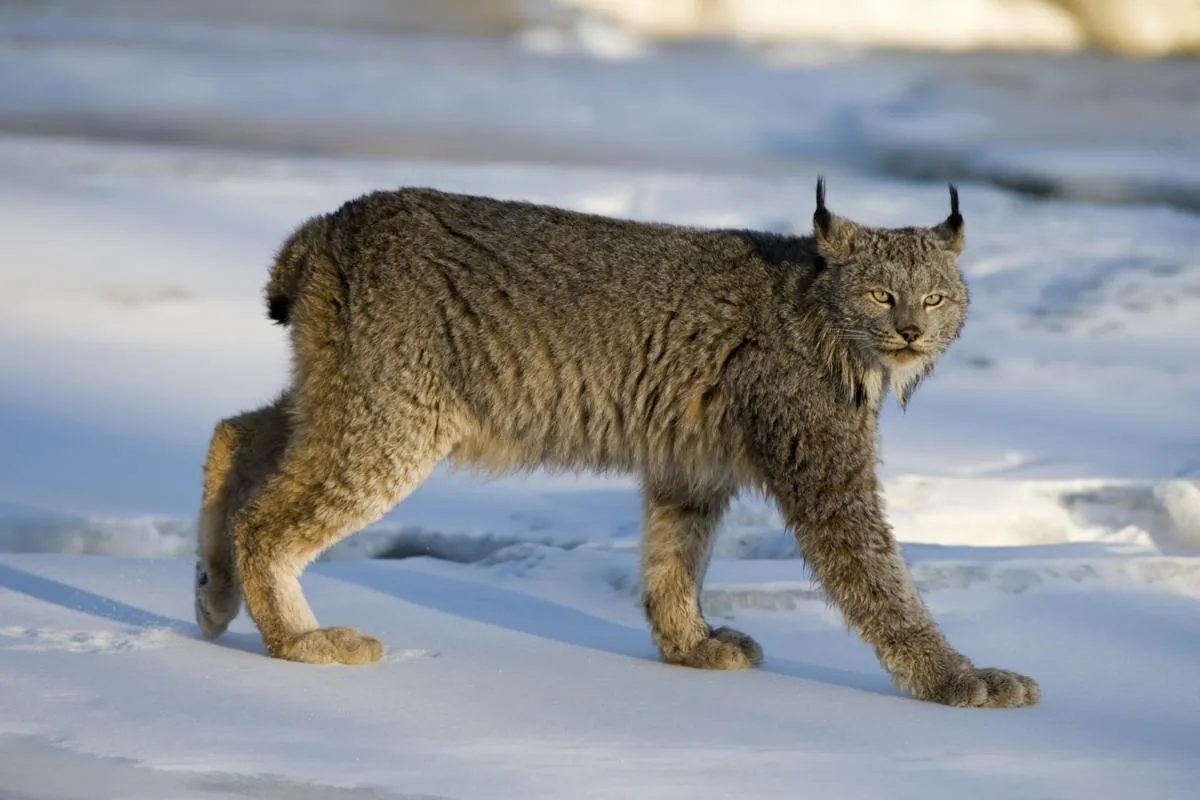
Lynx canadensis, pale, leggy, with snowshoe paws and long ear tufts.
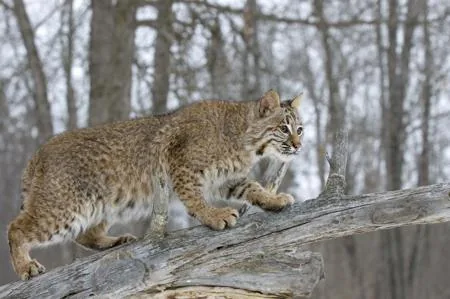
Lynx rufus, smaller and stockier, with a clearly spotted coat.
The Canadian Lynx Looks Bigger Than the Bobcat.
The Canadian lynx measures between 19 and 22 inches at the shoulder and weighs between 11 and 40 lb. Its hind legs are noticeably longer than the front ones, so the hips sit higher than the shoulders. The paws are also bigger, covered in thick fur that helps it walk on deep snow.
The bobcat is smaller, measuring 12 to 22 inches at the shoulder and weighing between 9 and 37 lb. Its front and hind legs are about the same length, giving it a more streamlined look. The paws are smaller too.
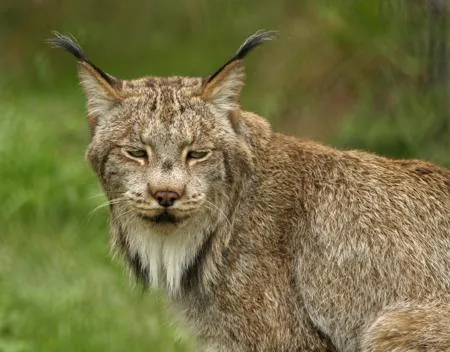
Long tufts on big ears and a thick mane around the face.
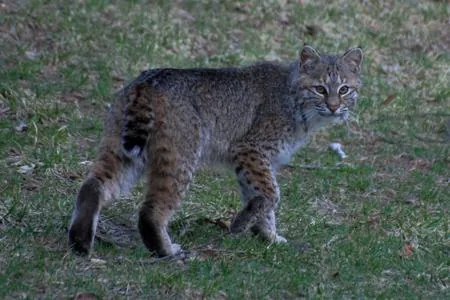
Streamlined and level-backed, with smaller paws and a spotted coat.
Different Coats, Different Ears, Different Tails.
The Canadian lynx has a muted, dusty-beige coat with only the faintest dark spotting. Its ears are probably the best clue, the lynx has long black tufts of hair on top of each ear, and a thick mane around its face. Its tail is short, with a dark tip.
The bobcat has much more obvious spots, a bit like a small leopard. Its ears are smaller, with shorter tufts. The bobcat's tail is longer, with black bands and a dark tip, and white on the underside.
Even Their Kittens Are Easy to Tell Apart.
Canada lynx kittens have grayish-brown fur. The mother raises them on her own until they are about 10 months old. The breeding season lasts roughly a month, usually between March and May. A single litter is normally two to four cubs, and litters get bigger when prey is easy to find.
Bobcat kittens are darker, and their spots show up clearly even at a young age. Bobcats can have a mating season between February and March, and sometimes a second one between June and July.
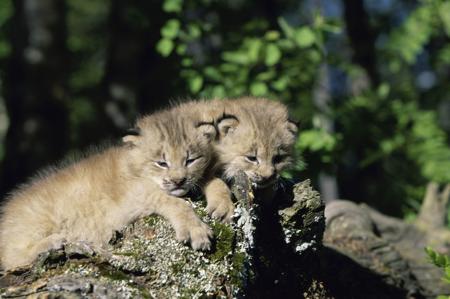
Pale, grayish-brown, and barely spotted.
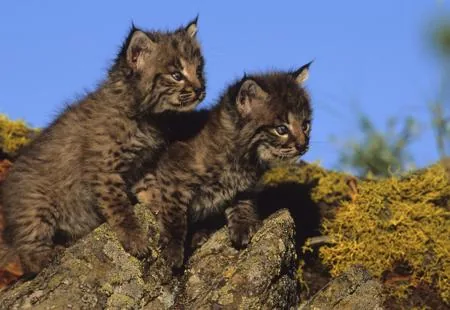
Darker, with spots already showing through.
Now, View Their Differences Up Close.
Put them side by side in the snow and two things settle it almost every time: color and size. The lynx is lighter and looks larger. The bobcat is more clearly spotted and a little smaller.
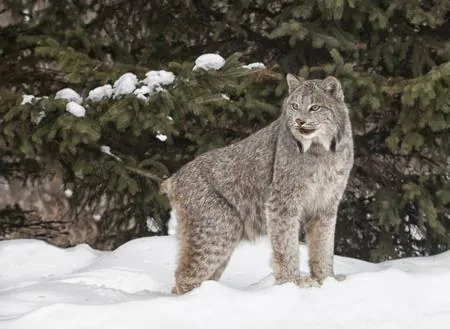
Lighter coat, larger in appearance.
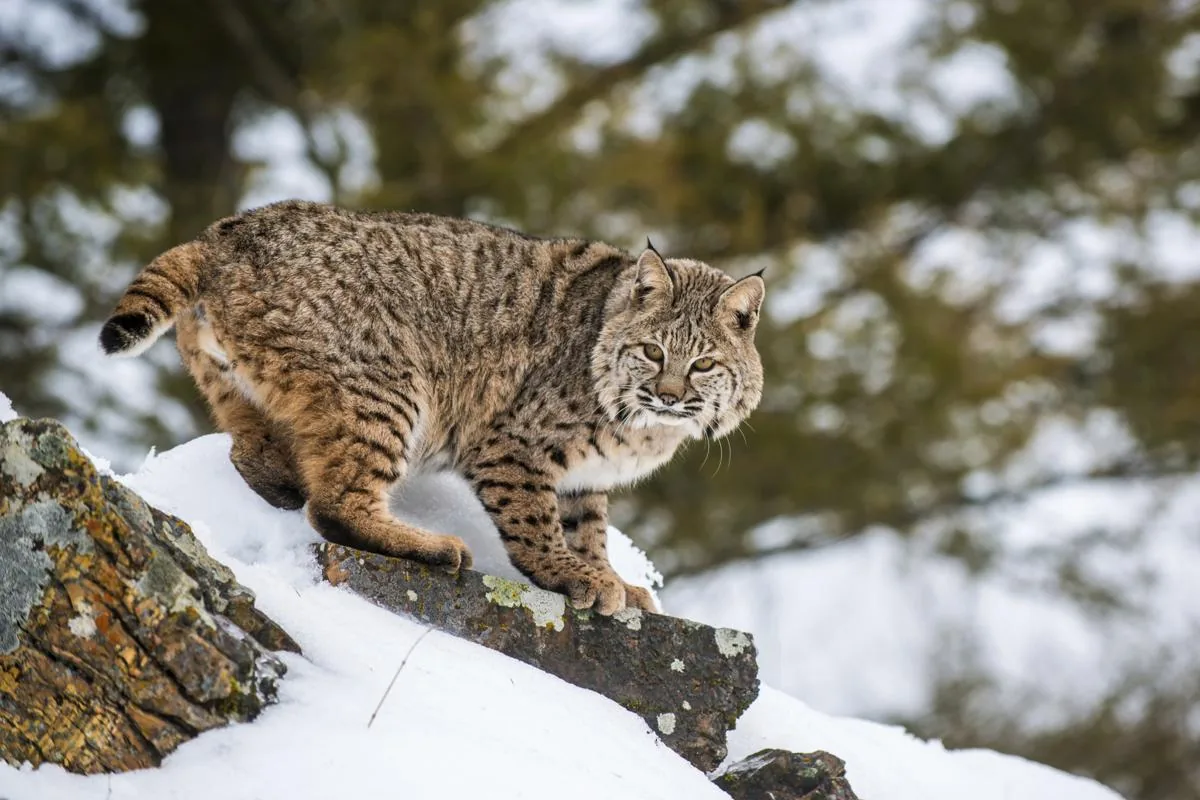
Spotted coat, smaller in size.
Lynx vs. Bobcat at a Glance
Here is everything above, side by side. The paws and ears alone usually settle it, but the coat, tail, and size are dead giveaways too.
| Clue | 🐈 Canadian Lynx | 🐱 Bobcat |
|---|---|---|
| Scientific name | Lynx canadensis | Lynx rufus |
| Size & build | 19-22 in at the shoulder; 11-40 lb. Long hind legs, so the hips sit higher than the shoulders. | 12-22 in at the shoulder; 9-37 lb. Front and hind legs nearly even, streamlined. |
| Paws | Big, with a thick covering of fur, built like snowshoes for deep snow. | Smaller and more delicate. |
| Ears | Large ears with ample black tufts; a thick mane lines the face. | Smaller ears with a shorter tuft. |
| Coat | Muted, dusty-beige with only the slightest dark spotting. | Prominent spots, a bit like a leopard's. |
| Tail | Shorter, with a dark tip. | Longer, with black bands and a dark tip; white on the underside. |
| Range | Canada, Alaska, and the snowy northern U.S. | Southern Canada through almost all of the mainland U.S., but not the snowy far north. |
| Main food | Snowshoe hare, 60% to 97% of its diet. | Rabbits, plus rodents, squirrels, birds, fish, and insects. |
Spot the Difference: Lynx or Bobcat?
5 quick questions. Can you tell these two look-alike wild cats apart?
Their Ranges Overlap, but Only Slightly.
The Canada lynx lives all across Canada and Alaska, plus a handful of northern U.S. states (including Washington, Oregon, Montana, and Idaho) and stretches as far south as Utah in some areas.
The bobcat ranges from southern Canada across nearly all of the mainland United States. Its small paws are not built for deep snow, which is why it stays out of the heavy-snow regions farther north into Canada.
Frequently Asked Questions
What is the easiest way to tell a Canadian lynx from a bobcat?
Look at the paws and ears. The Canadian lynx has very large, furry, snowshoe-like paws and long black tufts on its ears, with a thick facial ruff. The bobcat has smaller paws, shorter ear tufts, and a spotted coat. The lynx also looks bigger and longer-legged.
Are the Canadian lynx and bobcat the same animal?
No, but they are close cousins. Both are wild cats in the genus Lynx (the Canada lynx is Lynx canadensis and the bobcat is Lynx rufus) and they may share a common ancestor, the Eurasian lynx. They are separate species, though, with different bodies, coats, and habits.
Which is bigger, a lynx or a bobcat?
The Canadian lynx looks bigger. It measures 19 to 22 inches at the shoulder and weighs between 11 and 40 lb, with long hind legs that make its hips sit higher than its shoulders. The bobcat is a little smaller and more streamlined, at 12 to 22 inches and 9 to 37 lb.
Why does the bobcat live further south than the lynx?
The bobcat's small, delicate paws make it unfit to live in areas with heavy snowfall, which is why it is mostly absent from the far north of Canada. The lynx's big, furry paws act like snowshoes, so it thrives across Canada, Alaska, and the snowy northern United States.
What does a Canadian lynx eat?
The Canadian lynx's favorite food is the snowshoe hare, which makes up 60% to 97% of its diet. When hares are hard to find, it hunts rodents and birds. The bobcat also loves rabbits but is far more opportunistic, also eating rodents, squirrels, birds, fish, and insects.
- Lynx rangeAll across Canada and Alaska, plus the snowy northern U.S., Washington, Oregon, Montana, Idaho, into New England, and south to Utah.
- Bobcat rangeFrom southern Canada across nearly all of the mainland United States, but kept out of the heavy-snow far north by its small paws.
Their Food Habits Differ as Well.
The Canadian lynx's favorite food is the snowshoe hare, which makes up 60% to 97% of its diet. When hares are hard to find (usually in summer) it hunts rodents and birds instead.
The bobcat also loves rabbits, both the snowshoe hare and the eastern cottontail. But bobcats are far more opportunistic than the lynx. They will happily hunt rodents, squirrels, birds, fish, and insects too. They are also considered a threat to the endangered whooping crane.
Explore More Animals
 Brilliant and Interesting Facts About BobcatsDid you know there are 12 subspecies of the bobcat, and over a million in the wild? Discover fascinating bobcat facts about habitat, diet, hunting, territory, a
 Are Bobcats Dangerous to Humans and Pets?Bobcats are a species of wild cats found all across the United States. They pose no real threat to humans as such, but may try to hunt smaller farm animals and
 Cheetah vs. Leopard: How to Tell Them ApartCheetah or leopard? Learn the quick clues, spots vs. rosettes, speed, body shape, and habitat, that tell these two spotted cats apart, with a side-by-side cha
 Coyote vs. Wolf vs. Fox: A Complete ComparisonCoyotes are often known to be the smaller cousins of gray wolves, and the foxes of the coyotes. This AnimalSake article does an analysis to put an end to the ag

 Fun fact for today!The lynx's huge, furry paws work like built-in snowshoes, that's its number-one giveaway in the snow.