

A Fish That Moves Its Own Eye
This eye-migration even baffled Charles Darwin. He called it a "remarkable peculiarity." It is a unique feature of all flatfish. Because these fish lie on their side at the bottom of the ocean, having both eyes on top helps them spot prey. Flukes and flounders share this ability, but with one key difference in which side the eyes end up on.
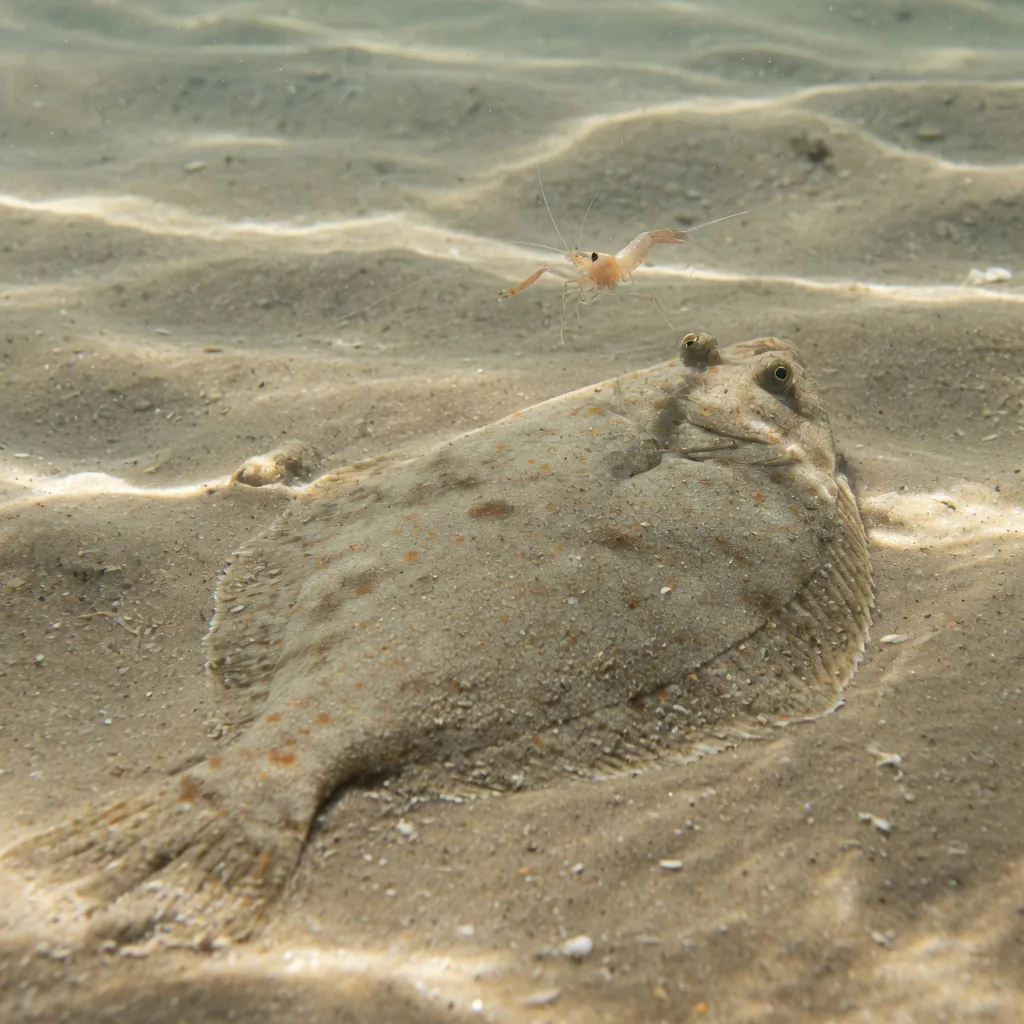
Both flukes and flounders are bottom-dwelling flatfish found in the Atlantic Ocean. They lie flat on the ocean floor and blend in with their surroundings. Their camouflage lets them hide from prey and strike by surprise.
Both fish taste mild, a favorite with chefs because they work in many recipes. Both are fun to catch, too. They look alike, with dark, spotted skin and eyes on one side of their body. So how do you tell them apart? The chart below shows the key differences.
Fluke Vs. Flounder
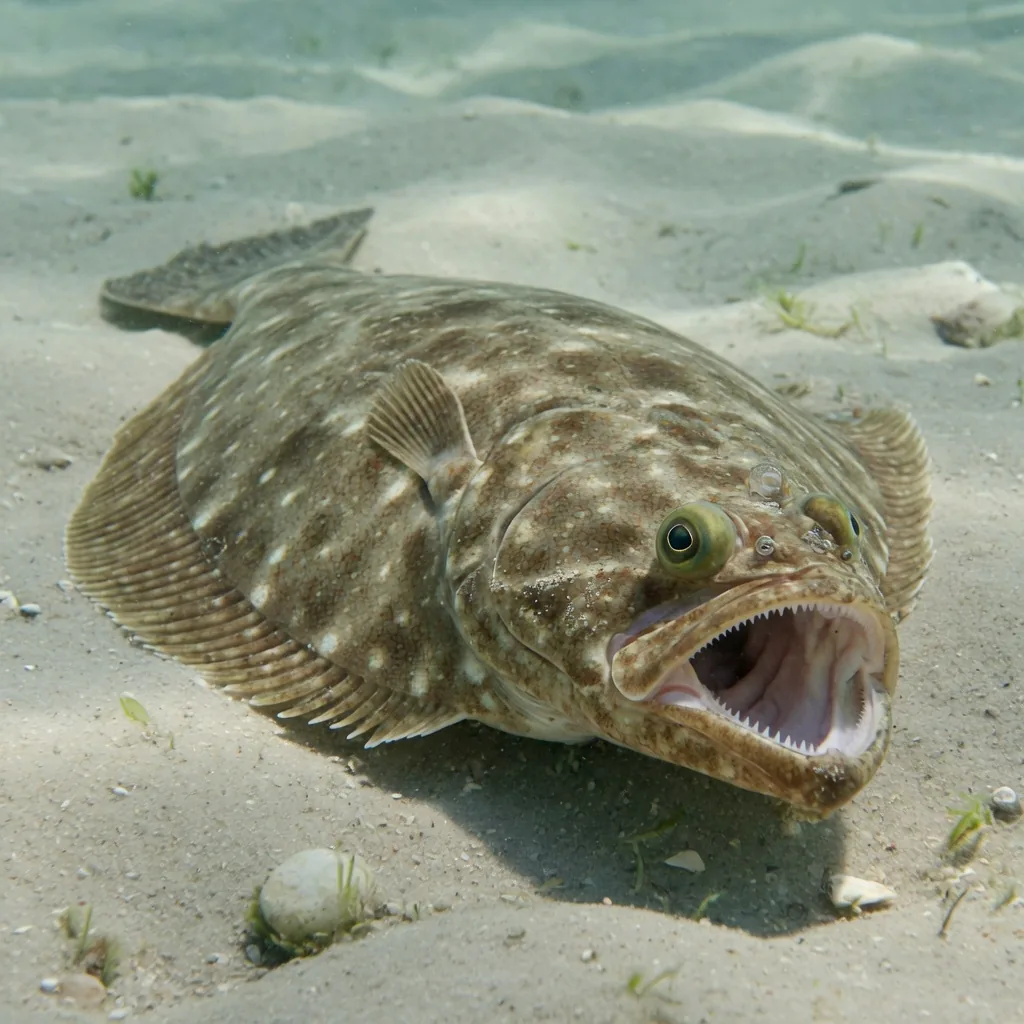
Eyes on the left, and a big mouth full of sharp, exposed teeth for hunting other fish.
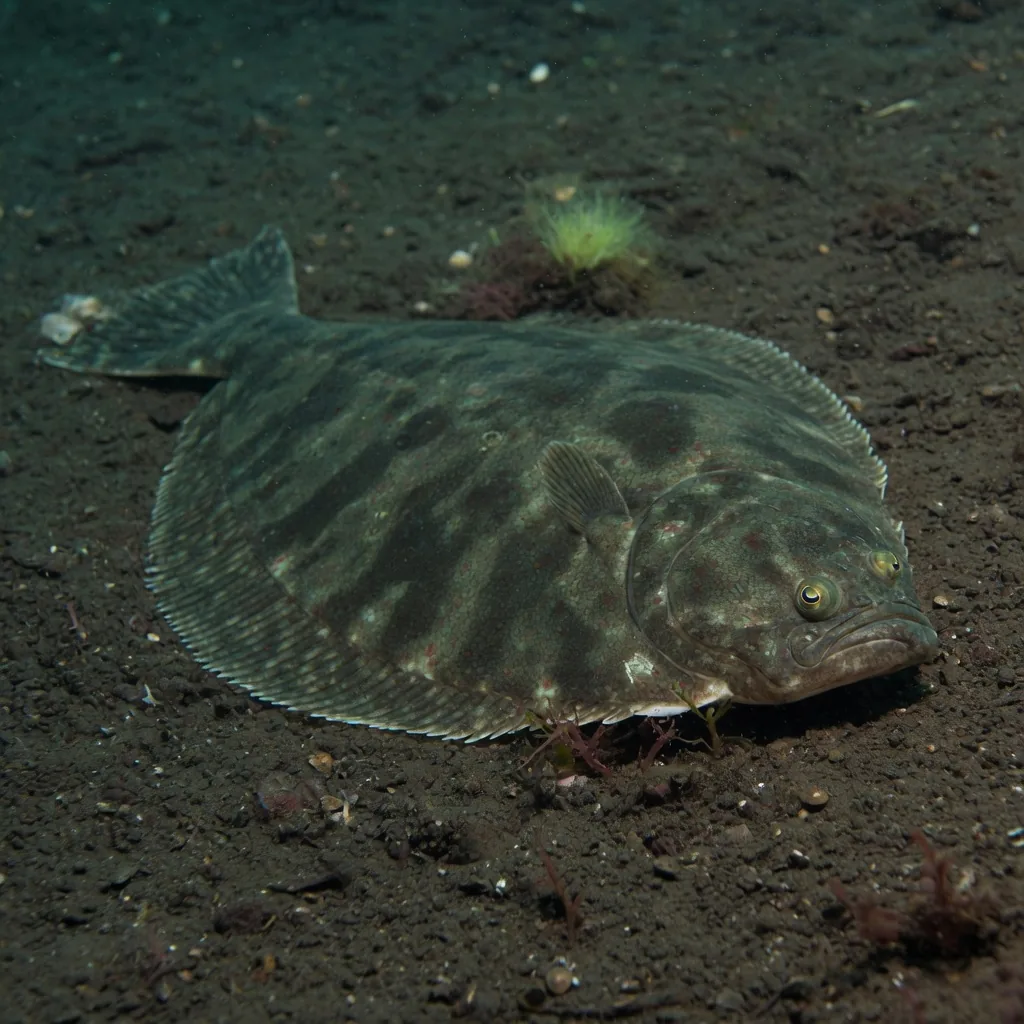
Eyes on the right, with a small, neat mouth and no teeth on show.
| Feature | 🐟 Fluke | 🐠 Flounder |
|---|---|---|
| Commonly Known As | Summer Flounder, Left Eye Fish | Winter Flounder, Right Eye Fish |
| Scientific Name | Paralichthys dentatus | Pseudopleuronectes americanus |
| Habitat | Western Atlantic Ocean | Western North Atlantic Ocean |
| Lifespan | Average of 20 years | Average of 12-14 years |
| Eye Position | On the left side of the body | On the right side of the body |
| Length | 15 - 20 inches | 4 - 24 inches |
| Weight | 2 - 20 pounds | 1.5 - 5 pounds |
| Mouth and Teeth Structure | Large mouth with exposed large teeth | Small mouth with no teeth |
| Diet | Carnivores: feed on shrimp, winter flounders, blue crabs, silversides, squid, blue fish, etc. | Carnivores: feed on shrimp, sand worms, amphipods, and other smaller fish. |
| Fishing season | Summer (May - September) | Winter (April - May) |
| Taste | Mild and sometimes muddy | Mild, delicate, and sweet |
With these clues in mind, fishers can tell flukes and flounders apart quickly. First, check which side the eyes are on. If you are still not sure, look at the mouth, a large toothy mouth means fluke, a small mouth means flounder.
Frequently Asked Questions
What is the fastest way to tell a fluke from a flounder?
Check which side the eyes are on. A fluke (summer flounder) has both eyes on the left side of its body; a winter flounder has both eyes on the right side.
Why do flukes and flounders have both eyes on one side?
They are flatfish. They are born with one eye on each side of the head, but as they grow, one eye migrates to the other side so both end up together on the side that faces up while the fish lies flat on the seabed.
What is the difference between a fluke's and a flounder's mouth?
A fluke has a large mouth with big, exposed teeth because it hunts other fish. A winter flounder has a small mouth with no visible teeth and eats smaller prey like sand worms and shrimp.
Are a fluke and a flounder the same fish?
No. They come from two distantly related flounder families. The fluke is the summer flounder (Paralichthys dentatus); the winter flounder is Pseudopleuronectes americanus.
Which one tastes better, fluke or flounder?
Both have a mild flavor that chefs love. Fluke can taste mild and sometimes a little muddy, while winter flounder is often described as mild, delicate, and sweet.
- 👈 Fluke = Left Eye Fish
- Right Eye Fish = Flounder 👉
In the end, it all comes down to the fun experience of fishing. The favorite dish made by using a fresh catch will be like a cherry on the top!
Fluke or Flounder? Take the Quiz!
5 quick questions. Can you tell these two flatfish apart?
Explore More Animals
 Ridiculously Fabulous Facts About Flounder FishThe flounder fish is known for its unusual change in body structure, especially the position of its eyes. This astonishing fish goes through an unbelievable tra
 Types of FishThere are over 32,000 species of fish, more than all other vertebrates combined. Discover how fish are classified by species and habitat, plus the fish we keep
 A Visual Guide on How to Identify Various Types of Snapper FishSnappers are one of the most popular fish in the seafood industry. Learn how to identify all 17 commonly known snapper varieties by their colors, fins, stripes,
 Really Striking Facts About Herring FishHerrings are widely found in the shallow waters of the North Atlantic and North Pacific oceans. Discover fascinating facts about their hunting style, reproducti

 Fun fact for today!A fluke's eyes are on its left and a flounder's are on its right, that one clue is usually all a fisher needs!