

The elephant is the largest animal to walk the Earth today. There are two recognized species:
- The African elephant (Loxodonta africana)
- The Asian elephant (Elephas maximus)
Together they live across sub-Saharan Africa, South Asia, and Southeast Asia.
Both species belong to the Elephantidae family and to an ancient group called Proboscidea, the same order that includes extinct relatives like mammoths and mastodons. Today, the ivory trade is the biggest threat to elephants. The IUCN lists the African elephant as 'vulnerable' and the Asian elephant as 'endangered'.
This AnimalSake post covers the key differences between the African and Asian elephant species, so you can tell them apart at a glance.
African Elephant vs. Asian Elephant
| Feature | African Elephant | Asian Elephant |
|---|---|---|
| Species | Loxodonta africana | Elephas maximus |
| Height | 8.2-13 ft (2.5-4 m) | 6.6-9.8 ft (2-3 m) |
| Weight | 5,000-14,000 lbs | 4,500-12,000 lbs |
| Ears | Large, Africa-shaped | Smaller, rounded |
| Trunk tip | 2 finger-like protrusions | 1 finger-like protrusion |
| Skin | More wrinkled, darker gray | Smoother, lighter gray |
| Back shape | Concave (highest at shoulder | Convex) slight hump in middle |
| Tusks | Both sexes; softer, more rings | Males only; harder, fewer rings |
| IUCN Status | Vulnerable | Endangered |
Size and Weight
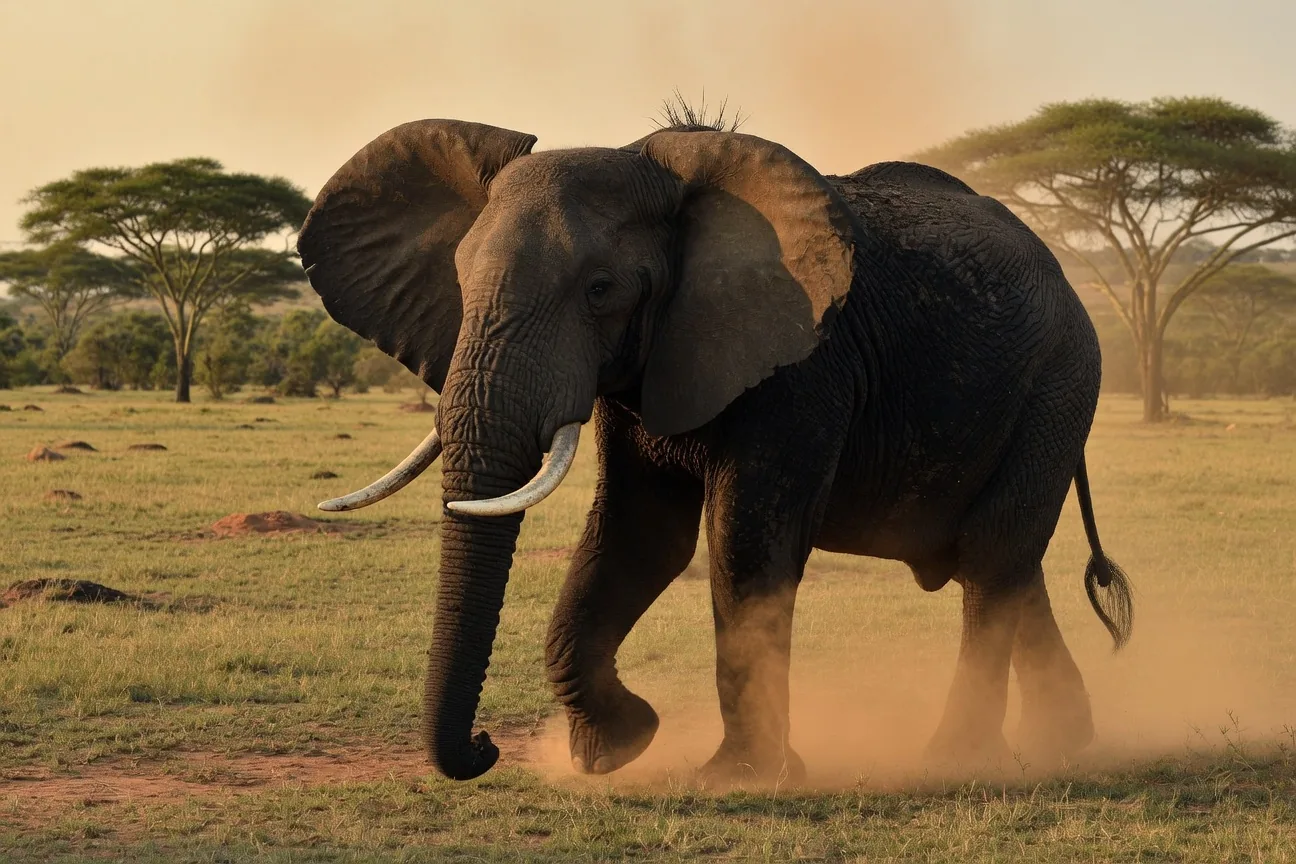
African elephants are noticeably bigger. They stand about 8.2 to 13 ft (2.5 to 4 m) tall at the shoulder, that's as tall as a single-storey building!
Asian elephants are smaller, measuring about 6.6 to 9.8 ft (2 to 3 m) at the shoulder.
The bigger size means African elephants also weigh more, between 5,000 to 14,000 lbs.
Asian elephants are lighter, weighing between 4,500 to 12,000 lbs.
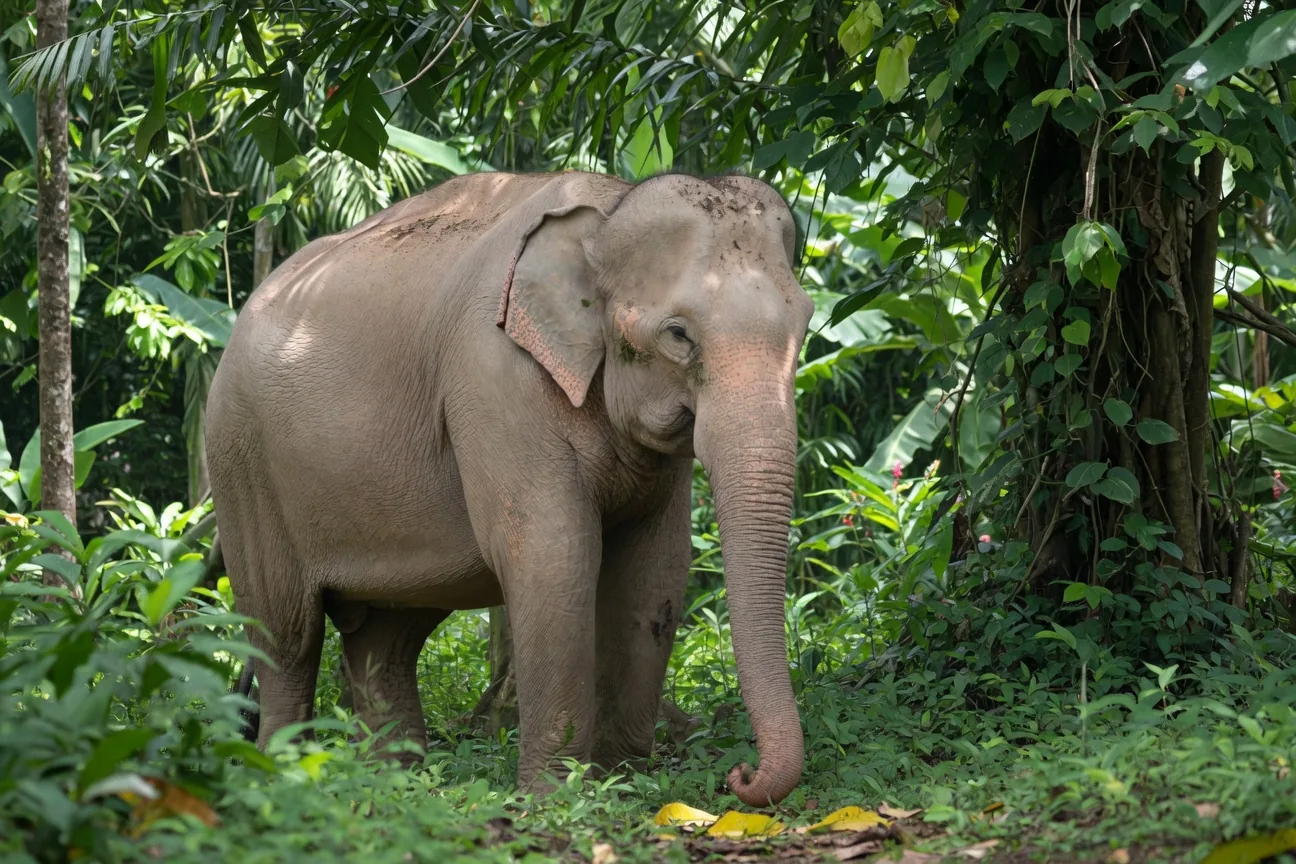
Skin
African elephants have very wrinkled skin. Their hide is a dark shade of gray, sometimes nearly black.
Asian elephants have smoother skin with fewer wrinkles, and it is lighter in color.
Can You Tell Them Apart? Take the Quiz!
5 quick questions on African vs. Asian elephants. How well do you know your giants?
The Trunk
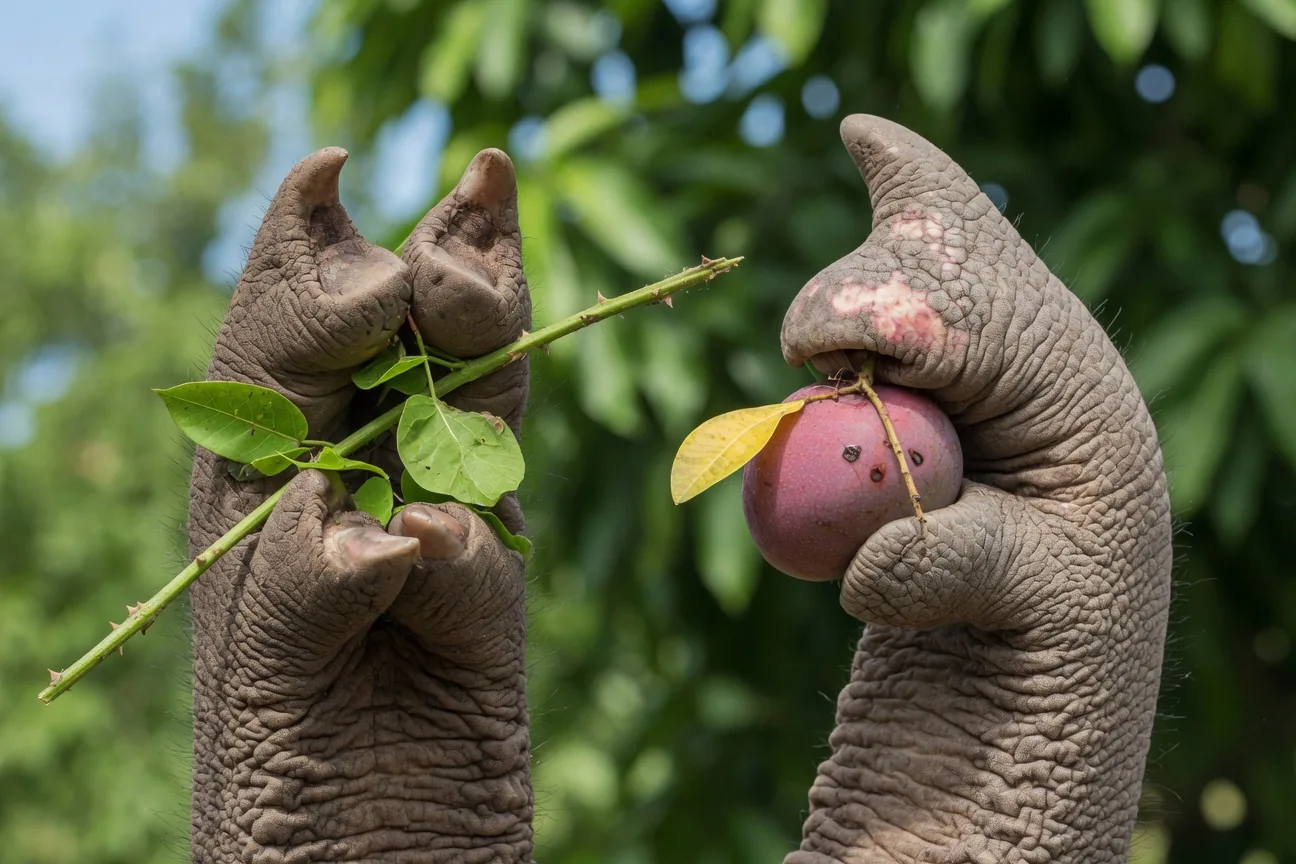
The elephant's trunk contains close to 100,000 muscles. It uses this powerful tool to smell, breathe, trumpet, drink, and grab food. At the tip there is a finger-like grip that helps the animal pick up its meals. The African elephant has 2 finger-like protrusions at the tip, like a two-fingered pincer.
The Asian elephant has just a single finger at the tip of its trunk. This means it picks up food differently. Instead of pinching, it wraps the trunk around the food item and squeezes it into its mouth.
Ears
Ears are one of the easiest ways to tell the two species apart. The African elephant's ears are enormous, they are actually shaped like the continent of Africa. Those large ears are not just for looks. They help the animal release body heat and stay cool under the hot African sun.
The Asian elephant's ears are much smaller and rounded. Temperatures in South Asia are cooler than in Africa, so Asian elephants don't need such big ears to cool down. (And no, their ears aren't shaped like Asia!)
Shape of the Body
The African elephant has a smooth, rounded head. Its highest point is at the shoulder, the back slopes down from there, giving it a concave (dipped) shape.
The Asian elephant's head has a clear hump on top. Its back also has a slight arch in the middle, giving it a convex (rounded-upward) appearance.
Tusks
Both male and female African elephants grow tusks, though the males' tusks are noticeably larger. African tusks are softer and tend to show more rings along their length.
For Asian elephants, only the males grow tusks. Female Asian elephants have very small tusk stubs or none at all. Asian tusks are harder and have fewer rings than African ones.
Why It Matters
Both species are fighting for survival. It is up to us to protect them. Without action, elephants could face the same fate as the mammoths, driven to extinction by relentless hunting by people. Every elephant we lose is one less giant walking our planet.
Explore More Animals
 Really Astonishing Facts About African ElephantsGentle to some, threatening to others, African elephants continue to be a subject of interest for many animal lovers. This AnimalSake post provides some interes
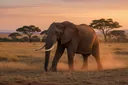 African Elephant Habitat: This is Where These Animals Really BelongThe largest land animal on Earth, the African elephant roams 37 nations across sub-Saharan Africa. Discover the two species, their habitats, and what threatens
 Facts About Asian Elephants You Won't Believe You Didn't KnowDid you know that female Asian elephants do not have tusks? And that only some male ones do? Here are some interesting facts about the Asian elephants.
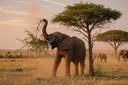 What Do Elephants Eat? Diet, Habits & Fun FactsElephants consume up to 375 pounds of plants every day. Find out exactly what wild and zoo elephants eat, how they find minerals, and why they spend 80% of thei

 Fun fact for today!African and Asian elephants cannot interbreed, they are genetically too different!