

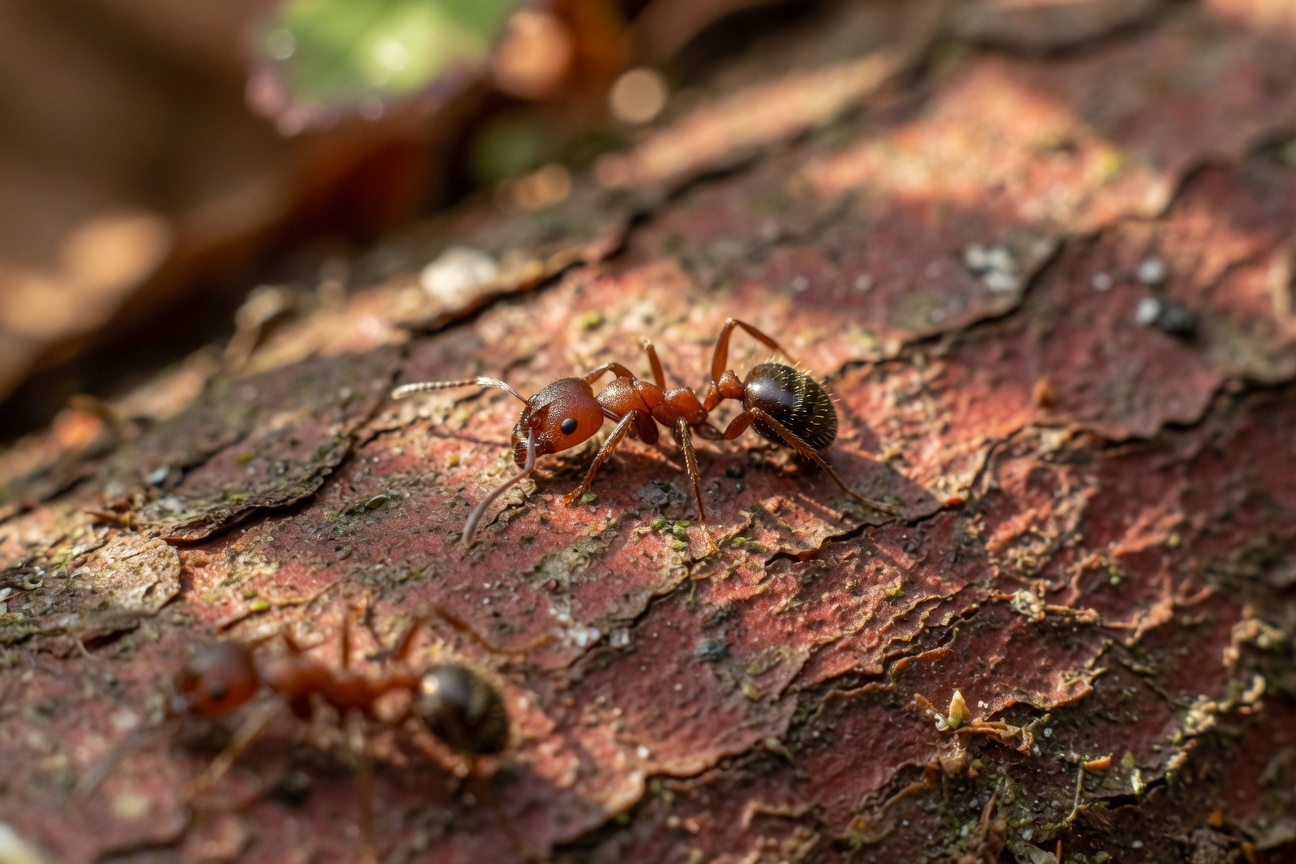
Picture a long chain of ants trailing up a wall. Hundreds of ants walk in a line, carrying food or searching for it, a very common sight! There is a certain rhythm to their walk. None of them leaves the line. They all move in step, one after the other. Watching them work without stopping, you might wonder: do these tiny creatures ever sleep?
Some people say ants never really sleep. At first, that sounds right, it is quite uncommon to spot an ant standing still. Ants are always on their toes (both literally and in their busy lives), so it's easy to believe they never rest. But every living being needs some rest, doesn't it? So, do ants sleep? Yes, they do.
Ants take turns to sleep
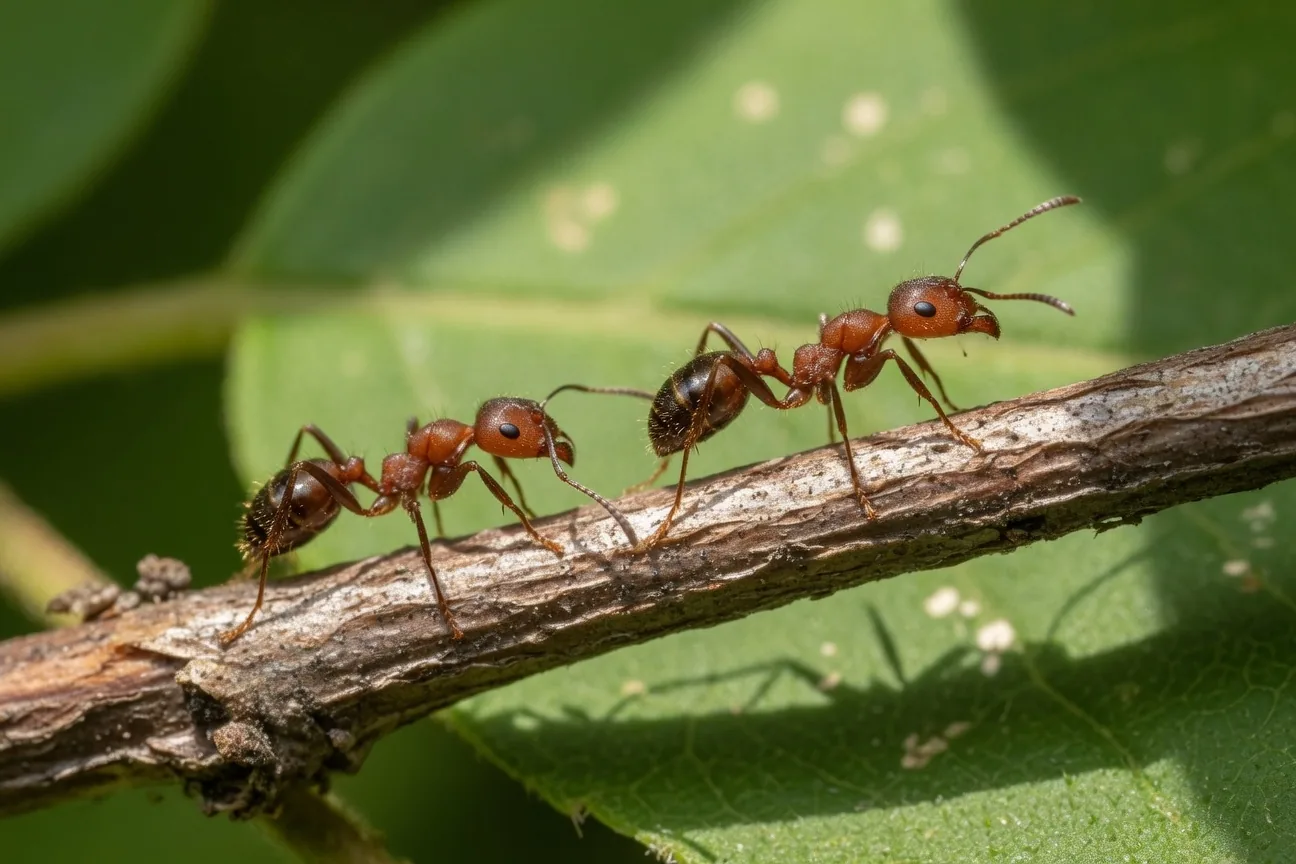
Ants seem to be working 24/7 because there are always some ants working at any point in time and all working ants look the same! So, even if you see ants walking for hours without stopping, it is not the same group of ants all along. Some ants go to sleep for a while, and others take their place. By taking turns, these clever ants make it look like they are working all day long.
How do ants sleep and wake up?
Have you ever seen some ants walking slowly while others looked lively and fast? The slow ones have just woken up! They are getting back into action and need a moment to reach their usual speed. Scientists have found that ants show sleep-like behavior to lower how much food they need. When they rest, their body processes slow down and they burn less energy. It is a clever way to deal with times when food is hard to find!
Take the Ant Sleep Quiz!
5 quick questions. Find out what you really know about how ants sleep.
When do ants sleep?
Ants take turns to sleep throughout the day and night. But there is also a special time of year when the whole colony rests. Have you noticed that you see far fewer ants in winter? Where do they go when it gets cold? Studies show that ants hibernate during the winter months. Their body processes slow right down. They live off food that they collected and stored during the summer, and they are much less active until the weather warms up again.
How long do ants sleep?
A fascinating research article called Polyphasic Wake/Sleep Episodes in the Fire Ant, Solenopsis Invicta was written by Deby L. Cassill, Skye Brown, Devon Swick, and George Yanev. It was published in the July 2009 issue of the Journal of Insect Behavior. The study found that fire ants definitely sleep, and that the amount of sleep varies depending on the type of ant.
Worker ants take about 253 very short naps each day. Each nap lasts roughly 1 minute. All those short rests add up to around 4 hours of sleep per day. Queen ants sleep differently, they take 92 longer sleep episodes, each lasting about 6 minutes. That works out to approximately 9 hours of sleep each day.
Queen ants sleep for about the same amount of time as most people do (if you consider 8 hours a typical night). Worker ants need far less sleep. The study also found something interesting: the ants' sleep is affected by whether it is light or dark outside. And queen ants were observed having episodes of rapid antenna movement sleep.
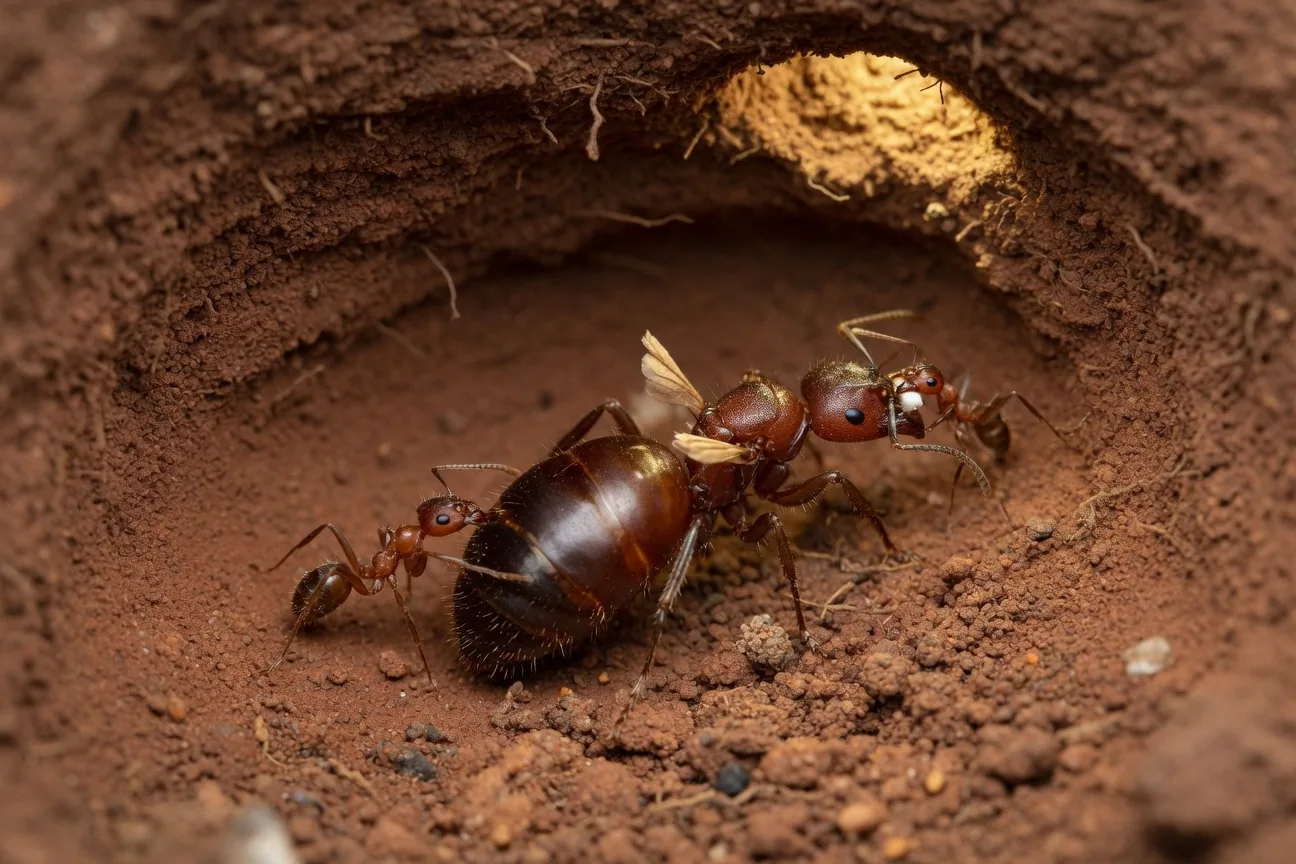
Rapid antenna movement (or RAM sleep) sounds a lot like rapid eye movement (REM) sleep in humans, doesn't it? That is because RAM sleep in ants is actually very similar to our own REM sleep cycle.
A BBC news report covered this research in detail. It confirmed that queen fire ants sleep longer, while worker ants take short power naps. The queen's naps last about 5-6 minutes each, with 92 of them through the day. The report also found that sleeping longer is the secret to the queen's longer lifespan compared to workers.
The BBC report described exactly how the study was carried out. Researcher Deby Cassill and her team raised a colony of fire ants inside an artificial chamber. The colony had 3 queen ants, 30 worker ants, and 30 larvae. The team watched the ants constantly. This is how they discovered how long ants sleep. The study also showed that 4/5th of the ants were awake at any given point in time, with some workers always up and ready to work.
Another interesting finding was that queen ants keep their sleep patterns in sync. All 3 queens in the colony went to sleep at the same time and woke up at the same time. Cassill observed that the queens slept on top of one another and woke each other up, or were woken up by the worker ants. Sometimes the queens slept with their antennae partly raised and their mouths open. Other times they slept with their antennae held up straight and mouths closed. That second position was the sign of deep sleep. Cassill's team also observed that queen ants dream. It sounds hard to believe, but there is scientific evidence for it! On that note, take a look at these interesting facts about ants.
Frequently Asked Questions
Do ants sleep?
Yes, ants sleep in many short episodes spread throughout the day and night, taking turns so the colony always has active workers.
How long do worker ants sleep?
Worker fire ants take about 253 short naps per day, each lasting roughly 1 minute, totalling around 4 hours of sleep daily.
Do ants dream?
Research suggests queen ants experience something similar to REM sleep, called Rapid Antenna Movement (RAM) sleep, during which they may dream.
Do ants hibernate in winter?
Yes. Ants hibernate during cold winter months, slowing their metabolism and living on food stored during summer.
Do ants sleep like humans do?
Well, yes and no. Ants (both queens and workers) sleep in short episodes spread through the day and night. Humans usually take one long sleep at night. So the pattern is different. But ants are similar to us in one key way: they are believed to experience a form of REM sleep and may even have dreams, just like we do.
Worker ants sleep for less time than queens. Their main job is to protect the queen and her eggs and to keep the colony running smoothly. So they cannot afford long rests. We saw that the amount of sleep depends on the type of ant.
The research above focused mainly on fire ants. Harvester ants are another type of ant that scientists have studied. They too show periods of low activity. Their rest episodes are brief (about 1 minute each) though researchers are still debating whether this counts as true sleep. Some other studies suggest that ants sleep for about 7-8 hours each day. Sleep patterns have not been studied in all types of ants yet, so there is still lots to discover.
But isn't it interesting to know that ants do sleep? At least some of them do. And even more interesting is the idea that they may even dream, just like we do. So the next time you see a long line of ants, think before you admire their non-stop work. The ones you spotted a moment ago might have already dozed off!
Explore More Animals
 Really Gripping Facts about AntsAnts could leave humans behind when it comes to organization and teamwork! Discover 5 eyes, trap-jaws, farming, and more, plus a quiz and glossary.
 Animals That Hibernate: The Complete Kids' Guide to Winter SleepThe complete guide to animals that hibernate, bears, bats, frogs, snakes, bees and more. Learn how winter sleep works inside the body, and how hibernation diff
 What Do Ants Eat? The Answer Will Shock YouAnts eat a variety of things that most of us don't even know about. Discover the surprising diet of ants, from honeydew and fungi to seeds and termites.
 The 6 Types of Killer Ants You Never Knew AboutFire ants, bullet ants, Siafu, and more, meet the six most dangerous ants on Earth and discover what makes them so deadly.

 Fun fact for today!A fire ant queen sleeps about 9 hours a day, longer than most humans!