

Gorillas are famous for their massive size. Their short trunk and broad chest and shoulders can look frightening at first. But in reality, gorillas are often timid and gentle. The very first gorilla was sighted by a Roman explorer in the 5th century B.C. The word gorilla means "hairy person," and the term was coined some 2,500 years ago. These are amazing creatures, and their unique behavior and personalities are a delight to study.
Different Species of Gorilla
There are only two species of gorillas in the world. Each species is split into sub-species. Gorillas live in the tropical and sub-tropical forests of Africa. Some live high in the mountains, while others live at sea level.
Eastern Gorilla
The eastern gorilla's scientific name is Gorilla beringei. It is the largest primate on Earth. Eastern gorillas live in the eastern part of Central Africa, which is how they got their name. There are two sub-species. Gorilla beringei beringei is the eastern mountain gorilla. Gorilla beringei graueri is the eastern lowland gorilla. As their names suggest, mountain gorillas live in hilly, high-up areas. Lowland gorillas prefer flat ground. Eastern mountain gorillas are mainly found in Uganda, Rwanda, and the eastern Democratic Republic of Congo. The eastern lowland gorilla lives only in the Democratic Republic of Congo. Gorillas live in family groups called "troops." Each troop has between 12 and 40 members, depending on how big their territory is. Female gorillas are great mothers. They take care of their young and communicate in many ways, warning the troop about danger and telling strangers to stay away. The leader of a troop is a male silverback gorilla. He must be at least 13 years old. Only he is allowed to mate with the females in the troop. When younger males grow up, they leave the troop and start their own families. Females also leave when they grow up. They look for a silverback to join his troop. Gorillas mainly eat flowers, fruits, leaves, stems, and bamboo. Eastern lowland gorillas also eat ants and other small insects.
Western Gorilla
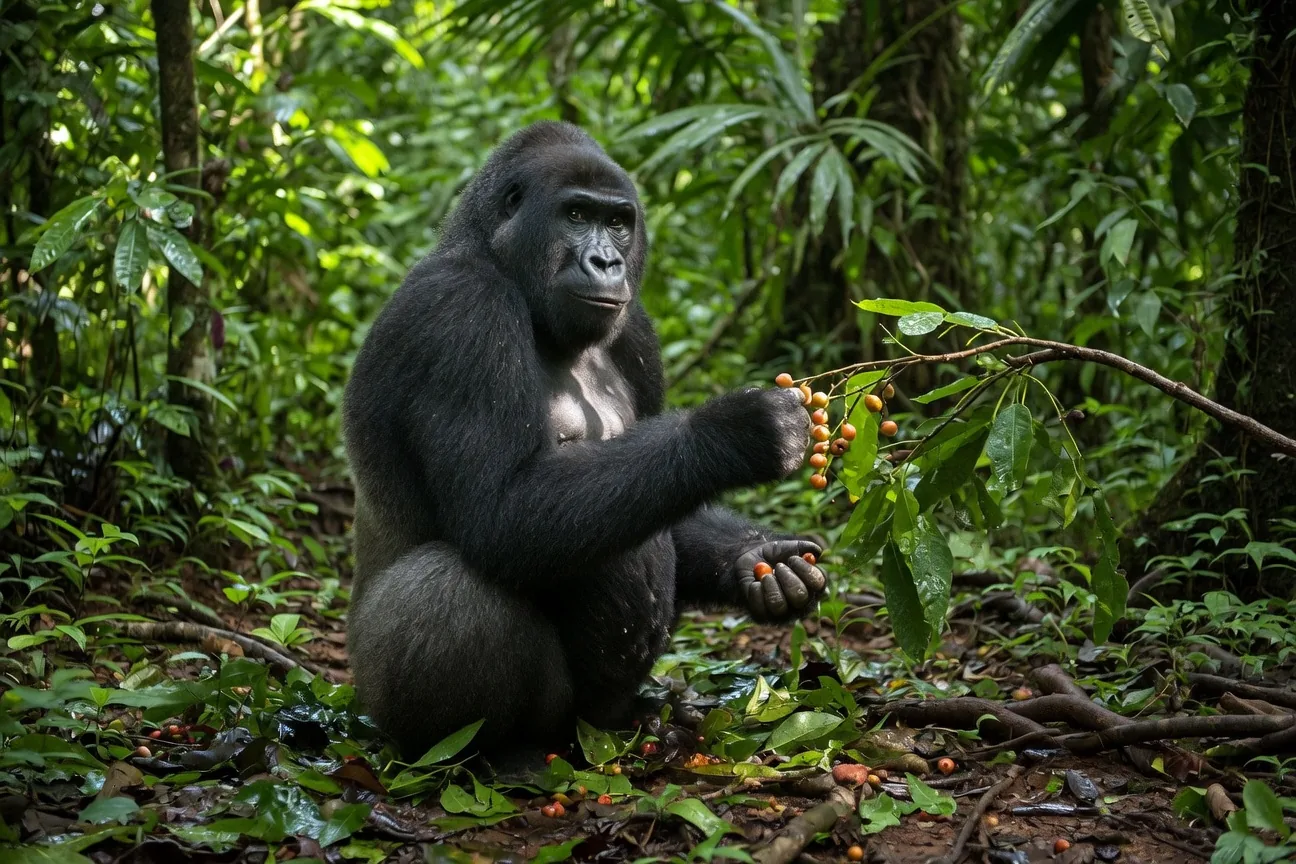
The western gorilla's scientific name is Gorilla gorilla. They live in the western part of Central Africa. They are originally from Angola, Congo, Cameroon, Nigeria, Equatorial Guinea, Central African Republic, and Gabon. However, they are now extinct in Congo. Western gorillas are a bit smaller and more agile than eastern gorillas. Both species look quite similar, though. There are two sub-species. Gorilla gorilla diehli is the Cross River gorilla. It lives near the Cross River, which runs along the border of Nigeria and Cameroon. Gorilla gorilla gorilla is the western lowland gorilla. The western lowland gorilla lives in the low-lying tropical forests of western Central Africa. These forests have thick plant growth covering the ground. Western lowland gorillas are also found near swamp forests. They eat mainly fruit-bearing plants, plus other plant matter and insects. One cool thing about western gorillas: they use tools. For example, they pick up small stones or pebbles to crack open nut shells. Like eastern gorillas, the silverback leads the troop and is the only male that mates. Females are devoted carers who look after their young until they are four years old.
How Gorillas Are Classified
Scientists sort every living thing into groups. Here is where the gorilla fits in the tree of life:
- Kingdom, Animalia
- Phylum, Chordata
- Class, Mammalia
- Family, Hominidae (the great apes, the same family as humans and chimpanzees)
- Genus, Gorilla
That genus is divided into two species, and each one has two sub-species:
- Gorilla gorilla, with sub-species G. g. gorilla (western lowland) and G. g. diehli (Cross River gorilla)
- Gorilla beringei, with sub-species G. b. graueri (eastern lowland gorilla) and G. b. beringei (mountain gorilla)
Size & Body Shape
The different sub-species of gorillas look a little different from one another.
How Do the Species Differ?
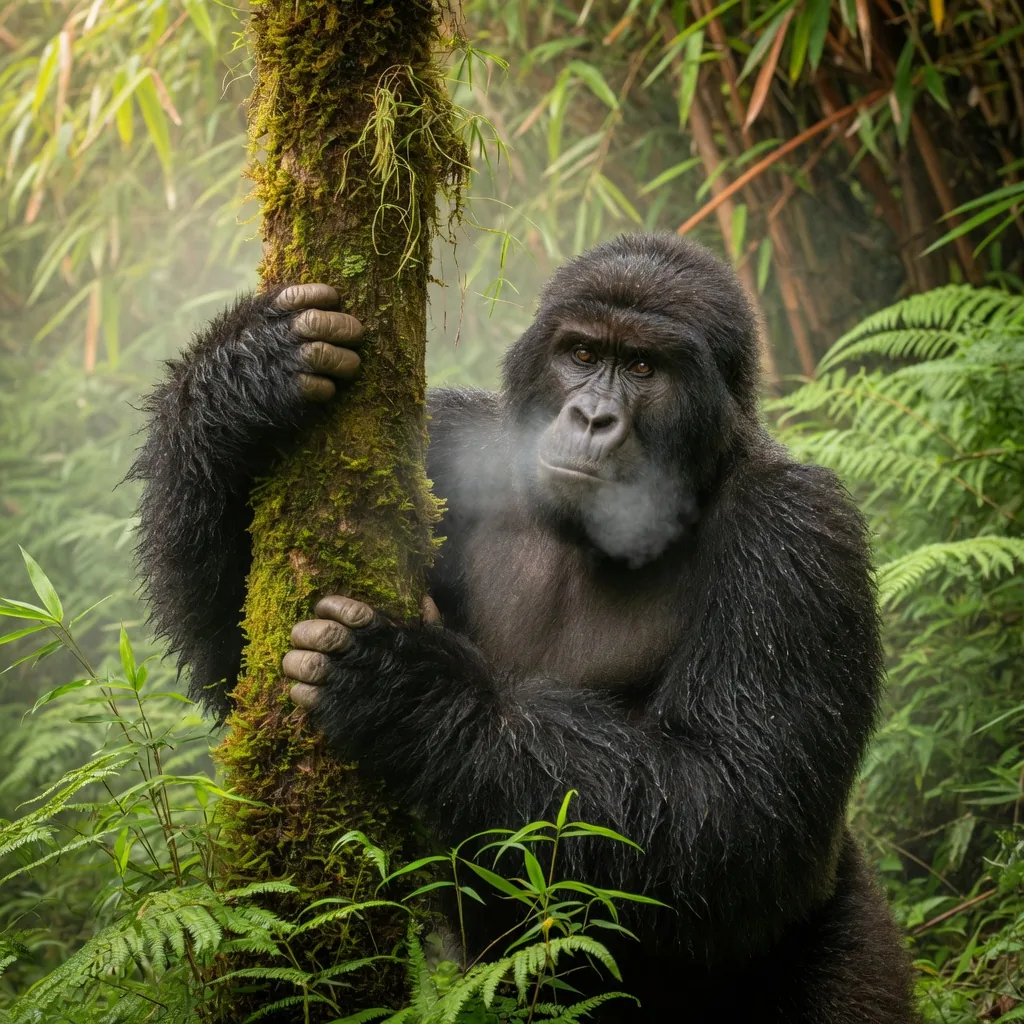
The hair of the lowland gorillas is short and fine, with no undercoat. That is why these primates mostly live in warm forests. Mountain gorillas have a shaggy, thick coat instead, which lets them live in the colder temperatures high up in the mountains. Western lowland gorillas have a grayish or brownish coat and a reddish forehead. Both the mountain and eastern lowland gorillas usually have blackish coats.
Mountain gorillas are bulkier and heavier than both lowland species, which are more slender. Eastern lowland gorillas have a wider chest and a longer face than the western lowlands.
What a Gorilla's Body Is Like
Adult males weigh between 300 and 400 pounds (135 to 180 kg), while adult females weigh between 150 and 250 pounds (70 to 115 kg). Males stand between 5.5 and 5.9 feet tall, while females are about 5 feet tall. Adult males are called "silverbacks" because of the bright patch of silver hair on their backs. Gorillas have brown eyes, two arms, two legs, and small ears.
Just like humans, gorillas have 32 teeth, ten fingers, and ten toes. They even have unique fingerprints and nose-prints! Gorillas mostly walk on all fours, this is called "knuckle walking." They stand up on two legs only sometimes, such as when they are carrying food or defending themselves.
Where Gorillas Live
The places gorillas call home are varied and spread out. They can be found high up in the mountains as well as in tropical forests, lowland areas, and swamps. They are land-living (terrestrial) animals. Almost all of them live in Africa, and each sub-species lives in its own region.

Western lowland gorillas are found in Cameroon, the Republic of Congo, Gabon, Central African Republic, Zaire, Equatorial Guinea, Nigeria, and Angola.
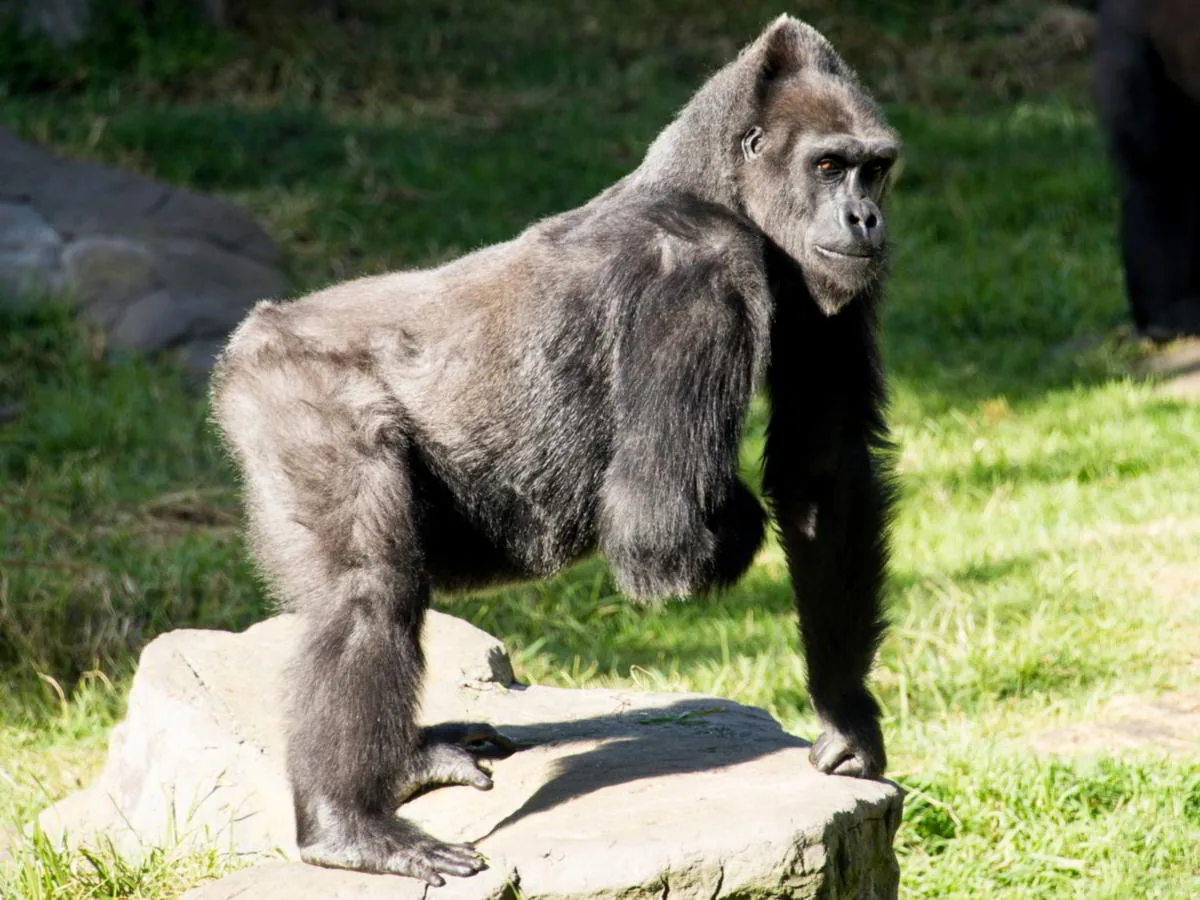
Eastern lowland gorillas are found in Uganda, Zaire, and Rwanda. Mountain gorillas live in the same regions as the eastern lowlands, but much higher up, between 5,400 and 12,000 feet (1,650 to 3,700 meters) above sea level.
What Gorillas Eat
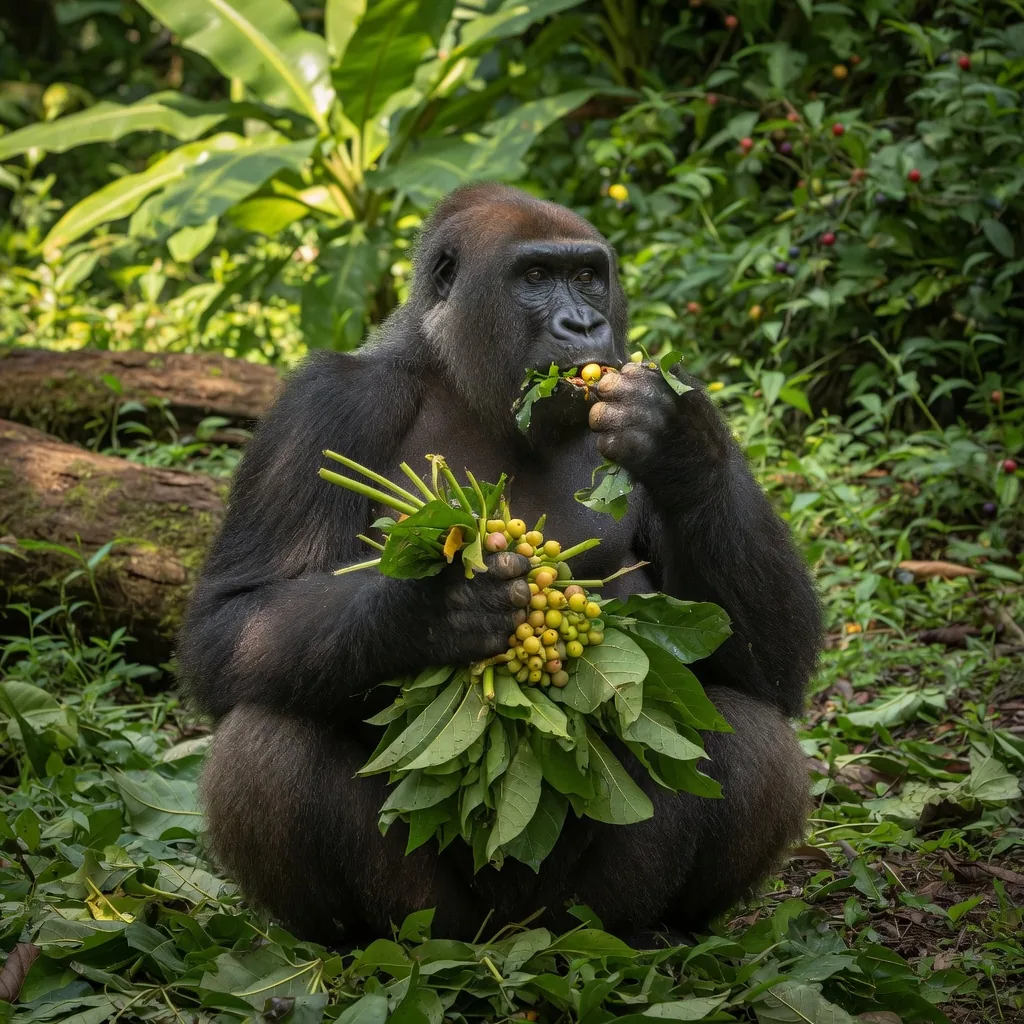
Gorillas are mostly herbivores, which means they eat plants. They munch on the leaves and stems of trees, shrubs, and vines, and they are known to eat more than 200 different plant species. Their menu includes bulbs, fruits, roots, bark, shoots, leaves, seeds, and flowers. Now and then they also eat termites, ants, and other small animals they find on trees, to get the protein their bodies need. They do not drink water very often, because they get most of the water they need straight from their food.
Family Life: Raising Young Gorillas
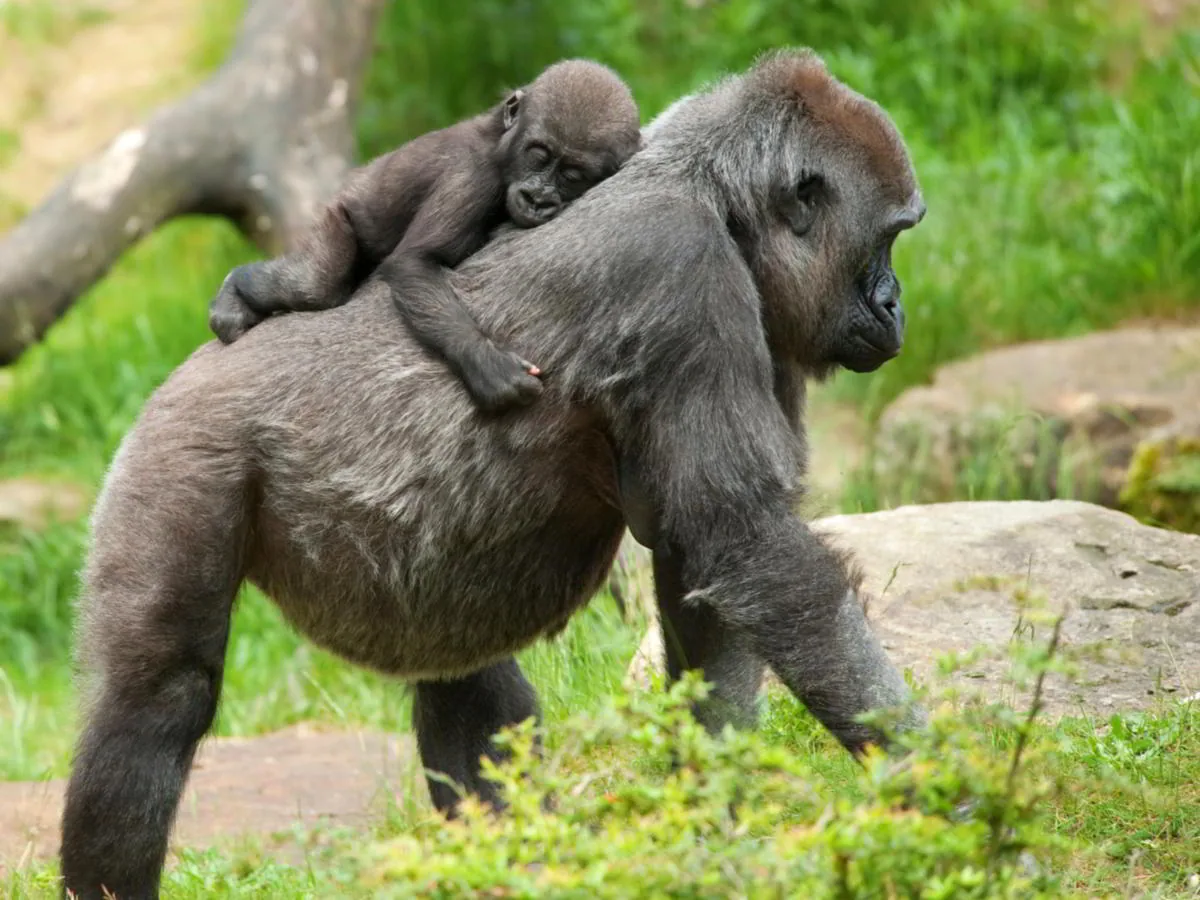
Female gorillas grow up at about eight years of age, but they usually do not start having babies until they are ten or older. Males become fathers when they are around 15. A pregnancy lasts about 8.5 months, and a single baby gorilla is born. The newborn weighs just 3 to 4.5 pounds. Infants learn to crawl at 2 months old and begin to walk at about 9 months. Mothers nurse their babies until they are 2½ to 3 years old, and the little ones stay close to their mothers until about age 4.
For the first 3 to 4 months of life, infants stay in almost constant contact with their mothers, feeding at least once an hour.
Caring for Infants
Silverbacks do not do the everyday job of raising babies, but they do protect the infants from danger, help them make friends in the troop, and even care for orphaned youngsters. Female gorillas can give birth only about every 4 years, so they have only around three babies in their whole lifetime. This slow reproduction rate makes it very hard for gorilla numbers to recover. Wild gorillas live 35 to 40 years, while those cared for in zoos can reach 50 years.
How Gorillas Live Together
Gorillas live in troops. A troop has one dominant silverback, several females and their young, and some younger males. Females usually stay with the troop for life, while males leave when they are 10 to 11 years old. There is a very close bond between the members of a troop, with lots of interaction, communication, and affection.
Gorillas will fight to protect every member of the troop, not just their own young. They are extremely protective and will even risk their lives to keep the others safe.
Young gorillas learn by copying the older ones. They also groom each other, picking out and eating tiny insects from each other's fur. Every member of the troop joins in except the silverback. The bond gorillas share, and the selflessness they show, is truly wonderful to watch. Humans could learn a lesson or two from them!
How Gorillas Talk to Each Other
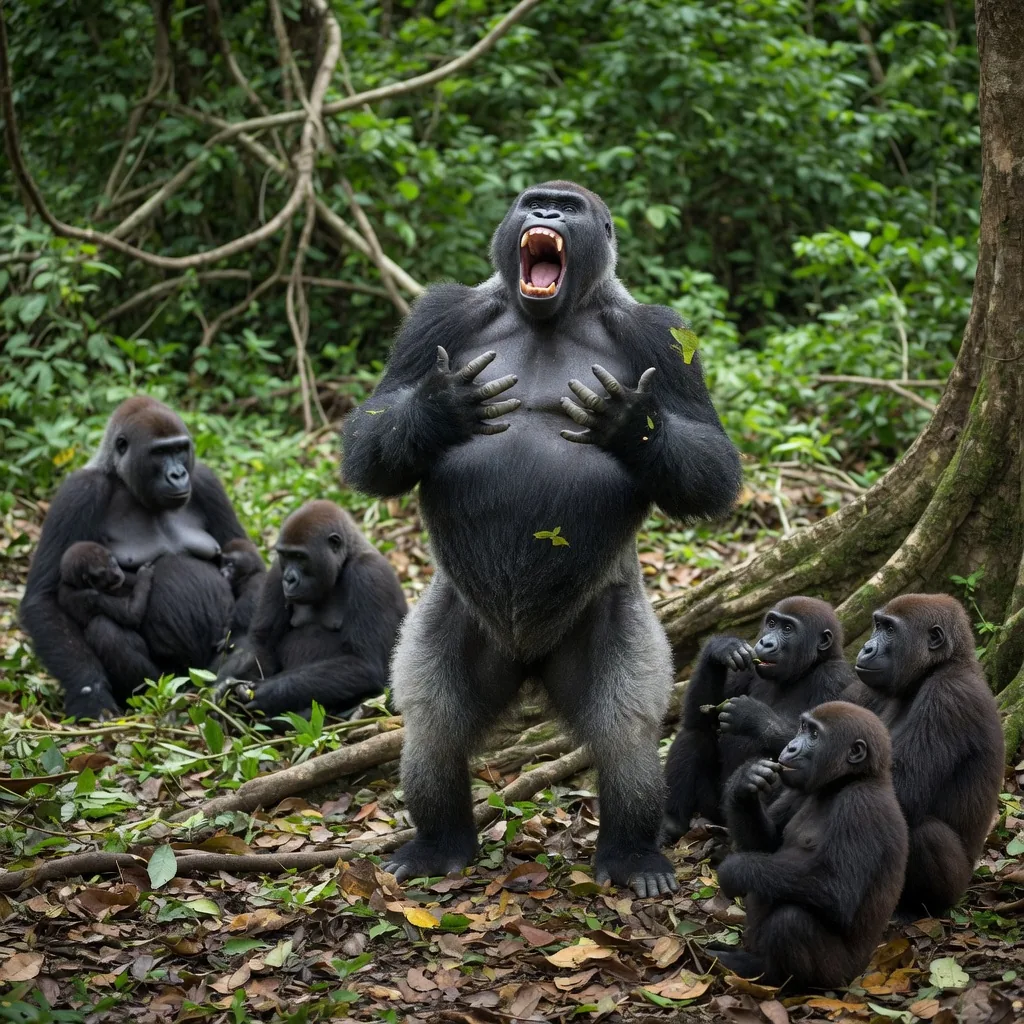
Gorillas make a huge range of sounds to talk to one another. So far, 20 to 25 different sounds have been identified, and many more are still unknown. Gorillas grunt, chirp, growl, hoot, roar, scream, whine, bark, and chuckle. They also beat their chests (with open hands, not fists), lunge, throw things, run sideways, slap the ground, stand on two legs, crouch low, and even stare. They laugh when tickled, and they stick their tongues out at each other!
Gorillas use all of these signals to look for food, to discipline troublemakers, to comfort or support one another, to find a mate, and to build friendships with the rest of the troop.
How Smart Are Gorillas?
Gorillas are considered very intelligent animals, and many scientists believe they have rich, well-developed feelings. They build deep bonds with their troop members, and mothers form especially strong bonds with their babies. They use tools (for example, rocks to crack open fruits and nuts, or sticks for fishing) and are believed to think about both the future and the past.
One amazing example of gorilla intelligence is a female gorilla named Koko, who learned sign language and used it to communicate. Some people argue that she did not truly understand the signs, but she won the admiration and hearts of many. She was said to know more than 2,000 words of spoken language and over a thousand signs.
Gorillas and People
Humans and gorillas come into contact often. Sadly, movies like King Kong show gorillas as huge monsters that kill people and smash everything in their path. This is nowhere near the truth, and it gives people a scary, unfair picture of these animals.
Gorillas are actually very quiet, calm animals, and they will not attack unless they are provoked. One movie that shows this gentler side is Mighty Joe Young, the story of an orphaned baby gorilla that forms an everlasting bond with a little girl.
The people who study these primates, care for them in zoos, and work in conservation programs have excellent relationships with them. Even so, it is very important to understand that gorillas are not suitable as pets and are not meant to be tamed. They are wild animals with their own personalities and nature.
Many people make the mistake of keeping baby gorillas as pets, against the law, and run into serious problems later on. These animals belong in the wild, and that is where they should stay.
Frequently Asked Questions
What do you call an adult male gorilla?
A silverback, named for the patch of silver hair that grows on his back when he reaches adulthood, around 13 years old.
Are gorillas herbivores?
Predominantly yes, they eat leaves, stems, fruit, bark, and seeds from more than 200 plant species. They occasionally eat termites and ants for protein.
How many gorilla subspecies are there?
Four: western lowland, Cross River, eastern lowland (Grauer's), and mountain gorilla.
Why are gorillas endangered?
Mainly habitat loss, poaching for bushmeat, disease such as Ebola, political unrest, and a slow reproduction rate. Eastern gorillas are listed as Endangered and western gorillas as Critically Endangered.
How many gorillas are left in the wild?
Estimates put the total at around 5,000. Mountain gorillas are the rarest, with about 600 individuals remaining, putting them on the edge of extinction.
The 'Endangerment'
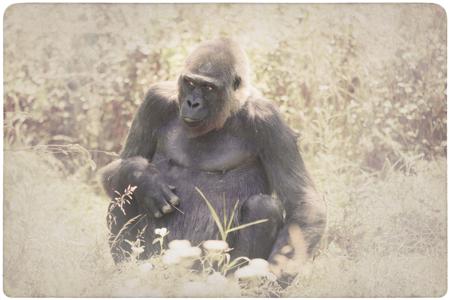
The gorilla is one of the most endangered animals in the world. Some of the reasons are caused by humans, and some are natural. Their numbers are dropping fast. The mountain gorilla is on the verge of extinction. The western gorilla is in even greater danger than its eastern cousin. The IUCN Red List of Threatened Species estimates that there may be only 250-300 western gorillas left in the African forests, a very worrying number.
Take the Gorilla Quiz!
8 quick questions. How much do you really know about these amazing apes?
Reasons Behind Gorilla's Endangerment
Loss of Habitat
One of the biggest reasons gorillas are endangered is the loss of their home. Forests are being cleared for farming, timber, and mining. Domestic animals grazing in the forest also disturb gorilla habitat. And as the human population grows, more land is taken away from the gorillas.
Hunting and Poaching

Most gorilla deaths are caused by illegal hunters called poachers. They kill gorillas mainly for bushmeat, which is worth a lot of money. Some poachers also capture baby gorillas to sell for entertainment, for example, to circuses. These infant gorillas are mistreated, underfed, and often die. Older gorillas are poached for their body parts, which are sold as amulets or souvenirs.
Political Unrest
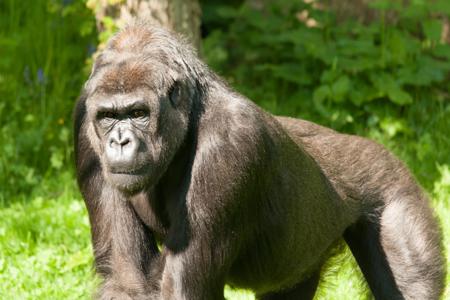
Gorillas have suffered because of human conflict too. Violence in the Great Lakes region of Africa has killed many of these animals. In the early 1990s, people fleeing Rwanda took shelter in the Virunga National Park. They had to cut down trees for firewood and sometimes killed gorillas to survive. The mountain gorillas in that area were badly affected.
Decline in Tourism
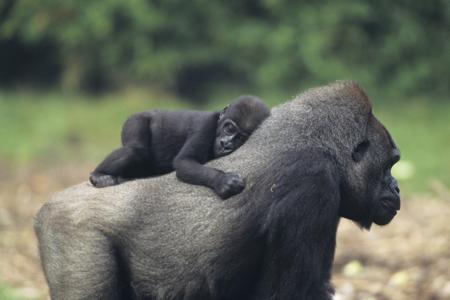
The political unrest also hurt the tourism industry in Central Africa. Tourism money (from both local and international visitors) was an important source of funding for wildlife sanctuaries and national parks. This money helped protect gorillas. When tourism dropped sharply, that protection funding dried up too.
Diseases and Ailments
Disease is another serious threat. Gorillas can catch illnesses like measles, mange, and intestinal parasites. They are especially at risk because they have contact with humans, which makes them more likely to pick up human diseases. In 2004, several hundred gorillas died from an outbreak of the Ebola virus in the Odzala National Park in Congo.
Human Misconceptions
Gorillas are often shown as scary, violent beasts in movies and TV shows like King Kong and Tarzan. But in real life, gorillas are not violent. They are actually quite gentle and friendly. The only time gorillas get angry is when their family is threatened, especially their young. That is when they stand up and beat their chests. Unfortunately, this makes people think gorillas are dangerous, and some are killed out of fear.
Natural Disasters
Natural disasters are impossible to predict or prevent. Because gorillas live deep in African forests, they are especially at risk from forest fires. Extreme heat in the region can cause fires that kill gorillas and destroy their habitat.
How Many Gorillas Are Left?
The numbers are sobering. The Ebola outbreak of 2007 alone claimed the lives of more than 5,000 gorillas in Africa. Today the total wild population is estimated at only around 5,000. Mountain gorillas are the rarest of all, only 600 individuals remain in the wild, putting them on the very edge of extinction. Eastern lowland gorillas number close to 2,500, and the rest are western lowlands.
Fun Facts About Gorillas
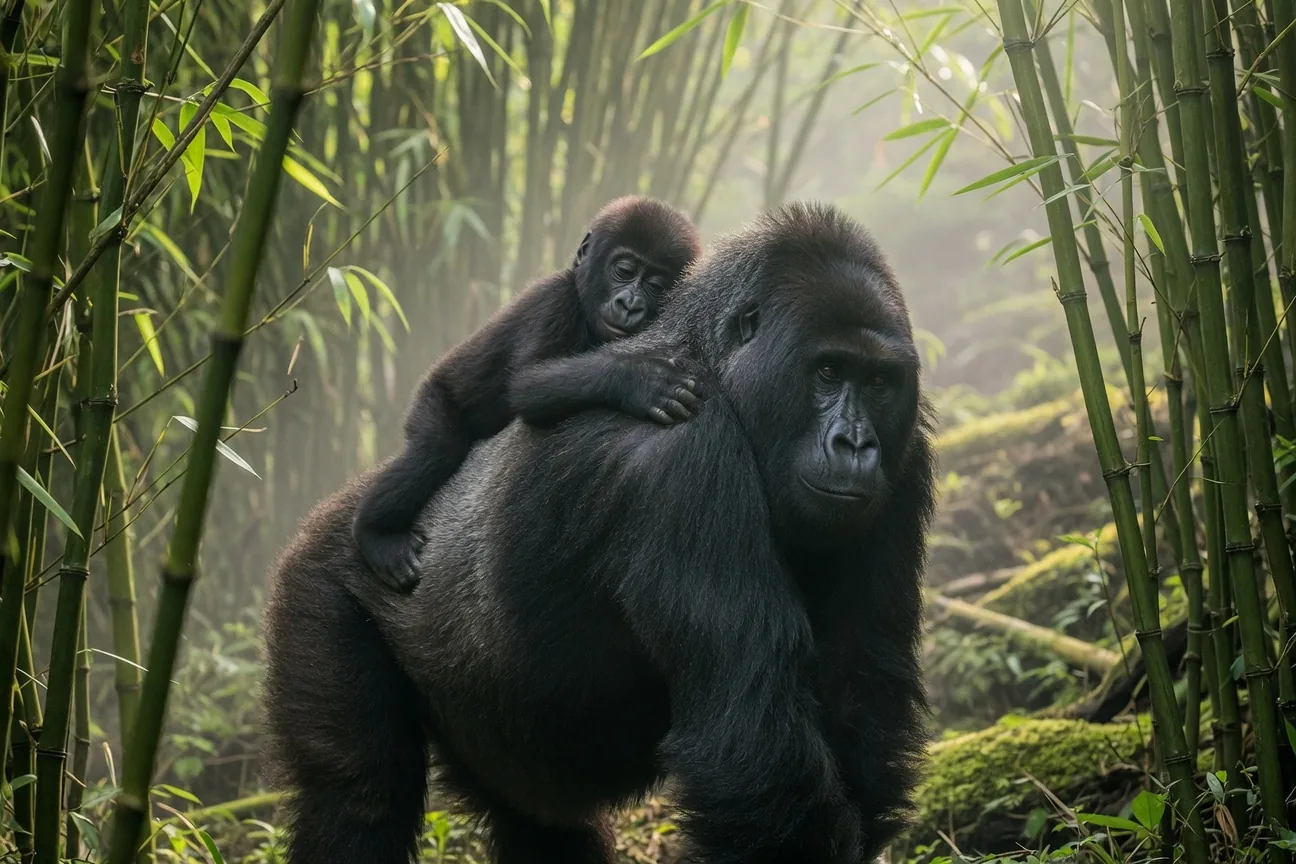
Gorillas are our closest relatives after chimpanzees. Almost 98% of their DNA is the same as ours.
They are not aggressive animals. They do not attack humans unless they are provoked. Even so, many people think of them as dangerous.
Just like humans, every gorilla has unique fingerprints, no two are the same.
Every gorilla also has a unique nose-print.
Gorillas can walk upright like humans, but they usually choose not to. Instead, they walk on their knuckles, resting their weight on them.
Scientists believe the western lowland gorilla can carry and spread the HIV/AIDS virus, in addition to other known transmission routes.
In the wild, a gorilla can live for about 35 years. In captivity, with good care, it can live for more than 50 years.
Contraceptives have the same effect on gorillas as they do on humans.
Gorillas never sleep in the same spot two nights in a row.
Gorillas can grip objects with both their hands and their feet.

Conservation Efforts
Many organizations are working hard to save gorillas before it is too late. One of the most important is the Great Apes Survival Project. It is run by the United Nations Environment Programme (UNEP) and the United Nations Educational, Scientific and Cultural Organization (UNESCO). Its goal is to protect and conserve the Great Apes (gorillas, chimpanzees, and orangutans) by restoring their natural habitats.
The International Gorilla Conservation Programme (IGCP) focuses specifically on eastern mountain gorillas. It works to protect the gorillas and their habitats in Uganda, Congo, and Rwanda. The African Wildlife Foundation (AWF) also helps protect gorillas across African forests.
Gorilla tourism has been a big help too. Dian Fossey's Mountain Gorilla Project brought a new kind of tourism to Rwanda, "gorilla tourism." At its peak, gorilla tourism became the country's biggest source of income. The project focused on tourism, conservation, education, and building wildlife sanctuaries. It also taught local people about the economic benefits of protecting primates.
A Ray of Hope
There is some good news. More than 10 African countries signed a special agreement called the Agreement on the Conservation of Gorillas and Their Habitats. The aim was to protect gorillas across all 10 countries and build a legal system to make that cooperation work. It was the first international agreement made specifically for gorillas, and it came into effect on June 1, 2008.
Gorillas need your help to survive on this planet. You can volunteer for or donate to an organization working for this cause, or even support or foster an individual gorilla. Unless people step in to help these animals, and stricter laws are made to stop poaching (which still continues despite the rules we already have), we could lose these precious creatures forever.
Explore More Animals
 Endangered Rainforest Animals That Will Really Shock YouThough rainforests hold 40-75% of all organisms on Earth, many species face extinction. Meet the gorilla, Javan rhino, giant panda, and more, with IUCN status
 A List of Endangered Animals From Every ContinentFrom the Bengal tiger and giant panda to the mountain gorilla and polar bear: a continent-by-continent list of the world's endangered animals, with photos.
 Why Are Chimpanzees Endangered? Painful Reasons & What We Can DoChimpanzees are considered an endangered species, a condition for which humans are largely responsible. Read on to know more about why chimpanzees have come und
 Jungle Animals ListAn A-to-Z list of jungle animals for kids: mammals, birds, insects, arthropods and reptiles that live in the world's jungles, each with a photo and fun facts.

 Fun fact for today!Gorillas share almost 98% of their DNA with humans, making them our second-closest relatives!