

A Critical Situation
Of the 80 monkey species that are considered endangered, 28 are listed as critically endangered. That means they face a very high risk of dying out in the wild.
Right now, as many as 80 species of monkeys are threatened with extinction. And yet, they rarely make the news the way tigers or rhinos do. Part of the reason is that there are so many species — and subspecies — of monkeys in the world. Most people have never even heard of some of them.
There are approximately 260 known species of monkeys worldwide. Scientists split them into two groups: New World monkeys, found in Central and South America and parts of Mexico, and Old World monkeys, found in Africa and Asia. Many species are still common in the wild — but others turn up again and again on the danger lists kept by the International Union for Conservation of Nature (IUCN).
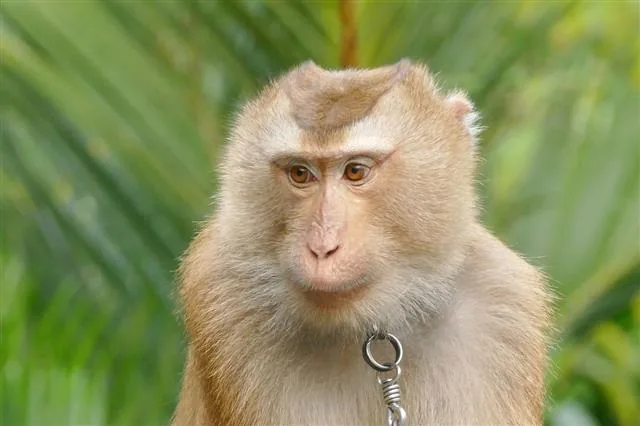
IUCN Classification
On the basis of the relative risk of extinction, the IUCN classifies threatened species into different categories.
- Critically endangered species (CR): Extremely high risk of extinction in the wild
- Endangered species (EN): Very high risk of extinction in the wild
- Vulnerable (VU): High risk of extinction in the wild*
*The species enlisted as vulnerable are the ones that are likely to become endangered.
List of Endangered Monkeys
CR Critically Endangered EN Endangered
| Species & Scientific Name | Range | Status |
|---|---|---|
| Arunachal MacaqueMacaca munzala | Arunachal Pradesh, India | EN |
| Barbara Brown's TitiCallicebus barbarabrownae | Caatinga, Brazil | CR |
| Barbary MacaqueMacaca sylvanus | Algeria, Morocco, and Gibraltar | EN |
| Black Bearded SakiChiropotes satanas | Brazilian Amazon | CR |
| Black Lion TamarinLeontopithecus chrysopygus | São Paulo, Brazil | EN |
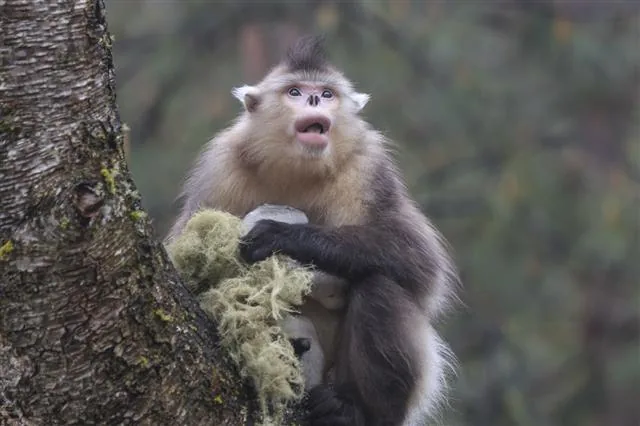
| Black Snub-nosed MonkeyRhinopithecus bieti | China | EN |
| Black-headed Spider MonkeyAteles fusciceps | Colombia, Nicaragua, and Panama | CR |
| Black-shanked DoucPygathrix nigripes | Vietnam and Cambodia | EN |
| Blond CapuchinCebus flavius | Northeastern Brazil | CR |
| Brown Spider MonkeyAteles hybridus | Colombia and Venezuela | CR |
| Buffy-headed MarmosetCallithrix flaviceps | South-eastern Brazil | EN |
| Caquetá TitiCallicebus caquetensis | Colombia | CR |
| Celebes Crested MacaqueMacaca nigra | Sulawesi (Celebes), Indonesia | CR |
| Coimbra Filho's TitiCallicebus coimbrai | Bahia and Sergipe, Brazil | EN |
| Colombian Woolly MonkeyLagothrix lugens | Colombia and Venezuela | CR |
| Cotton-top TamarinSaguinus oedipus | Northwestern Colombia | CR |
| Delacour's LangurTrachypithecus delacouri | Vietnam | CR |
| DrillMandrillus leucophaeus | Nigeria, Cameroon, and Equatorial Guinea | EN |
| Dryas MonkeyCercopithecus dryas | Congo Basin | CR |
| François' LangurTrachypithecus francoisi | Southwestern China to northeastern Vietnam | EN |
| Gee's Golden LangurTrachypithecus geei | India (i.e., the state of Assam) and Bhutan | EN |
| Geoffroy's Spider MonkeyAteles geoffroyi | Central America and Mexico | EN |
| Golden Lion TamarinLeontopithecus rosalia | Brazil | EN |
| Golden MonkeyCercopithecus kandti | Central Africa, Uganda, Rwanda, and DR Congo | EN |
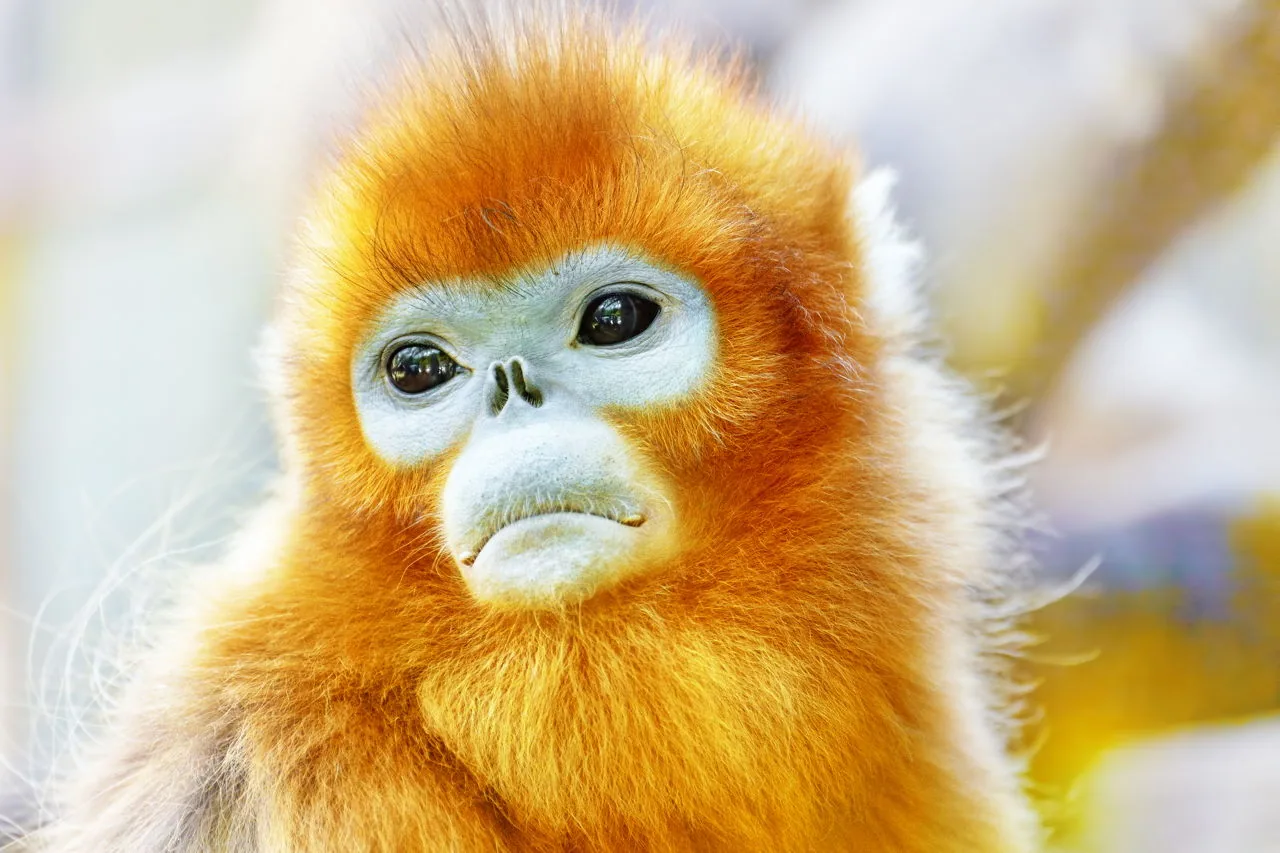
| Golden Snub-nosed MonkeyRhinopithecus roxellana | Central and Southwest China | EN |
| Golden-bellied CapuchinCebus xanthosternos | Bolivia, Brazil, and Colombia | CR |
| Golden-headed Lion TamarinLeontopithecus chrysomelas | Brazil | EN |
| Gray Snub-nosed MonkeyRhinopithecus brelichi | China | EN |
| Gray Woolly MonkeyLagothrix cana | Bolivia, Brazil, and Peru | EN |
| Gray-shanked DoucPygathrix cinerea | Vietnam | CR |
| Guatemalan Black HowlerAlouatta pigra | Belize, Guatemala, and Mexico | EN |
| Hatinh LangurTrachypithecus hatinhensis | Vietnam | EN |
| Indochinese LutungTrachypithecus germaini | Thailand, Burma, Cambodia, and Vietnam | EN |
| Javan SuriliPresbytis comata | Western Java and Indonesia | EN |
| Kaapori CapuchinCebus kaapori | Brazil | CR |
| Kashmir Gray LangurSemnopithecus ajax | Northern India and Nepal | EN |
| KipunjiRungwecebus kipunji | Tanzania | CR |
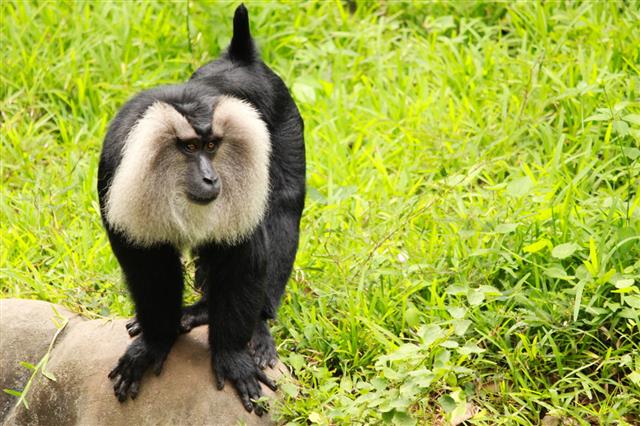
| Lion-tailed MacaqueMacaca silenus | Western Ghats in southern India | EN |
| Maranhão Red-Handed HowlerAlouatta ululata | Ceará, Maranhão, and Piauí in Brazil | EN |
| Mentawai LangurPresbytis potenziani | Mentawai Islands, Indonesia | EN |
| Moor MacaqueMacaca maura | Sulawesi, Indonesia | EN |
| Myanmar Snub-nosed MonkeyRhinopithecus strykeri | Burma (Myanmar) | CR |
| Niger Delta Red ColobusProcolobus epieni | Niger Delta | CR |
| Northern MuriquiBrachyteles hypoxanthus | Brazil | CR |
| Ollala Brothers' TitiCallicebus olallae | Bolivia | EN |
| Pagai Island MacaqueMacaca pagensis | Mentawai Islands, Indonesia | CR |
| Pennant's ColobusProcolobus pennantii | Equatorial Guinea, Nigeria, and the Republic of the Congo | CR |
| Peruvian Spider MonkeyAteles chamek | Peru, Brazil, and Bolivia | EN |
| Phayre's Leaf MonkeyTrachypithecus phayrei | Southeast Asia | EN |
| Pied TamarinSaguinus bicolor | Brazilian Amazon | EN |
| Pig-tailed LangurSimias concolor | Mentawai Islands, Indonesia | CR |
| Preuss's MonkeyCercopithecus preussi | Nigeria, Cameroon, and Equatorial Guinea | EN |
| Preuss's Red ColobusProcolobus preussi | Cross-Sanaga River Ecoregion, West-central Africa | CR |
| Proboscis MonkeyNasalis larvatus | Borneo, Southeast Asia | EN |
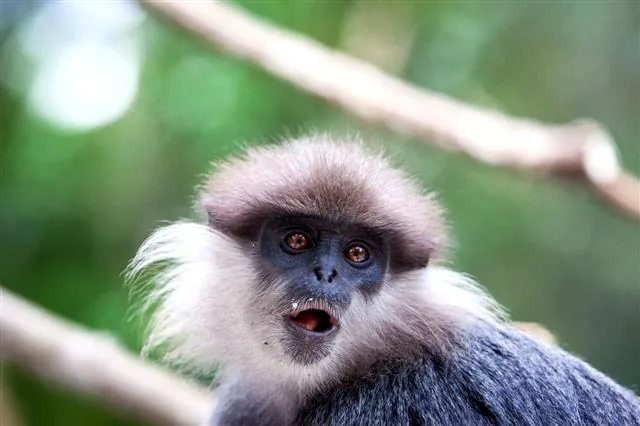
| Purple-faced LangurSemnopithecus vetulus | Sri Lanka | EN |
| Red-shanked DoucPygathrix nemaeus | Vietnam and Laos | EN |
| Rio Beni TitiCallicebus modestus | Bolivia | EN |
| Rio Mayo TitiCallicebus oenanthe | Peru | CR |
| Roloway MonkeyCercopithecus roloway | Côte d'Ivoire and Ghana | EN |
| Sanje MangabeyCercocebus sanjei | Tanzania | EN |
| Sarawak SuriliPresbytis chrysomelas | Borneo in Southeast Asia | CR |
| Shortridge's LangurTrachypithecus shortridgei | Burma and China | EN |
| Southern MuriquiBrachyteles arachnoides | Brazil | EN |
| Sumatran SuriliPresbytis melalophos | Sumatra, Indonesia | EN |
| Superagui Lion TamarinLeontopithecus caissara | Southeastern Brazil | CR |
| Tana River MangabeyCercocebus galeritus | Southeastern Kenya | EN |
| Thollon's Red ColobusProcolobus tholloni | DR Congo and Republic of the Congo | EN |
| Tonkin Snub-nosed MonkeyRhinopithecus avunculus | Northern Vietnam | CR |
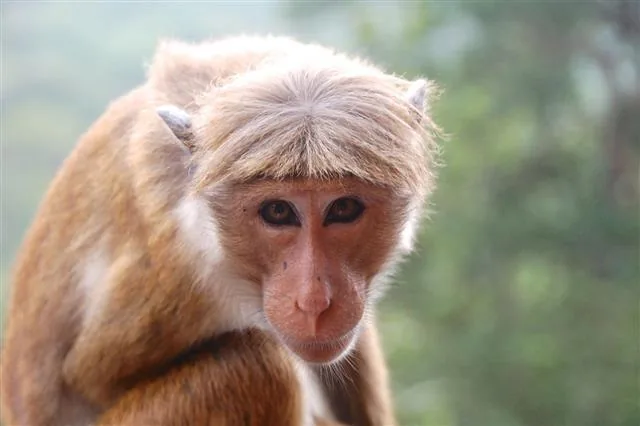
| Toque MacaqueMacaca sinica | Sri Lanka | EN |
| Ugandan Red ColobusProcolobus tephrosceles | Uganda and Tanzania | EN |
| Uta Hick's Bearded SakiChiropotes utahickae | Brazil | EN |
| Uzungwa Red ColobusProcolobus gordonorum | Tanzania | EN |
| Western Red ColobusProcolobus badius | Western Africa | EN |
| White-cheeked Spider MonkeyAteles marginatus | Brazil | EN |
| White-footed TamarinSaguinus leucopus | Colombia | EN |
| White-fronted Spider MonkeyAteles belzebuth | Colombia, Ecuador, Venezuela, Peru, and Brazil | EN |
| White-headed LangurTrachypithecus poliocephalus | Vietnam and China | CR |
| White-nosed SakiChiropotes albinasus | Brazilian Amazon | EN |
| Yellow-tailed Woolly MonkeyOreonax flavicauda | Peru | CR |
| Zanzibar Red ColobusProcolobus kirkii | Zanzibar Archipelago | EN |
Vulnerable Species
Vulnerable species are those likely to become endangered if nothing changes. Sadly, the list of vulnerable monkeys is nearly as long as the endangered list. If conservation efforts do not improve soon, the endangered list could become twice as long in the near future.
Frequently Asked Questions
How many monkey species are endangered?
About 80 species of monkeys are threatened with extinction, and 28 of those are critically endangered.
What are the two main groups of monkeys?
New World monkeys, found in Central and South America and Mexico, and Old World monkeys, found in Africa and Asia.
Who decides if a monkey is endangered?
The International Union for Conservation of Nature (IUCN) classifies species as Vulnerable, Endangered or Critically Endangered.
Why are monkeys becoming endangered?
The main reasons are excessive hunting, loss of habitat from logging and farming, and capture for traditional medicine and the pet trade.
Take the Endangered Monkeys Quiz!
5 quick questions. Find out how much you really know about the monkeys fighting to survive.
| Species & Scientific Name | Range |
|---|---|
| Aracá UakariCacajao ayresii | Northwest Brazilian Amazon |
| Atlantic TitiCallicebus personatus | Brazil |
| Bald UakariCacajao calvus | Brazil and Peru |
| Bale Mountains VervetChlorocebus djamdjamensis | Bale Mountains, Ethiopia |
| Black ColobusColobus satanas | Cameroon, Congo, Equatorial Guinea, and Gabon |
| Black TamarinSaguinus niger | Brazil |
| Black-footed Gray LangurSemnopithecus hypoleucos | Southern India |
| Booted MacaqueMacaca ochreata | Sulawesi Island, Indonesia |
| Brown Woolly MonkeyLagothrix lagotricha | Colombia, Ecuador, Peru and Brazil |
| Brumback's Night MonkeyAotus brumbacki | Colombia |
| Buffy-tufted MarmosetCallithrix aurita | Southeast Brazil |
| Capped LangurTrachypithecus pileatus | Bangladesh, Nepal, Bhutan, China, India, and Myanmar |
| Central American Squirrel MonkeySaimiri oerstedii | Pacific coast of Costa Rica and Panama |
| Coastal Black-handed TitiCallicebus melanochir | Brazil |
| Coiba Island HowlerAlouatta coibensis | Panama |
| Collared MangabeyCercocebus torquatus | Nigeria, Cameroon, Equatorial Guinea, and Gabon |
| Colombian Black-handed TitiCallicebus medemi | Colombia |
| Diana MonkeyCercopithecus diana | Sierra Leone to Ivory Coast in Africa |
| Goeldi's MarmosetCallimico goeldii | Amazon Basin (Bolivia, Brazil, Colombia, Ecuador, and Peru) |
| Gorontalo MacaqueMacaca nigrescens | Sulawesi Island, Indonesia |
| Gray-bellied Night MonkeyAotus lemurinus | Colombia, Argentina, Ecuador, and Panama |
| Gray-handed Night MonkeyAotus griseimembra | Colombia and Venezuela |
| Hamlyn's MonkeyCercopithecus hamlyni | Congo |
| Heck's MacaqueMacaca hecki | Sulawesi, Indonesia |
| Hose's LangurPresbytis hosei | Borneo in Southeast Asia |
| Javan LutungTrachypithecus auratus | Java, Indonesia |
| King ColobusColobus polykomos | Ivory Coast, Guinea, Guinea-Bissau, Liberia, and Sierra Leone |
| L'Hoest's MonkeyCercopithecus lhoesti | Congo Basin |
| Laotian LangurTrachypithecus laotum | Laos |
| MandrillMandrillus sphinx | Cameroon, Gabon, Equatorial Guinea, and Congo |
| Natuna Island SuriliPresbytis natunae | Natuna Besar Island, Indonesia |
| Neblina UakariCacajao hosomi | Amazon Rainforests of Brazil and Venezuela |
| Nilgiri LangurTrachypithecus johnii | Nilgiri Hills, South India |
| Northern Pig-tailed MacaqueMacaca leonina | Bangladesh, Cambodia, China, India, Laos, Myanmar, Thailand, and Vietnam |
| Ornate TitiCallicebus ornatus | Colombia |
| Peruvian Night MonkeyAotus miconax | Peru |
| Red-eared GuenonCercopithecus erythrotis | Cameroon, Equatorial Guinea, and Nigeria |
| Red-faced Spider MonkeyAteles paniscus | Brazil, Suriname, Guyana, and French Guiana |
| Red-handed HowlerAlouatta belzebul | Southeastern Amazon Rainforest, Brazil |
| Roosmalens' Dwarf MarmosetCallibella humilis | Amazon Rainforest, Brazil |
| Sclater's GuenonCercopithecus sclateri | Southern Nigeria |
| Siberut MacaqueMacaca siberu | Siberut Island, Indonesia |
| Silvery Woolly MonkeyLagothrix poeppigii | Brazil, Ecuador and Peru |
| Sooty MangabeyCercocebus atys | Burkina Faso, Ivory Coast, Ghana, Guinea, Guinea-Bissau, Liberia, Senegal, and Sierra Leone |
| Southern Pig-tailed MacaqueMacaca nemestrina | Malay Peninsula, Borneo, Sumatra, and Bangka Island (Southeast Asia) |
| Stump-tailed MacaqueMacaca arctoides | South Asia |
| Sun-tailed MonkeyCercopithecus solatus | Gabon |
| Thomas's LangurPresbytis thomasi | North Sumatra, Indonesia |
| Tonkean Black MacaqueMacaca tonkeana | Sulawesi Island, Indonesia |
| Ursine ColobusColobus vellerosus | Benin, Ivory Coast, Ghana, Nigeria, Togo, and Burkina Faso |
| White MarmosetMico leucippe | Brazil |
| White-footed SakiPithecia albicans | Brazil |
| White-fronted SuriliPresbytis frontata | Indonesia, Malaysia, and Brunei |
| White-throated GuenonCercopithecus erythrogaster | Rainforests of Nigeria and Benin |
Why Are Monkeys Endangered?
Scientists and conservation workers have noticed that the numbers of many monkey species are falling. What worries them most is how fast that decline is happening. Over the last decade or so, the drop has been steep. In most cases, the following factors are to blame.
Excessive Hunting
Several monkey species are hunted for their meat. The Roloway monkey and Pennant's Red Colobus, both found in Africa, are two well-known examples. Other species, like Miss Waldron's Red Colobus and the Mt. Uarges Guereza — a subspecies of Mantled Guereza — are killed for their skin, which is sold in international markets.
Loss of Habitat
Monkeys are losing their homes. Illegal logging, clearing land for farms, and growing human settlements are shrinking their natural habitat fast. When forests are cut up into smaller and smaller patches, monkeys can't find enough food or mates. That makes it much harder for them to survive and breed.
Other Factors
Some monkeys are killed for their body parts, which are used in traditional medicine. This still happens today in several parts of the world. On top of that, the demand for pet monkeys is growing. To catch them, hunters set snares that often wound or kill the animals — even those that escape. Learn why monkeys don't make good pets.
The endangered monkey list keeps growing longer every year. If hunting, habitat loss, and the pet trade are not brought under control, many of the species on this list today will eventually vanish from the wild completely — and some of the most fascinating animals on Earth will be gone forever.
Explore More Animals
 Endangered Rainforest Animals That Will Really Shock YouThough rainforests hold 40-75% of all organisms on Earth, many species face extinction. Meet the gorilla, Javan rhino, giant panda, and more, with IUCN status
 A Complete List of All Types of MonkeysFrom the pygmy marmoset (5 inches tall) to the giant Mandrill: discover every major type of monkey (New World and Old World) with photos, fun facts, and a qui
 A List of Endangered Animals From Every ContinentFrom the Bengal tiger and giant panda to the mountain gorilla and polar bear: a continent-by-continent list of the world's endangered animals, with photos.
 Monkey Habitat: Where Do Monkeys Live?There are more than 260 extant monkey species known today. Discover where monkeys live (from Amazon rainforests to Asian mountains) plus habitat facts, a quiz

 Fun fact for today!There are about 260 kinds of monkeys in the world — but roughly 80 of them are now in danger of disappearing forever.