

An animal is called an endangered species when it is at risk of becoming extinct. That can happen because there are very few of them left, or because the environment they live in is changing. According to the International Union for Conservation of Nature and Natural Resources (IUCN), about 40 percent of all organisms on Earth are on the verge of extinction.
In 1963, the IUCN created the Red Data List. It evaluated the extinction risk of more than 15,500 species and subspecies worldwide. This list is also known as the IUCN Red List of Threatened Species, or just the IUCN Red List.
Rainforests are forest areas with very heavy rainfall, between 1750 and 2000 mm per year. They are one of the richest ecosystems on Earth and are sometimes called the "Jewels of the Earth." More than 50 percent of all animal species live in rainforests. But because of climate change and humans taking over their land, many of these animals are now endangered or threatened.
Types of Endangered Rainforest Animals
Gorilla
Gorillas are classified as a critically endangered species. In just three generations (and one gorilla generation spans about 22 years) an estimated 80 percent of the gorilla population has disappeared. The main causes are commercial hunting, damage to their habitat from logging, and deaths from disease. Gorillas also have a very slow reproductive rate, which makes it even harder for their numbers to recover.
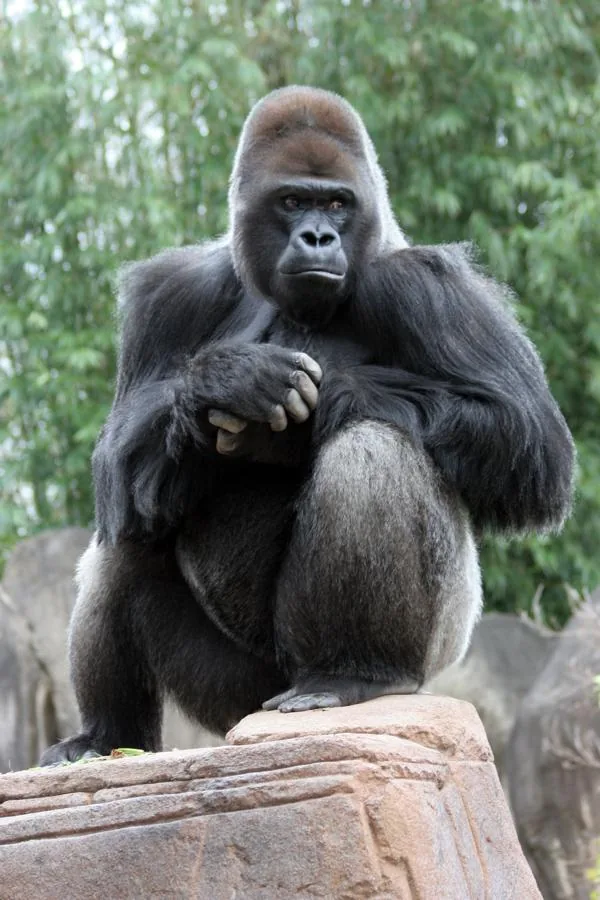
Gorillas are most common in the rainforests of West Central Africa. They live mainly in lowland tropical forests and swamp forests.
Although there are international and national laws to protect gorillas, enforcement has not been strong enough. In 1991, the International Gorilla Conservation Programme (IGCP) was set up by the African Wildlife Foundation (AWF), Fauna & Flora International (FFI), and the World Wide Fund for Nature (WWF). Its main goal is to protect endangered mountain gorillas by reducing threats to their forest habitat and working with protected area authorities.
Sumatran Orangutan
The Sumatran Orangutan is listed as critically endangered. Its population has fallen by an estimated 80 percent over the last 75 years. These orangutans live in the southeastern tropical and subtropical broadleaf forests of Sumatra and Borneo. The two biggest threats are habitat destruction (when forests are cleared for oil palm plantations and farmland) and hunting.
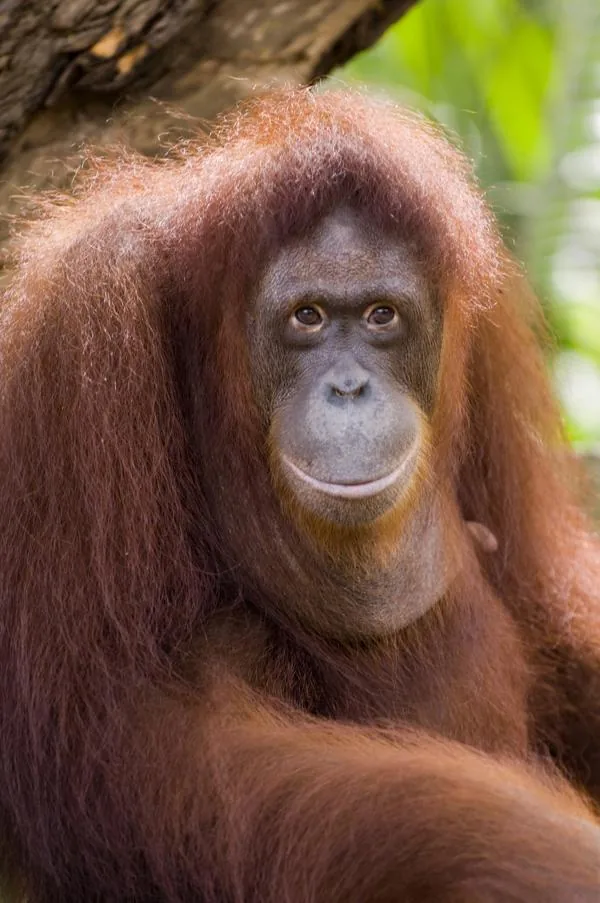
A proposed road network called Ladia Galaska in Aceh province could cause even more habitat destruction. Orangutans are also hunted and captured in the wild to be kept as pets.
This critically endangered species is protected under Appendix I of CITES. It is also strictly protected by Indonesian law (UU No 5/1990). In 1998, the Leuser Ecosystem (which supports nearly 75 percent of Sumatran Orangutans) was protected by Presidential Decree to give these animals a sustainable home.
Take the Endangered Rainforest Animals Quiz!
5 quick questions. Test what you've learned so far about these incredible animals.
Sumatran Rhinoceros
The Sumatran Rhinoceros is one of the smallest rhinoceros species. It stands 112-145 cm high at the shoulder, has two horns, and has a thin coat of reddish-brown hair. These animals are very solitary and are only seen together during courtship and raising young. Only an alarming 275 individuals remain. The species once lived across the rainforests and swamps of India, Thailand, Bhutan, Indonesia, and Malaysia. Now the population is mostly confined to Sumatra and Borneo.
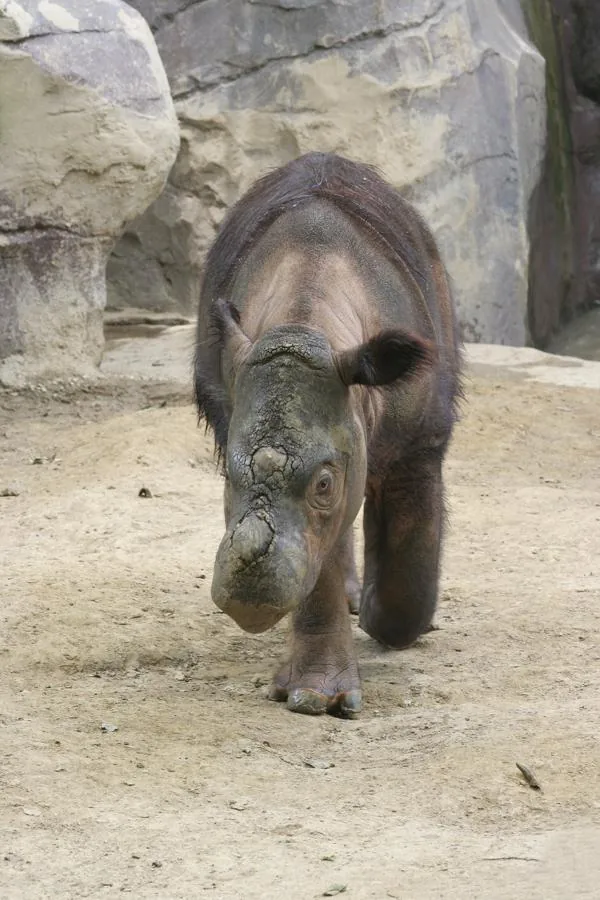
The population has declined by more than 80% over three generations. The main threats are poaching and hunting for their horns and other body parts.
The species is now legally protected in all range states. Indonesia and Malaysia are working together on an international program to deploy stronger anti-poaching measures.
Javan Rhinoceros
The Javan Rhinoceros is one of the rarest animals on the planet. It is on the brink of extinction, only 50 of these animals survive in the wild, and none live in captivity. It looks similar to the one-horned rhinoceros but has a much smaller head and body. The Javan rhino lives in rainforests that have plenty of water and mud wallows. Of the three subspecies of this rhinoceros, only 50 Indonesian Javan rhinos survive, all on the Ujung Kulon peninsula in western Java, Indonesia.
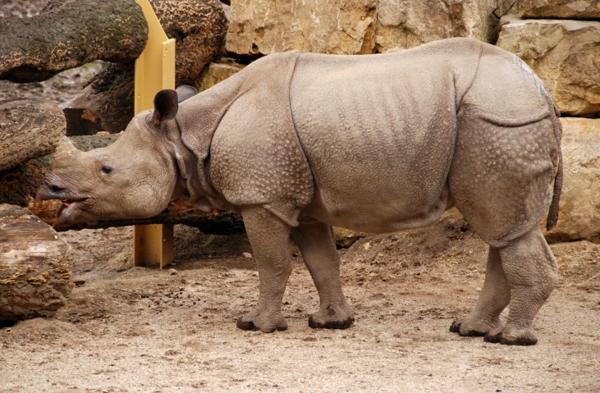
High demand for rhino horn, poaching, and disease have caused a huge drop in their numbers.
Besides being legally protected in all range states, the Rhino Protection Unit (RPU) was set up to guard these animals in two protected areas: Ujung Kulon National Park on Java, and the Cat Loc section of Cat Tien National Park in Vietnam's Dong Nai province.
Golden Lion Tamarin
The Golden Lion Tamarin (Leontopithecus rosalia) lives in the lowland coastal region of the state of Rio de Janeiro, Brazil. It is on the endangered animals list because its range covers less than 5,000 km². Famous for its bright reddish-orange fur and claw-like nails called tegulae, this small monkey lives in the lowland seasonal rainforest of Brazil's Atlantic coast, which gets about 1,500 mm of rain per year.
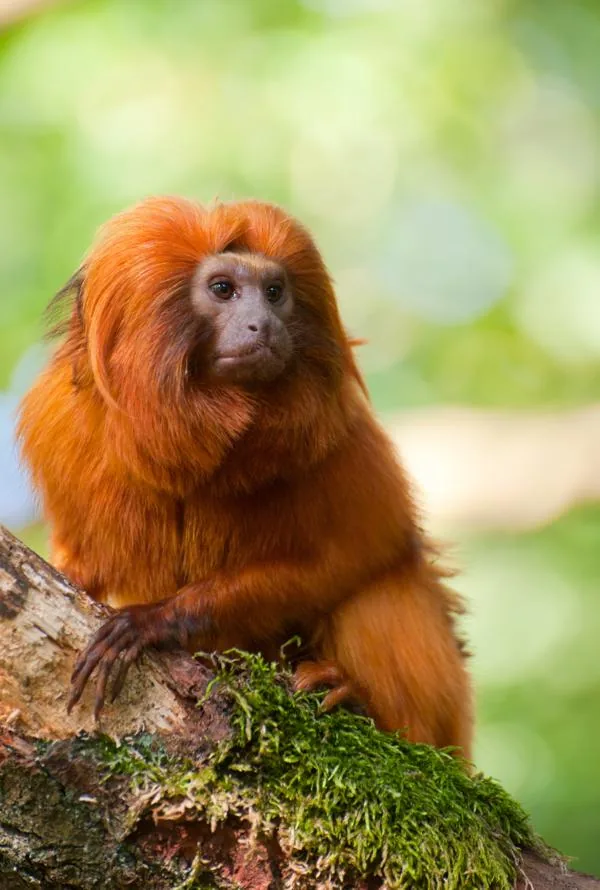
The tamarin population is squeezed into three small patches of tropical rainforest in southeastern Brazil. Humans have caused most of the damage, hunting them for their beautiful fur, plus mining, urbanisation, and infrastructure development have all shrunk their numbers.
In 1996 the IUCN listed this animal as critically endangered. Thanks to thirty years of conservation work, it has since been moved back to simply endangered, a real success story. The first conservation work was done by Adelmar Coimbra-Filho and Alceo Magnanani in the late 1960s, who ran field surveys and started a breeding program.
In 1972, the Golden Lion Tamarin Conservation Program (GLTCP) was set up to protect these primates. Reserves like the Poço das Antas and União Biological Reserves help keep a stable population. In 1990, the International Committee for the Conservation and Management of Lion Tamarins was set up to prevent the species from going extinct.
Chimpanzee
Chimpanzees are found across African forests, mostly in wet and dry forests. These omnivorous primates live in social communities of five to 150 individuals. Even though chimpanzees are a widespread species of ape, their numbers have dropped sharply in recent decades. The main causes are human exploitation, and habitat loss from slash-and-burn farming, gas mining, and logging.
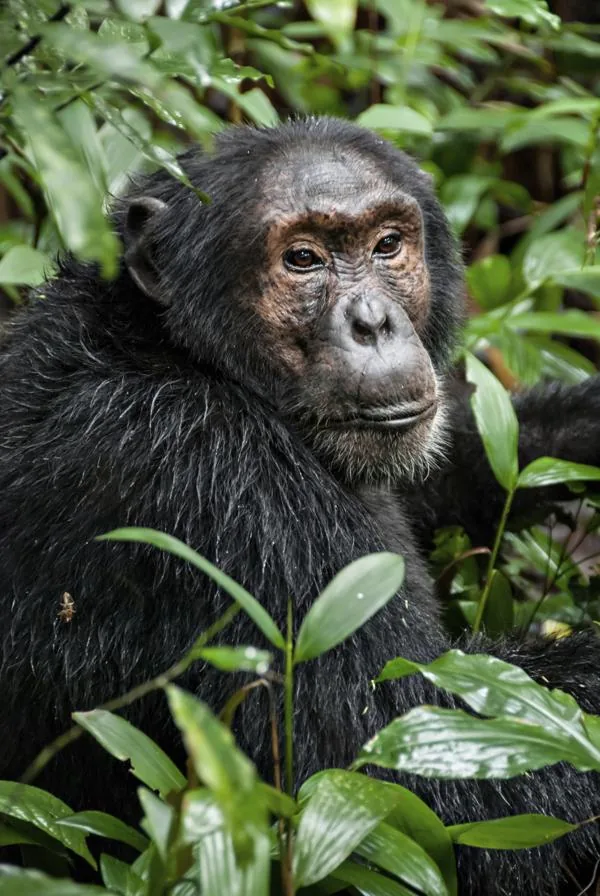
Poaching (for the pet trade, for bushmeat, or to stop them raiding crops) has also cut chimpanzee numbers. Sometimes diseases like Ebola hemorrhagic fever sweep through a population and cause a rapid decline.
Killing chimpanzees is against the law in all countries, and they are found in wildlife preserves. But stricter enforcement is needed to protect them from extractive industries and commercial hunting. Better monitoring and conservation action are also needed to stop the spread of epidemics like Ebola.
Bengal Tiger
The Bengal tiger is found mostly in India, in evergreen and monsoon forests. It also lives in Bhutan, Bangladesh, and Nepal. According to biologists, poaching, hunting, and habitat loss are the main reasons its population is falling. The loss of natural prey (like antelopes and deer) is also a serious concern. In the 20th century alone, 3 tiger species became extinct.
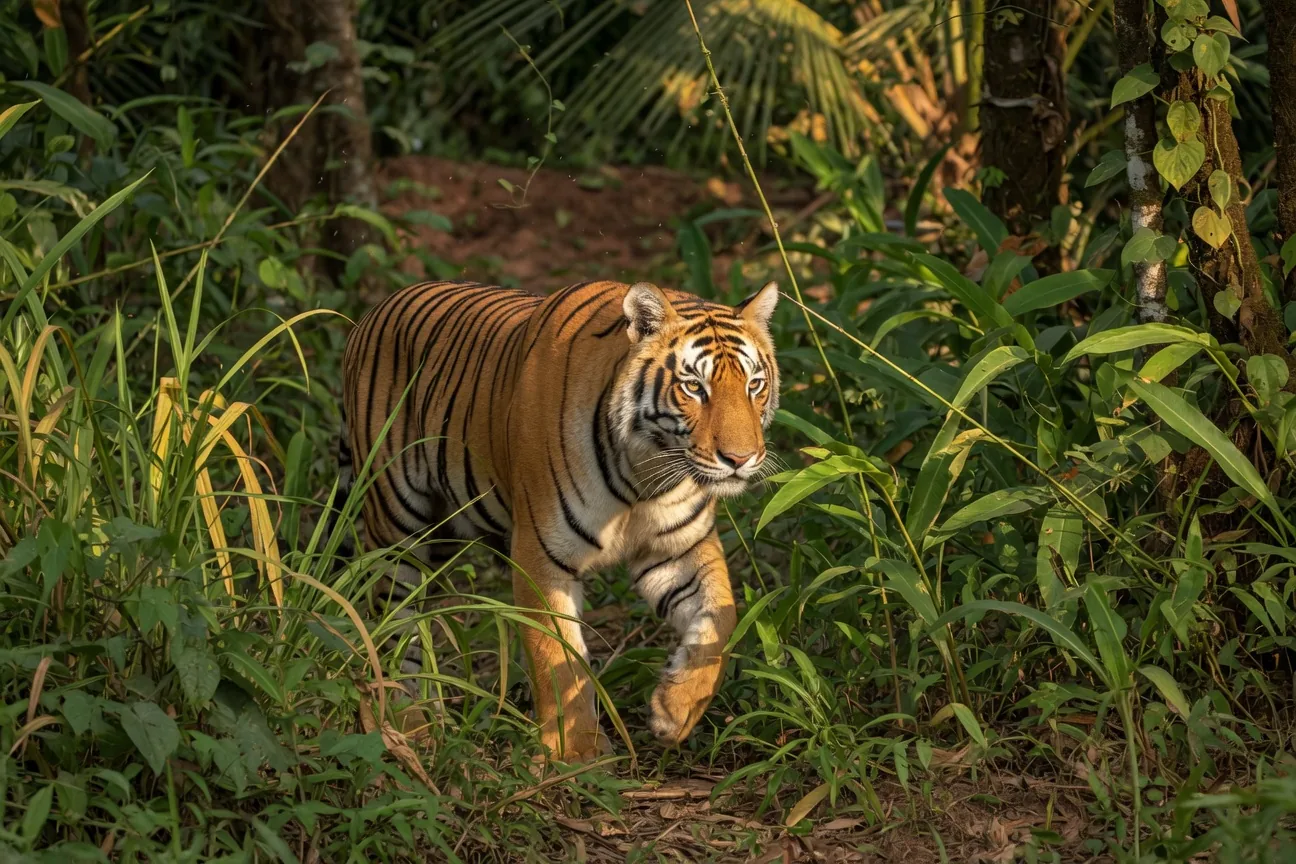
In 2000, WWF launched the Terai Arc Landscape project, working with the governments of India and Nepal to reconnect 11 protected areas through wildlife corridors. WWF has also partnered with local groups to stop poaching and cut off the trafficking of tiger parts.
Proboscis Monkey
Also called the long-nosed monkey, the Proboscis Monkey is listed as Endangered. Its population has shrunk sharply because of hunting and habitat destruction. The species lives in the mangrove, lowland, riverine, and swamp forests of Brunei, Indonesia (Kalimantan), and Malaysia (Sabah and Sarawak). Humans moving into their coastal and riverside habitat is one of the biggest threats to this species.
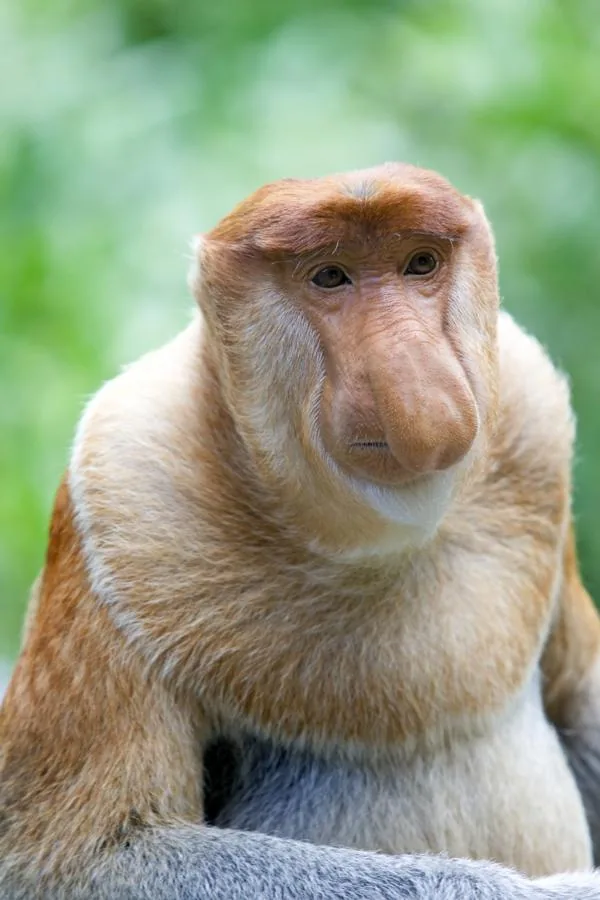
The Proboscis Monkey is protected under CITES Appendix I and is known to occur in 16 protected areas, including Muara Kaman Nature Reserve, Gunung Pueh Forest Reserve, Danau Sentarum Wildlife Reserve, Gunung Palung Nature Reserve, and Kendawangan Nature Reserve. Unfortunately, poor funding and institutional weaknesses have meant its numbers have continued to fall.
Indian Wild Dog
Also known as the Asiatic Wild Dog or Dhole, the Indian Wild Dog has seen its numbers fall sharply, to fewer than 2,500 individuals in the wild. The main threats are the loss of their prey, habitat destruction, and diseases caught from domestic and other dogs. These dogs prefer the moist and dry tropical forests of India. Besides India, they are also found in Bhutan, Cambodia, Lao PDR, Myanmar, North Korea, Thailand, Tibet, and Vietnam.
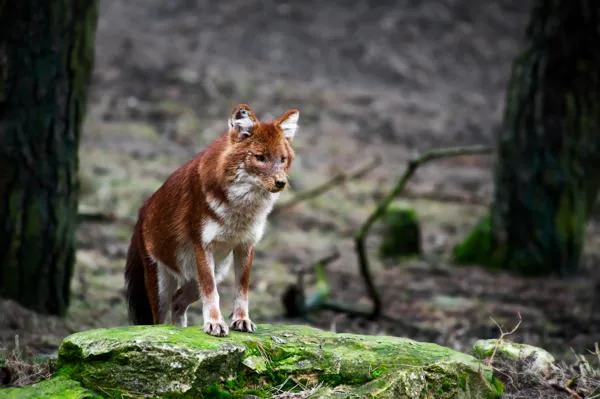
In India, the Dhole is protected under Schedule 2 of the Wildlife Act of 1972. In Cambodia, wildlife decrees restrict hunting of the species. Even so, the work needed to protect the prey base that dholes depend on has not yet been done.
Giant Panda
The Giant Panda is one of the world's most powerful symbols of conservation. All wild Giant Panda populations are found in south-central China. In 2004 there were around 1,600 individuals in the wild, plus about 300 in captivity. These peaceful members of the bear family live in broadleaf and coniferous forests with a thick understory of bamboo.
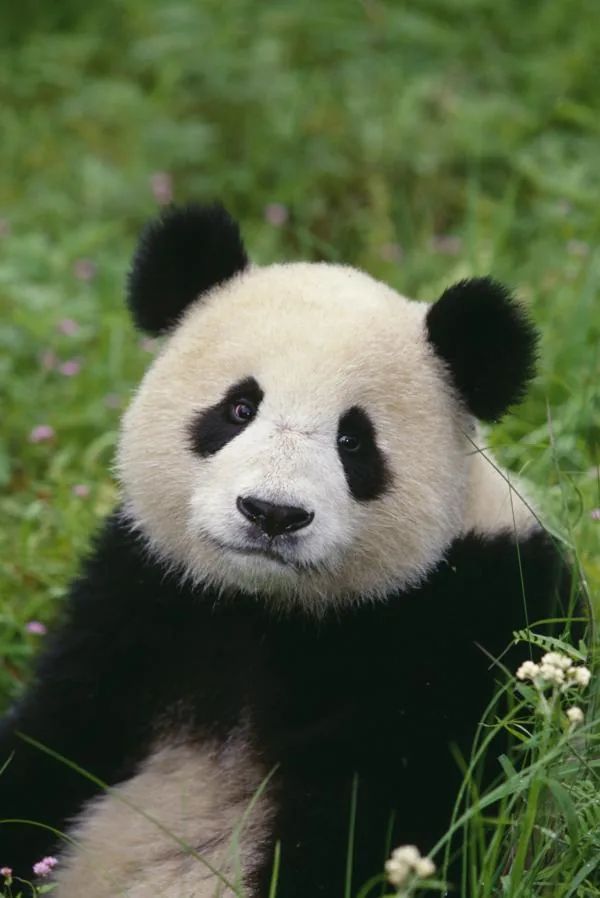
The Giant Panda has distinctive white patches around its eyes and a thick, woolly black-and-white coat. It survives mainly on bamboo. The biggest threats to the species are habitat destruction and its total reliance on bamboo, a plant that flowers and dies off every 15 to 120 years, which can suddenly remove the panda's food supply.
The Giant Panda is protected under Category 1 of China's Wildlife Conservation Law of 1988, and under Appendix I of CITES. WWF and the Chinese Ministry of Forestry have run a joint conservation program to protect these endangered animals. With poaching now largely under control, restoring and expanding habitat is the focus of ongoing conservation work.
Giant Otter
The Giant Otter is the largest of the thirteen otter species. It lives in the rainforests of South America, particularly in the slow-moving rivers and streams of the Amazon, Orinoco, and La Plata river systems. Although it has very few natural predators, its population is threatened by water pollution from mining, overfishing of the fish it eats, and illegal hunting for its pelt. The current wild population is estimated at between 1,000 and 5,000 individuals.
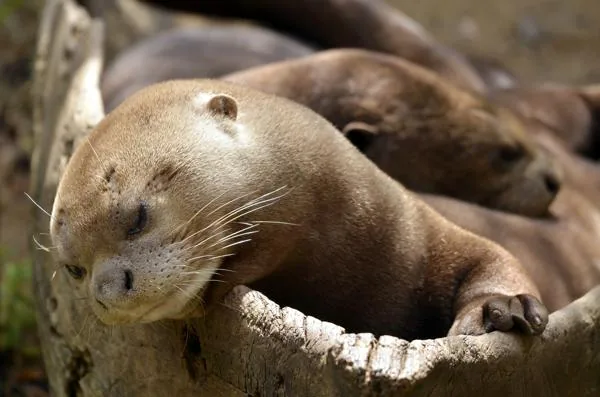
Diseases like canine distemper or parvovirus can also hit these animals hard, causing big drops in local populations.
Protected areas in South America (such as the Alto Purús National Park in Peru and others in Suriname) are key to saving the Giant Otter's habitat.
Asian elephant
The Asian elephant is the largest living land animal in Asia. It is under threat from habitat loss, degradation, and fragmentation. As humans expand into elephant territories, conflicts break out, and elephants are sometimes killed as a result. Asian elephants are smaller than African elephants. They have a distinctive trunk, tusks, and ears with dorsal fins folded inwards. They live in tropical evergreen forests and moist and dry deciduous forests.
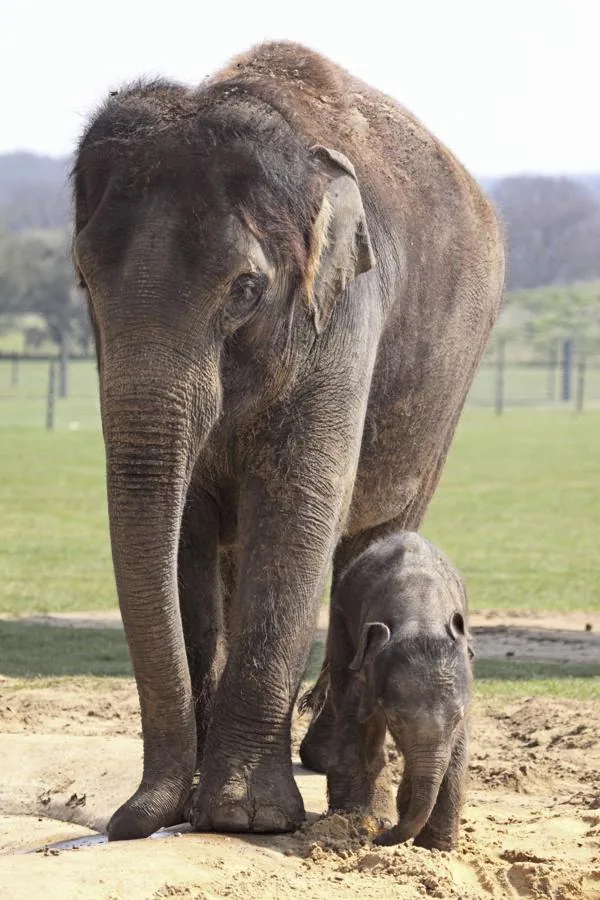
The species is listed under CITES Appendix I. Conservation efforts must focus on maintaining the elephant's habitat, reducing human-elephant conflicts, and stopping ivory trading.
Endangered Rainforest Species
The animals above are just the most well-known cases. Rainforests are home to hundreds of other threatened species, birds, frogs, reptiles, and more. Here is a snapshot of some of the most at-risk, drawn from the IUCN Red List.
Classified as Critically-Endangered
- Philippine Cockatoos
- Philippine Eagle
- Regent Honeyeater
- Kakapo Parrot
- Sharp Snouted Day Frog
- Rancho Grande Harlequin Frog
- Poison Dart Frog
- Panamanian Golden Frog
- Golden Mantella
Classified as Endangered
- Swift Parrot
- Waterfall Frog
- Common Mist Frog
- Great Green Macaw
The list of endangered animals is expected to grow in the coming years. Laws, organizations, and treaties like the Convention on International Trade in Endangered Species (CITES) give these animals protection. But more public awareness is needed. By spreading the word, we can help protect animals from extinction and conserve the biodiversity of our natural world.
Explore More Animals
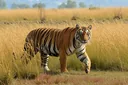 A List of Endangered Animals From Every ContinentFrom the Bengal tiger and giant panda to the mountain gorilla and polar bear: a continent-by-continent list of the world's endangered animals, with photos.
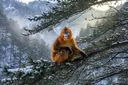 Endangered Monkeys ListMeet the world's endangered monkeys: a full list of around 80 threatened species, from snub-nosed monkeys to tiny tamarins, plus why they are vanishing and how
 Tropical Rainforest Animals List: A Guide to the Jungle's WildlifeFrom jaguars and harpy eagles to poison dart frogs, orangutans and sloths, meet the astonishing animals of the world's tropical rainforests, the richest habita
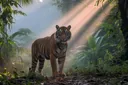 List of All Endangered Species: An A, Z of Animals & Plants at Risk | Animal SakeA comprehensive A-to-Z list of endangered animals and plants whose numbers have fallen so far that they are in immediate danger of extinction.

 Fun fact for today!Rainforests cover just 6% of Earth's land surface, yet they hold 40-75% of all living species on the planet.