

Species Status and Numbers
The table below shows every recognized subspecies, those still clinging to survival, and the three that have already been lost forever.
| Subspecies | Status | Estimated Remaining |
|---|---|---|
| Bengal (Indian) Tiger | Status: Endangered | Remaining: Around 2000 |
| Indochinese Tiger | Status: Endangered | Remaining: Around 1200 |
| Malayan Tiger | Status: Endangered | Remaining Around 800 |
| Amur (Siberian) Tiger | Status: Endangered | Remaining Around 600 |
| Sumatran Tiger | Status: Endangered | Remaining Around 500 |
| South China Tiger | Status: Endangered | Remaining Fewer than 50 |
| Caspian Tiger | Status: Extinct | Last Seen: Around 1970s |
| Bali Tiger | Status: Extinct | Last Seen: Around 1930s |
| Javan Tiger | Status: Extinct | Last Seen: Around 1980s |
| Note: The Tasmanian tiger, also called the Tasmanian wolf, is actually a marsupial, and is not related to tigers. | ||
The South China Tiger: Almost Gone
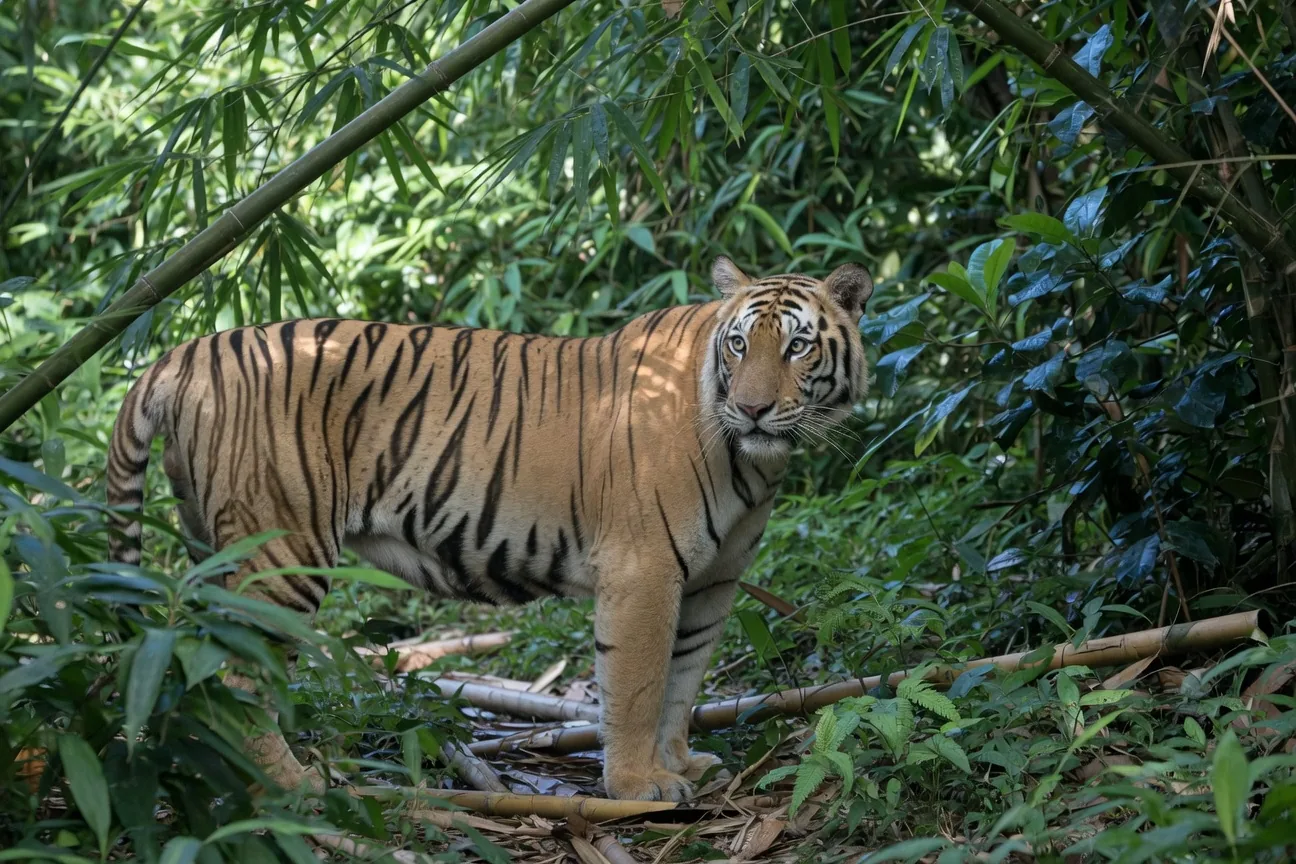
Very few tigers remain in the world today. Without serious protection, even these survivors could disappear forever. The South China Tiger is the most extreme example, fewer than 50 are thought to survive, and it has been at least 20 years since anyone spotted one in the wild. Many scientists now believe this subspecies is already functionally extinct.
Take the Endangered Tigers Quiz!
5 quick questions. How much do you know about the world's most threatened big cats?
Why is the Tiger Endangered?

Humans have hunted tigers heavily for centuries. In ancient times, royalty kept tamed tigers as pets, and tiger hunting was a popular sport among the nobility. In many Asian countries, people also believe that tiger body parts have special powers, for example, a talisman made from a tiger's claw is thought to protect against evil.
Tigers have also been killed for their fur and for almost every part of their body. Their claws, teeth, and eyes are sold at high prices. Their bones are said to be powerful medicines, and many other organs are believed (wrongly) to be cures for human illnesses. These false beliefs have driven illegal hunters, called poachers, to kill tigers for their whiskers, fat, and other body parts. This reckless poaching is one of the biggest reasons tigers are endangered today.
Beyond hunting, humans have also destroyed the places where tigers live. Forests have been cut down for farms and cities, shrinking tiger territories. People have even moved into tiger habitats, which often leads to more conflict and hunting. Worse still, humans have hunted the animals that tigers eat (like deer and wild boar) leaving tigers with less food. A hungry tiger has to take bigger risks to survive.
In reality, tigers do not hunt animals larger than themselves, such as elephants. They are also very good climbers and swimmers, which helps them survive floods and natural disasters. But none of these skills protect them from their biggest threat: humans.
Population Decline in Numbers
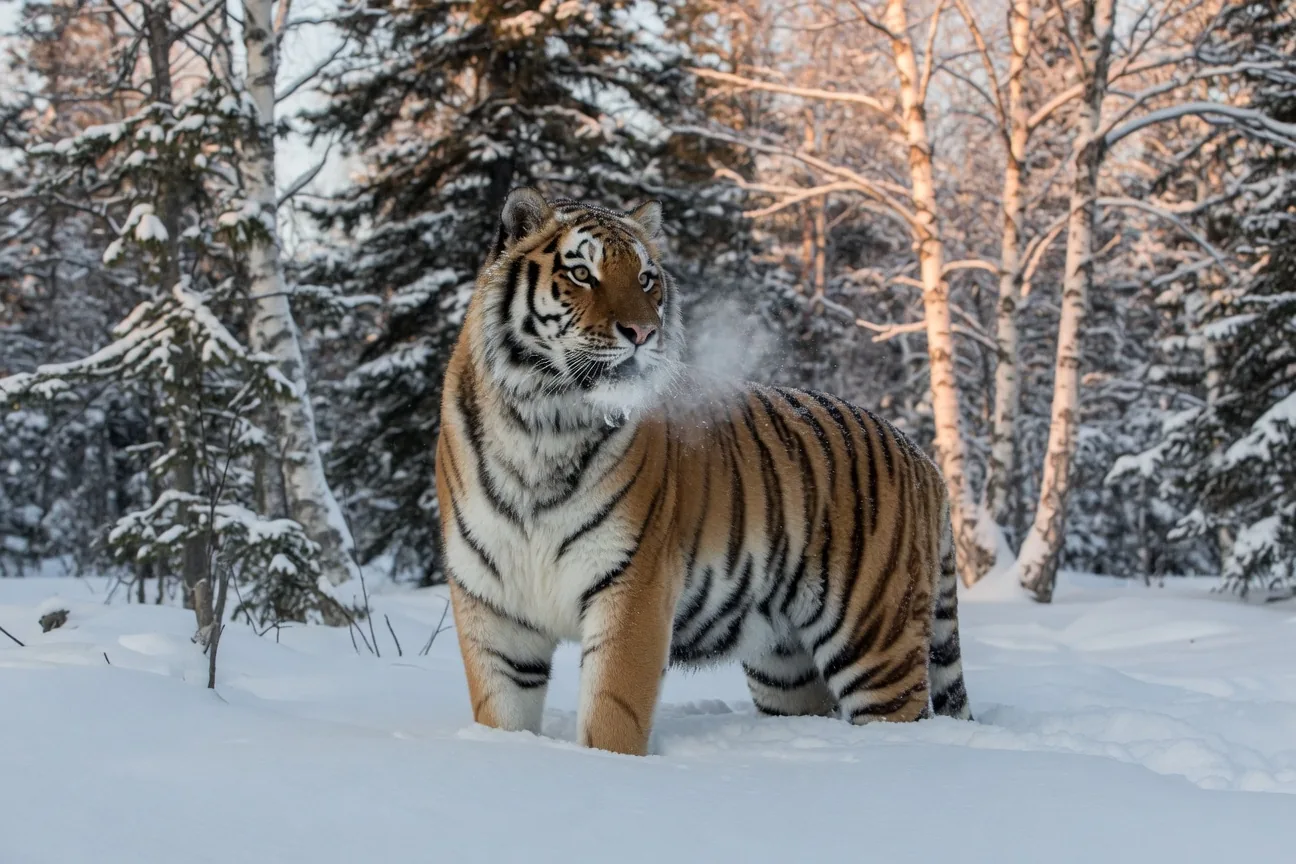
Tiger numbers in the Indian subcontinent have dropped sharply over the past fifty years. Nepal now has only two hundred tigers, while India has about four thousand, both serious declines from earlier figures. China and Korea have been identified as the biggest sources of illegal tiger poaching. Tigers also face threats from wild animals like elephants, bears, and large buffaloes. Their only natural defenses are their razor-sharp claws and strong teeth.
The good news is that the world is fighting back. Today, all subspecies of the tiger are listed as endangered, and hunting or poaching them is illegal everywhere. China banned the sale of all tiger products in 1993. Unfortunately, illegal poaching for tiger fur, bones, and organs still continues despite the ban.
Even so, tigers continue to be hunted and to lose their habitat, and together these are the greatest threats they face. The World Wildlife Fund (WWF) has been working hard to stop the decline. Their goal was to double the number of tigers in the world by 2022, the Year of the Tiger. Many other organizations are also working to protect this magnificent animal. There is still hope, but only if these efforts continue.
Explore More Animals
 Save Tigers from ExtinctionTigers are vanishing fast. Learn why only around 5,000-7,000 remain, which three subspecies are already gone, and what you can do right now to help save them.
 Tiger's Habitat: What do Tigers Eat?Royal in their appearance, tigers are one of the most majestic animals seen in the wild. Here is some information about their habitat and food habits.
 Facts About the Bengal Tiger That Will Leave You FlabbergastedBengal tigers are the second largest big cat on Earth, and one of the most endangered. Discover their stripes, hunting habits, white tiger connection, and how
 Utterly Mind-boggling Facts About the White Bengal TigerAlso known as Indian tigers, white Bengal tigers were initially hunted down for fun, as a part of sporting activities. Today, most of these are bred in captivit

 Fun fact for today!At the start of the 1900s there were around 100,000 wild tigers. Today fewer than 3,200 remain, a 97% crash in just one century.