

What Does "Endemic" Mean?
Endemism is the state of an organism being confined to a particular geographic area. The geographic area can be variable, ranging from a single mountain to a whole country. The organism in question could be any plant, animal, or microbe species. This is in direct contrast to the term 'cosmopolitan', which (in the ecological sense) means a widespread, possibly global population.
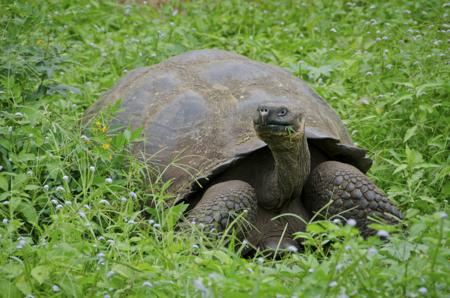
A species being endemic is often a sign that it is endangered. But it is also possible that the species has always been endemic to a particular region and has never been found elsewhere. For example, the Galápagos tortoise has always been endemic to Galápagos, and it would be wrong to say this means it is endangered.
The term 'endemic' is often confused with 'indigenous'. Indigenous simply means that the species originated there. It says nothing about where the species lives now. A species indigenous to a region may be found elsewhere, and is therefore not endemic to the region of its origin. Let's dig deeper into what this term stands for.
What's In a Name?
The use of the term 'endemic' was criticized by David Sharp, a biogeographer. The word had originally arisen as an antonym of the word 'epidemic', in terms of pathogens that affected humans. Sharp proposed the use of the word 'precinctive' instead of 'endemic' in the ecological sense. Though his reasoning and criticism was accurate, his terminology never caught on, and the word 'endemic' remained in use.
Types of Endemism
Endemic species can be classified into two categories: paleoendemic and neoendemic.
Paleoendemism Shrank to one place
Species that used to be found in numerous areas but are now confined to a particular location are called paleoendemic.
The reasons for the change can be numerous and varied. Human encroachment and the loss of habitat it causes is the most common reason for most species becoming extirpated (wiped out from a particular region), if not completely extinct. Other causes include pollution (another form of human intervention) or changes in the local environment. The arrival of new predators, often brought in by humans, can cause chaos in local ecosystems and eliminate particular plants or animals from the region.
The Asiatic lion is the perfect example of a paleoendemic species. Once found from the Middle East to the Sundarbans in Bengal (the two kings of the jungle actually coexisted in the Gangetic plains for a long time), it was actively hunted down in much of its range.
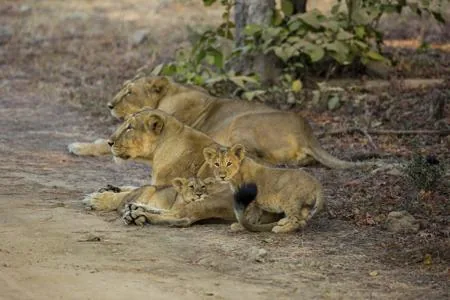
The British rule in India declared wild animals as vermin and placed rewards on their hunts. The poor animal was also hunted indiscriminately across the rest of its range. This, along with more passive forms of human intervention such as habitat loss due to growing urbanization and agriculture, contributed to it becoming extirpated in the huge majority of its range. It is now only found in the scrublands of western India (the state of Gujarat, to be particular). Though African lions thrive in Africa, the Asiatic lion is now endemic. These terms are equally applicable to plant species.
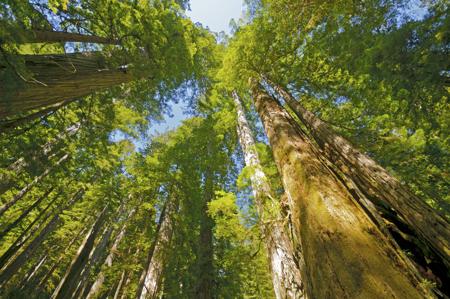
Redwood trees, once found in abundance all over the U.S., but now largely limited to California, are an example of paleoendemic plants.
A misuse of this term would be to call the cheetah an example of paleoendemism. It was eliminated from the vast majority of its habitat in Asia and now survives mainly in Africa. But extending the limits of endemism to the second largest continent in the world would make the term absolutely meaningless.
Similarly, the Bengal tiger can be said to be endemic to the Indian Subcontinent, but since it has numerous populations in various areas of the region, it is not considered so. It may be endangered, but that doesn't mean it is endemic.
It would also be wrong to consider the Siberian tiger as a paleoendemic species. Even though it only has one contiguous region of existence (like the Asiatic lion), it is spread across national borders and encompasses various types of forests, making it difficult to fit neatly into political or ecological terms.
Take the Endemic Species Quiz!
5 quick questions. Find out if you can tell a paleoendemic from a neoendemic, and which famous animals live in just one place.
Neoendemism Always one place
A species that has never been found outside its place of origin is known as neoendemic.
This occurs mainly because of geographic isolation from the rest of the world. So secluded regions such as Australia, Madagascar, and the Galápagos Islands are home to the widest varieties of neoendemic species.
Because these places are cut off from everywhere else, the organisms living there evolve in their own direction. They may end up looking nothing like any other species in the world. Only a deep study of their evolutionary history reveals their link with more widespread species.
The perfect example of this is Australia, which (cut off from the rest of the world) gave rise to animals such as kangaroos, koalas, and wallabies.
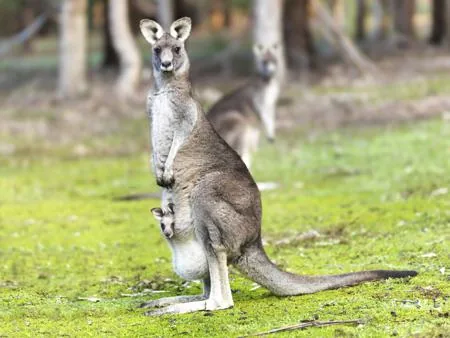
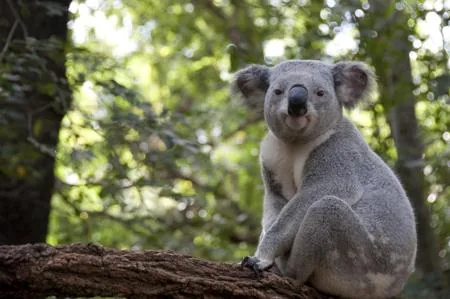
These animals look nothing like any found on other continents, since much of their appearance-related evolution and speciation occurred after plate tectonics separated Australia from the rest of the world.
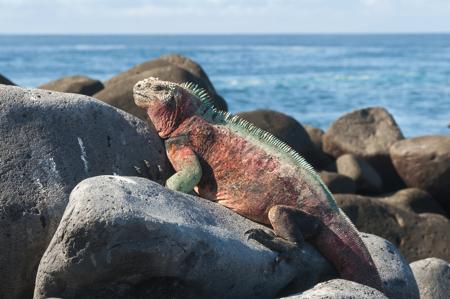
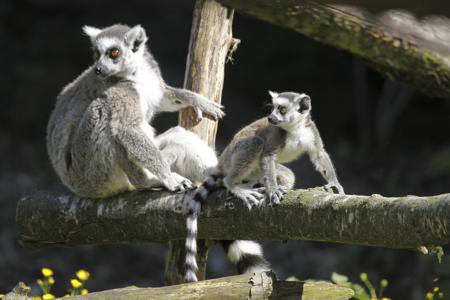
Apart from the Aussie examples above, other endemic species that have always been confined to their place of origin include the Galápagos giant tortoise, the marine iguana (also found on Galápagos, and the only lizard in the world to lead a marine lifestyle) and the lemurs on Madagascar. Both of these, being islands, are great at producing endemic species.
Regions such as Madagascar, Australia, the forests of New Caledonia, the pine-oak forests in Mexico, and the Luzon rainforests in the Philippines are hotspots for neoendemic species, due to their geographic isolation and independent evolution.
Explore More Animals
 A List of Endangered Animals From Every ContinentFrom the Bengal tiger and giant panda to the mountain gorilla and polar bear: a continent-by-continent list of the world's endangered animals, with photos.
 Mesmerizing Facts About the Australian WildlifeAustralia is one of the richest ecosystems on Earth. Discover the amazing mammals, birds, reptiles, amphibians, and fish that make this island continent unlike
 Forest Animals List: A Field Guide to Who Lives in the WoodsFrom rainforest to taiga, meet the mammals, birds, reptiles, insects and amphibians of the world's forests, plus the endangered species fighting to survive.
 Where Do Crocodiles Live? Habitat, Species & Amazing FactsCrocodiles live near swamps, marshlands, brackish waters, lakes, and rivers across five continents. Meet all the species, learn where each one lives, and discov
Frequently Asked Questions
What is an endemic species?
An endemic species is a plant, animal, or microbe that is found naturally in just one geographic area and nowhere else on Earth. That area can be as small as a single mountain or as large as a whole country.
What is the difference between paleoendemic and neoendemic species?
A paleoendemic species used to live in many places but has shrunk to just one, like the Asiatic lion. A neoendemic species has always lived in only one place and never spread anywhere else, like the kangaroos and lemurs that evolved on isolated lands.
Does endemic mean the same as endangered?
No. Being endemic can be a warning sign that a species is rare, but some animals, like the Galápagos tortoise, have always been endemic and are not endangered just because they live in one place.
Why do islands have so many endemic species?
Islands like Madagascar, Australia, and the Galápagos are cut off from the rest of the world. Their animals evolve on their own, separate from everywhere else, so they often look like nothing found on any other continent.

 Fun fact for today!The giant tortoises of the Galápagos are so famous for living in just one place that the islands were even named after them, galápago is an old Spanish word for tortoise!