

We Shower Too!
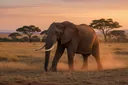
Elephants love water. They suck it up with their trunk and spray it all over their body, a proper shower! Then they spray dust on themselves, which works like a natural sunscreen and protective coating.
African elephants are the largest living land mammals. They are easy to tell apart from Asian elephants: their ears are much bigger, their tusks are longer, and their forehead slopes forward. Read on to discover many more amazing facts about these incredible creatures.
Classification
♦ Kingdom: Animalia
♦ Phylum: Chordata
♦ Class: Mammalia
♦ Order: Proboscidea
♦ Family: Elephantidae
♦ Genus: Loxodonta
♦ Species: Loxodonta africana and Loxodonta cyclotis
Subspecies Appearance
Body
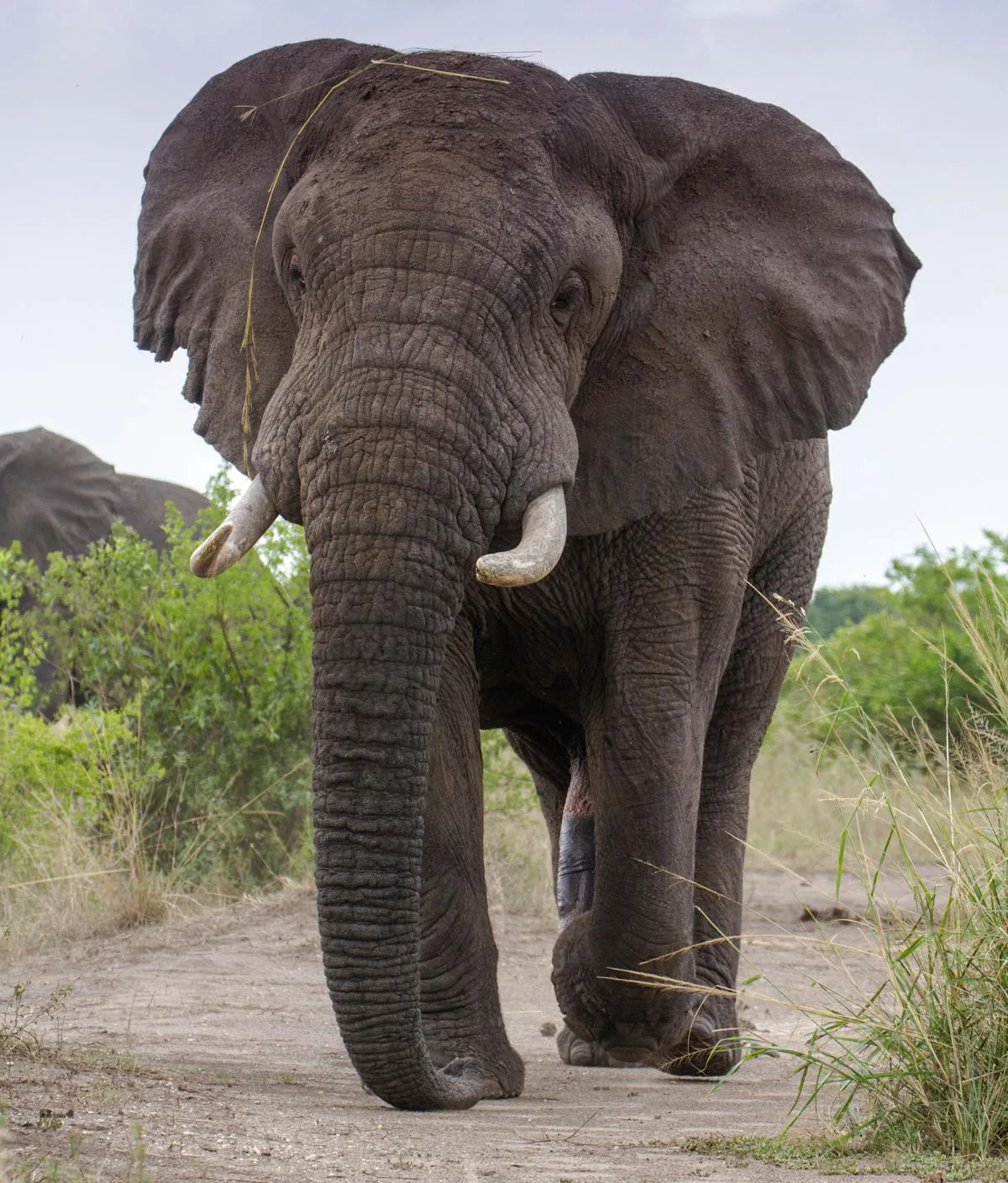
The African bush elephant (Loxodonta africana) is the largest land animal on Earth. The African forest elephant (Loxodonta cyclotis) is the third largest. Bush elephant males stand 10 to 13 feet tall at the shoulder and weigh between 8,800 to 14,800 pounds (4,000 to 6,000 kg). Females are smaller, 7 to 8 feet tall and 5,200 to 7,700 pounds (2,400 to 3,500 kg).
Forest elephants are also 7 to 8 feet tall and weigh between 4,400 to 9,900 pounds (2,700 to 6,000 kg). They have heavy, stocky bodies with a concave-shaped back. Their huge ears help them stay cool by releasing body heat into the air.
Trunk
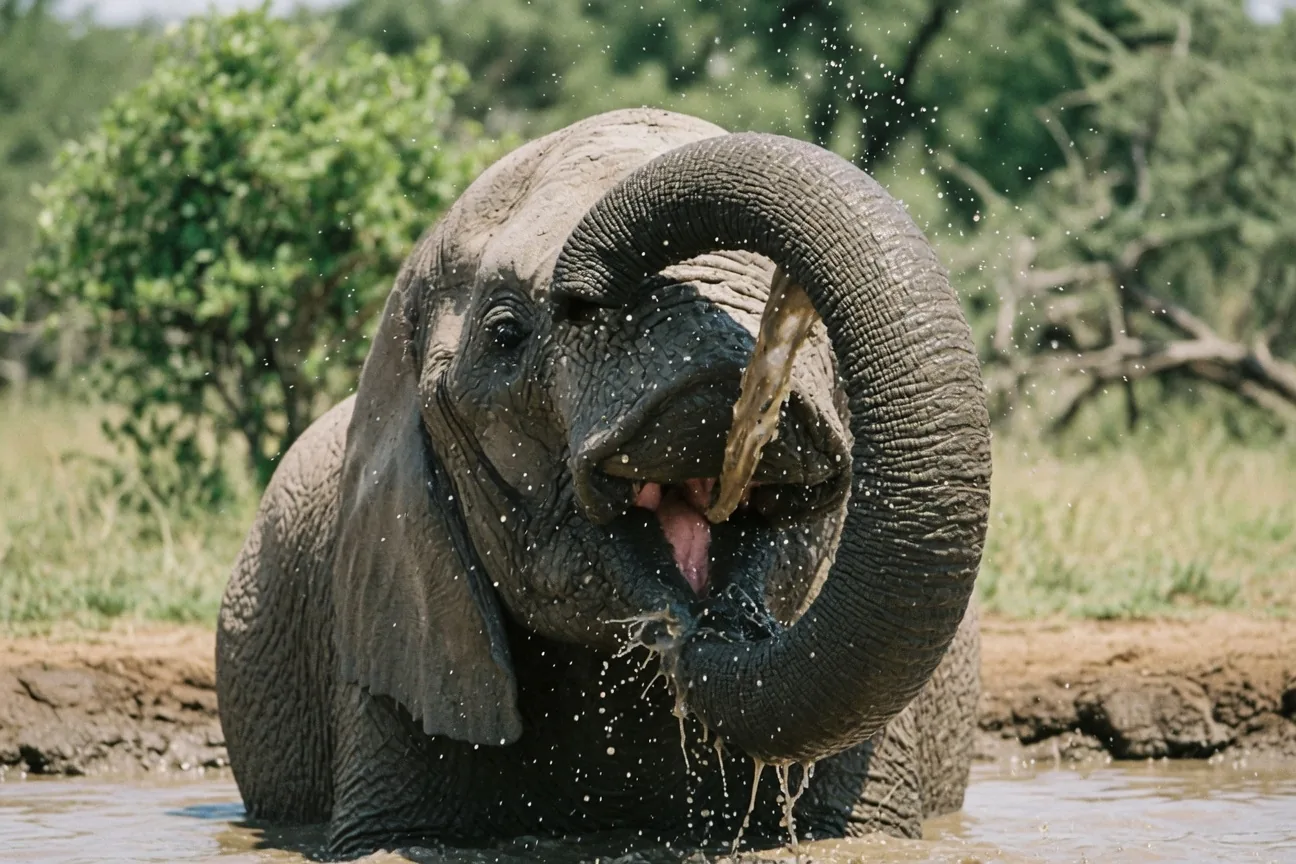
The trunk is an extension of the upper lip and the nose. It works like a fifth limb, elephants use it to touch and feel objects around them. At the tip are two opposing lips that can grip with surprising precision.
Elephants also use their trunk to pick up food, pluck leaves, peel bark off trees, and suck up water to drink. They can even lift their newborn babies and help them stand with it!
Toenails
Loxodonta africana species generally have four toenails on the forefeet and three on the hind feet. Loxodonta cyclotis generally have five toenails on the forefeet and four on the hind feet.
Skin
Elephants belong to a group called pachyderms. The word comes from the Greek/Latin roots pachy (thick) and derm (skin), meaning thick-skinned. Rhinos and hippos are in this group too. An elephant's skin can be as thick as 1 inch on the back and head, but as thin as 1 millimeter behind the ears and inside the mouth.
Teeth
African elephants have 4 molars at a time. These are replaced 5 to 6 times during their lives. When the front pair wears out and falls off, a new pair grows at the back and pushes the remaining teeth forward. Each molar weighs 11 pounds (about 5 kg) and is 12 inches long (about 30 cm).
The incisors grow into tusks. Elephants use their tusks for digging, fighting, and self-defense. Tusks weigh between 50 to 100 pounds (23 to 45 kg) and are between 4 to 8 feet long.
Habitat and Distribution
♦ African elephants can be found in a varied habitat. It ranges from deserts to marshes, to savanna grasslands, and even forests.
♦ These animals are found from the southern part of the Sahara desert to the southern end of Africa, and from the west coast where the Atlantic Ocean is, to the East side where the Indian Ocean is, and even in some parts of central Africa.
Take the African Elephant Quiz!
5 questions. Test what you know about the world's largest land animal.
Reproduction
♦ Females give birth every 4 to 9 years. Births happen more often during the rainy season and less during droughts. The gestation period lasts about 22 months, the longest of any land mammal! A mother usually gives birth to a single calf. Twins are possible but extremely rare.
♦ Newborn calves weigh 200 to 300 pounds (90 to 130 kg). They start following their mothers almost straight away. Females reach sexual maturity between 10 to 11 years of age, and males between 12 to 15 years. However, males don't usually mate until their 20s, when they are big enough to compete with other males.
♦ Other females in the herd help look after calves, they will even nurse calves that are not their own.
Diet
♦ African elephants eat grasses, leaves, bark of trees, twigs, roots, fruits, and vegetables. All elephants are herbivorous animals.
♦ They also need a regular water supply nearby.
♦ They even dig up the soil and eat small clumps of it to meet their salt and mineral requirement.
Communication with Each Other
Elephants are considered the most intelligent terrestrial animals. Their brain weighs about 5 kg, the largest of any land animal. They have many clever ways of talking to each other.
♦ They produce very low-frequency infrasound, too deep for human ears. Other elephants can hear these rumbles from miles away. They can even detect the sound vibrations through the ground with their feet and trunk tips.
♦ They also make sounds we can hear: soft rumbles, loud trumpets, roars, and growls.
♦ Elephants have an excellent sense of smell. They leave chemical signals for each other, in urine, saliva, feces, and secretions from glands near their temples.
♦ They also communicate by touch: leaning against each other, using the trunk as a greeting, caressing, mock-fighting, and a mother guiding her calf by holding its tail.
Lifespan
African elephants live for up to 70 years.
♦ One of the most common natural causes of death is starvation. By about age 70, they have lost all their molars and can no longer chew food properly.
♦ They can also suffer from diseases such as arthritis, septicemia, cardiovascular issues, rabies, tetanus, dysentery, tuberculosis, and pneumonia.
Frequently Asked Questions
What is the scientific name of the African elephant?
The African bush elephant is Loxodonta africana and the African forest elephant is Loxodonta cyclotis.
How long do African elephants live?
African elephants live for up to 70 years.
How long is an elephant's gestation period?
About 22 months, the longest of any land mammal.
Are African elephants endangered?
African elephants are listed as vulnerable on the IUCN Red List, threatened mainly by poaching for ivory and habitat loss.
What do African elephants eat?
They are herbivores, they eat grasses, leaves, bark, twigs, roots, fruits, and vegetables.
Predators and Threats
♦ African elephants need a large territory to survive. As humans take over more land, elephants lose their habitat. Today, most African elephants live in protected reserves.
♦ Poaching is a major threat. Elephants are killed for their tusks, which are sold as ivory. There is an international ban on ivory trading, but illegal trade still continues wherever buyers can be found.
♦ Elephants can also be killed by lions, or injured when two males fight each other.
Social Hierarchy
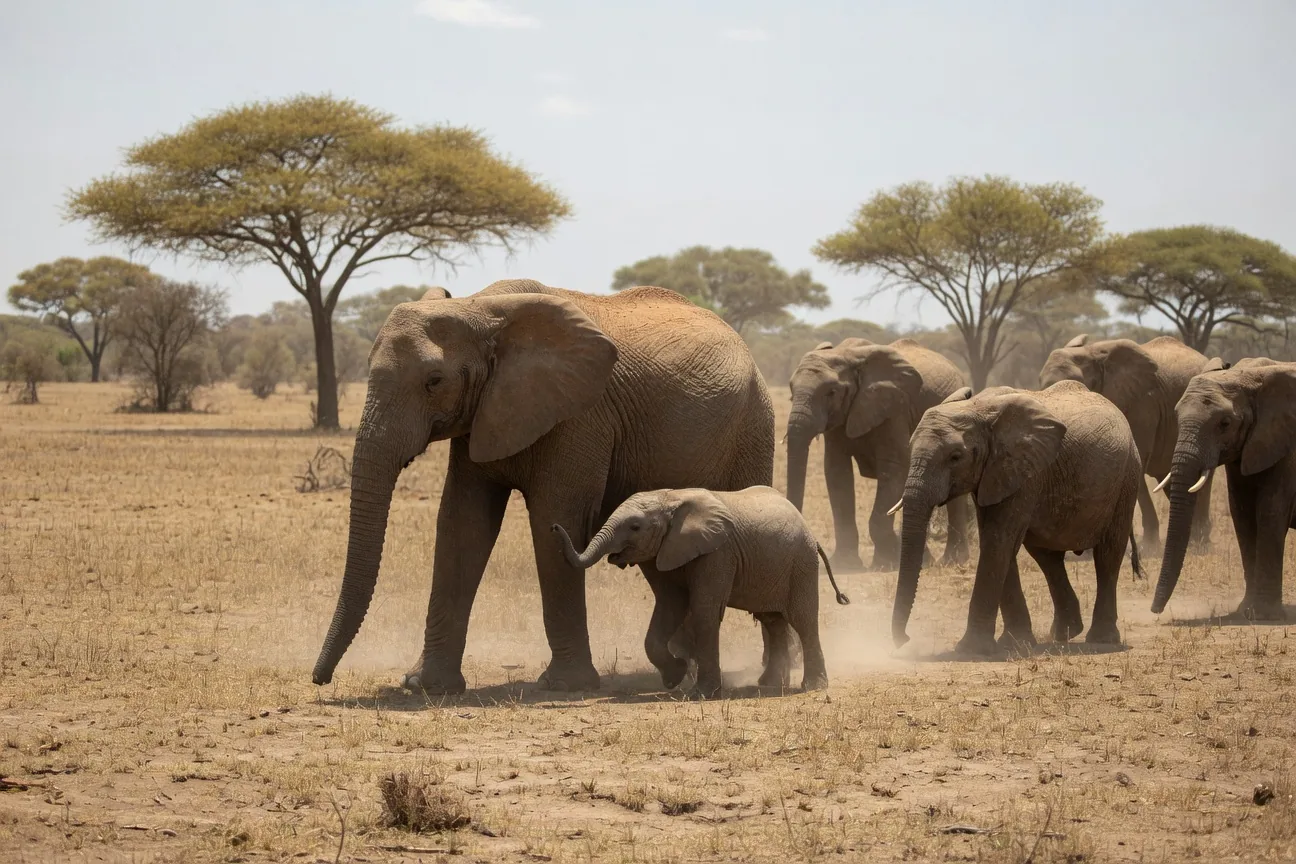
♦ African elephants live in families of many related females. These families are called herds and the oldest female, who leads the herd, is called the matriarch.
♦ The herd consists of grandmothers, mothers, aunts, cousins, sisters, and their calves.
♦ The herd size can range from 20 to as many as 80 individuals.
♦ The females stay together, whereas the male calves leave once they reach puberty and join bachelor herds.
Ecological Importance
♦ When elephants uproot trees and bushes, they loosen and aerate the soil. This also helps turn forests into grasslands, which other wild animals need for grazing.
♦ Elephants dig up soil to eat it for salt and minerals. This creates burrows and water holes that many other animals use as homes and drinking spots.
♦ Seeds in elephant feces pass through their digestive system unharmed and are spread across wide areas. Many plant species depend on this method of spreading their seeds. That makes elephants true ecosystem engineers.
Conservation and Legal Protection
African elephants are listed as a vulnerable species on the International Union for Conservation of Nature's Red List. They were previously listed as endangered. Countries around the world have passed laws to protect them from poaching for the ivory trade. While some places still allow trophy hunting, most countries now recognize how important elephants are and how serious their situation has become. Bans and punishments for poaching have increased as elephant numbers continue to fall.
How Can You Help?
You can help save African elephants! Here are some ways to get started:
♦ Donate to conservation organizations working to protect elephants in the wild.
♦ Sponsor or foster an elephant, your money goes towards their care and upkeep.
♦ Volunteer with wildlife organizations and help take care of elephants directly.
♦ Start or join campaigns and petitions calling for stronger protection laws.
Elephants play a vital role in keeping ecosystems balanced. If we stop buying ivory, the demand for it drops, and with it, the reason to poach elephants. Protecting them today means future generations will still be able to share the planet with these magnificent creatures.
Explore More Animals
 What Do Elephants Eat? Diet, Habits & Fun FactsElephants consume up to 375 pounds of plants every day. Find out exactly what wild and zoo elephants eat, how they find minerals, and why they spend 80% of thei
 Facts About Asian Elephants You Won't Believe You Didn't KnowDid you know that female Asian elephants do not have tusks? And that only some male ones do? Here are some interesting facts about the Asian elephants.
 African Lion FactsThe numbers of African lions are sadly on a rapid decline. These vulnerable species face constant threat due to loss of habitat and poaching. Here are some inte
 African Elephant Habitat: This is Where These Animals Really BelongThe largest land animal on Earth, the African elephant roams 37 nations across sub-Saharan Africa. Discover the two species, their habitats, and what threatens
Glossary: Key Elephant Terms
| Word | Meaning |
|---|---|
| Pachyderm | From Greek/Latin pachy (thick) + derm (skin), the old informal grouping for thick-skinned animals like elephants, rhinos, and hippos. |
| Matriarch | The oldest, most experienced female who leads an elephant herd. She guides the family to food and water using decades of memory. |
| Infrasound | Very low-frequency sound, below what humans can hear. Elephants produce deep rumbles that travel through the ground for miles. |
| Herbivore | An animal that eats only plants, grasses, leaves, bark, roots, and fruit. All elephants are herbivores. |
| Ivory | The hard, creamy-white material that makes up elephant tusks. International trade in ivory is banned under CITES to protect elephants from poaching. |
| Gestation | The length of pregnancy, how long a baby develops inside the mother before birth. At 22 months, elephants have the longest gestation of any land mammal. |

 Fun fact for today!An elephant's trunk has no bones, it's made of over 40,000 muscles!