

What comes to your mind when you think about chickens? Meat-eaters might picture a tasty recipe, while others picture cute little chicks. The word Ameraucana is a blend of the words American and Araucana. According to the American Poultry Association (APA), both the Ameraucana and the Araucana are recognized as pure-bred, blue-egg breeds.
The Ameraucana comes in two forms: the Ameraucana Bantam and the Ameraucana large fowl. These chickens are well known for being docile but a little skittish. Some people used to think blue eggs were healthier than white eggs, but recent research shows there is no real difference in cholesterol or nutrition.
History
The Ameraucana is a fairly new breed. Around the late '70s, breeders crossed the standard American chicken with the Araucana to fix some of that breed's weaknesses. The result was the Ameraucana.
In 1980, the name was officially accepted by both the American Poultry Association (APA) and the American Breeders Association (ABA). The Ameraucana Breeders Club was then set up to share information with breeders. Since 1984, the APA and ABA have recognized eight color varieties of this breed. The eight color patterns are black, blue, blue wheaten, brown red, silver, white, and wheaten. These colors apply to both large fowl and bantams.
Appearance
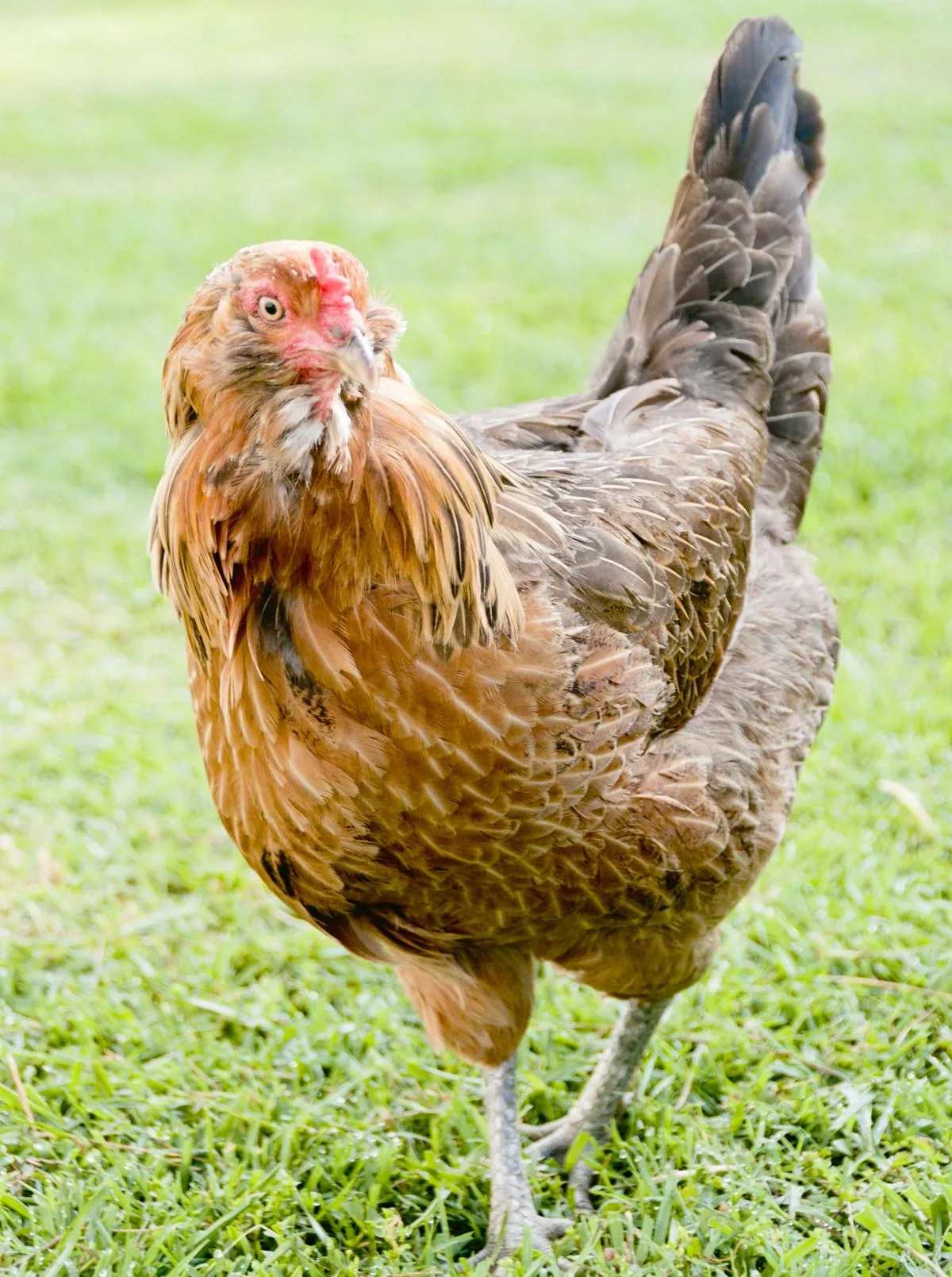
- A comb is a fleshy growth on top of a chicken's head. Ameraucanas have a pea comb, it acts like a cooling system and helps prevent frostbite in cold weather.
- Their beak curves slightly downward. The lower part of their face is covered with feathers that look like a beard.
- Unlike the Araucana, they have full tails. The tail sits at a unique angle of 45 degrees above the horizontal.
- Their earlobes are red. Females tend to have a paler look overall.
Size
The Ameraucana is fairly small compared to other breeds. According to the Ameraucana Breeders Club, standard weights for bantams are:
- Cocks, 30 oz
- Hens, 26 oz
For large fowl, the standard weights are:
- Cocks, 6.5 lbs
- Hens, 5.5 lbs
Color
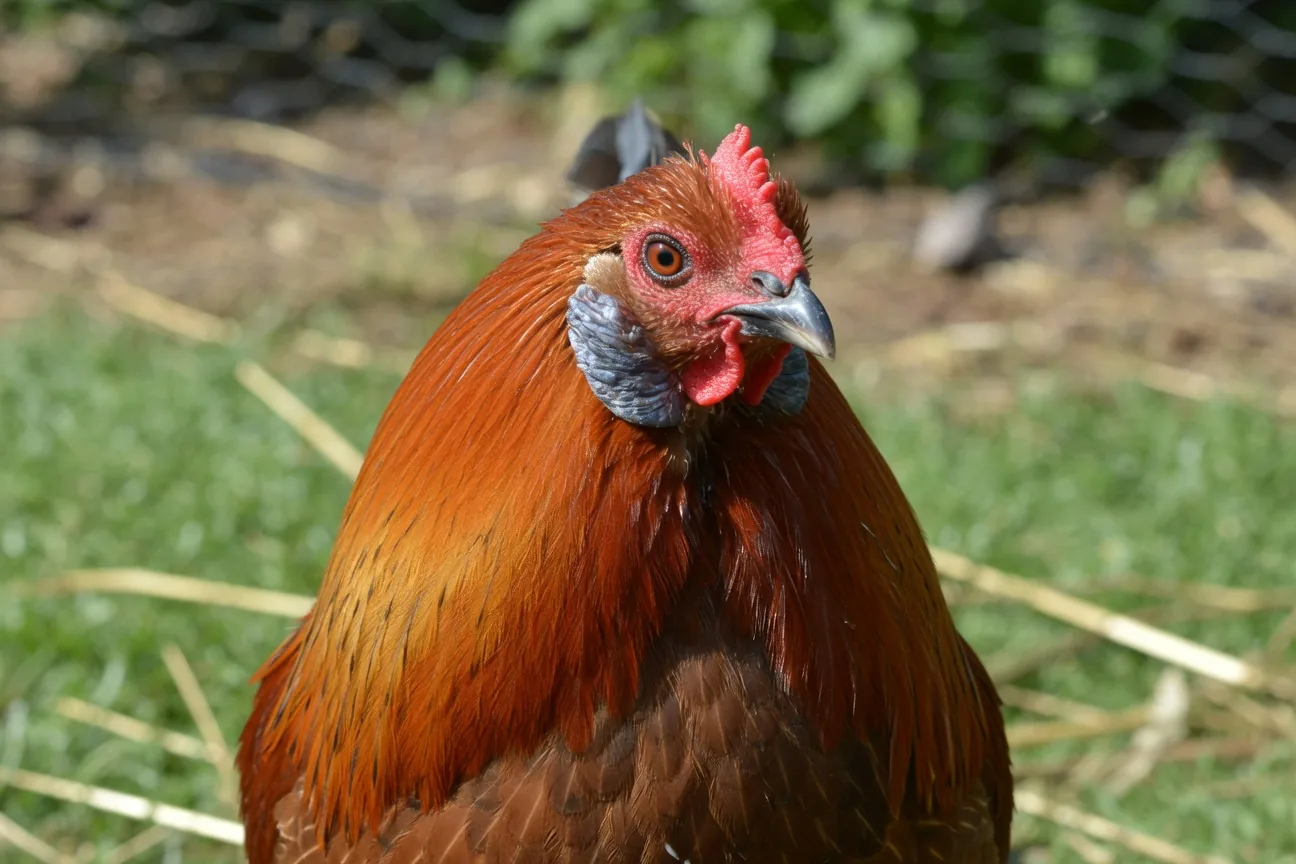
- Ameraucanas come in many colors, black, blue, blue wheaten, brown red, silver, buff, white, and wheaten. Because there are so many varieties, it can be hard to tell a true Ameraucana from an Easter Egger. Some breeders claim to have Ameraucanas, but they actually have Easter Eggers.
- Males often have an orange tint to their feathers. Their feet are white, their shanks are blue-gray, and their eyes have a red and brown tone.
Behavior
- Most owners describe these chickens as sweet, docile, good-natured, and shy.
- Roosters look out for the hens. They call out when they find food and step in to protect females from danger.
- Roosters can be aggressive toward each other, so they should be kept separate from the hens unless breeding is taking place. Always make sure the flock has plenty of food and clean water.
Take the Ameraucana Chicken Quiz!
5 quick questions. How much do you know about this enchanting breed?
Eggs
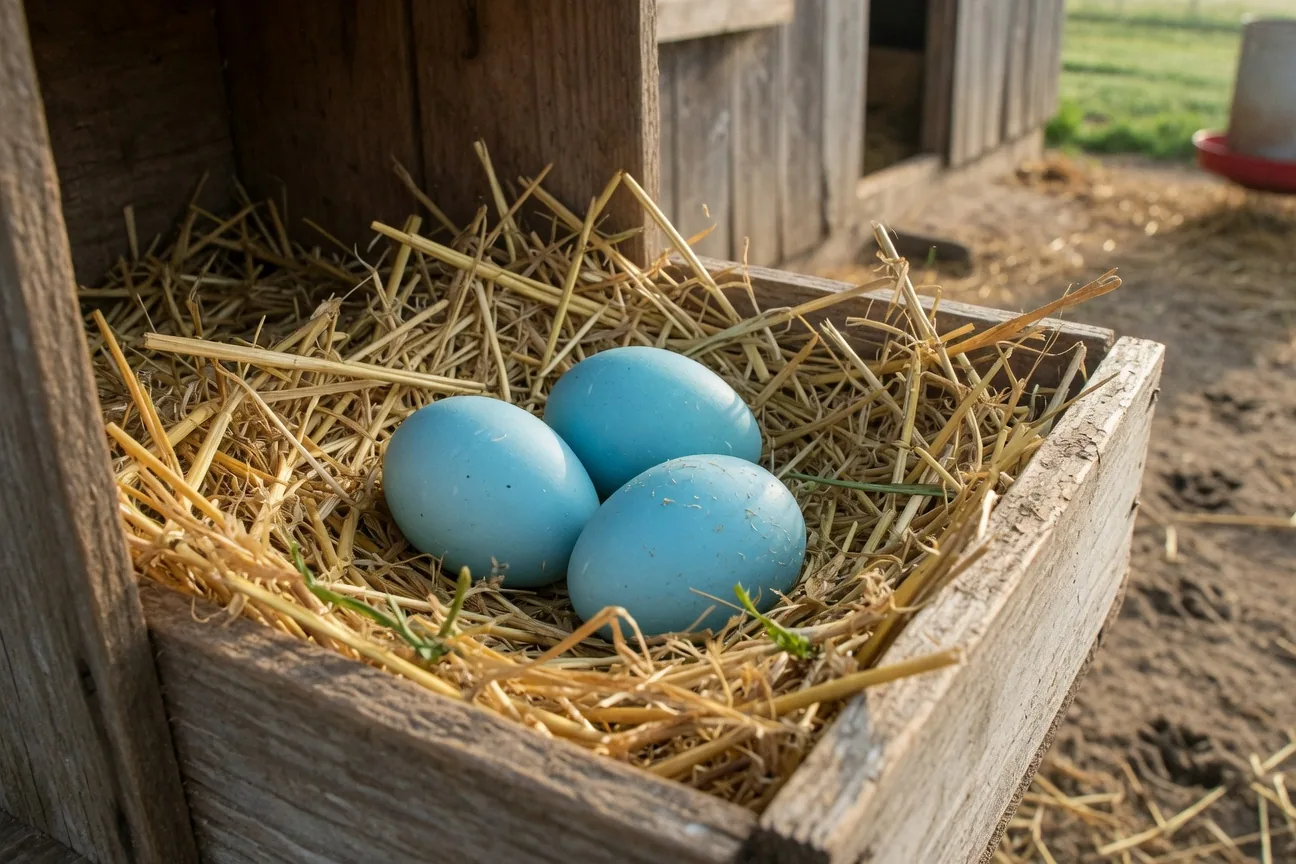
- Hens start laying when they are 5 or 6 months old. Many will lay even during winter. Because egg laying uses up protein and calcium, hens need a diet that is rich in both.
- The eggs are blue, which gives them an Easter egg appearance.
- Ameraucanas can live for more than 10 years, though this depends on diet and living conditions.
- This breed is best suited for egg production.
Frequently Asked Questions
What color eggs do Ameraucana chickens lay?
Blue eggs
When was the Ameraucana breed officially recognized?
1980, by the American Poultry Association
How long do Ameraucana chickens live?
More than 10 years, depending on diet and living conditions
What is a pea comb?
A small, low, triple-row fleshy comb that helps prevent frostbite and acts as a cooling system
What is the difference between an Ameraucana and an Easter Egger?
Ameraucanas are a recognized pure breed with set standards; Easter Eggers are mixed breeds that may also lay blue or green eggs but don't meet APA breed standards
Features like feather beards, blue legs, and tufted ears make Ameraucanas one of the country's favorite laying breeds.
Explore More Animals
 An Awesome List of Different Types of Chickens With PicturesChickens are one of the most popular domesticated animals in the world. There are many different breeds of chickens with interesting characteristics.
 Crazily Fabulous Facts About the Plymouth Rock ChickenEverything you need to know about the Plymouth Rock chicken: barred and white varieties, egg production, the White Rock's dramatic growth story, and why this br
 Everything You Need to Know About Raising Bantam ChickensWant to keep chickens as pets? Bantam chickens are the perfect choice. Learn how to feed, house, and care for these tiny, curious birds with our complete guide.
 Life Cycle of a Chicken: Egg, Chick, and Chicken ExplainedThe life cycle comprises three basic stages: egg, chick, and chicken. Chickens may be raised for their meat, eggs, or both on local as well as commercial farms.
Glossary: Ameraucana Chicken Terms
| Term | What it means |
|---|---|
| Pea comb | A small, low, three-row fleshy growth on top of a chicken's head. It helps regulate body temperature and reduces frostbite risk in cold climates. |
| Muff / beard | A puff of feathers growing around the cheeks and below the beak of certain chicken breeds, including the Ameraucana. One of the breed's signature traits. |
| Bantam | A miniature version of a standard chicken breed. Bantam Ameraucanas are smaller but otherwise share the same traits as the large fowl variety. |
| Easter Egger | A mixed-breed chicken (not officially recognized by the APA) that may carry the blue-egg gene from the Araucana or Ameraucana but doesn't meet the breed standard. Often mistakenly sold as an Ameraucana. |
| Tidbitting | A courtship behavior in roosters where they make special calls, bob their head, and pick up and drop food to attract hens. Hens prefer roosters that tidbit frequently. |
| Shank | The lower leg of a chicken, between the "knee" joint and the foot. On Ameraucanas, the shank is typically blue-gray in color, another breed identifier. |

 Fun fact for today!The word "Ameraucana" is a blend of American and Araucana, named after its South American ancestor!