

Five Eyes, and Still Mostly Blind
Scientists believe ants first appeared during the Cretaceous period. They evolved from wasps that lived during the Jurassic period, so ants and dinosaurs were alive at the same time!
The scientific classification of ants places them firmly in the insect world:
- Kingdom: Animalia
- Phylum: Arthropoda
- Class: Insecta
- Order: Hymenoptera
- Suborder: Apocrita
- Superfamily: Formicoidea
- Family: Formicidae
Now, let's look at some of the more popular species of ants, and then onto some really interesting facts!
Interesting Facts about Ants
Ants are extremely good at adapting to different climates. That's why they are one of the longest surviving species on Earth. They have been around for the past 150 million years, and by the looks of it, seem set for another 150 million!
Over 12,000 known species of ants exist in the world. Experts think there are approximately 12,000 more species yet to be identified and named.
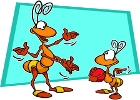
Ants are very intelligent beings. We usually think of humans training animals, but older ants actually train the younger ants in whatever task they are supposed to do. It is one of the only cases in nature where an animal has been known to teach another of its own kind!
A few species of ants have "trap-jaws", the best way to describe them is "super jaws." These jaws can snap shut at tremendous speeds. Records show 140mph! That makes them the fastest bite amongst all animals. Ants use them as catapults, flinging themselves backwards to escape danger.
Ants can also run at amazing speeds. To give you an idea: if an ant was the size of a horse, it would be able to run as fast as a racehorse!
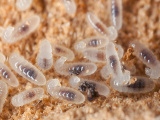
Some ants have the job of looking after the queen's eggs. They do it very diligently! Every morning they pick up the larvae and move them to the topmost chamber of the anthill to keep them warm. Every night they move them back to the lowermost chamber so they don't freeze.
When the queen ant flies off to start her own colony, she collects sperm from different males. She needs as many as 2 - 3 million sperms to start a new colony!
Ants are pretty colorful creatures. They appear in shades of green, red, and brown. Some species also show blue and purple colors, while a few tropical ant species have a metallic shine.
Ants normally range from 2 to 7 mm in length. The carpenter ant is an exception, it can stretch to 2 cm, or even an inch.
Adult ants cannot swallow solid food. They depend on the juice they squeeze out from pieces of food. They pass this liquid food on to the larvae too.
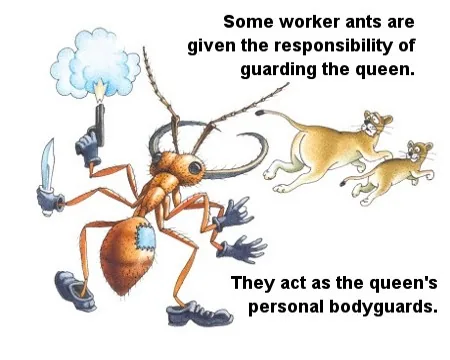
Some worker ants have the responsibility of guarding the queen. They act as the queen's personal bodyguards.
One of the largest species of ant is the Giant Forest Ant (Camponotus gigas). The soldiers of this species grow as long as 28 - 30mm. What's more, the ants of this species engage in ritual battles that can continue for months!
An ant's antenna is a multipurpose tool. It can touch things to identify them, and it can also smell!
These creatures are very helpful to each other. They have two stomachs, one for themselves, and one to store food to share with other ants. They also have a tiny pocket in their mouths just for carrying food to share!
Take the Ant Facts Quiz!
5 quick questions. How much do you really know about Earth's most industrious insects?
Ants have the largest brain amongst insects. Scientists believe that the processing power of an ant's brain could be similar to a Macintosh II computer!
It is the sting of the ant that is painful, not the bite. Most ants have slightly venomous stings. Fire ants are the most feared, they have extremely venomous stings that cause severe itching.
Ants are mostly omnivorous. That means they eat other insects, seeds, oils, and bread. You can read more about their diet on our page about what ants eat.
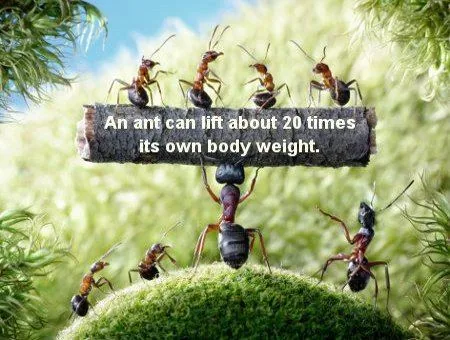
An ant can lift about 20 times its own body weight. But that is just the average. Some ants can carry loads 50 times their body weight!
The life span of ants depends on their rank in the colony. Fertile males have only one job, providing sperm to the queen. They live just a few weeks. Worker ants live for 2 - 3 years. Queen ants live the longest, with a lifespan of almost 25 - 30 years!
Colony Life and Organization
Not all ant colonies need a queen. Some colonies function without one, and some have more than one queen. If two queens can't get along, one will leave, taking a few worker ants with her to start a brand new colony.
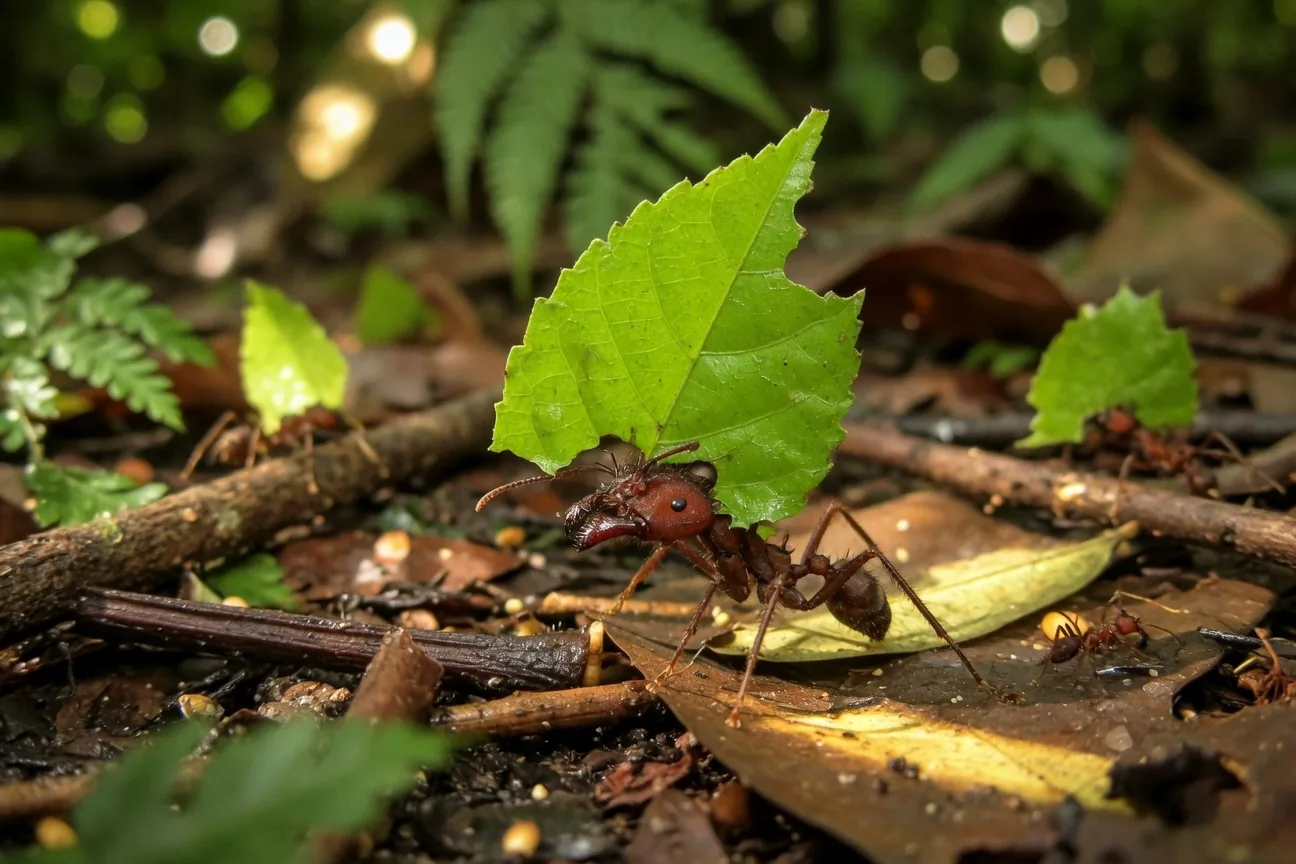
A Tropical Leafcutter ant uses its sharp outer jaw to cut leaves and turn them into pulp. The pulp is then used to grow fungus gardens. These gardens are carefully tended and harvested for food. So we can't take credit for inventing farming, ants did it way before us!
Worker ants are split into groups based on their jobs. Some build the nest. Some are in charge of taking rubbish out and putting it in the dump. Others teach the younger ants how to find food.
Soldier ants guard the nest. They protect it from predators and warn the others about danger. To send a warning, they bang their heads against the nest walls. The vibrations travel through the nest and alert every ant inside.
Soldier ants have specially shaped heads that fit right in the entrance to the nest, they can literally block the door! They only let their fellow worker ants in.
When a worker ant finds food, it leaves a trail of scent on the way back. Other ants follow this scent trail straight to the food. Since ants have poor vision, they rely on these trails heavily.
Leafcutter ants face a nasty problem, a parasite that lays eggs in the crevices of their heads. So when they go out to collect leaves, smaller ants ride on their heads. These tiny riders have one job: fend off the parasite. Talk about teamwork!
Each ant colony has its own unique smell. If an ant leaves its colony, it slowly loses that scent. If it comes back after a few days without the colony's smell, the other ants will treat it as an enemy and attack.
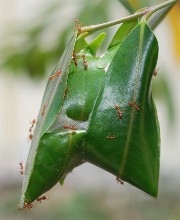
Leafcutter ants rank second only to humans when it comes to forming intricate and huge societies. They can build 100m wide nests in a matter of a few years! And they live in societies containing 8 - 10 million individuals. Amazing engineering for such tiny animals!
Random Trivia about Ants
Antarctica is the only continent which has no ants.
While some species of ants are totally blind, others have vision sharp enough to detect objects that are a meter away.
In most species, queen ants are born with wings. They use their wings just once, to fly off and start a new colony. After that flight, their wings fall off for good.
One species of ants, Mycocepurus smithii, is an all-female species. That's right, they don't need males at all!
Ants follow the barter system! They make deals with certain plants and animals. The plant or animal provides food, and in return the ants provide protection. Ants guard plants by fending off herbivores and destroying parasitic plants trying to take root nearby. They do the same for some animals too.
Army ants from South America are nomadic, they are almost always moving. On the rare occasions when they do settle, it doesn't last long. When they need a temporary home, they make a nest by simply holding each other close and tight!
Frequently Asked Questions
How many eyes do ants have?
Most ants have 5 eyes, two compound eyes and three tiny ocelli on top of the head.
How strong are ants?
Ants can carry 20 times their body weight on average; some species can lift 50 times their weight.
How long do queen ants live?
Queen ants can live up to 25-30 years, far longer than worker ants (2-3 years) or fertile males (a few weeks).
Which continent has no ants?
Antarctica is the only continent with no ant species.
Did ants invent farming?
Leafcutter ants cultivate fungus gardens using chewed leaves, they were farming millions of years before humans.
According to statistics, there are about 1½ million ants for every human on Earth. That is why the total mass of all ants on Earth almost equals the total mass of all humans on Earth!
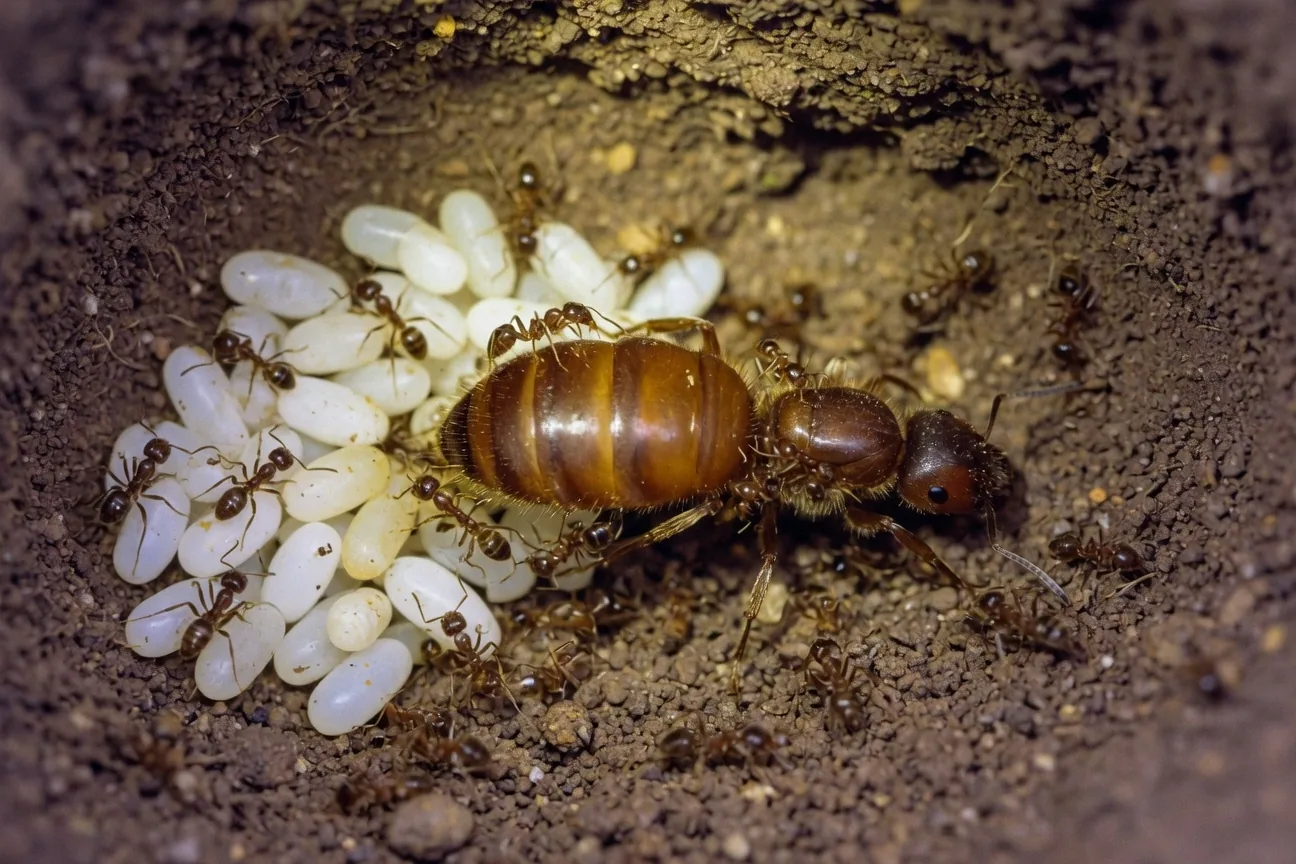
Ants, as well as their larvae, are considered delicacies in many parts of the world. They can be very expensive since they are so hard to catch! Roasted and toasted ants are especially popular.
Slavery is practiced in a few species of ants. The Slave-Maker ant (Polyergus Rufescens) raids the nests of other ant species and steals their pupae. Once the pupae hatch, they are made to work as slaves within the colony.
Ants are famed for having the largest brain amongst insects. They put that advantage to good use, other than humans, such complex behavior is hardly seen in any other species. Their problem-solving skills have even inspired scientists working on biometrics, robotics, computers, and complex algorithms. Way to go, ants!
Explore More Animals
 Do Ants Sleep? The Answer Will Certainly Blow Your MindAnts are always associated with relentless work, but do they ever rest? Discover how fire ant workers power-nap, how queens dream, and why ants hibernate in wi
 The 6 Types of Killer Ants You Never Knew AboutFire ants, bullet ants, Siafu, and more, meet the six most dangerous ants on Earth and discover what makes them so deadly.
 Random Facts About Animals That Will Surprise YouSome really interesting facts about animals that you will enjoy reading. From elephants with 40,000 trunk muscles to hummingbirds that fly backwards, discover
 Did You Know These Facts About Creepy-crawly Centipedes?Centipedes are scary little creatures with a segmented body and numerous legs. Learn how many legs they really have, what they eat in the wild and as pets, and
Glossary: Ant Terms Explained
| Term | What it means |
|---|---|
| Colony | A group of ants living and working together, ranging from a few dozen to millions of individuals. |
| Ocelli | The three tiny simple eyes on top of an ant's head that detect light intensity and polarization. |
| Pheromone | A chemical signal ants leave as scent trails to guide nestmates to food or to warn of danger. |
| Necrophory | The ant behavior of removing and disposing of dead colony members to keep the nest clean and disease-free. |
| Trap-jaw | A specialized type of ant mandible that can snap shut at up to 140 mph, the fastest bite in the animal kingdom. |
| Formicidae | The scientific family name for all ants; from the Latin formica meaning "ant." |

 Fun fact for today!Ants have been on Earth for 150 million years, they outlived the dinosaurs!