

Distribution
Squirrels come in many colors, red, brown, gray, and black. But some color types are much rarer than others.
Black squirrels are one of those rare ones. Here's the surprising part: they are not as exotic as they look.
They are most common in the Midwestern and Northeastern United States. You'll also find them in Britain, Quebec, and Ontario.
And here's the big twist, black squirrels are not a separate species at all. They are actually eastern gray squirrels with a genetic condition called Melanism.
Population Concentrations
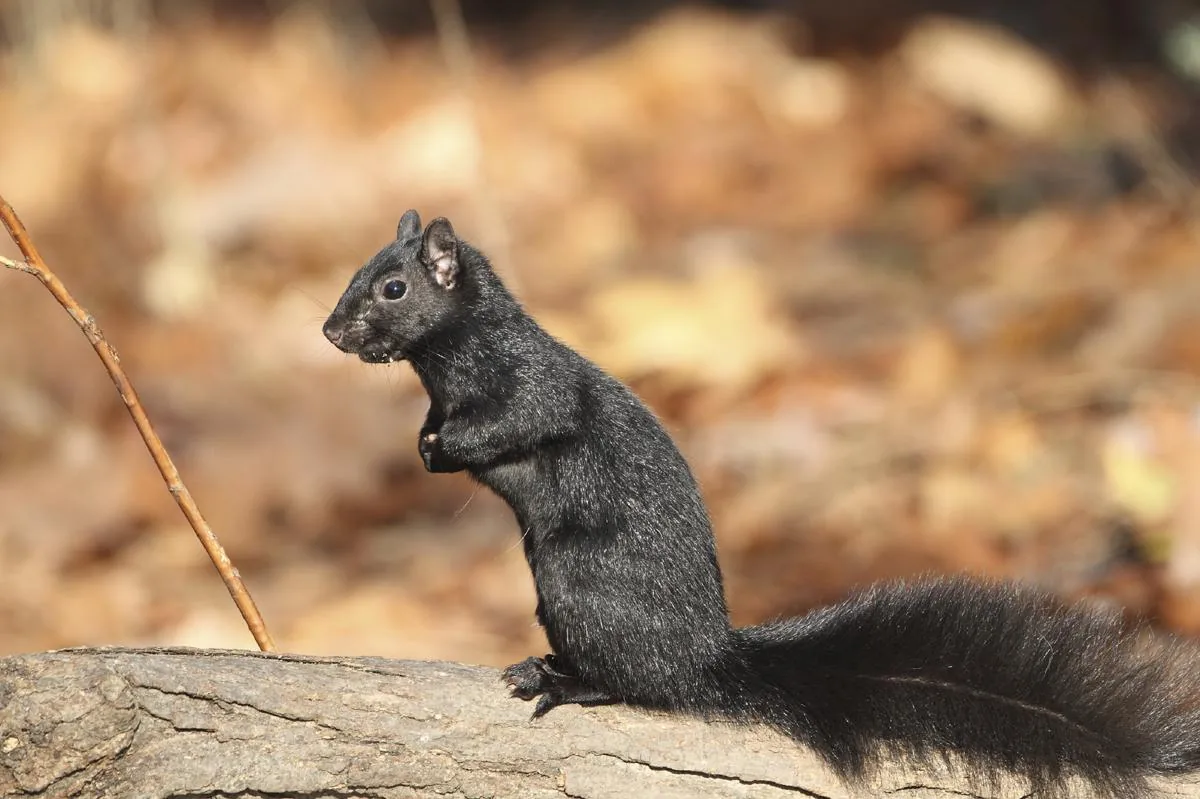
The biggest groups of black squirrels are found in Ontario, Canada, and in Ohio, USA.
In Kent, Ohio, the numbers are especially high. A scientist brought black squirrels there on purpose to study how they would affect the local ecosystem.
Battle Creek, Michigan is another place where black squirrels were deliberately introduced.
In Great Britain, black squirrels arrived in the 1800s, again, brought in by people rather than spreading there on their own.
Even so, black squirrels are still very rare. They make up only about 1 out of every 10,000 eastern gray squirrels, even in areas where big groups live.
Behavior and Diet
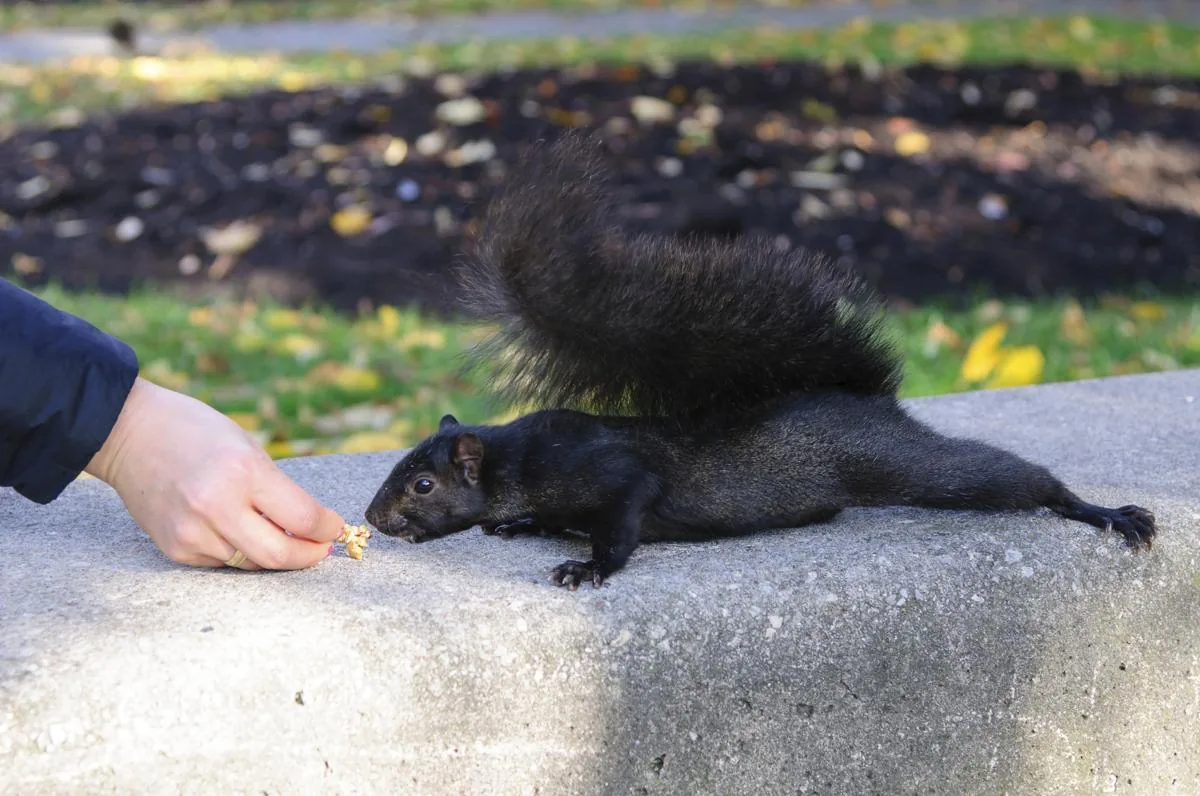
Other than their color (and a few perks from melanism) black squirrels behave just like eastern gray squirrels.
They hide food in trees, underground, and in other secret spots. They also build nests in trees to stay dry and warm. Their diet is varied: nuts, berries, seeds, and other plant material.
Black squirrels do very well in cities and towns. They are comfortable around people, so you'll often find large numbers of them in parks and backyards.
Test Your Black Squirrel Knowledge!
5 quick questions, find out how much you know about these unusual squirrels.
Reproduction
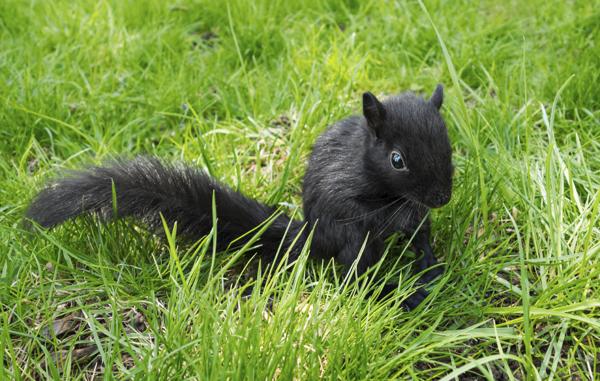
Melanism is a gene mutation, not a normal color variation. That means two gray squirrels usually cannot have black babies.
But if a black squirrel and a gray squirrel have babies together, some of those babies may turn out brownish-black. That happens when they inherit the mutated color gene from the black parent.
Here's another twist: two black squirrels can actually have gray babies! This happens when both black squirrels are only brownish-black, meaning each one carries just one copy of the mutated gene. Their babies could end up with two normal color genes, and come out completely gray.
Frequently Asked Questions
Are black squirrels a separate species?
No, black squirrels are eastern gray squirrels with a genetic condition called melanism.
Where do black squirrels live?
They are concentrated in the Midwestern and Northeastern United States, and are also found in Britain, Quebec and Ontario.
Why are black squirrels black?
Melanism, a genetic mutation that increases dark pigment (melanin) in the skin and fur, making the animal appear completely black.
How rare are black squirrels?
They account for only about 1 out of every 10,000 eastern gray squirrels, even in areas with large local populations.
Melanism and its Advantages
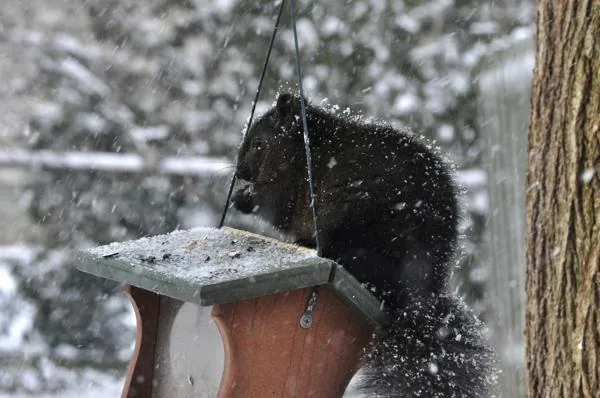
Melanism is a genetic condition that can happen in many different animals. It causes an animal to appear completely black because of extra dark pigment in their skin and fur.
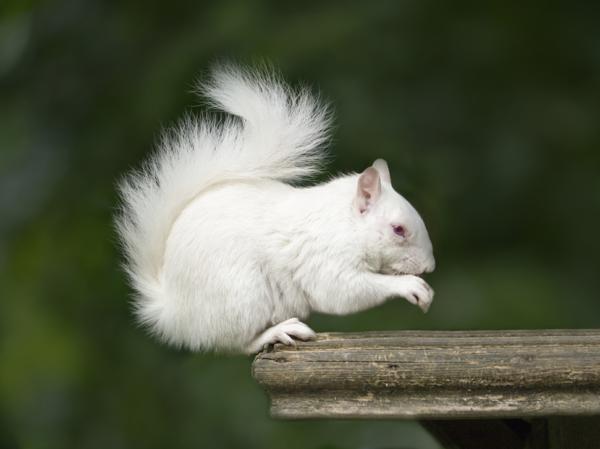
Albinism is the opposite of melanism. It causes animals to look white or very pale. In most animals, melanism is very rare, but in some species it has become common enough that scientists call it adaptive melanism.
Black panthers are a famous example of adaptive melanism. Black squirrels have the same condition.
Being black can actually be useful. Black squirrels blend in better in the dark, dense forests of the eastern United States, their color works as camouflage.
However, when Europeans began clearing North American forests, that dark color became less helpful. That's one reason black squirrels are less common today than gray ones.
But there's still a big advantage for black squirrels in cold places. Their dark skin soaks up more heat from the sun. This helps them stay warmer in winter.
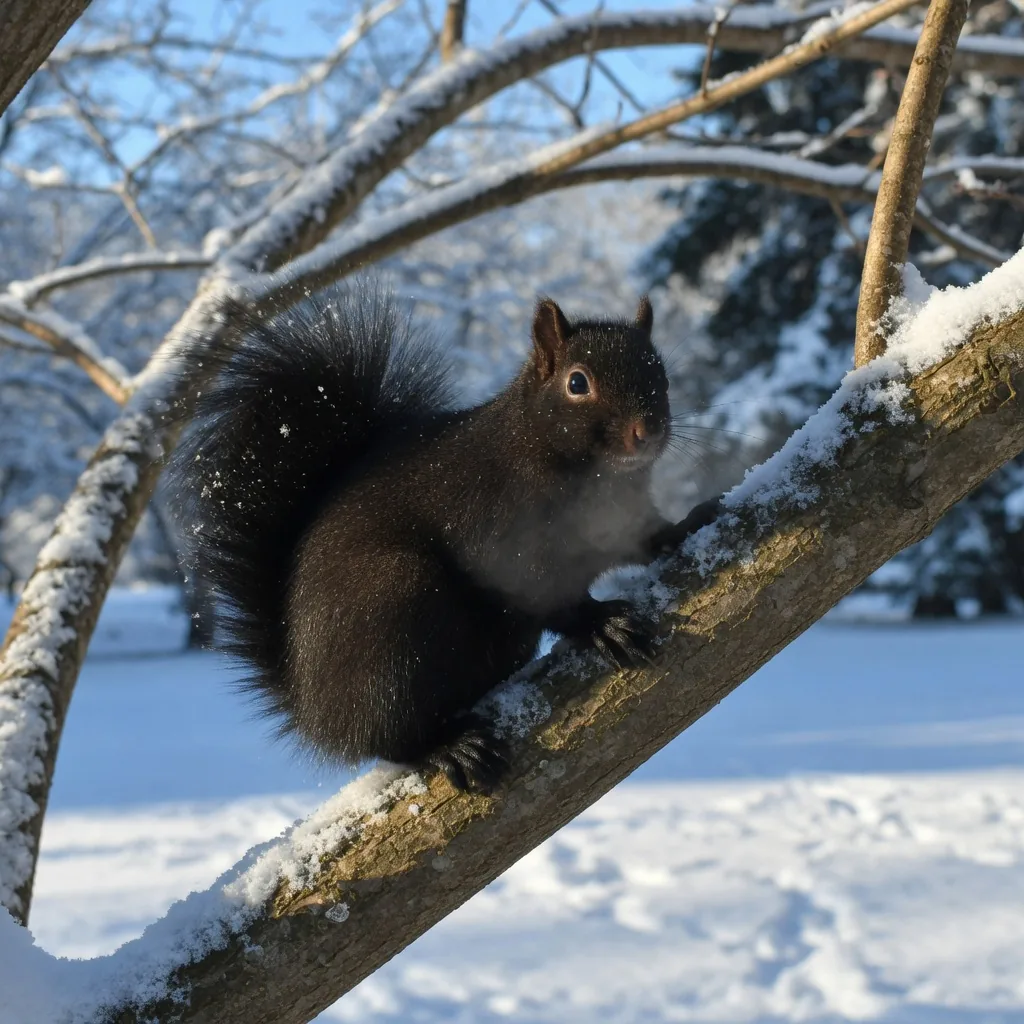
Because black squirrels are so uncommon, many cities, universities, and towns have adopted them as their mascot. They love to celebrate their local black squirrel populations and help people notice these unusual animals.
Explore More Animals
 Facts About Gray Squirrels: The State Mammal of North CarolinaDiscover everything about the gray squirrel (Sciurus carolinensis), its drey nest, scatter-hoarding food tricks, ever-growing teeth, and life in the trees.
 Facts About SquirrelsSquirrels are small tree animals, with a very cute bushy tail and sharp teeth. They are fast, really intelligent, and always alert! It is fun to watch them and
 Sleeping and Nesting Habits of SquirrelsSquirrels sleep up to 14.9 hours a day! Discover how flying, tree, and ground squirrels build their nests, where they sleep, and how baby squirrels grow up.
 What Do Squirrels Eat?We often come across squirrels around our homes, but seldom do we pay attention to what they eat. Their eating habits go well beyond nuts and corn.
Glossary
| Word | What it means |
|---|---|
| Melanism | A genetic condition that causes an animal's skin, fur, or feathers to contain unusually high amounts of dark pigment (melanin), making the animal appear black. |
| Adaptive melanism | When melanism becomes widespread in a species because it provides a survival advantage, like better camouflage in dark forests or extra warmth in cold climates. |
| Albinism | The opposite of melanism: a genetic condition in which an animal produces little or no dark pigment, resulting in white or very pale coloring (and often pink eyes). |
| Genetic mutation | A change in an animal's DNA that can affect appearance or behavior. Melanism in squirrels is caused by a mutation in their pigmentation gene. |
| Pigmentation gene | A gene that controls the color of an animal's skin, fur, or feathers by directing the production of pigments like melanin. |

 Fun fact for today!Black squirrels are not a separate species, they're eastern gray squirrels with a color gene called melanism!