

Black-tailed deer are known as the "Ghost of the Pacific." They can move through the thick rainforests of the Pacific Coast without making a sound or being seen.
Even with such a cool nickname, the black-tailed deer is the least studied deer in North America. According to Dr. Valerius Geist, the first black-tailed deer appeared around 2 million years ago. The Lewis and Clark Expedition of 1804 to 1806 was the first to record where these deer lived. Hunters prize adult black-tailed bucks as trophies. But these deer are so secretive and stealthy that they are very hard to find. Let us find out more about the black-tailed deer.
Name
The black-tailed deer gets its name from its most obvious feature, a black tail. You may see it spelled two ways: black-tailed deer or blacktail deer. Both are correct.
Classification
The black-tailed deer is a subspecies of mule deer (Odocoileus hemionus). It is further split into two subspecies: the Columbian black-tailed deer (Odocoileus hemionus columbianus) and the Sitka black-tailed deer (Odocoileus hemionus sitkensis).
Range
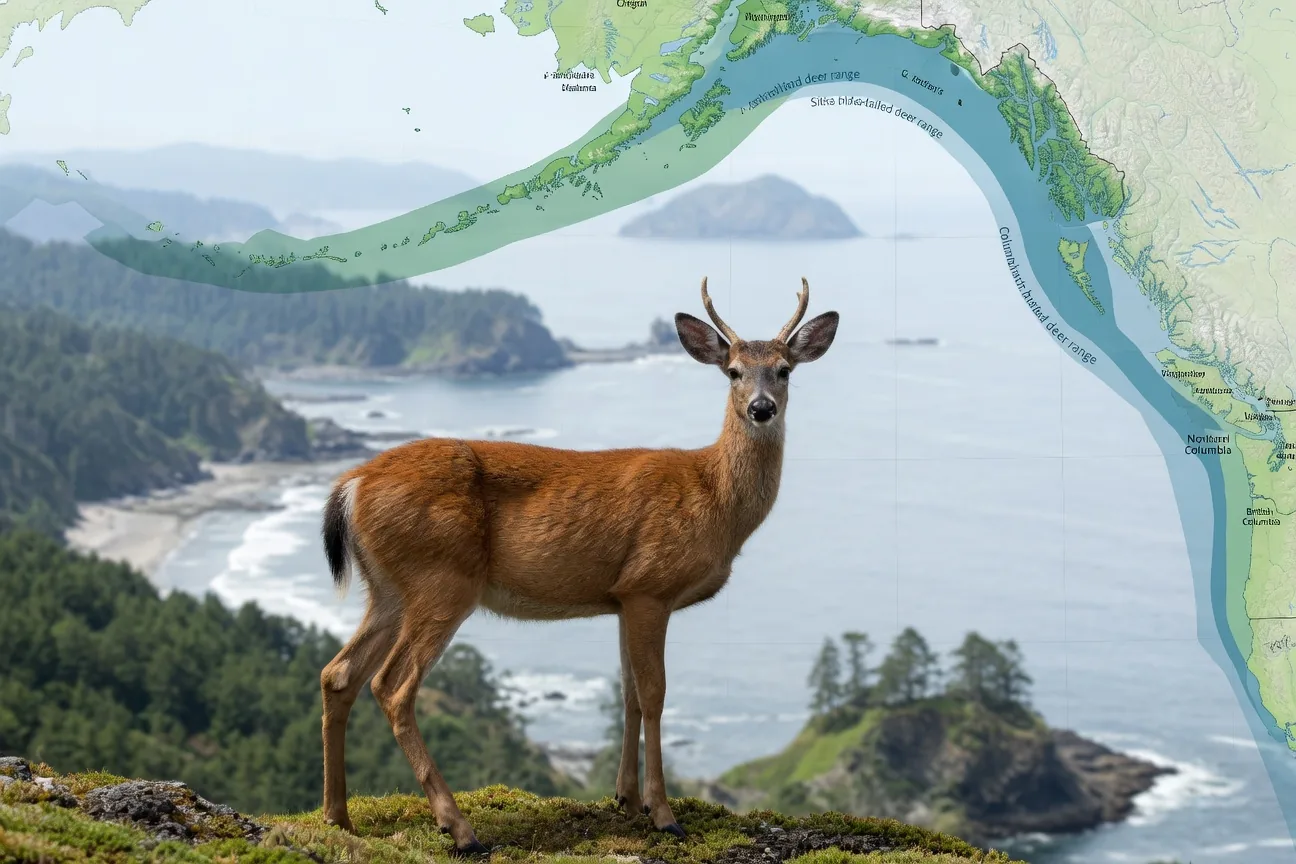
The Columbian black-tailed deer lives from California to British Columbia. The Sitka black-tailed deer lives from British Columbia all the way to Southeast Alaska. Both subspecies stay near the Pacific coastal area.
Appearance
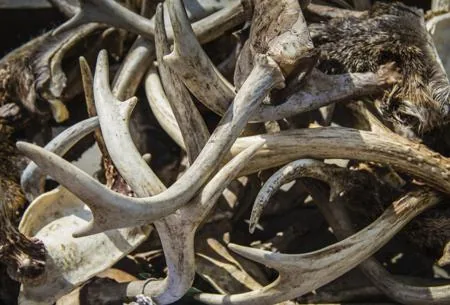
A female black-tailed deer (called a doe) weighs around 58 kilograms. A male (called a buck) can weigh up to 90 kilograms. Sitka black-tailed deer are smaller, weighing 36-54 kilograms. Their height ranges from 27 to 45 inches. These deer have stocky bodies with long, slim, sturdy legs.
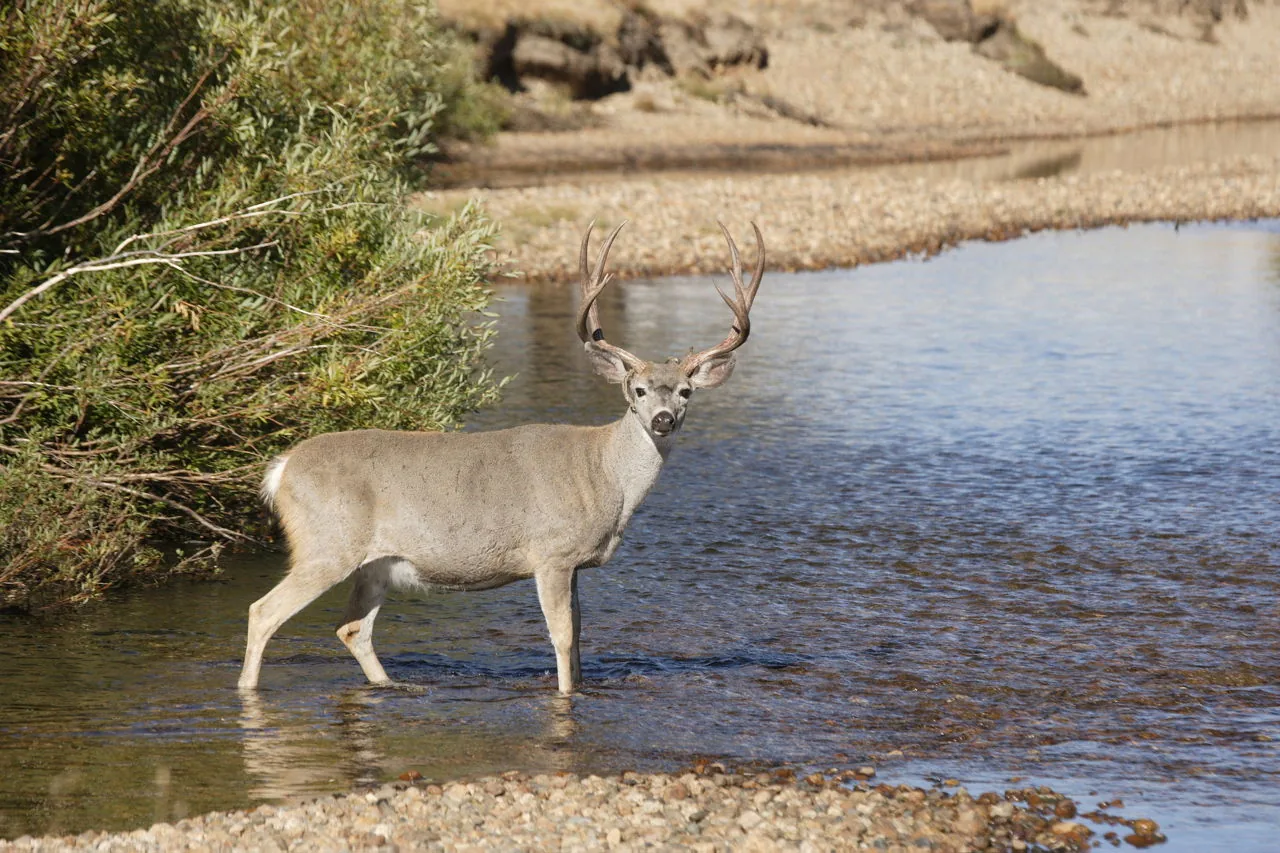
Black-tailed deer change color with the seasons. In summer their coat is reddish-brown; in winter it turns brownish-gray. Their tail is completely black or dark brown. Their undersides are white. They have large ears that can move independently, rotating to pick up sounds from any direction.
Usually only bucks grow antlers, but in rare cases a female may grow them too. Antlers begin developing when the deer is 6-8 months old. At first they are small nubs called antler buttons. They grow under a soft skin layer called velvet. Once the antlers are fully formed, the dried velvet peels away.
Male deer shed their antlers once a year, between December and March, then grow new ones between April and August. Each year the antlers get bigger with more branches. Shed antlers on the forest floor are a great source of calcium and other nutrients for smaller animals.
Lifespan
In the wild, black-tailed deer typically live for 9-10 years. In captivity, where they are safe from predators, they can live as long as 17-20 years.
Habitat
These deer live in forests close to the Pacific coast. You can find them on mountains and in the foothills below. They prefer a mild climate with cool temperatures and plenty of rain. They do not migrate, but deer living high in the mountains may move down to lower ground in winter.
Diet
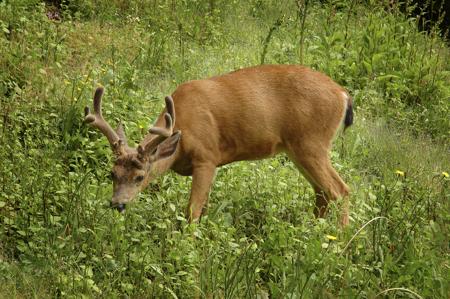
Black-tailed deer eat shrubs, herbs, browse, grass, berries, acorns, nuts, and lots of green leaves. They will also eat cultivated crops if they get the chance. Mushrooms and lichens are on the menu too. In summer, these deer especially love fresh, new plant growth.
Black-tailed deer are ruminants, which means they have four stomach chambers. They can swallow food quickly without chewing and then bring it back up to chew it properly later. This trick lets them escape from danger fast, they just run first and chew later!
Predators
Coyotes, cougars, bears, wolves, and golden eagles are the main predators of the black-tailed deer.
Take the Black-tailed Deer Quiz!
5 quick questions, test what you know about the Ghost of the Pacific.
Behavior
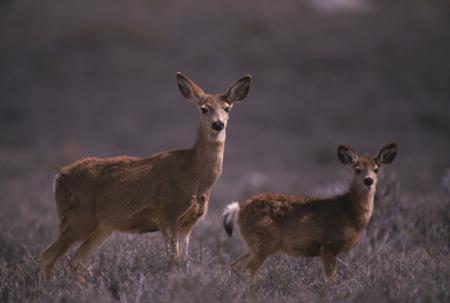
The mating season runs from November to December. Adult males spar with each other to win a female's attention. Female deer prefer bucks with large, heavy antlers. Bucks will also chase females in pursuit. All this sparring and running is hard work, bucks often lose weight and damage their antlers in the process.
The gestation period lasts 6-7 months. Fawns are usually born in May or June. Mothers almost always give birth to twins, though single births and triplets do happen. Fawns weigh around 2-4 kilograms at birth. For the first week of life, fawns produce no scent at all. This keeps them safe while their mother browses nearby to regain her energy. Bucks play no role in raising fawns. Fawns drink their mother's milk at first, and a mother and her young form a small family group. Even so, the fawn mortality rate is recorded at 45-70%.
Male fawns mature at 18 months. Female fawns reach sexual maturity at 2 years.
Their large, swivelling ears can pick up any sound that might mean danger. If startled, these deer escape with a bouncy, bounding run.
Communication
Black-tailed deer talk to each other using more than 10 different sounds, or vocalizations.
They also communicate through scent. Pheromones (chemical signals released from glands on their lower legs) send messages to other deer about territory and readiness to mate.
Explore More Animals
 A Definitive List of the Different Types of Deer | Animal SakeFrom the white-tailed deer and the giant moose to the tiny pudu: meet the world's deer species, with photos, sizes, habitats and a full list of every kind.
 The Symbol of Canada's Native Wildlife: Facts About the MooseHave you ever seen a moose? Discover fascinating moose facts: the world's largest deer, surprising speeds, the famous dewlap, Canadian moose facts, and more.
 Reindeer FactsReindeer are found all over the Arctic area. Read on for some more facts about them, which are bound to make you more knowledgeable about these fascinating crea
 Temperate Rainforest Animals List: A Field Guide to the Cool, Misty WoodsNot all rainforests are tropical! Meet the bears, elk, snow monkeys, koalas and other amazing animals of the world's cool, misty temperate rainforests.

 Fun fact for today!Black-tailed deer are called the "Ghost of the Pacific" for moving unseen through thick rainforest!