

Few animals can match the coyote's ability to adapt. This tough canine has managed to survive even as humans built roads, cities, and farms across its territory. Coyotes belong to the Canidae family, the same group as wolves and foxes. They are also called the American jackal or prairie wolf. Their scientific name, Canis latrans, literally means "barking dogs."
Range and Sub-species
Coyotes live across most of North America and Central America, all the way from Alaska in the north to Panama in the south. There are 19 sub-species in total. Of these, 16 are found in the United States, Canada, and Mexico, while the remaining 3 live in Central America.
Even though coyotes are heavily hunted, they have actually expanded their range over the years. Sightings in cities and suburbs have become much more common, including in California, Oregon, and New Jersey.
Appearance
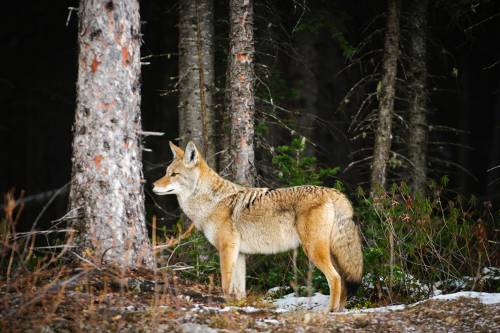
A coyote's fur ranges from grayish brown to yellowish gray, with white patches on its belly and throat. Its black-tipped tail has scent glands near the base. Where a coyote lives shapes how it looks: mountain coyotes have darker fur, while desert coyotes tend to have lighter, more yellowish coats.
An adult coyote is about 30 to 34 inches long and stands 23 to 26 inches tall. They can weigh anywhere from 15 to 46 lbs. Coyotes from northern regions are generally heavier than those from further south.
Habitat
Coyotes are remarkably adaptable animals. They have spread across plains, prairies, and deserts throughout North and Central America, from the snowy wilderness of Alaska all the way to the Mojave Desert in California. They can survive equally well in forests, open plains, or dry deserts.
Coyotes are not just scavengers, they are skilled hunters too. They will travel several miles each day in search of food. One big reason for their success is that they are very comfortable living near humans, which has helped them settle in cities like those in California just as easily as in the wild.
Diet
Coyotes are omnivores, they eat both meat and plants. Their main prey is small mammals like prairie dogs, eastern cottontails, ground squirrels, and mice. They also eat birds, snakes, lizards, and sometimes livestock. In winter and autumn, when prey is harder to find, fruits and vegetables become an important part of their diet. Coyotes will also scavenge on carrion, though they prefer fresh meat from their own kills.
Hunting Skills
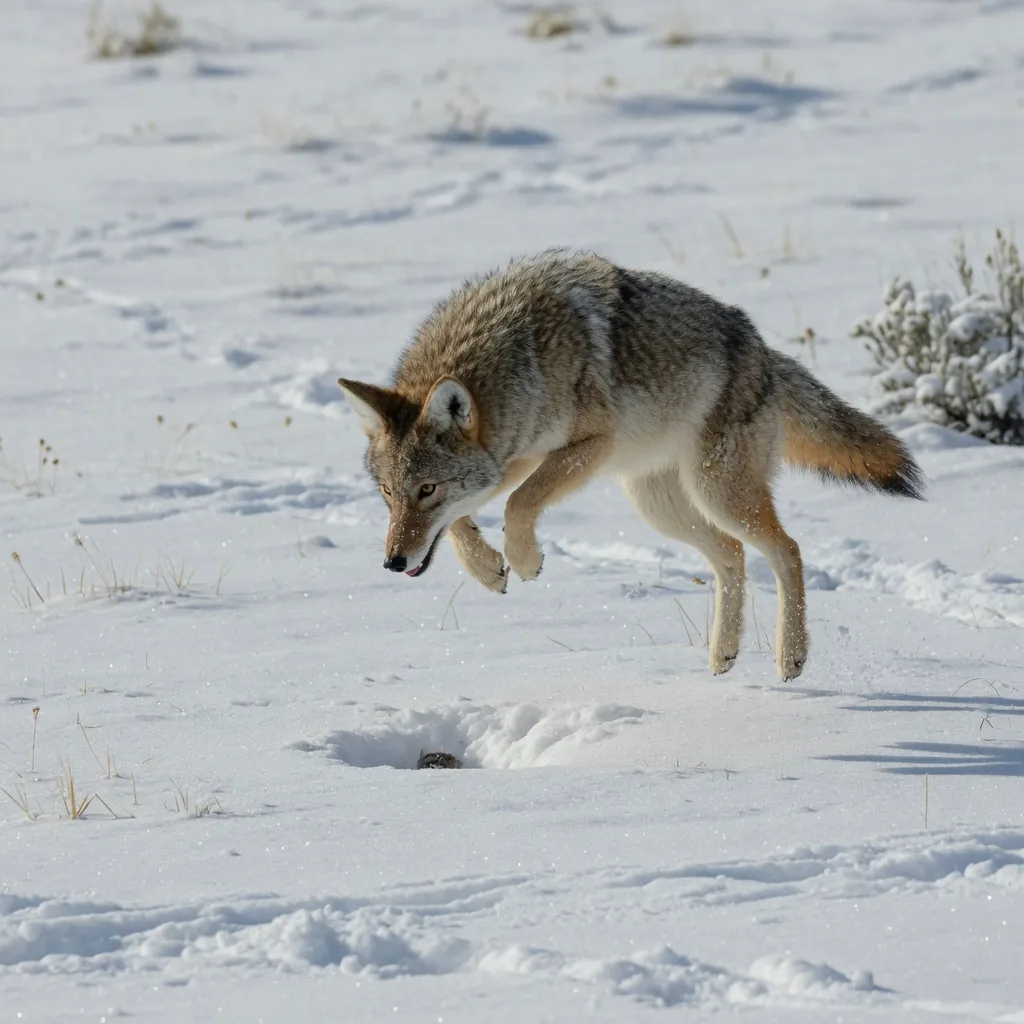
A coyote's hunting method depends on what it is chasing. For small prey like mice and ground squirrels, it uses its sharp sense of smell to track them, then carefully stalks through the grass before pouncing. For larger prey (like a deer) a pack will chase it until it tires, then attack from the rear and flanks to pull it down. A pack of coyotes can even bring down an elk, which can weigh around 550 lbs.
Coyotes are fast and powerful. They can reach speeds of 40 miles per hour and are good swimmers too. They are mainly active at dawn and dusk (making them crepuscular), though they are sometimes spotted hunting in the middle of the day.
Take the Coyote Quiz!
5 quick questions. How well do you know the prairie wolf?
Reproduction
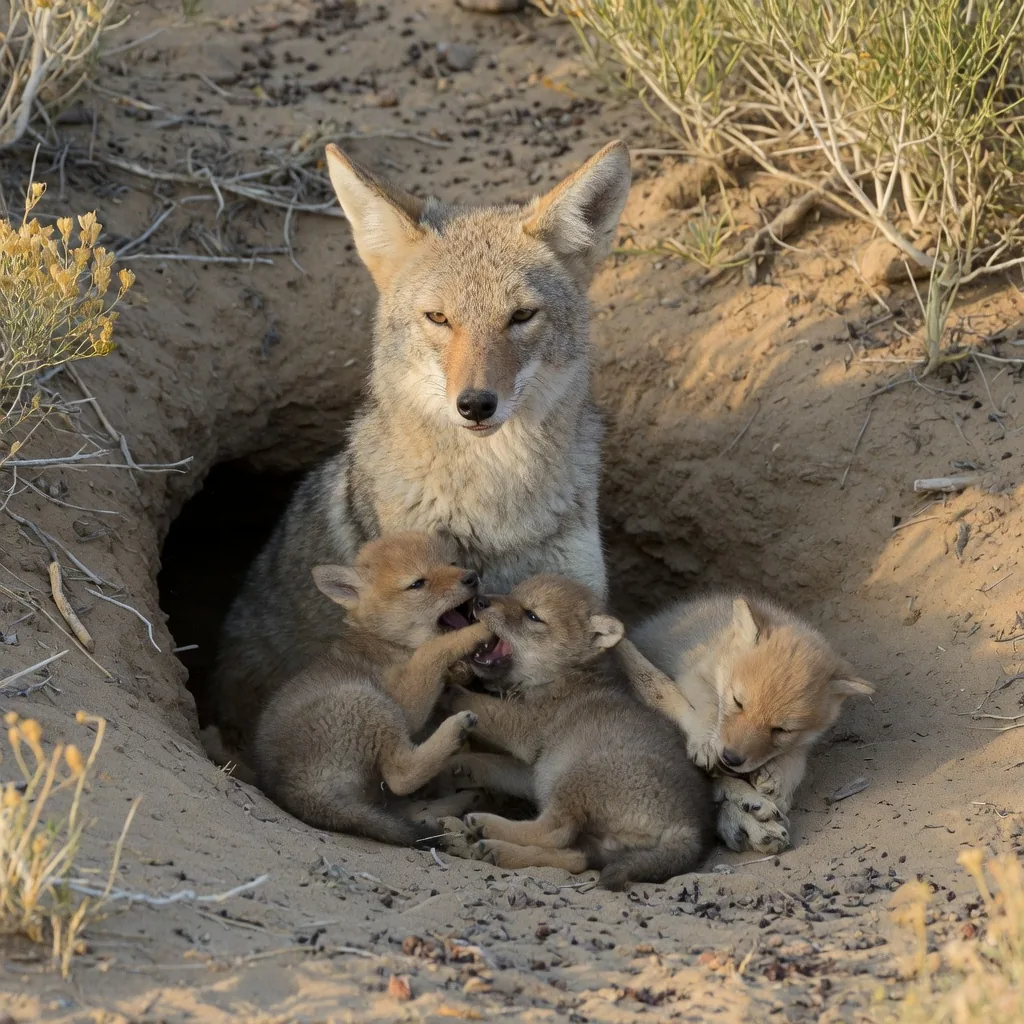
Coyotes mate between January and March. After a gestation period of 60 to 63 days, the female gives birth to a litter of around 6 pups. Each pup weighs about 250 grams at birth. The pups open their eyes after 10 days and are fully weaned by day 35.
At 6 months old, male pups leave to live on their own, while female pups stay with the pack. Coyotes reach their full size by 9 to 12 months and are ready to have pups of their own after about a year.
Conflicts with Other Species and Humans
Coyotes often clash with other animals that share their habitat. Their main natural predator is the gray wolf. Bears, cougars, and lynx cats also pose a threat. In 1995, gray wolves were reintroduced to Yellowstone National Park, and the coyote population in the area dropped sharply as a result.
Coyotes sometimes come into conflict with people too. They can act aggressively, there have been incidents involving small children and pets. Farmers also view them as pests because they occasionally prey on livestock.
Ninety percent of coyote deaths are caused by humans, through trapping, poisoning, or shooting. But coyotes also help humans, they eat rodents and other pests, which can actually protect crops and farms. Learning to coexist with coyotes is better for everyone.
Explore More Animals
 4 Types of Coyotes and Their 19 SubspeciesEven though coyotes have descended from wolves, they are smaller than wolves but larger than foxes. Meet all 4 types of coyotes, Central U.S., Eastern, Western
 Facts About the Coyote-Wolf Hybrid (Coywolf)In the wild, wolves usually kill coyotes upon spotting them. But what if they breed among themselves to produce a hybrid? AnimalSake tells you some facts about
 Unbelievable Facts About the Eating Habits of CoyotesMost often mistaken for domestic dogs, coyotes can now be spotted in cities too. Learn what coyotes eat, how they hunt, and how to protect your pets.
 Coyote vs. Wolf vs. Fox: A Complete ComparisonCoyotes are often known to be the smaller cousins of gray wolves, and the foxes of the coyotes. This AnimalSake article does an analysis to put an end to the ag

 Fun fact for today!The coyote's scientific name Canis latrans literally means "barking dog"!