

Ever since the first European settlers arrived, people in North America have considered coyotes a nuisance. At first they were hunted as suspected livestock-killers. Later, they were killed for their fur. Yet no matter how hard humans tried, coyotes could not be wiped out. Their numbers actually grew until they spread across most of the continent. Wolves (coyotes' bigger, stronger cousins) were not so lucky. They were nearly driven to extinction and only survived thanks to last-ditch conservation efforts. The difference comes down to intelligence and adaptability: coyotes have plenty of both. But imagine an animal that has the size of a wolf and the street smarts of a coyote. That animal exists, and it's called a coywolf.
What are Coywolves?
A coywolf is a hybrid between a coyote and one of the various wolf species found in the North American continent - eastern wolves, gray wolves (including their Mexican and Northwestern subspecies), and red wolves. It is also known as the eastern coyote, since most coyotes in the Northeastern United States have been found to carry some wolf genes.
Genetic Makeup
Coywolves have obtained 62% of their genes from coyotes, 27% from wolves, and 11% from dogs. So, they are not 50-50 hybrids of wolves and coyotes as many people believe, though such hybrids have been produced by scientists through artificial insemination.
Appearance
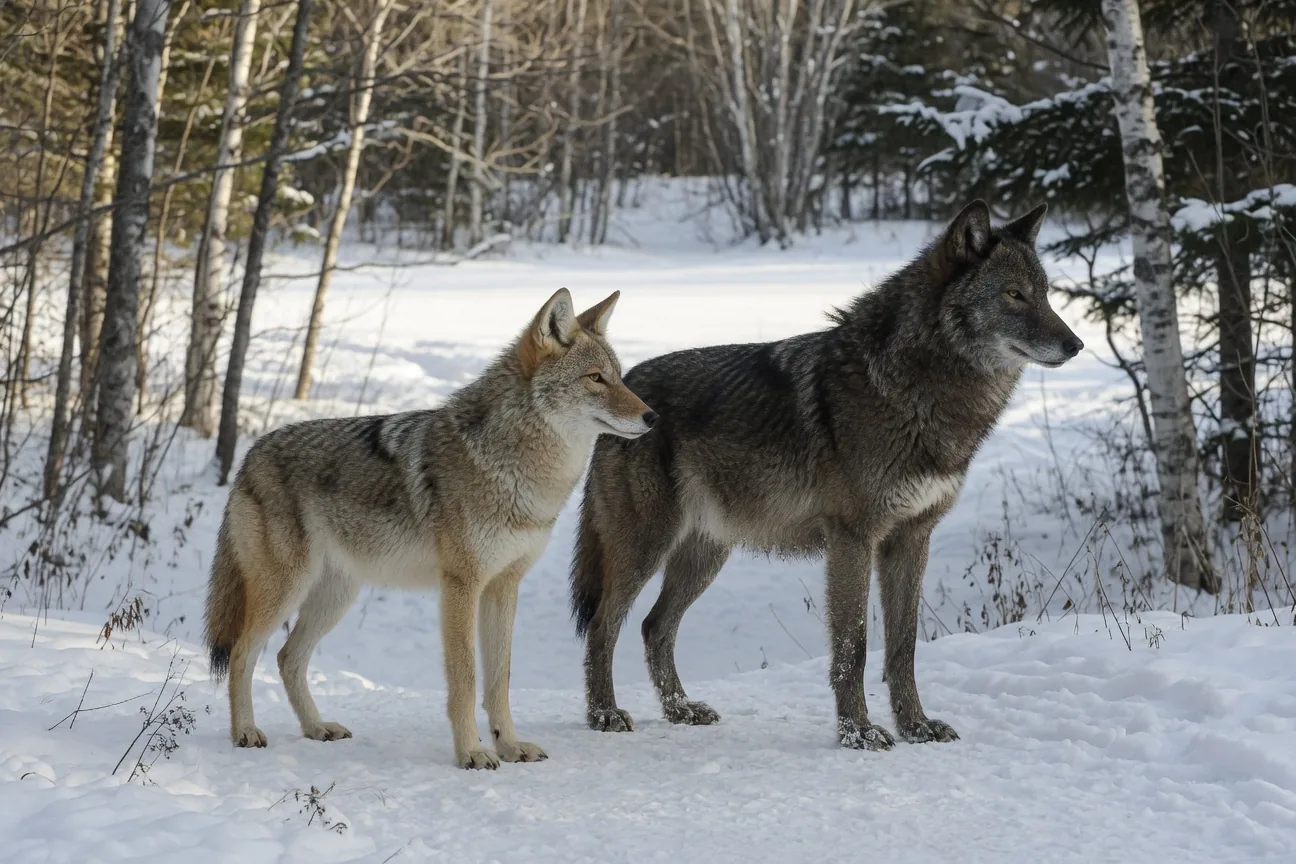
Coywolves are about 4 to 5 feet in length from their nose to the tip of the tail. They are usually smaller than wolves and larger than coyotes, but resemble both. Their coats show a variety of hues, ranging from blondish to dark-blackish.
Diet
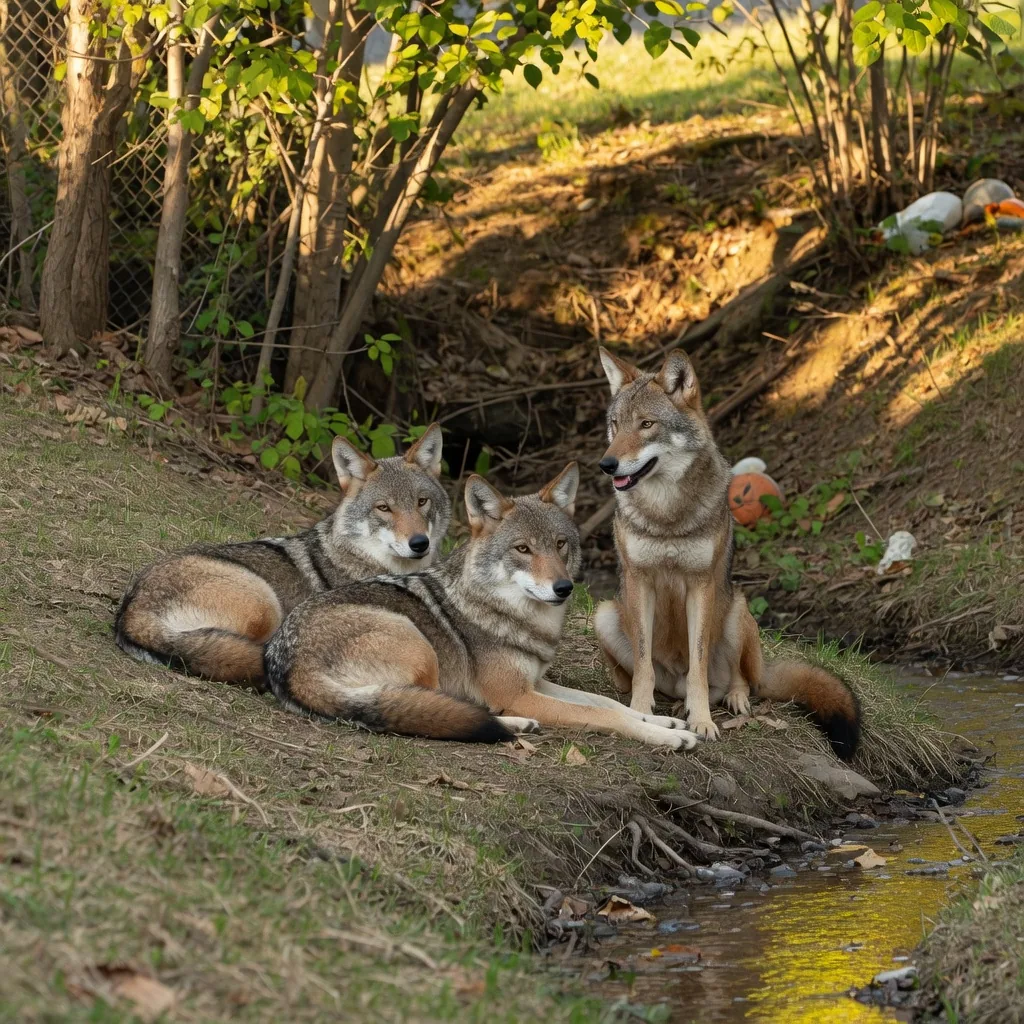
Coywolves mostly consume rodents and other small prey like rats, mice, squirrels, rabbits, geese, ducklings, carrion, along with nuts and berries. They also routinely rummage through garbage bins in suburban areas, looking for leftover food scraps.
Habitat and Range
They are more common in rural and suburban areas, though spreading rapidly into urban zones too. They make their homes in ravines and near streams, and prefer woodlands to grassy plains. Coywolves occur in large parts of Southeastern Canada, and some Northeastern US states like Illinois, Chicago, and have even reached metros like New York and Toronto. Their population is rapidly spreading westwards, both in USA and Canada.
Take the Coywolf Quiz!
5 quick questions. How well do you know North America's hybrid hunter?
Origins
In the last 150 years, humans have changed North American landscapes dramatically. As the human population grew, forests were cleared, land was taken over, and wolves were actively persecuted. Eastern wolves, which once thrived across the Northeastern USA, were pushed northwards into Canada. They were almost completely wiped out from all 48 US states. With so few eastern wolves left, something unexpected happened: instead of killing coyotes on sight (which they normally did), the surviving wolves began to see them as possible mates. The first coywolf to be discovered was found in Canada's Algonquin Provincial Park in 1919.
Lifespan
Owing to their elusive nature, the exact lifespan of coywolves is not known. However, it is thought that they can survive up to 10 years in urban areas, and between 3 - 5 years in the wild.
Attitude Towards Humans
Coywolves are not dangerous to humans. Like their coyote cousins, they are shy and usually stay well away from people. If one ever comes too close, raise your hands, shout, or whistle, do not run. Running can trigger a chase response. Also, never feed coywolves. Once they lose their natural fear of humans, they can become a problem for whole neighborhoods. Keep your pets safe outdoors and store pet food inside, since coywolves have been known to prey on small pets.
Frequently Asked Questions
What is a coywolf?
A coywolf is a hybrid between a coyote and one of the wolf species found in North America, such as eastern wolves, gray wolves, or red wolves.
Are coywolves dangerous to humans?
Coywolves are not dangerous to humans. They share the coyote's shyness and generally avoid contact with people.
Where do coywolves live?
They are common in rural and suburban areas of Southeastern Canada and Northeastern USA, and have been spotted in cities like New York and Toronto.
How big is a coywolf compared to a coyote?
Coywolves are up to 40% larger than western coyotes, weighing 35-45 lb versus a coyote's 15-30 lb.
Differences with Coyotes and Wolves
Coywolves sit fascinatingly between their parent species in almost every feature:
- Coywolves are omnivores, which means they can survive on both, a meat and fruit-based diet, like coyotes. Wolves, being carnivores, survive either on meat or carrion.
- They are up to 40% larger than western coyotes, but smaller than eastern wolves.
- The weight of a coywolf (35 - 45 lb) lies between that of a coyote (15 - 30 lb) and wolf (75 - 100 lb).
- They have longer and wider jaws than coyotes, with broader foreheads and strong jaw muscles like a wolf.
- Coywolves have longer limbs and shorter ears, which are more rounded than coyotes.
- The vocalization starts with a deep, wolf-like howl, and changes midway into the high-pitched, yipping sound of a coyote.
- They are more social than coyotes, similar to wolves, and live and hunt in packs of 3 - 5.
- Pups are larger at birth, and play without violence, unlike coyotes. Moreover, coywolf pups become sexually mature at 2 years of age, much later than in coyotes.
Benefits of Interbreeding
- Their larger size and increased bite-strength allows the coyote-wolf hybrid to hunt bigger prey like white-tailed deer, whereas, the largest prey coyotes can take down is a deer fawn. However, they are much smaller than wolves to hunt large prey like moose and full-grown deer.
- They have the ability to adapt to a variety of habitats, including urban areas, just like their coyote cousins. Wolves, on the other hand, lack such adaptability, which has contributed to their decline.
- One reason for the rising success of coywolves is that, unlike other hybrids, they are fertile and can breed to produce offspring.
Since dogs, wolves, and coyotes belong to the same genus, Canis, they readily interbreed amongst themselves. This behavior has led to the rise in their population, along with coyote-dog hybrids, known as coydogs, though this is mistakenly used as synonym for a coywolf.
Explore More Animals
 Coyote vs. Wolf vs. Fox: A Complete ComparisonCoyotes are often known to be the smaller cousins of gray wolves, and the foxes of the coyotes. This AnimalSake article does an analysis to put an end to the ag
 Facts about Coyote - Prairie WolfThe interesting facts about coyotes go well beyond the depiction of this species in popular culture. While there is no questioning that, what is even more inter
 4 Types of Coyotes and Their 19 SubspeciesEven though coyotes have descended from wolves, they are smaller than wolves but larger than foxes. Meet all 4 types of coyotes, Central U.S., Eastern, Western
 Unbelievable Facts About the Eating Habits of CoyotesMost often mistaken for domestic dogs, coyotes can now be spotted in cities too. Learn what coyotes eat, how they hunt, and how to protect your pets.

 Fun fact for today!Quite a few scientists believe coywolves are among the smartest animals on the planet.