

What Are Jellyfish?
Jellyfish belong to the phylum Cnidaria. The class Scyphozoa contains the true jellyfish, but some freshwater hydrozoans are also included in the group. The class name Scyphozoa comes from the Greek word skyphos, which means a drinking cup.
Body and Life Cycle
Jellyfish can be found in every ocean in the world. Their lifespan is between three and six months. Jellyfish go through two body forms during their life cycle—the polyp stage and the medusa stage.
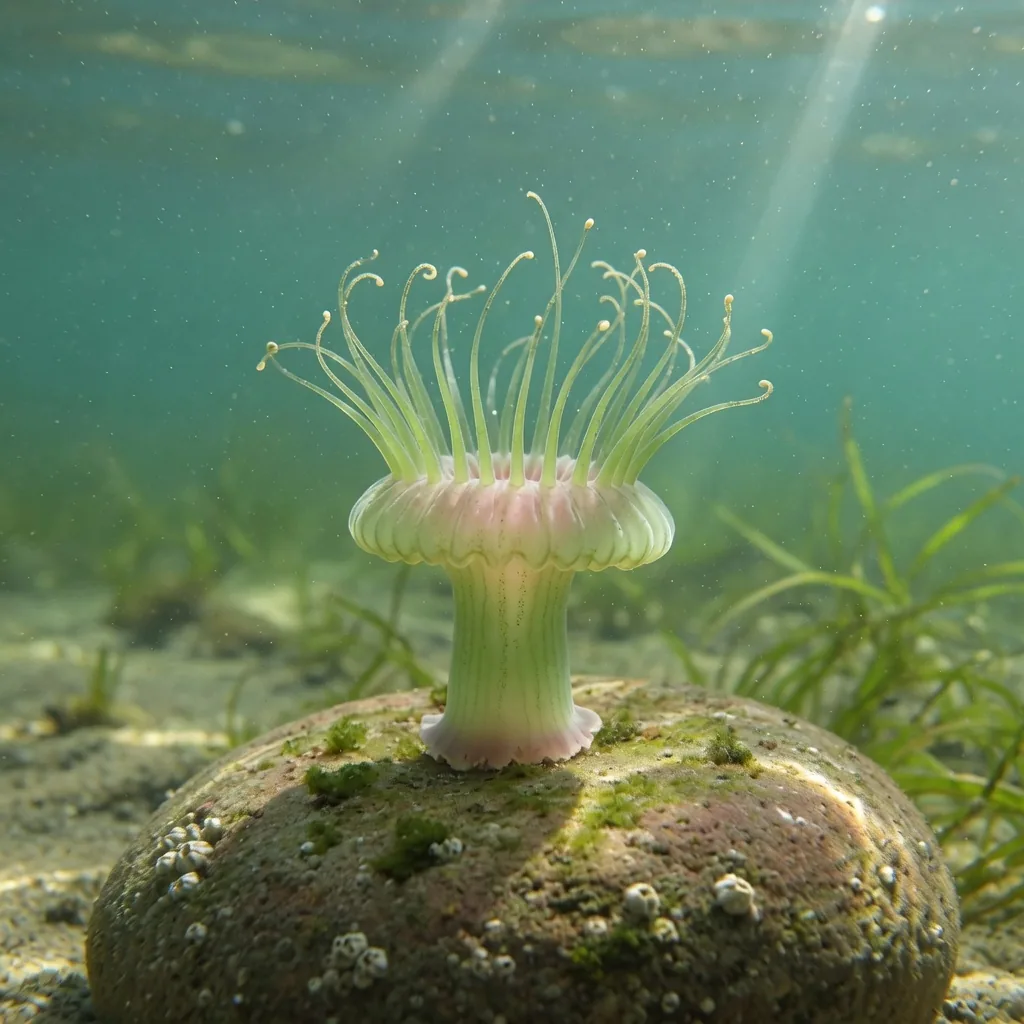
In the polyp stage, they look like a tiny tube fixed to a surface, with their mouth and tentacles facing upward. The second stage is the one most people recognize. During this stage, they have an umbrella-shaped body called the bell. This bell-shaped form is known as the medusa, and the tentacles hang down from its edge. The body of a jellyfish is 90% to 94% water.
Anatomy and Senses
A jellyfish body has three layers: an outer epidermis, an inner gastrodermis, and a thick jelly-like layer in between called the mesoglea. Jellyfish have no central nervous system, no circulatory system, no respiratory system, and no osmoregulatory system. Their digestive system is incomplete, which means they use the same opening for eating food and getting rid of waste.
Jellyfish have no brain. Instead, they use tiny sensory organs called rhopalia arranged around the bell. The rhopalia and a simple nerve net help jellyfish detect light, smell, and touch.
Feeding and Reproduction
A group of jellyfish is called a 'smack'. They feed on small protozoa, large metazoa, and other small fish in the sea. They catch their prey by trapping it in their tentacles. It is worth noting that some species of jellyfish do not have tentacles at all.
The male jellyfish releases sperm into the water. It travels to the mouth of the female, where the eggs are fertilised. Most jellyfish carry the fertilised eggs inside their oral cavities, which act as a brood chamber.
Take the Jellyfish Facts Quiz!
5 quick questions. How much do you know about these boneless ocean drifters?
Defense Mechanisms and Stings
The tentacles of a jellyfish are an important defense mechanism. Each tentacle is covered with stinging cells, known as cnidocytes.
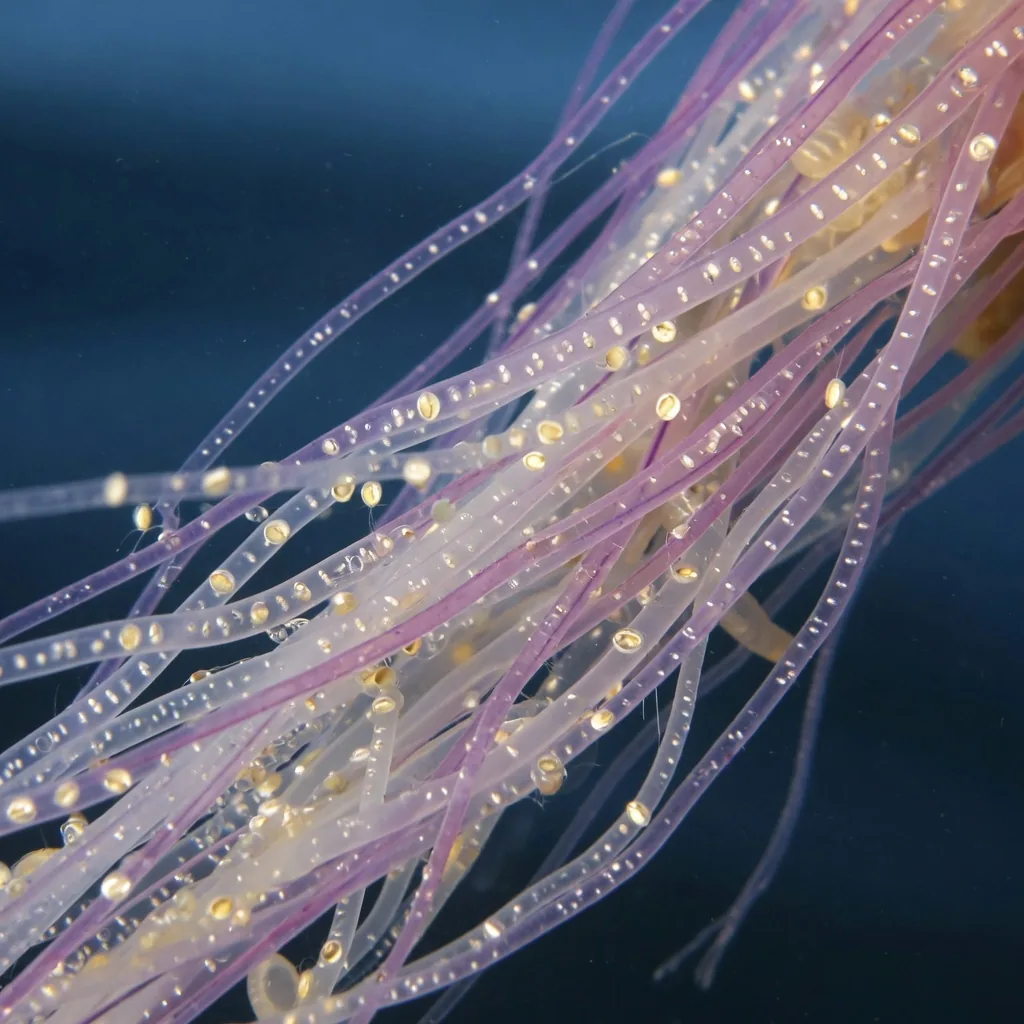
Jellyfish defend themselves using their oral arms and tentacles, which are covered with tiny organelles called nematocysts. Each nematocyst contains a coiled filament inside a capsule. When something touches the tentacle, the filament springs out and injects toxins into the target.
Jellyfish are generally not dangerous to people. However, some species can be very toxic and even deadly. Two deaths caused by jellyfish stings were reported in Australia. A sting is extremely painful and can trigger allergic reactions in some people.
Frequently Asked Questions
What phylum do jellyfish belong to?
Cnidaria, true jellyfish are Scyphozoans.
How much of a jellyfish is water?
90 to 94% of their body is water.
Do jellyfish have a brain?
No, they use a sensory organ called rhopalia and a nerve net instead.
What is a group of jellyfish called?
A smack.
How long do jellyfish live?
Between three and six months.
How Jellyfish Swim
Jellyfish are not strong swimmers. To move, they open and close their bell-shaped bodies in a steady rhythm. This pushes water behind them and creates currents that reach their tentacles. They have no scales or shells. If a jellyfish is left on hot sand in the sun, it dries out and disappears, leaving only a thin circle of film.
Explore More Animals
 Types of JellyfishJellyfish are mysterious ocean creatures, a complete kids' guide to the most popular types, plus how jellyfish live, eat, sting, and survive. From the deadly S
 Fantastic Facts About the Moon Jellyfish (Aurelia Aurita)Appearing like floating mushrooms, moon jellyfish drift through warm oceans worldwide. Discover how they move, sting, eat, and reproduce, plus a quiz!
 What Do Jellyfish Eat? Diet, Hunting & PreyJellyfish are mysterious carnivores with no brain, so how do they hunt and eat? Discover what jellyfish eat, how they catch prey, and what to feed a pet jellyf
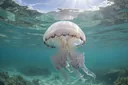 Facts about Cannonball JellyfishSome known and some unheard facts about the cannonball jellyfish have been presented in this article. So prepare to get up-close and personal with this beautifu
Jellyfish in Captivity
Jellyfish have a harder time living in captivity than most other sea creatures. They struggle to adjust to the enclosed space of an aquarium. They also rely on natural ocean currents to help carry them through the water, because they are too slow to swim effectively on their own. Aquariums that keep jellyfish need specially designed circular tanks to keep them moving safely. Learn more about different types of fish and ocean creatures.

 Fun fact for today!A jellyfish's body is 90-94% water, which is why they vanish on hot sand, leaving only a thin circle of film!