

Contrary to popular belief, killer whales (Orcinus orca) are not whales but in fact a type of dolphin. They belong to the "delphinidae" family which makes them closer relatives of dolphins rather than whales. They are known by different names like orca, blackfish, or grampus (rare name). The name 'orca', meaning "belonging to the kingdom of dead", was given to them by the Romans. Today, many people prefer the name "orca" to move away from the word "killer."
A male whale is called a bull, and a female is called a cow. They give birth to a live young one known as a calf, just like other mammals. These whales have rapid and excellent adaptability skills, which explains the reason why, after humans, they are the most widely distributed mammals.
Introduction to Killer Whales
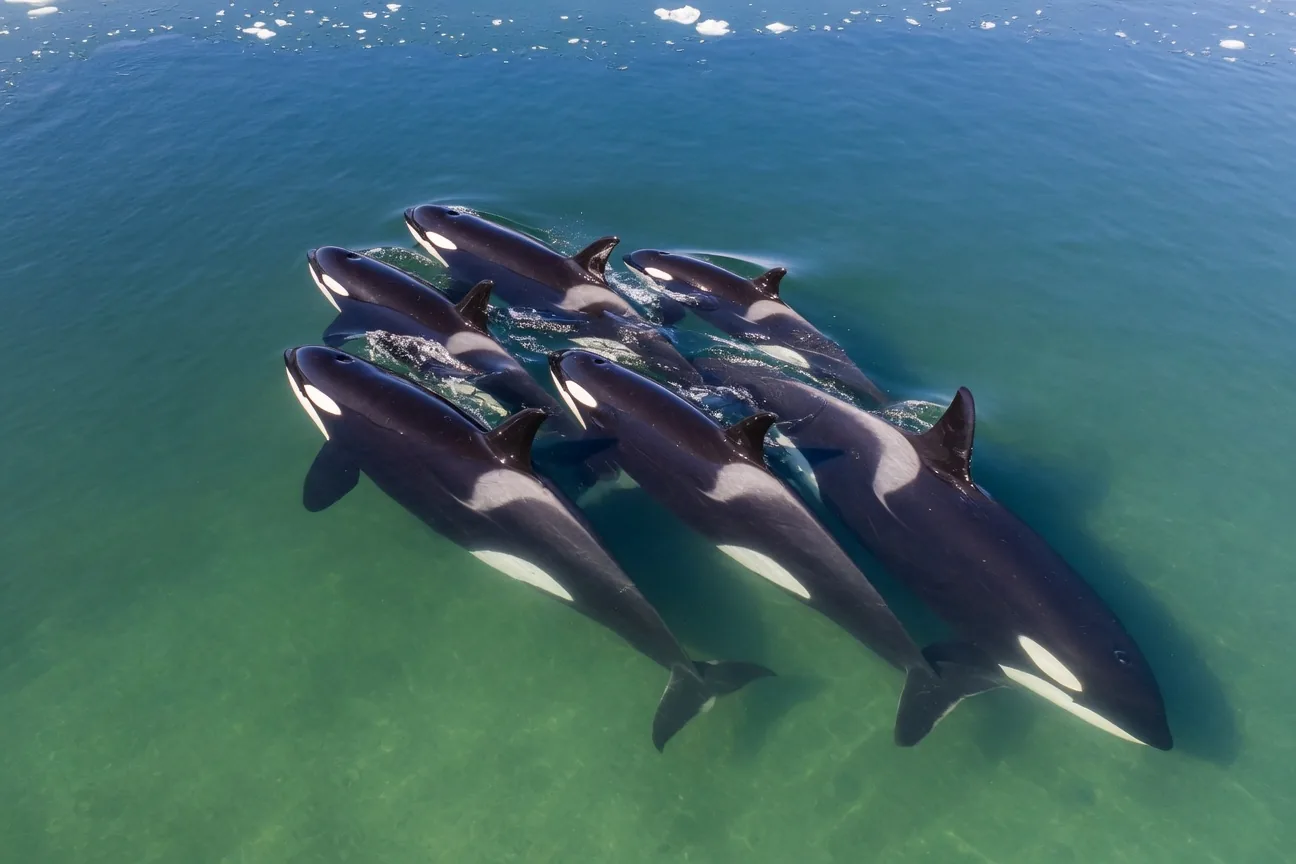
Identification: They are characterized by a distinctive white chest, black back, and a white patch above the eye. They also have a gray saddle-like patch behind the fin and across the back. These colors create a unique blend that helps them sneak up on prey undetected and launch surprise attacks. They are the largest in the dolphin family. The females will grow to about 6 - 8 m (20 - 26 ft), and the males grow to about 7 - 9 m (23 - 30 ft). The females have slightly smaller and curved dorsal fins, whereas the males have straight and triangular fins.
Culture: These giants never travel, swim, or hunt alone. They have a close 'social circle' known as a pod. The pods can include anywhere between 2 - 30 orcas that belong to a single family. A pod can include about 2 - 4 generations of orcas. They are mostly led by the oldest female in the pod. The older orcas are known to pass on knowledge to the younger calves in the pod. The passed on information may include hunting skills and vocalizations.
Language: One very interesting feature of killer whales is their communication system. They use a technique called 'echolocation' to navigate and hunt in the darkness of the ocean. They emit high-frequency sound waves that bounce back from prey or any obstructing surface. These signals give the orca information about the distance and direction of whatever is nearby. The jaws of these mammals act as receptors which direct the signals to their inner ears. This makes them skilled at traveling and hunting in the dark. Besides hunting, orcas also have a special language to talk with their families. Every pod is known to have a different dialect.
Life Cycle
Lifespan: These giant mammals have a lifespan ranging from 50 to 80 years. The females live longer, an average of 50 years and maximum up to 80 - 90 years; the oldest orca on record was 103 years old. Males live to about 29 - 35 years on average and for a maximum of up to 50 - 60 years. Orcas bred in captivity live about half as long as their wild counterparts. They usually live for less than 25 years, but some may live for 30 - 40 years.
Maturity and Reproduction
- Since they inhabit the depths of the ocean, it is difficult to study orcas in the wild. Whatever little information is known is gathered by studying them in captivity and zoological parks.
- Males mature between the ages of 15 - 21 years, and females between the ages of 10 - 16 years. It all depends on social factors.
- These mammals are so smart that the males mate with females from other pods to avoid inbreeding.
- The mating season is not specific as they can do so all year round. The gestation period ranges from 15 - 18 months.
- One calf is born every 3 - 5 years. Hence, nursing and care is done effectively.
- Killer whale females go through menopause after the age of 40, but will live for many years after that.
Nursing of the Calf
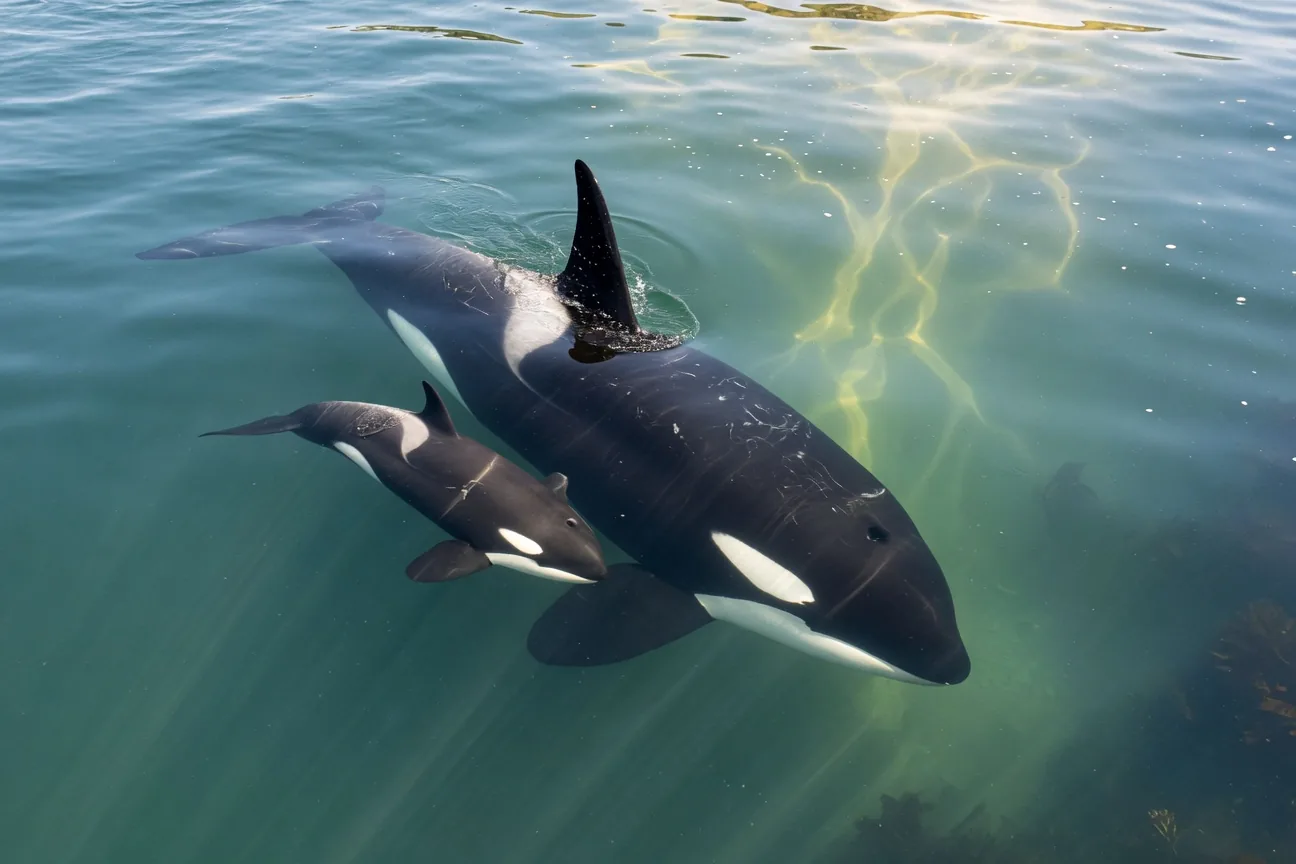
- Only one calf is born in the water. In most cases, it is observed to come out tail-first, but head-first deliveries have also been recorded.
- The young calves may have a yellow or creamy color, which turns white in a year. They are around 8.5 ft. only.
- The calves nurse for a year, but it may extend up to 2 years.
- The mother lays horizontal and glides with her tail arched so that the calf can swim and suckle on the left or right mammary gland.
- The calf is weaned at one year, but may continue to nurse for longer.
- Calves always swim with their mothers. Some males have been observed to never leave their mothers.
- Calf mortality is highest in the first 6 - 7 months.
Take the Killer Whale Quiz!
5 quick questions about orca life cycles, hunting, and habitat. How much do you know?
Habitat and Food Preferences
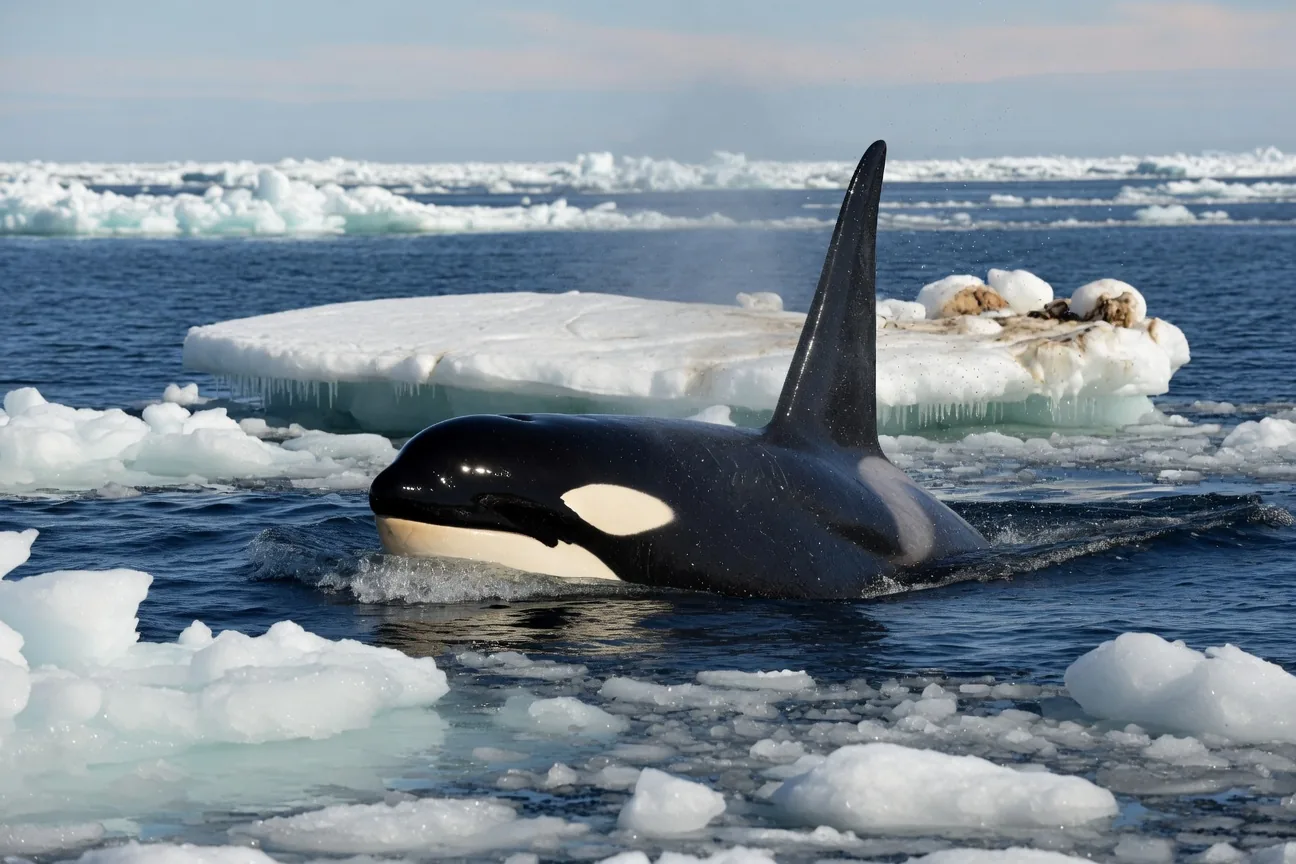
Orcas are usually found in cold, coastal waters around the world, though their presence has been recorded from the polar regions to the equatorial belt. They have a large population in the northern Pacific basin, coastal areas of Washington State, Johnstone Strait, and California. Large numbers are also found near Norway, coastal waters of Argentina, Iceland, and the Antarctic regions, although there were rare sightings in many places across the globe. They do prefer cold waters but are known to also swim in warm water regions like the Bahamas, Gulf of Mexico, Hawaii, and Australia. They have also seen swimming in freshwater rivers like the Rhine, the Thames, and the Elbe, in search of fish.

Migration of a species is subject to their prey's living and migration habits. Fish and marine mammals are the preferred choice of the orca's food, although the diet is a varied mix of seals, sea lions, reptiles, and walruses. Even polar bears, birds, and penguins have been victims of killer whale attacks. If there is scarcity of food, they may also go for big preys like sharks and whales. The entire pod will attack a big prey.
Frequently Asked Questions
Are killer whales actually whales?
No, they are the largest member of the dolphin family (Delphinidae).
How long do orcas live?
Wild females live 50-90 years; males average 29-35 years.
What do killer whales eat?
Fish, marine mammals, seals, sea lions, walruses, and occasionally sharks or large whales.
How do orcas communicate and hunt?
They use echolocation (high-frequency sound waves that bounce off prey) and each pod has its own unique dialect.
How big do killer whales get?
Females reach 6-8 m (20-26 ft); males reach 7-9 m (23-30 ft).
Type-wise Distribution
Northern Hemisphere
In the North Atlantic, generally, two types of orcas found. They are:
- Type 1: These whales have distinct white patches and a different saddle. They can be easily distinguished from the other due to their relative smaller size. These are mostly found in the northeast Atlantic ocean, off the shores of Great Britain.
- Type 2: These are one of the largest orcas and are easy to distinguish due to their back slanting eye patch and faint saddle. They also have some white patches. These are mostly found off the west coast of Scotland and Ireland.
In the eastern North Pacific Ocean, they are divided as three types, which are:
- Resident: These are quite large than the other two and have a rounded tip on the dorsal fin. In males, the dorsal fin is triangular and tall but in females, it has a curved back. They are mostly seen off the coast of British Columbia and Washington. The northern residents are seen in water to the top half of Vancouver Island to Alaska. The southern ones visit the lower half of the island through Washington. These feed on fish and squids.
- Transient: These are smaller orcas with pointed dorsal fins. They don't have any black marks on their gray saddle. These are found from Alaska to California. They are seen feeding mostly on mammals.
- Offshore: These are quite similar to both transient and resident orcas, but have a distinct, faint saddle. They are seen in different habitats like open-oceans and coastal areas. Their range is from Bering Sea to southern California. They are seen traveling far in search of schooling fish, which is their primary diet.
Southern Hemisphere
In Antarctica, orcas are classified into four major types. They are:
- Type A: These are the largest type which have a horizontal and medium-sized eye patch and a faint back saddle. They mostly prefer ice-free waters and are seen offshore only. Their diet mostly consists of minke whales.
- Type B: These are further classified into small and large type B. The basic difference is the eye patch; the large type has a large and horizontal eye patch, whereas the small type has a narrow and slanting eye patch. Both types have a dark gray color on the back and may have a yellowish (instead of pure white) cast. These are found in the inshore waters of the Antarctic Peninsula and Antarctica. The large type B prefer living near the ice, but the small type B prefer the open waters. These whales hunt and feed on seals.
- Type C: These are the smallest type and have a forward-slanting and small eye patch with a yellowish skin (cast) like the type B. These are mostly seen in inshore waters off eastern Antarctic. It is observed that they mostly feed on the Antarctic cod.
- Type D: These are very rare and are distinguished by a very small eye patch. They also have a bulbous forehead and a faint saddle. They have been spotted in the deep, sub-Antarctic waters. Very little is known about their diet but it is said to be fish.
The global population of orcas is estimated to be around 50,000, and luckily, they are not considered as "endangered". They were subject to commercial whaling (mass hunt for whales) many times till the recent past. But, they successfully survived through it! Killer whales must be respected and cared for because they are not only beautiful, but also very intelligent. You can also learn more about ocean giants at our blue whale facts page or explore the broader world of marine animals.
Explore More Animals
 Why Are Orcas Called Killer Whales? Here's the Surprising AnswerKiller whales are marine creatures primarily known for their hunting skills. They are found in all the oceans around the world. A few interesting facts on why o
 The Amazing Life Cycle of SharksSharks have prowled the oceans for around 400 million years. Discover how great white, hammerhead, bull, and thresher sharks are born, grow, and survive.
 All About the Food and Habitat of the Great White SharkGreat white sharks are the largest predatory fish of the oceans. Dubbed as killing machines, they derive their name from their typical white underbellies.
 Interesting Facts About the Adaptation of a Bottlenose DolphinHow have bottlenose dolphins survived the ocean for millions of years? Explore the physical and behavioral adaptations that make them one of the sea's most suc

 Fun fact for today!Killer whales are not actually whales, they are the largest members of the dolphin family!