

The red spitting cobra (Naja pallida) is one of the most colorful cobra species in the world. Scientists first recognized it as its own separate species in 2003. Before that, it was grouped with the Mozambique spitting cobra (Naja mossambica), a different snake found further south in Africa.
Despite the name, red spitting cobras come in many colors, gray, yellow, orange, pink, and brown are all possible. Their most recognizable feature is the bold dark band around the throat.
Appearance
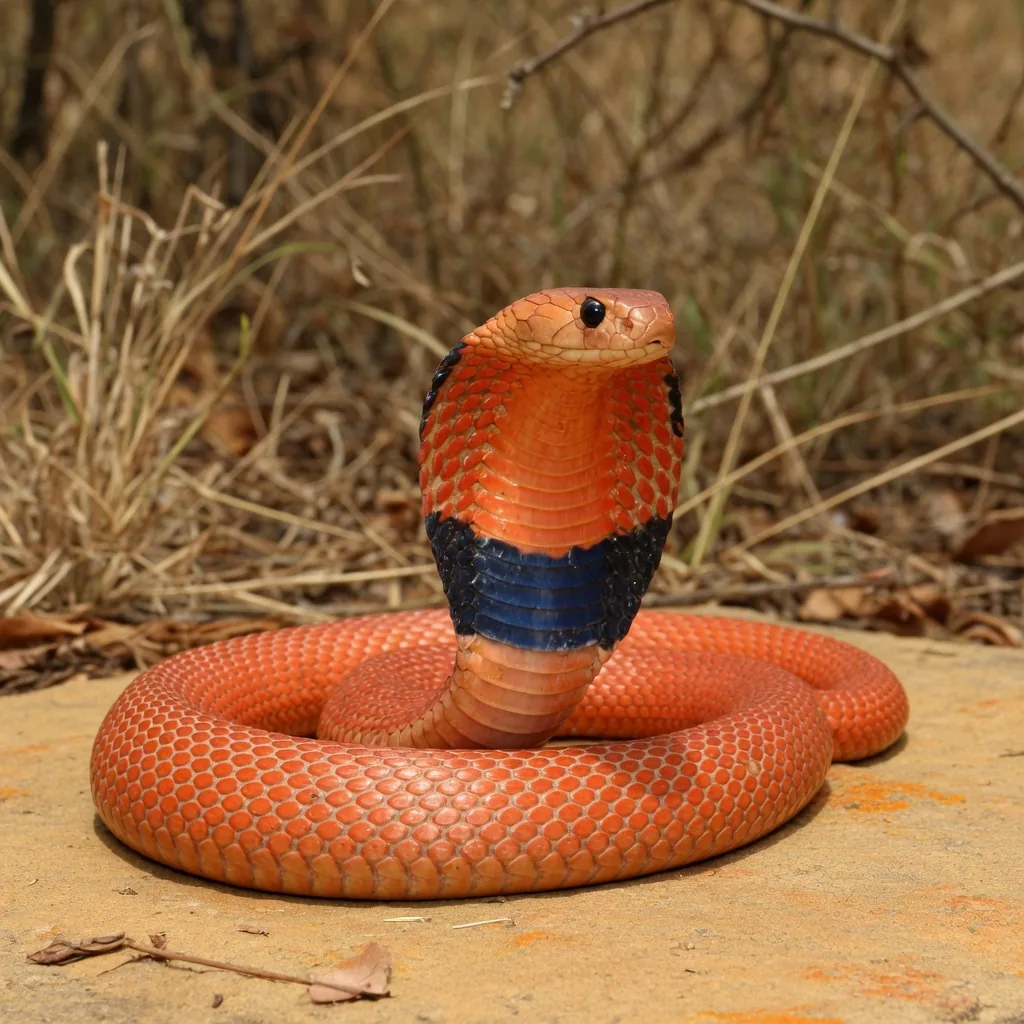
The red spitting cobra is a medium-sized snake. Adults usually measure between 2.3 and 4 feet long. In rare cases, some grow up to 4.9 feet. As cobras age, the dark throat band fades and the color shifts, true red individuals turn reddish brown over time.
The body is slim and slightly flattened, with a medium-length tail. The head is flattened and clearly separated from the neck, with a rounded snout. The scales along the back are set at a strong diagonal angle.
Distribution and Habitat
Red spitting cobras are found only in Africa. Their range stretches from northern Tanzania northward through Kenya, Somalia, Ethiopia, Sudan, and into southern Egypt. They live mostly in semidesert and dry savannah areas of East Africa. Near desert oases, they are spotted fairly often.
Behavior
Red spitting cobras are fast and alert snakes. When disturbed, they lift about two-thirds of their body straight up off the ground. Then they spread their hood and spit venom aimed directly at an attacker's eyes. The venom blurs the attacker's vision, giving the cobra a chance to escape. A cobra may spray several jets in a row until the threat backs off. The venom can cause pain and even eye blindness.
These cobras are active at night. During the day they hide in old logs, mounds, holes, or other ground cover. Young cobras, however, are often seen moving around in daylight.
When hunting, they inject venom into their prey. This paralyzes and kills the prey almost instantly.
Take the Red Spitting Cobra Quiz!
5 quick questions. How much do you know about this venom-spitting East African cobra?
Diet
Red spitting cobras are meat-eaters. They prey on lizards, frogs, small mammals, birds, and eggs. Like most cobras, they also eat other snakes, including their own kind. Scientists think this is why young cobras are more active during the day: staying active in daylight helps them avoid adult cobras, which hunt at night and could eat them.
Venom
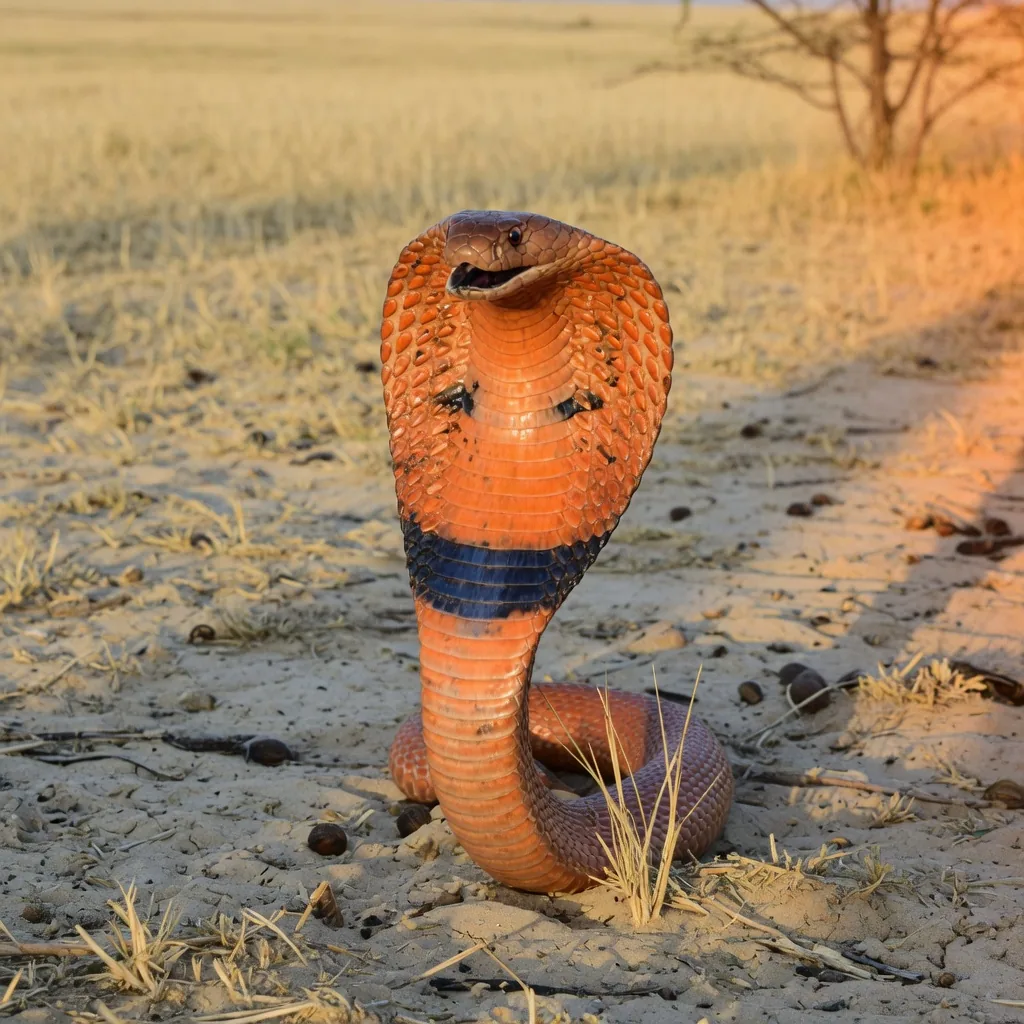
The venom contains two types of toxin. Cytotoxins destroy body tissue, and neurotoxins paralyze the muscles that control swallowing and breathing.
A red spitting cobra can accurately spit venom up to 8 feet away. It squeezes the muscles around its venom gland (a modified salivary gland) to fire the venom in a spread pattern aimed at a predator's eyes. The venom causes a burning sensation and can lead to temporary or permanent blindness.
Venom on skin is not dangerous. But if it gets into cuts or open wounds, it can be harmful.
If venom is sprayed in your eyes, wash them with water immediately and get medical help right away. A cobra bite causes severe pain around the wound and can make the lips and tongue go numb.
Frequently Asked Questions
What is the scientific name of the red spitting cobra?
Naja pallida
How far can a red spitting cobra spit its venom?
Up to 8 feet (about 2.4 meters)
Where do red spitting cobras live?
Semidesert and dry savannah regions of East Africa, from northern Tanzania through Kenya, Somalia, Ethiopia, Sudan, and southern Egypt.
Is the red spitting cobra's venom dangerous to humans?
Yes. Venom sprayed in the eyes can cause burning pain and potentially permanent blindness. A bite causes severe pain and numbness. Immediate washing and medical help are essential.
Reproduction
Females lay around 6 to 15 eggs in a burrow or a patch of rotting vegetation. Young cobras are independent from birth, they can bite and hunt on their own right away.
You can read more about the different types of snakes found around the world, or find out which species rank among the most fascinating African snakes.
Explore More Animals
 Spitting Cobra Facts: The Snake That Shoots VenomSpitting cobras spray venom straight at their predator's eyes with shocking accuracy. Learn how they do it, how far they can spit, and which is the biggest spec
 Things You Never Knew About Cobras, the Snakes with HoodsThe cobra is one of the most venomous snakes found in the world. Discover cobra pictures, detailed species information, hood anatomy, venom facts, and identific
 Encyclopedic Information About the Red Racer SnakeRed coachwhip, also known as the red racer snake, is a subspecies of coachwhip snakes. Discover its habitat, physical characteristics, diet, and breeding facts.
 Truly Intriguing Facts About the African Bush ViperAn African bush viper is a rough-scaled, highly venomous viper found in central and western Africa. Discover its colors, fangs, hunting tactics, and more.

 Fun fact for today!The red spitting cobra has been its own species only since 2003, it was reclassified from a subspecies of the Mozambique spitting cobra!