

Sea anemones are colorful polyps named after equally colorful terrestrial flowers of the Anemone genus. They are water-dwelling, filter-feeding animals belonging to the Actiniaria order of the Anthozoa class in the phylum Cnidaria.
Size and Movement
Sea anemones come in various sizes, ranging from less than 1¼ cm (½ in) to nearly 2 m (6 ft) in diameter. They cannot swim or walk, so they spend most of their life attached to a rock. The only way they can change their spot is by hitching a ride on a passing crab, or by detaching from the rock and slowly dragging themselves through the water.
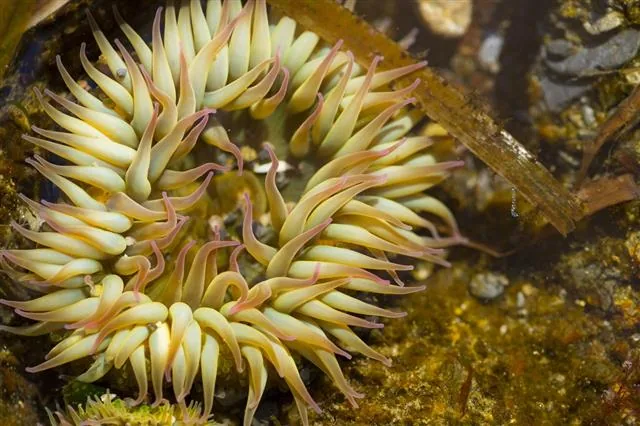
Anatomy
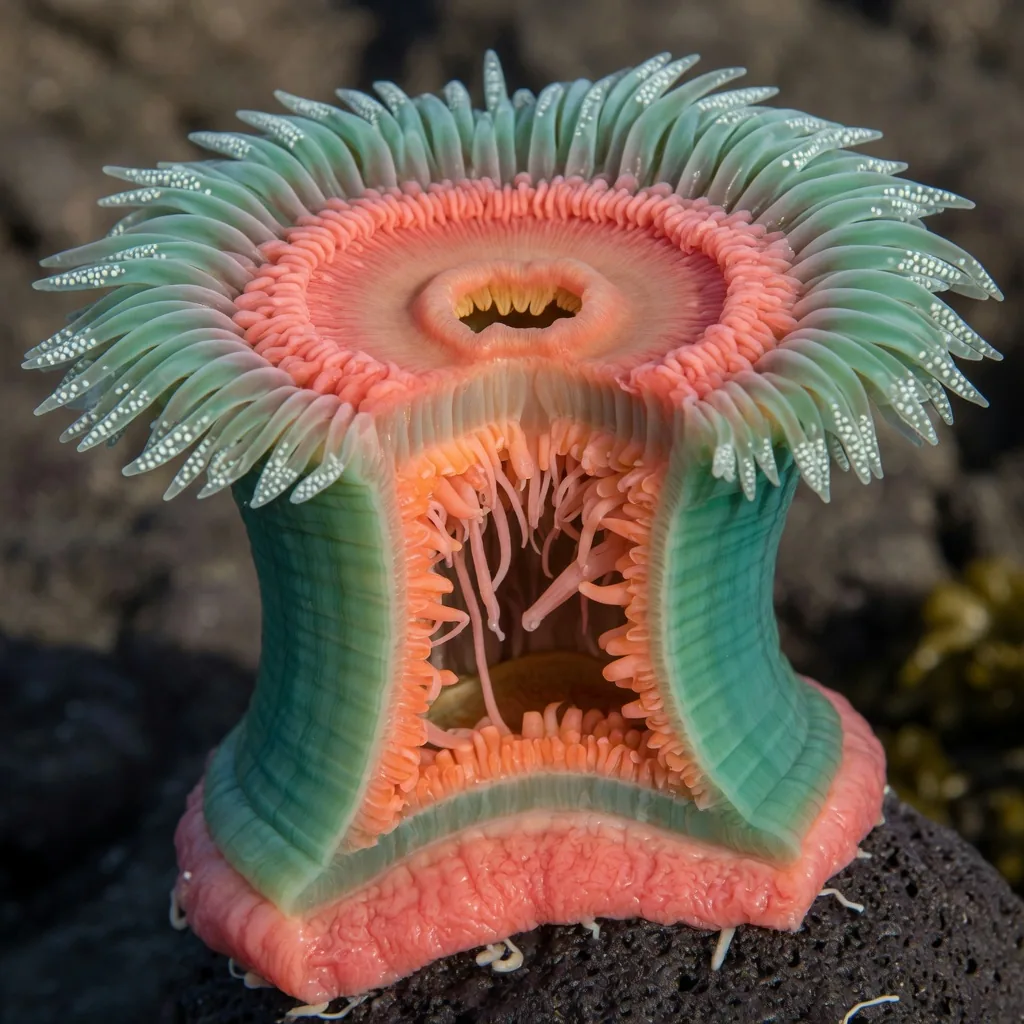
A sea anemone is built like a soft tube. The bottom is an adhesive foot that sticks to rocks. The top is a flat oral disc ringed by dozens of tentacles. At the center is a single opening that works as both mouth and stomach exit. The tentacles are packed with tiny stinging cells called cnidocytes, which the anemone uses both to catch prey and to defend itself.
Inside each cnidocyte is a microscopic weapon called a nematocyst. It contains a coiled, harpoon-like thread and a sensory hair on the outside. When an animal brushes the hair, the nematocyst explodes, firing the thread into the target and injecting a small dose of venom. This is what gives the anemone its sting.
The venom contains neurotoxins that paralyze prey. The tentacles then push the stunned animal into the mouth for digestion inside the gastrovascular cavity. When released into the water, the toxins also work as a defense against predators.
An anemone's nervous system is simple compared to most animals, it has no brain, just a loose net of nerve cells spread across its body. This network controls basic responses like reacting to touch, light, or chemicals in the water. The "muscles" are also simple: cells in the outer layer (epidermis) and inner layer (gastrodermis) contain tiny fibers that can contract, but they are not true separate muscles.
Because anemones have no hard skeleton, they use water pressure to stay firm. The gastrovascular cavity acts as a hydrostatic skeleton, a fluid-filled space that holds the body's shape. To keep it rigid, the anemone simply closes its mouth, trapping the water inside at a fixed volume.
Reproduction
Sea anemones can be male or female, and some species are hermaphrodites (able to produce both eggs and sperm). They can reproduce in two ways. In sexual reproduction, males release sperm into the water, which triggers females to release eggs. Both eggs and sperm exit through the mouth. Asexual reproduction has three routes: budding (growing a small copy off the body), binary fission (splitting into two halves), or pedal laceration (small pieces of the pedal disc break off and each grows into a new anemone).
Unlike other cnidarians such as jellyfish, sea anemones skip the free-swimming medusa stage. The fertilized egg develops into a tiny larva called a planula, which settles on a surface and grows straight into an adult anemone.
Test Your Sea Anemone Knowledge!
5 quick questions about these amazing reef predators. How much do you know?
Symbiotic Relationships
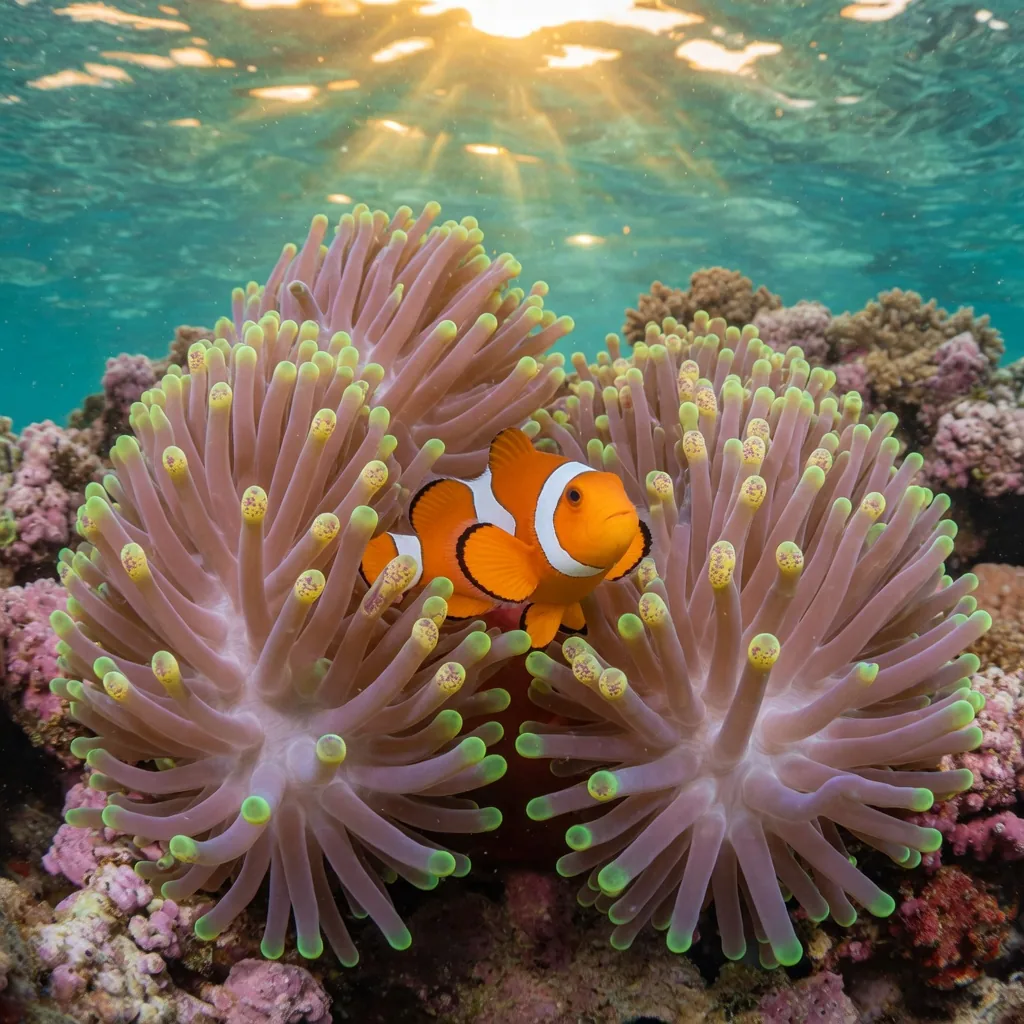
Sea anemones form partnerships with several other species. With algae, the deal is simple: the anemone gives the algae a safe home and access to sunlight, and the algae pay back with oxygen and sugar produced during photosynthesis. With clownfish and hermit crabs, the anemone acts as a bodyguard (its stinging tentacles keep predators away) while the fish and crabs drop scraps of food that the anemone eats.
Frequently Asked Questions
Are sea anemones animals or plants?
Animals, they are predatory polyps in the phylum Cnidaria, despite looking like flowers.
Do sea anemones sting humans?
Most species produce only a mild sting to humans, but their nematocysts are powerful enough to paralyze small fish and shrimp.
Why don't clownfish get stung by anemones?
Clownfish are coated in a protective mucus layer that prevents the anemone's nematocysts from firing.
How do sea anemones reproduce?
Both sexually (releasing eggs and sperm through the mouth) and asexually (by budding, binary fission, or pedal laceration).
How many species of sea anemones are there?
More than 1,000 species have been identified worldwide.
Distribution and Fossils
More than 1,000 sea anemone species are found in the oceans and coastal reefs across the world. The largest and most varied species live in coastal tropical waters. Because they have no hard skeleton, most Actiniaria leave no fossil trace, but a few rare fossils do exist. The oldest known fossil of a sea anemone is Mackenzia, found in the Middle Cambrian Burgess Shale of Canada.
Explore More Animals
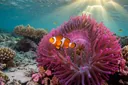 The Enigmatic Relationship Between Clownfish and Sea AnemoneThe relationship between clownfish and sea anemone is beautiful, yet enigmatic. They share a complex bond of interdependence, which is something we can learn fr
 Utterly Enchanting Facts About JellyfishThe jellyfish is a unique marine animal, known for its delicate looks, and equally deadly stings. However, there is much more to this sea creature than is appar
 Incredibly Interesting Facts About StarfishThe depths of the oceans are home to many amazing sea creatures. Starfish is surely one of them. These interesting facts about the starfish will amaze you and g
 Types of JellyfishJellyfish are mysterious ocean creatures, a complete kids' guide to the most popular types, plus how jellyfish live, eat, sting, and survive. From the deadly S

 Fun fact for today!Sea anemones are named after land flowers, but they are carnivorous animals, not plants!