

Despite the name, a snow leopard is not a type of leopard at all. A snow leopard belongs to a separate genus called Uncia, while a leopard belongs to the genus Panthera. The two cats differ in many ways, physically and genetically. A snow leopard's fur is thicker, its skull is smaller for its body size, and its tail is longer than a leopard's. Its rosette patterns are lighter and spread farther apart. And while leopards can produce a fierce roar, the snow leopard cannot, its vocal tissues are not fully formed in the same way. Let's look at each of these features up close.
Physical Appearance
The snow leopard is found mostly in hilly terrains and regions of very low and cold temperatures. Its physical features are natural adaptations that help the snow leopard brave these extreme conditions.
Fur
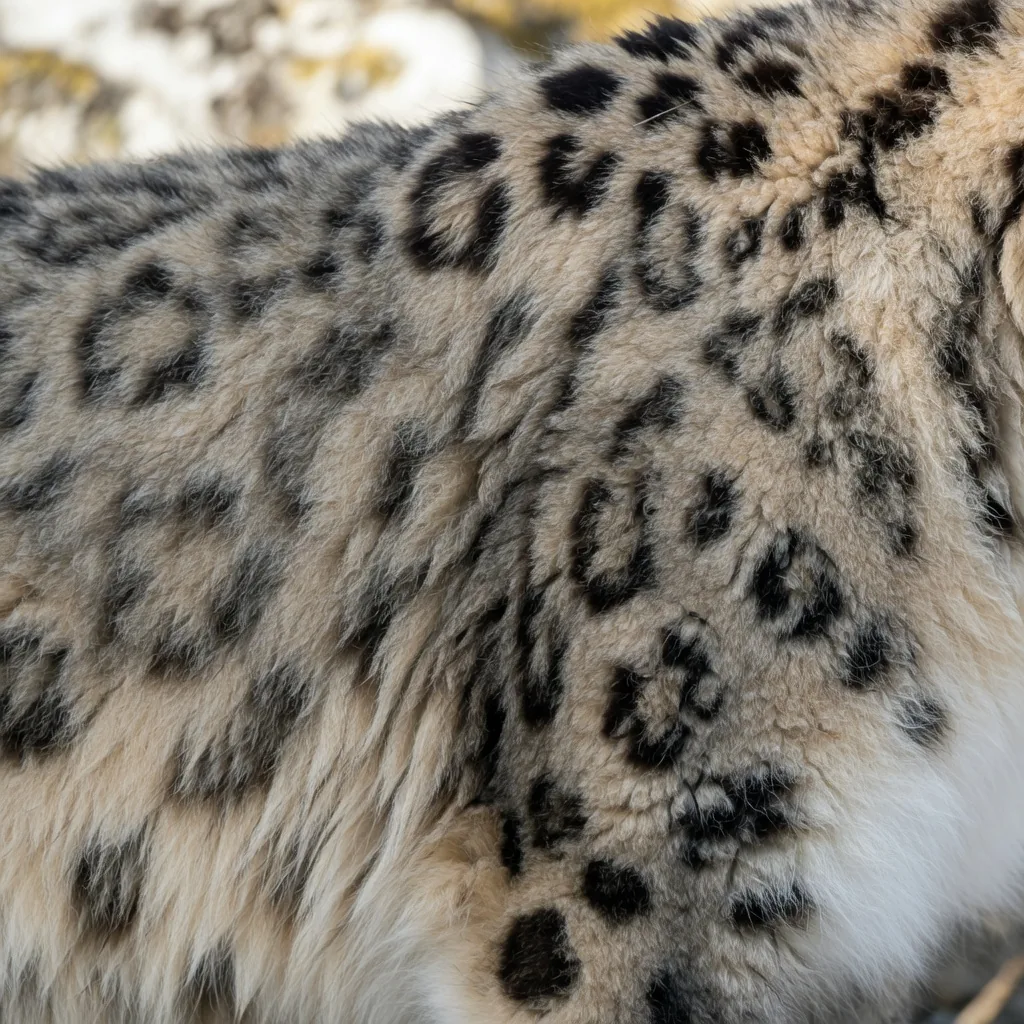
The snow leopard is a medium-sized cat. Its fur is mostly dull gray or pale yellowish, with white underneath. The fur grows about 1.5-2 inches long and is about 5 inches thick, like a built-in winter jacket that shields the snow leopard from the mountain cold.
Weight
A full-grown male snow leopard weighs between 77-121 pounds (35-55 kg). Some larger males can reach about 155 pounds (70 kg). Adult females are lighter, weighing between 55-66 pounds (25-30 kg). The body length, not counting the tail, is 75-130 cm.
Tail
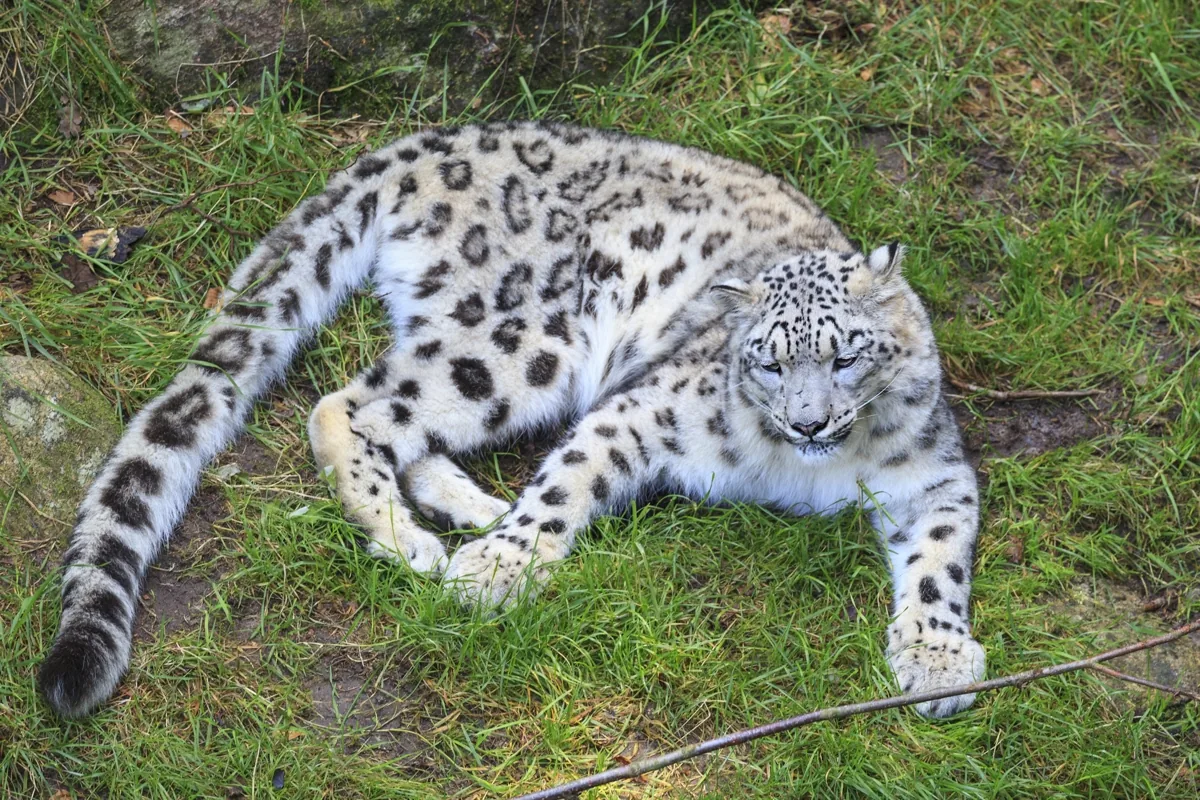
The snow leopard's tail is worth special mention, it is longer than the tails of most other cat species, reaching about 90 cm. It stores fat for energy, helps the cat keep its balance while leaping across rocky slopes, and can be wrapped around the face like a scarf for warmth during mountain blizzards.
Rosettes
Its fur is covered with blackish-brown spots spaced farther apart than on other spotted cats. The ring-shaped markings around each spot are called rosettes. They help the snow leopard blend into its rocky, snowy surroundings, making it almost invisible to both prey and predators.
Limbs
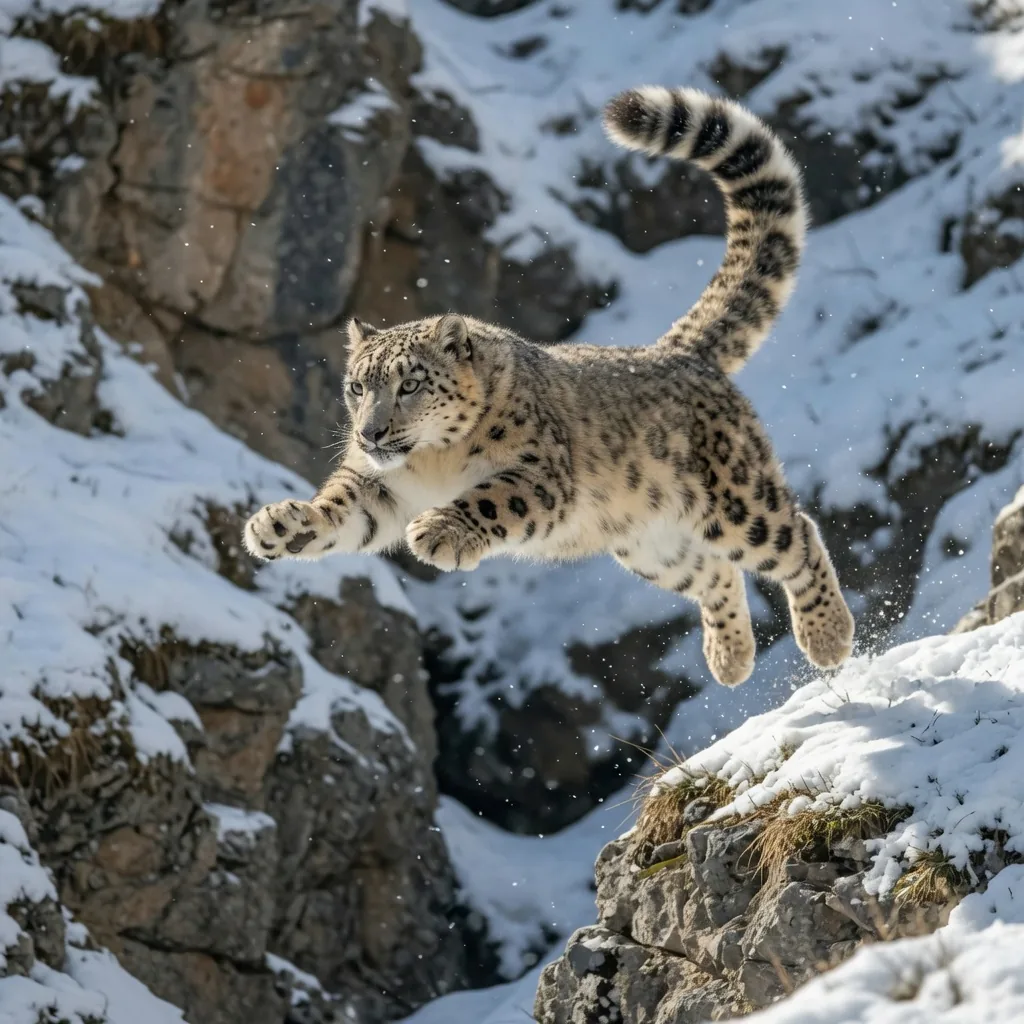
Snow leopards have short, powerful legs, their front limbs are a little shorter than their back limbs. Together they allow the cat to leap 50 feet horizontally and 20 feet vertically. Their paws are wide, which spreads their body weight across soft snow like natural snowshoes. Thick fur lines the undersides of each paw, letting them walk comfortably across snow that can be up to 35 inches deep.
Skull
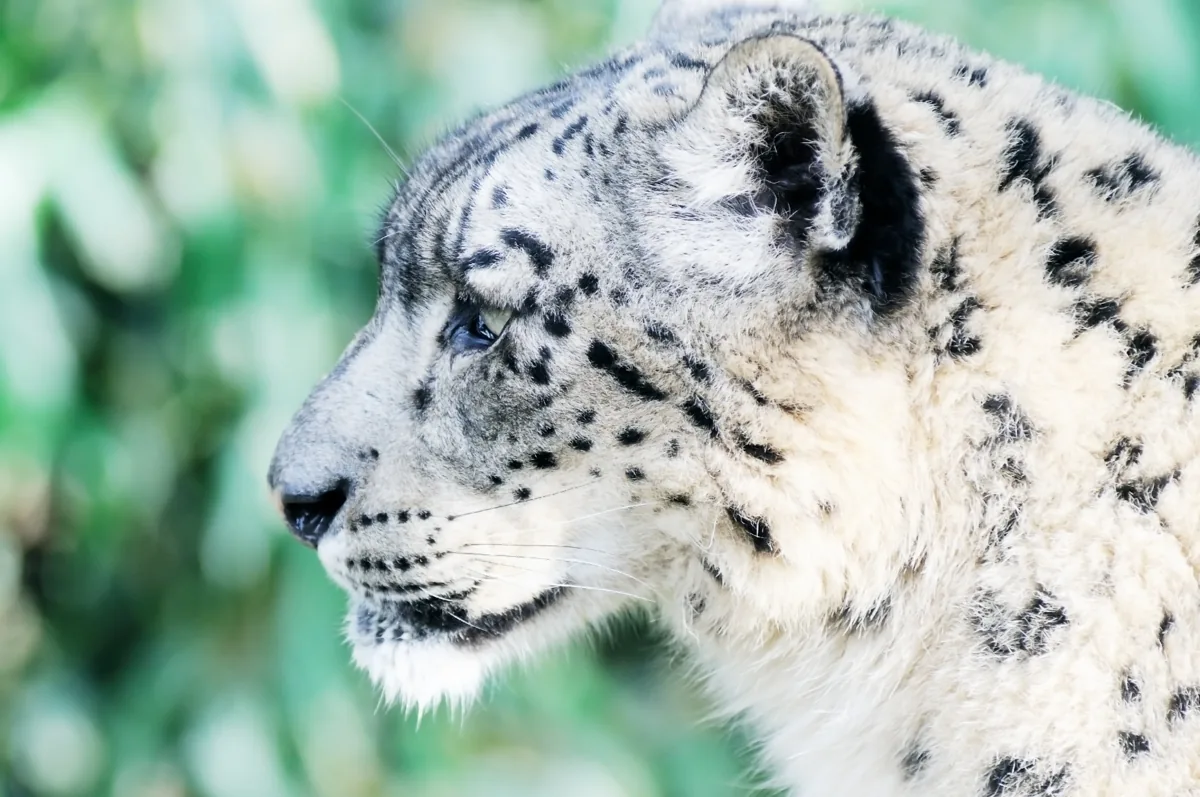
The snow leopard's skull is relatively small with short, rounded ears. Smaller ears lose less heat, a smart adaptation for surviving icy mountain winters.
Eyes
Snow leopards stand apart from other cat species because of their unusual eye color, pale green or gray. They are the only members of the cat family known to have eyes of this color.
Sounds/Cat calls
The vocal tissues of a snow leopard are not as fully developed as those of other big cats. Because of this, snow leopards cannot roar like lions or tigers. Instead, they make a range of other sounds: hissing, purring, wailing, growling, mewing, and chuffing.
Habitat
Geographical Range
Snow leopards live in the rocky mountain ranges of Central, South, and East Asia, usually between the tree line and the permanent snow line. They are found across 12 countries: China, India, Pakistan, Bhutan, Mongolia, Russia, Nepal, Afghanistan, Kazakhstan, Tajikistan, Kyrgyzstan, and Uzbekistan. About 60% of the world's snow leopard population lives in China.
Home Terrain
Snow leopards make their home in alpine meadows, treeless rocky mountains, broken cliffs, steep slopes, and ravines. These rugged places give them cover to hide and hunt. How large their home range is depends mostly on how much prey is available. Snow leopards are not strongly territorial, so the home ranges of two individuals can overlap.
Diet
Prey
Snow leopards are powerful hunters, they can take down prey up to three times their own size. They are also opportunistic feeders, meaning they will eat whatever is available if large prey is scarce. Their main prey includes mountain sheep such as the Asiatic and Siberian Ibex, Bharal (Pseudois nayaur, also called blue sheep), markhors, urial, goats, langurs, deer, and boars. Smaller prey include hares, Pikas (Ochotona), and rodents. They also hunt birds like the snow cock and Chukar (Alectoris chukar).
Hunting Technique
Snow leopards are active hunters and can chase prey for up to 300-400 meters. After a successful kill, they stay with the carcass for a week or two, eating until nothing is left. This means they only need to hunt every 8-15 days, depending on the size of the prey. When wild prey is hard to find, snow leopards sometimes turn to livestock kept by mountain farmers, which causes serious problems for both the leopards and the people.
Take the Snow Leopard Quiz!
5 quick questions. How much do you know about these mountain ghosts?
Behavior
Activity
Snow leopards are crepuscular animals, most active at dawn and dusk. No attacks on humans by a snow leopard have ever been recorded. When they encounter a person, snow leopards are far more likely to back away and disappear than to stand their ground. They only show aggression during fights between two males or when cubs are in danger.
Territorial Habits
Snow leopards are shy, solitary animals, they prefer to live alone rather than in groups. To mark their home area and warn other cats away, they leave scent marks: paw prints on rocks and crevices, or urine sprayed over scratch marks. These scent messages also act as communication, letting other snow leopards know which trails are safe and well-used.
Frequently Asked Questions
Can a snow leopard roar?
No, snow leopards cannot roar because their vocal tissues are not fully developed. They hiss, purr, growl, mew, and chuff instead.
What genus does the snow leopard belong to?
Snow leopards belong to the genus Uncia (sometimes classified as Panthera uncia), not the same genus as true leopards (Panthera).
How far can a snow leopard jump?
Snow leopards can leap up to 50 feet horizontally and 20 feet vertically.
Are snow leopards endangered?
Snow leopards are listed on the IUCN Red List of Threatened Species. Their population is estimated at 2,500-6,000 in the wild.
Reproduction and Offspring
Mating
Snow leopards mate between January and March. They reach maturity between two and three years of age. The female is pregnant for 90 to 100 days, then gives birth to 2-3 cubs in a sheltered spot such as a cliff ledge or rocky crevice. She lines the den with soft fur shed from her own belly to make a warm bed for the cubs. After mating, the male leaves and never returns, the mother raises her cubs completely on her own.
Growth of Cubs
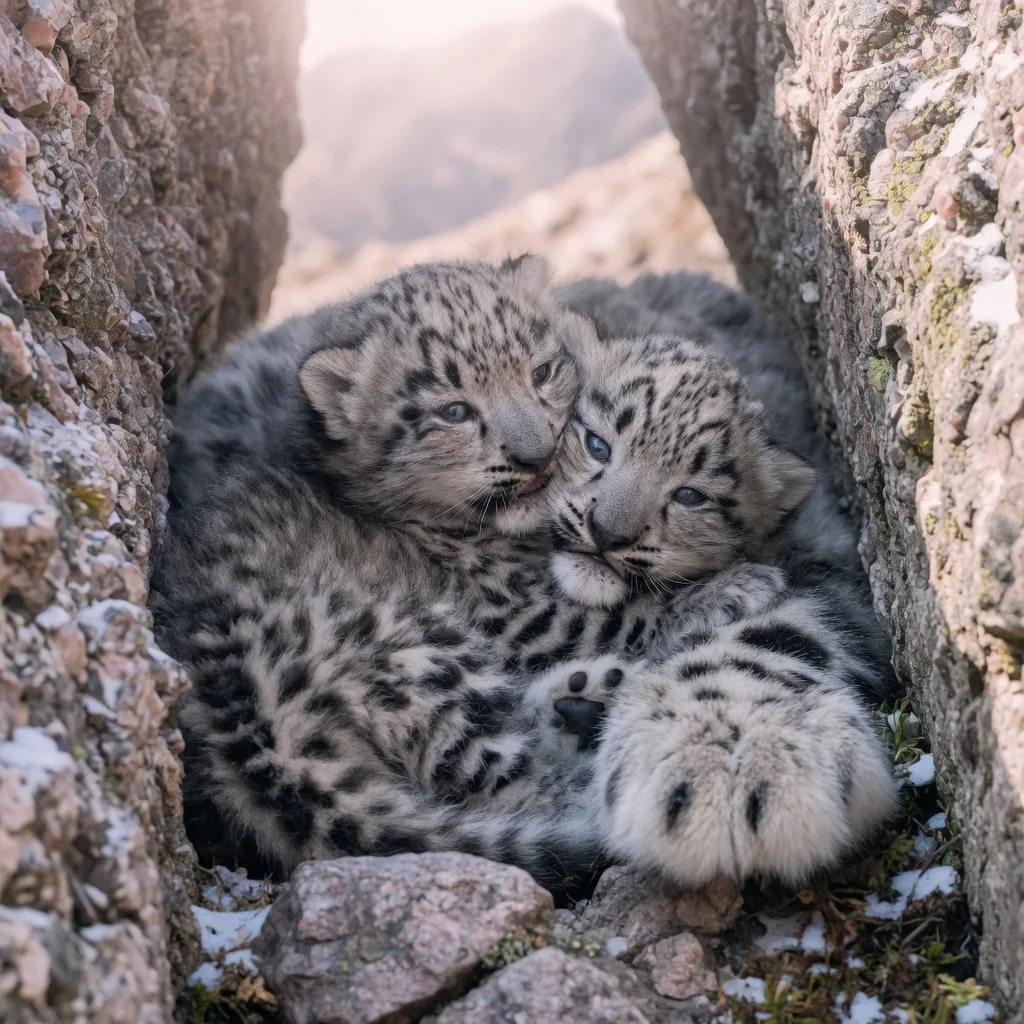
Snow leopard cubs are born blind and helpless, though they do have a thick coat of fur to protect them from the cold. Cubs weigh between 11-20 pounds at birth. They stay blind for 8-10 days and cannot walk until they are around 10 weeks old. After two or three months, they start eating solid food. Over the following months, each cub follows its mother everywhere, learning the basics of hunting and survival. The cubs leave their mother once they are 18-22 months old.
Threats
Lifespan and Population
In the wild, snow leopards live for 12 to 15 years. In captivity, they can live for 20 to 22 years, about ten years longer. The global population is estimated at around 2,500, though some sources put the number at 4,000-6,000. Because snow leopards are so secretive and hard to study, many of these figures are estimates and may not be fully up to date.
Poaching
Snow leopards are illegally hunted (poached) for their beautiful, thick fur, which is used in expensive garments. They are also killed for their bones and other body parts, which are used in traditional medicine across parts of Asia.
Insufficient Prey, Habitat, and Resources
Snow leopards depend on cold, rocky mountain habitats with sparse plant cover. Climate change and global warming are shrinking these habitats. As the mountain environment warms, trees and shrubs move higher up the slopes, crowding out the open terrain snow leopards need. On top of that, the wild sheep and mountain goats they rely on for food are also declining in numbers, making it harder for snow leopards to find enough to eat.
Human Attacks
When wild prey is scarce, snow leopards sometimes attack livestock such as goats and sheep. This angers the farmers who depend on those animals for their livelihoods, and some farmers respond by killing the snow leopards.
Symbolic Meaning
In heraldry (the art of coats of arms), a snow leopard is called an ounce. For the Turkic peoples of Central Asia, the snow leopard carries deep cultural meaning. In Turkic heraldry it is known as irbis or bars and serves as a proud emblem. It is the national symbol for the Tatars and Kazakhs, appears on the official seal of the city of Almaty, and is the symbol on the membership badge of the Girls Scout Association of Kyrgyzstan.
Endangered Species and Conservation
Snow leopards are listed on the IUCN (International Union for Conservation of Nature) Red List of Threatened Species as Vulnerable. Their numbers have been falling steadily, and without action, extinction is a real risk.
Many organizations are working to protect snow leopards. These include the Snow Leopard Network, the Cat Specialist Group, the Snow Leopard Conservancy, the Snow Leopard Trust, the Panthera Corporation, and the World Wildlife Fund (WWF). Together they study snow leopard behavior, support communities near snow leopard habitat, and push for stronger wildlife protection laws.
One of the biggest challenges is the conflict between snow leopards and local farmers. WWF is helping livestock farmers build stronger, leopard-proof pens and shelters so their animals are safe at night, removing the reason to retaliate. WWF is also working to protect the Eastern Himalayan mountains, one of the best breeding areas for snow leopards. Together with TRAFFIC (a group that monitors the illegal wildlife trade), WWF works to reduce poaching and shut down the trade in snow leopard parts.
Snow leopards are rare, elusive, and extraordinary animals. Protecting them (and the mountain landscapes they call home) is something people all over the world are working toward.
Explore More Animals
 Astonishing Facts About Amur Leopards, the World's Rarest Big CatsOne of the rarest animals on the planet, the Amur leopard is actually a subspecies of the leopard; in fact, it is one of the nine subspecies of leopards.
 Marvelously Staggering Facts About the CheetahAgile, swift, graceful, lethal...words fail to describe the magnificence of this particular predator from the cat family. A closer run-down of the statuesque ch
 Utterly Mind-boggling Facts About the White Bengal TigerAlso known as Indian tigers, white Bengal tigers were initially hunted down for fun, as a part of sporting activities. Today, most of these are bred in captivit
 Animals of the Gobi DesertGobi Desert is home to some of the most fascinating animals on Earth. Discover the Bactrian camel, Gobi bear, snow leopard, jerboa, and more, plus how they sur

 Fun fact for today!Snow leopards can't roar, they hiss, purr, and chuff instead!