

A Money Machine
The Texas Longhorn is profitable even after it has outlived its usefulness as a beef producer. Being a symbol of the Old West, Longhorn skulls, horns, and hide are in high demand and widely used to decorate businesses and homes.
In 1493, Christopher Columbus brought this ancestral cattle to the Caribbean island of Hispaniola. Researchers state that this breed originates from two ancient cattle namely: Taurine and Indicine. In the 16th century, the Spanish moved the cattle to the north, which is present day Texas. For the next 300 years, Longhorns not only thrived but spread far and wide across the Midwestern grasslands. Due to their adaptability and disease resistant characteristics, they came to be valued not only by the breeders and ranchers but also by beef eaters in the East. Subsequently, within half a century, the Longhorns were pushed to the verge of extinction.
In the 1920s, the Federal government stepped in and set up refuges to restore them. Gradually, breeders began realizing the value of the Longhorns and started raising and maintaining their own private stock. In 1964, the Texas Longhorn Breeders Association of America was formulated in Lawton, Oklahoma. The main aim of this association was to notice the Texas Longhorn and its connection with American history, to share knowledge about this breed and motivate owners to develop and maintain herds. Their lifespan is more than 20 years if they are well-cared for and have enough room to roam around. After this brief overview of the history of the Longhorn, let's learn some more about this magnificent beast.
Appearance
Texas Longhorns have short hair and don't grow much of a winter coat, even in cold weather. Their ears are small, because it's the horns that really stand out on their head.
Cows are expected to have a feminine neck with smooth shoulders and a slim, angular body. Bulls should look strong and masculine. Both are long-legged compared to most other breeds, which helps them travel long distances across open rangeland. They also have tight, close-fitting skin with no loose folds, which means they rarely get snagged on brush, and their meat stays naturally lean.
Color
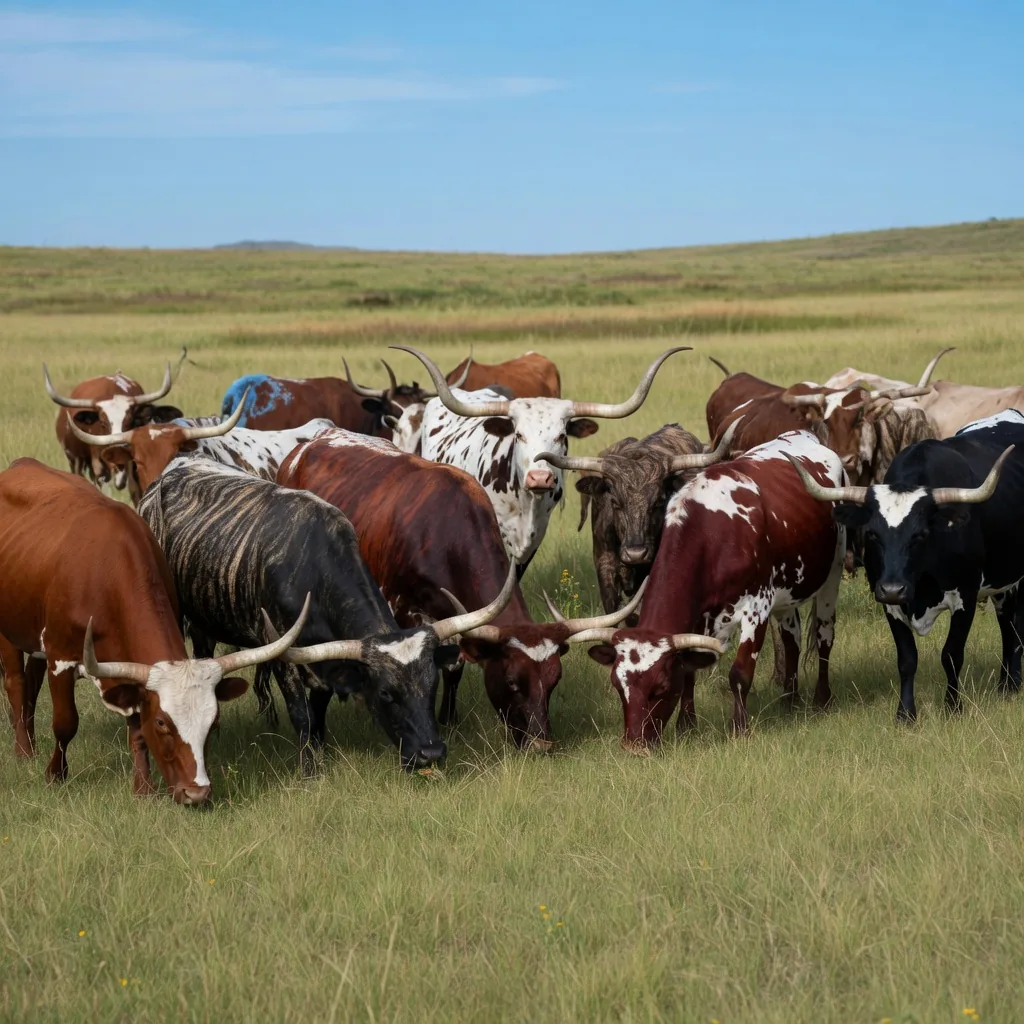
Texas Longhorns can come in almost any color. The most common are dark red and white mixes. A calf can be a completely different color from its mother, so it's sometimes hard to tell which calf belongs to which cow on a large ranch!
Some tend to get darker with age, or may develop small spots as they age. Colors may range from black, blue, brown, brindle with white lineback, dark yellow, mulberry, Parker brown, red and white spotted.
Horns
Their most famous feature is their enormous horns, they can measure up to 8 feet wide from tip to tip. The size depends on the animal's age. Young calves start with small, curved horns that point out and away from the head. As the animal grows older, the horns keep growing. Top prices are paid for impressive horns, and many people use them as home décor.
Take the Texas Longhorn Quiz!
5 quick questions. How well do you know this legendary cattle breed?
Weight
Longhorns are a medium-sized breed. Bulls generally weigh between 1,500 and 2,200 lbs, while cows weigh around 850 to 1,300 lbs. They are naturally lean rather than heavily muscled, though some modern breeders select for larger, beefier animals.
Health
One of the reasons ranchers prize the Texas Longhorn is its rugged health. The breed is highly disease-resistant and very adaptable, it can thrive in hot, dry conditions where other breeds would struggle. Longhorns are also naturally resistant to many cattle parasites and ticks, which means lower vet bills and less need for chemical treatments. Their hardiness comes from centuries of surviving on the open range with little human help.
Reproduction
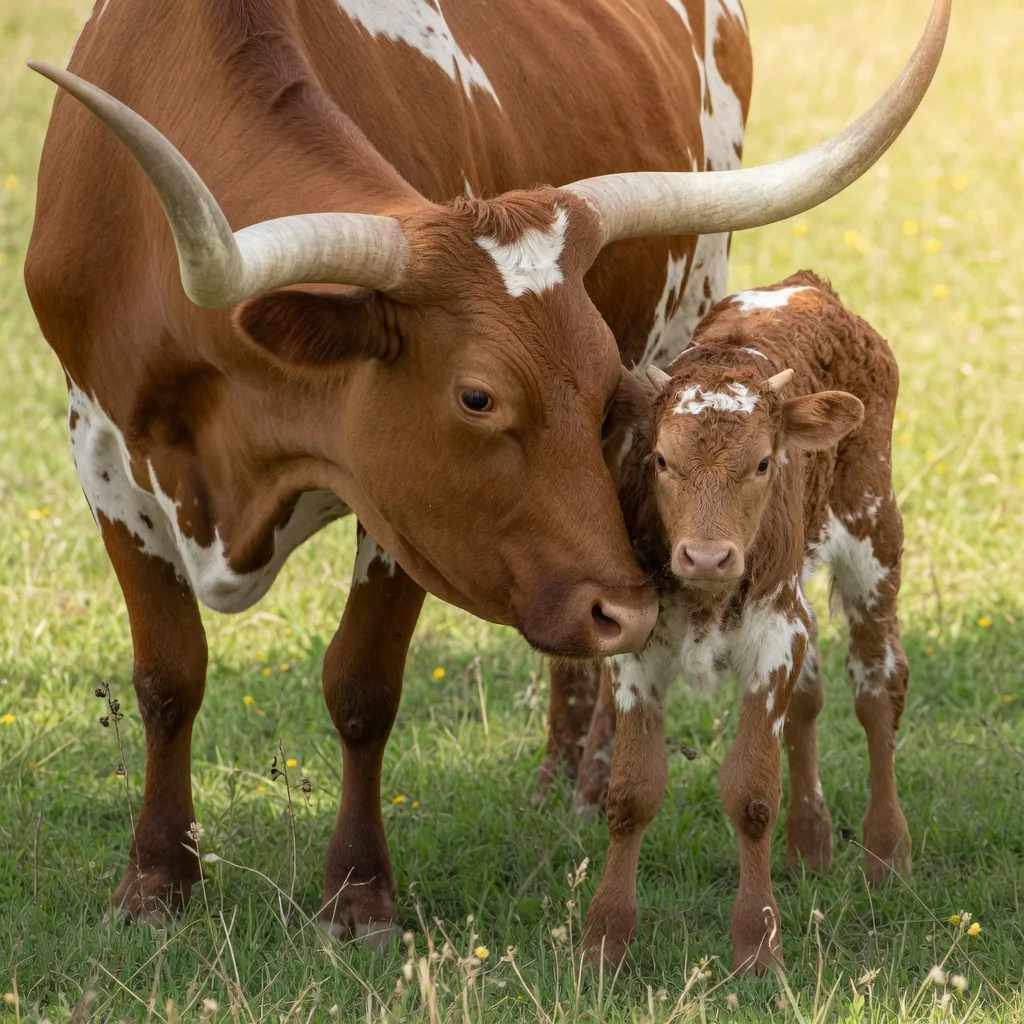
Longhorn heifers are remarkably early breeders. They can produce a calf on their own (without any human help) before they are even 16 months old. They continue calving every year, often into their mid-teens and beyond. Cows are excellent, attentive mothers. Their reproduction rate is roughly double that of other cattle breeds, which is one reason ranchers find them such a profitable choice.
Nature
Texas Longhorns are fairly calm and easy to handle. They are intelligent animals that can be trained to perform in show rings, pull wagons, and even be ridden. When treated with care and respect, they are straightforward to raise and breed.
Frequently Asked Questions
How wide can Texas Longhorn horns grow?
Texas Longhorn horns can measure up to 8 feet wide from tip to tip.
How long do Texas Longhorns live?
Their lifespan is more than 20 years if they are well-cared for and have enough room to roam around.
What do Texas Longhorns eat?
They feed mostly on a wide range of plants, grasses, and weeds, no special supplemental feed required.
What colors can Texas Longhorns be?
They can be any color, but the most common are dark red and white mixes. Colors include black, blue, brown, brindle, dark yellow, mulberry, and red and white spotted.
When was the Texas Longhorn Breeders Association founded?
The Texas Longhorn Breeders Association of America was formulated in 1964 in Lawton, Oklahoma.
For a look at another diverse group of cattle breeds from around the world, AnimalSake has you covered.
Uses
Most cattle are raised for either milk or meat. Texas Longhorns are especially valued for their meat. They produce very lean beef that contains less cholesterol and fat than most other breeds. Because it is so palatable and low in fat, the meat can fetch a higher price. Some ranchers also use Longhorns for riding, so don't be surprised if you ever spot someone sitting in the saddle on one of these impressive animals!
Diet
Owners don't need any special feed or supplements for this breed. Longhorns graze on a wide range of plants, grasses, and weeds, they are happy foragers that do well on natural pasture.
Texas Longhorns often form a strong bond with their caretaker. No two cattle are exactly alike, they each have their own personality, horn shape, color pattern, and size. That individual character is part of what makes them so beloved by the ranchers and breeders who work with them.
Explore More Animals
 Facts You Must Know (But Perhaps Don't) About Highland CattleHighland cattle facts: the ancient Scottish breed with a double shaggy coat, curved horns, and the leanest beef around. Discover what makes Highlanders so remar
 Surprisingly Awesome Facts About Limousin CattleLimousin cattle are raised for their meat in more than 70 countries across the world. AnimalSake gives you some facts and information about this hardy cattle br
 Facts About Jersey Cows You Won't Believe You Didn't Know Until NowJersey cows are renowned the world over for the rich milk they produce, along with being relatively low-maintenance and docile. AnimalSake presents some interes
 The State Animal of Texas: Facts About the Nine-banded ArmadilloThe nine-banded armadillo, the state animal of Texas, is a distant cousin of the sloth and the anteater. It is the only mammal with a protective armored shell.

 Fun fact for today!Texas Longhorn skulls, horns, and hide are still widely used to decorate homes and businesses as symbols of the Old West!