

"I'm not fat. It's all this fur. It makes me look ... poofy."
, Manny, Ice Age
It's true, you know. The name 'mammoth' is a little misleading, as it seems to suggest that these creatures were obscenely huge. When in fact, mammoths are understood to be approximately the same size as present-day Asian elephants.
With the steady melting of permafrost in the northern polar region, several mammoth fossils were found. Scientists are using these fossils to understand these creatures, their habitat, and the reasons contributing to their extinction. The information thus revealed has shed some light not only on the way the mammoths lived, but also what our world was like back in those times.
Appearance and Physical Traits
Scientists have unearthed mammoth fossils on each continent barring Australia, South America, and Antarctica.
Appearance-wise, the woolly mammoth nearly matched an Asian elephant, with a few differences in their features. The mammoth's skull was narrower in comparison to modern elephants. Also, their ears were smaller and the tail was shorter, both of which were adaptations to extreme cold.
Woolly mammoths had a full coat of fur consisting of long, coarse exterior hair, measuring close to a meter long, and a short, dense layer underneath.
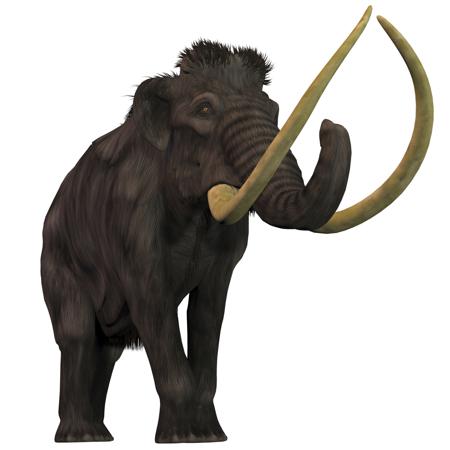
Scientific name: Mammuthus primigenius. Height: Approximately 3.5 meters at the shoulder. Weight: up to 6 tons. Also known as: Tundra mammoth, earth stag.
Besides the thick coating of shaggy hair, the mammoths had a 4-inch layer of fat beneath their skin which provided insulation from the harsh winds.
Diet and Daily Life
The diet of these herbivores comprised about 500 lbs of plants, grass, aquatic shrubs and trees per day. The tip of their trunk had a peculiar protrusion, which was used to pick and eat delicate buds, flowers, and shorter grass blades.
They spent about 16-18 hours a day either feeding or foraging a source of food or water, consuming at least 130-660 lbs of food per day.
Mammoths had four huge teeth―two upper and two lower. Throughout their lifetime they grew six sets of teeth, and are known to have died when their last set of teeth lost the ability to grind up the food they ate.
The lifespan of mammoths was estimated to be about 60-80 years.
Reproduction
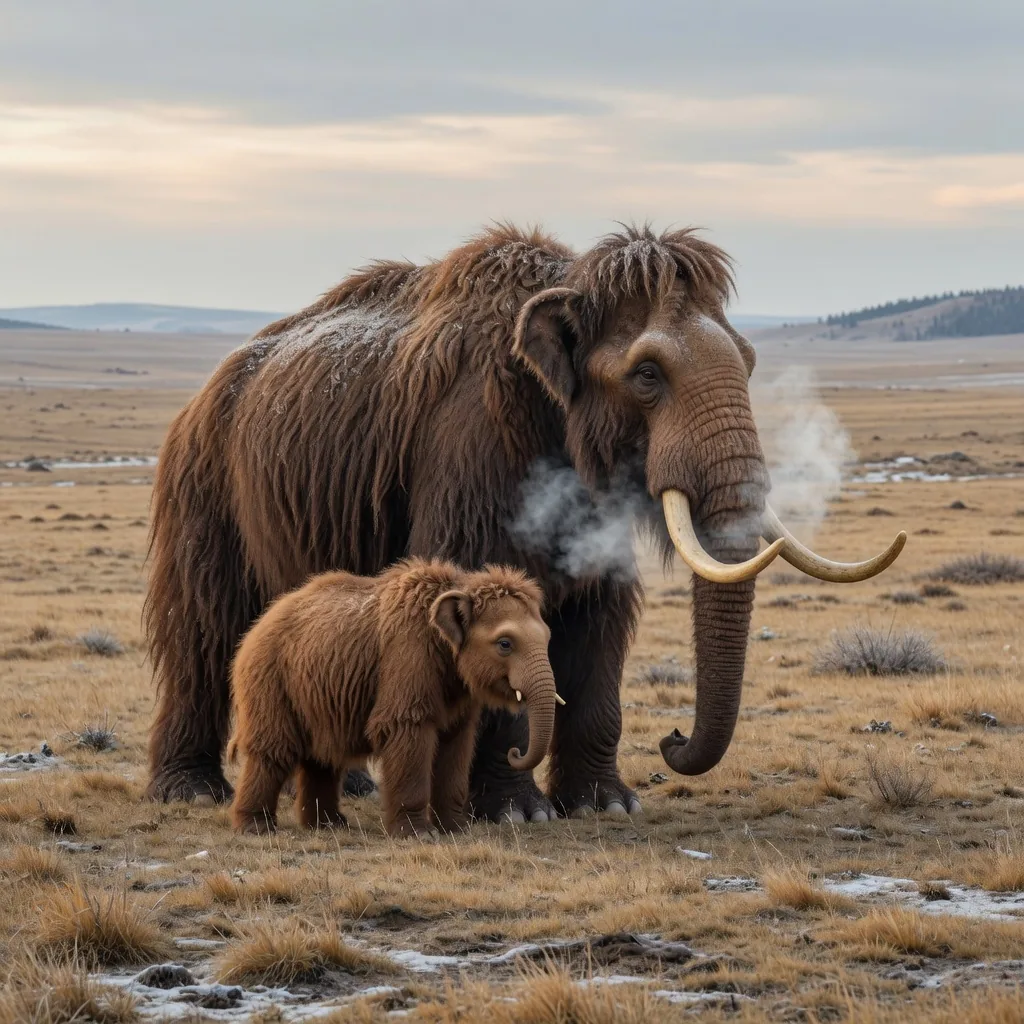
Not much is known about their reproductive cycle, but approximations can be derived from modern-day elephants. Mammoths had a gestation period of 22 months, following which they gave birth to a single calf.
Take the Woolly Mammoth Quiz!
5 quick questions. How much do you really know about these Ice Age giants?
The Amazing Tusks
The tusk of the mammoth was unique, and was used in a variety of tasks―brushing off snow from the ground while searching for food, as a show of strength to deter predators, and to attract a potential mate.
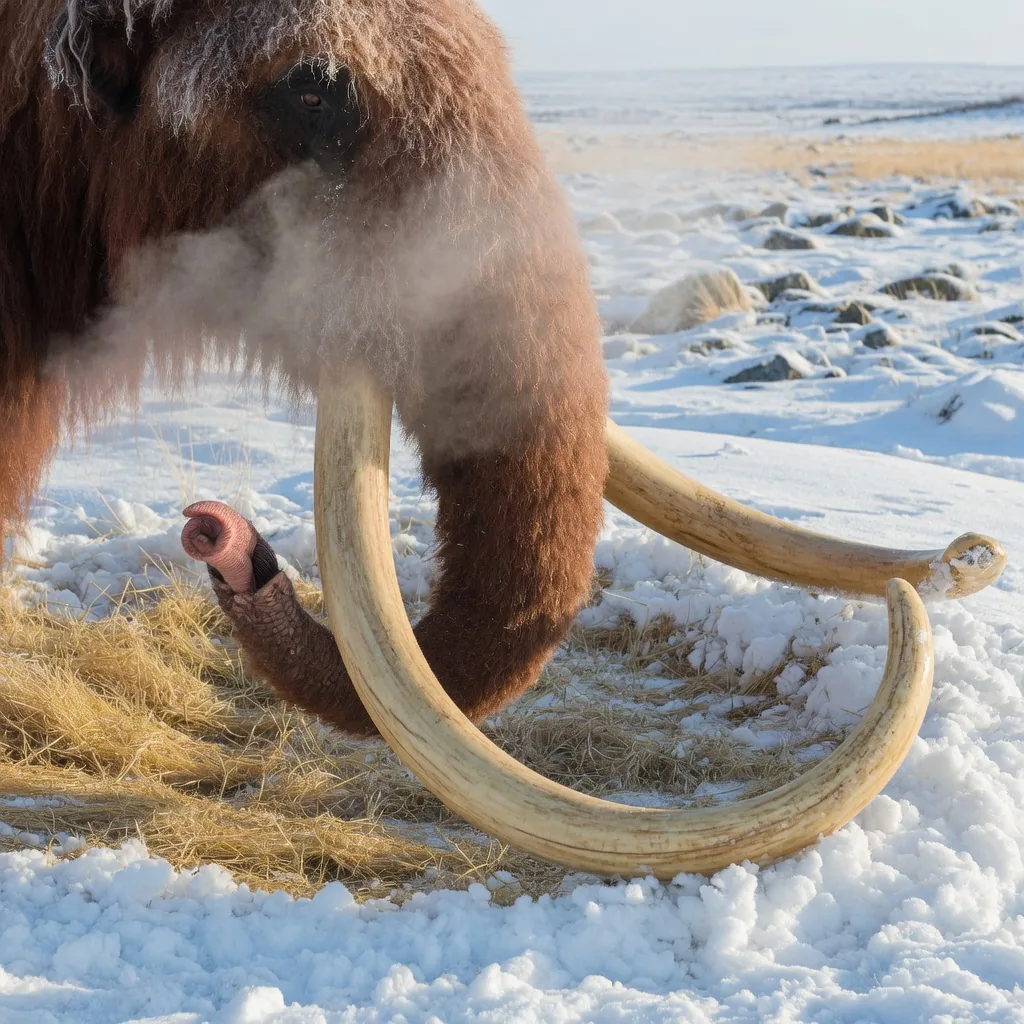
To scientists, the fossilized tusk of the mammoth can reveal a lot―its age at the time of death, the season in which it died, and its overall health.
There is a mad rush in the Arctic region to hunt for frozen specimens of mammoths, owing to these ivory treasures. They fetch a decent price in the market, and unlike elephant tusks, these aren't exactly illegal.
Predators and Extinction
Predators of mammoths were mostly saber-toothed felines and humans. Humans extensively began hunting mammoths for their meat, bones, and skin. This is regarded as a plausible cause which led to the extinction of the species.
The extinction of mammoths is mainly attributed to one other cause besides hunting, which is the sudden climate change at the end of the Pleistocene Period. The increasing temperature made it hard for the mammoths to survive, considering their physical attributes were suited to the colder climate.
Frequently Asked Questions
How big was a woolly mammoth compared to a modern elephant?
About the same size as a modern Asian elephant, roughly 3.5 meters tall and up to 6 tons.
When did woolly mammoths go extinct?
Most died out around 8,000 BCE, but the last isolated population survived on Wrangel Island until about 1700 BCE.
What did woolly mammoths eat?
They were herbivores, eating grasses, plants, aquatic shrubs, and trees, up to 660 lbs per day.
Who was Lyuba?
Lyuba was a baby woolly mammoth discovered in 2007 in Russia, nearly perfectly preserved after 40,000 years in permafrost.
Why did woolly mammoths go extinct?
The two main causes were climate change at the end of the Pleistocene Period (warming temperatures) and hunting by early humans.
Famous Specimens
The most famous mammoth specimen to have been recovered from the frozen ground is that of a female calf, nicknamed Lyuba. The carcass was discovered in 2007, in an almost-intact state. She was understood to have been about a month old when she died near the Yuribei River, in present-day Russia, and had been buried for almost 40,000 years.
It was generally assumed that the last woolly mammoths vanished from the Arctic tundra around 8,000 BCE, with the last of the isolated woolly mammoth populations vanishing from Wrangle Island, located in the Arctic Ocean as late as 1700 BCE.
Explore More Animals
 Unusual and Little-known Facts About MammalsMammals are a class of vertebrates which began to evolve on Earth around 200 million years ago. Discover record-holders, classification, and surprising facts ab
 Irish Elk FactsThe Irish Elk was the biggest deer to have ever lived on earth. Its fossils reveal the animal's antlers were 12 feet long. Learn facts, extinction theories, and
 Remarkably Interesting Facts About Wolves You'd Love to KnowSince ancient times, wolves have been associated with danger and feared by people. But are they really the way folklore depicts them? Discover fascinating wolf
 Facts About Asian Elephants You Won't Believe You Didn't KnowDid you know that female Asian elephants do not have tusks? And that only some male ones do? Here are some interesting facts about the Asian elephants.

 Fun fact for today!The last woolly mammoths were alive when the ancient Egyptians were building their pyramids!