

Our planet is full of amazing things, and "fastest" is one of the most popular superlatives of all. Speed has always fascinated people, whether it is the fastest car, the fastest airplane, or the fastest animal on Earth.
Finding the world's fastest machine is fairly easy. Finding the world's fastest animal is trickier. Kingdom Animalia has thousands of species, all shapes and sizes, and picking a winner depends on which rules you use.
Different animals move in different ways. Land animals run, marine animals swim, and birds fly. To be fair, we need to consider all three types of movement. Birds are part of kingdom Animalia, and so are insects and fish. Below you will meet the speed champions on land, in water, and in air, and there will be a few surprises along the way.
Cheetah: Fastest Animal on Land
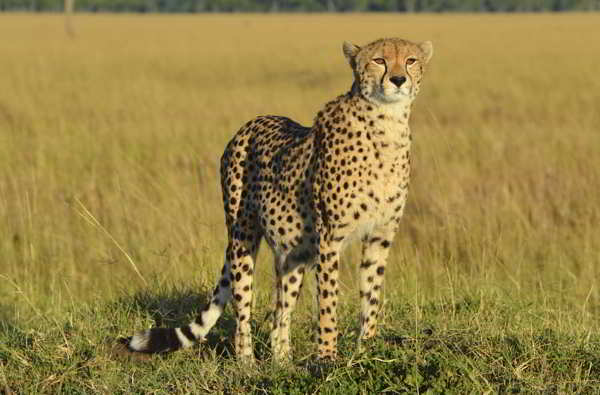
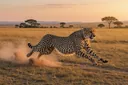
The fastest land animal (and the fastest mammal on the planet) is the cheetah (Acinonyx jubatus). Native to the vast plains of Africa and Asia, it can reach 70 mph with ease. Its acceleration is just as impressive: it goes from 0 to 60 mph in just 3 seconds, faster than many sports cars.
Every part of a cheetah's body is built for speed. Its small head cuts through the air. Its heavy tail acts like a rudder, helping it steer and make sharp turns. Large nostrils let it take in more oxygen, and an enlarged heart and lungs pump that oxygen around the body quickly. The cheetah is also the only big cat with semi-retractable claws, these grip the ground like running spikes and give it the traction it needs to sprint.
There is a catch, though. A cheetah can only sprint for about 500 m at a time. During a chase its body temperature rises fast, which can become life-threatening. If the prey does not go down quickly, the cheetah may have to give up, to save itself. After every sprint it rests for about half an hour to cool down. Despite this limit, the cheetah has a hunting success rate of 50 per cent, one of the best in kingdom Animalia.
The cheetah shares its habitat with the second fastest land animal, the gazelle, which can reach 50 mph. It is no coincidence that they share a predator-prey relationship in those open grasslands. The environment itself has shaped both species into speed champions.
Sailfish: Fastest Animal in the Ocean
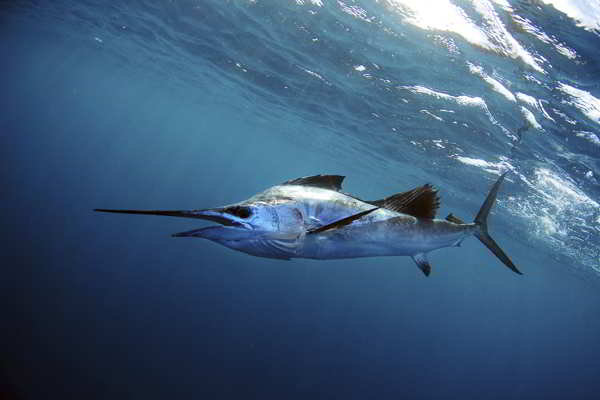
According to the Guinness Book of Records, the fastest fish in the world is the sailfish, which can reach 68 mph, just shy of the cheetah's 70 mph on land. Sailfish measure 1.7 to 3.4 meters in length and weigh between 120 and 220 lbs. They live in the warm tropical waters around the world.
There are two subspecies. The Atlantic sailfish (Istiophorus albicans) lives in the Atlantic Ocean, and the Indo-Pacific sailfish (Istiophorus platypterus) lives in the Pacific and Indian Oceans. Both have a spectacular oversized dorsal fin (the "sail" that gives them their name) plus a long bill and a crescent-shaped tail. That streamlined, hydrodynamic body is what drives their record-breaking speed.
Some reports claim sailfish have hit 70 mph, putting them level with the cheetah, but those figures are still debated. The second-fastest fish, the black marlin, averages 50 mph and belongs to the same billfish family. The ocean is still full of mysteries, and it is quite possible that an even faster marine creature is out there waiting to be discovered.
Test Your Speed Knowledge!
5 questions about the fastest animals on Earth. Can you beat 5 out of 5?
Peregrine Falcon: Fastest Animal in Air
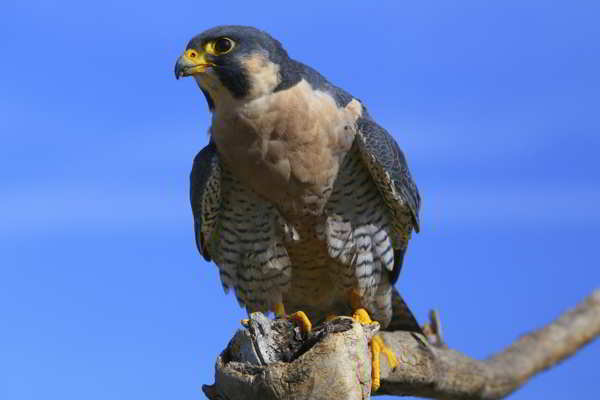
Here is the big surprise: the fastest animal on the planet is a bird. The Peregrine falcon (Falco peregrinus) can reach 200 mph in the air, nearly three times faster than the cheetah. In normal level flight, though, a peregrine averages just 40 mph and could not even catch a pigeon.
So when does it hit 200 mph? Only when hunting. The peregrine climbs high into the sky, spots its prey below, then dives (beak first) at speeds of more than 200 mph. The fastest recorded dive was an unbelievable 242 mph, set in 2005 by a Washington-based falconer's pet peregrine named Frightful, owned by Ken Franklin.
How does a bird measuring just 16 inches pull this off? During the dive it tucks its wings and feet close to its body, folds its tail, and streamlines itself into a near-perfect aerodynamic shape. Its nostrils are specially shaped to help it breathe normally even at those extreme speeds. The dive is powerful, but not always accurate, the peregrine's hunting success rate is only 20 percent.
The peregrine is also one of the most widespread birds of prey on Earth. It lives on every continent except Antarctica and prefers open areas where it has clear sky to hunt. Peregrines are even trained to fly around airports to scare other birds away from runways.
Leatherback Sea Turtle: Fastest Reptile in the World
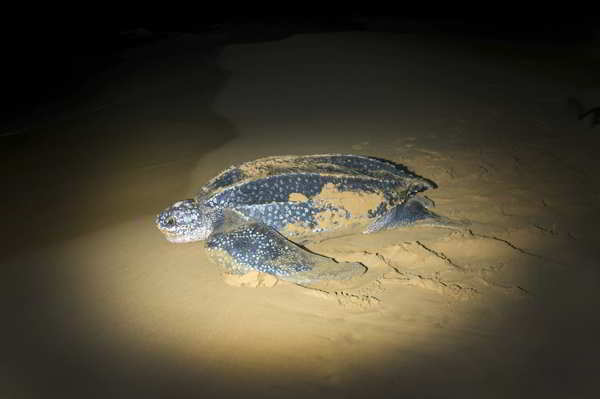
According to the Guinness Book of World Records, the leatherback sea turtle can reach 21.92 mph in the water. This might seem surprising for a turtle, but leatherbacks spend almost their entire lives in the ocean and only come onto land to lay eggs. They are also the largest of all living sea turtles, measuring between 6 and 7 ft in total length.
When you are that big and your body is built like a torpedo (smooth, streamlined, and equipped with powerful paddle-like fins) reaching 20 mph in the water is not so hard to believe.
Unbelievable but true!
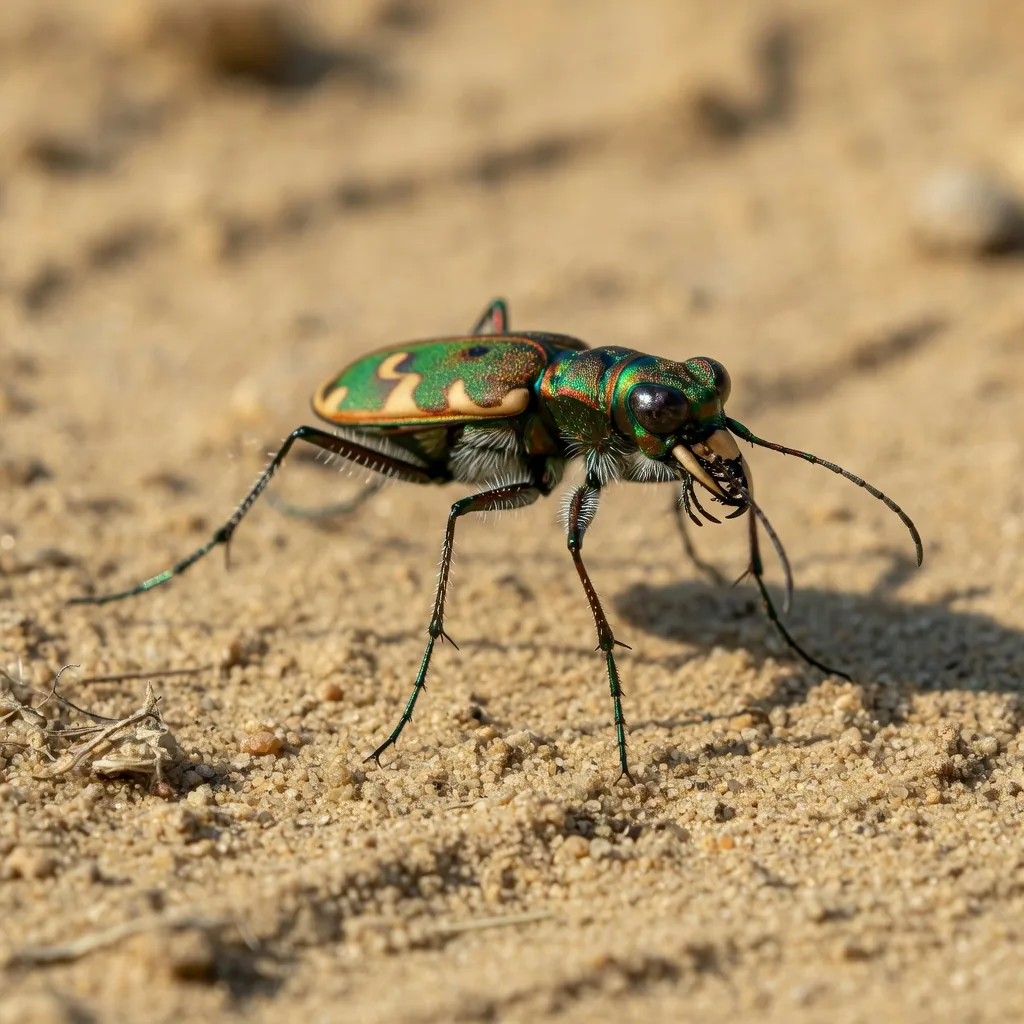
There are 2,600 recognized species of tiger beetle, and the fastest of them can reach 5.6 mph. That does not sound exciting, until you scale it to body size. In 1 second, the tiger beetle covers a distance six times its own body length. Scaled up to human size, that would be the equivalent of running at 480 mph.
To put that into perspective: Usain Bolt, the fastest man on the planet, clocks just 27 mph in his record-breaking sprint. Pound for pound, the tiny tiger beetle leaves him in the dust.
Other species which dominate when it comes to speed...
» The black mamba (Dendroaspis polylepis) is not only one of the most venomous snakes in the world, it is also the fastest, capable of moving at 10-12 mph.
» According to the Guinness Book of World Records, the black spiny-tailed iguana (Ctenosaura similis) is the fastest lizard on Earth, reaching 21.7 mph.
» While the Peregrine falcon dives at 200 mph, the White-Throated Needletail (Hirundapus caudacutus) holds the record for the fastest bird in level flight at 105 mph.
» The Southern Giant Darner dragonfly (Austrophlebia costalis) is the fastest flying insect, averaging 35 mph with a top speed of 60 mph.
Many people believe the cheetah is the fastest animal on Earth, and that is true if you are talking only about land animals. But kingdom Animalia includes 2 million species of mammals, reptiles, birds, insects, and more. Once you open the competition to the whole animal kingdom, the Peregrine falcon wins without question.
Explore More Animals
 Marvelously Staggering Facts About the CheetahAgile, swift, graceful, lethal...words fail to describe the magnificence of this particular predator from the cat family. A closer run-down of the statuesque ch
 A Complete List of Desert Animals (With Pictures)Meet the hardy animals that survive the world's hot and cold deserts: camels, fennec foxes, meerkats, rattlesnakes, polar bears and dozens more, plus a close-up
 What Do Cheetahs Eat? Diet, Hunting & Fascinating FactsOnce roaming freely around the world, cheetahs are now fast becoming an endangered species. Here, we shed some light on the fastest land animal: what they eat a
 Random Facts About Animals That Will Surprise YouSome really interesting facts about animals that you will enjoy reading. From elephants with 40,000 trunk muscles to hummingbirds that fly backwards, discover

 Fun fact for today!The fastest animal on Earth is a bird, and it moves nearly three times faster than a cheetah.