

Occasional sightings of snakes in the garden are not uncommon, especially during spring. In North America, you are most likely to encounter gopher snakes, pine snakes, corn snakes, king snakes, water snakes, hognosed snakes, rat snakes, garter snakes, and others in your garden. The most common among them are garter snakes, which are also called garden snakes. These small snakes are long, slender, colorful, and highly agile.
What Does a Garter Snake Look Like?
Garter snakes are commonly found in gardens, especially during spring, when they come out of their winter hibernation sites. A basic understanding of their features will prove useful in identifying these snakes, which are often seen in backyards or grassy areas. With more than 35 species and numerous subspecies, identifying a garter snake can be slightly difficult. Below are some of the common features that these snakes share.
Size
A garter snake has a slim body with a length of around 20 to 30 inches, but some individuals can be much longer and stouter. Usually, females are twice the size of males, the latter having longer and thicker tails.
Color
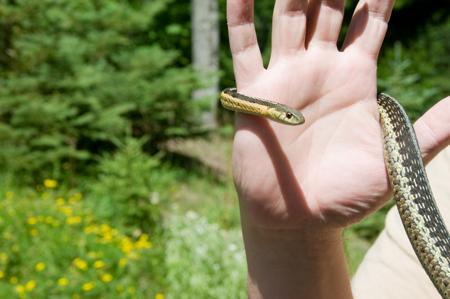
Garter snakes are among the most beautiful and colorful snakes in North America. They are found in different color combinations with hues of red, gray, turquoise, orange, yellow, green, and more. Usually, they have a lighter belly color.
Stripes
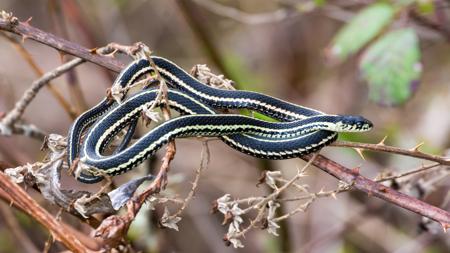
Most of these garden snakes are identified by their stripes. They have colorful stripes that extend through the length of their bodies. Many of them have three stripes, one on the back and the other two on the sides. However, some species have a checkered pattern, while some others have no stripes or pattern at all.
Scales
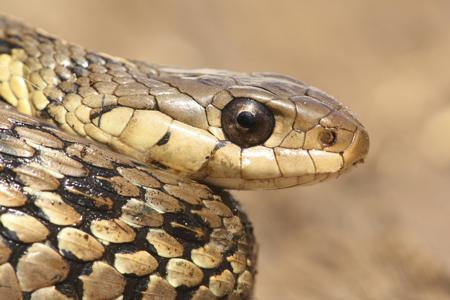
Garter snakes have keeled scales, each scale has a lengthwise ridge that runs through the center. Most of them have vertical dark lines on their upper lip scales. This is one of the most important features that help in identifying these snakes by their characteristics.
Habitat
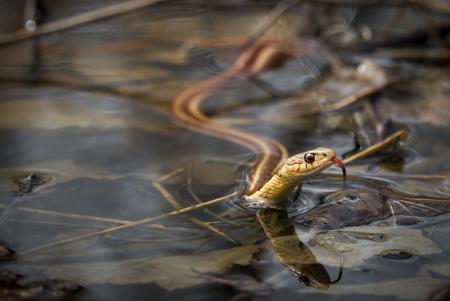
Usually, garter snakes are found in locations near water sources. They are often seen in lawns, forests, woodlands, fields, streams, ponds, rocky creeks, marshes, grasslands, and similar places. They are adaptable to varied habitats and feed on live animals such as fish, frogs, slugs, earthworms, lizards, crickets, small rodents, and birds.
Take the Garter Snake ID Quiz!
5 quick questions. How well can you identify a garter snake?
Behavior
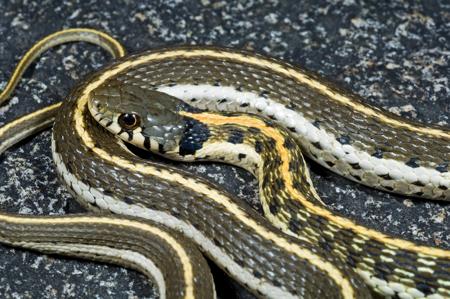
These garden snakes are active during daytime. If threatened, a garter snake may hide its head and beat with its tail. It may also release a foul-smelling secretion from the gland located beneath its tail. The snake may sometimes adopt a coiled posture and strike the intruder. Usually, thousands of individuals come together for communal hibernation in winter.
Frequently Asked Questions
How many species of garter snake are there?
Around 35 species in the genus Thamnophis.
Are garter snakes venomous?
Most are non-venomous, but some species have a mild toxin that is not lethal to humans.
How long do garter snakes grow?
Typically 20 to 30 inches, though some individuals can be much longer.
Which garter snake is endangered?
The San Francisco garter snake has been listed as endangered since 1967.
What do garter snakes eat?
Fish, frogs, slugs, earthworms, lizards, crickets, small rodents, and birds.
Some Garter Snake Species
Common Garter Snake (Thamnophis sirtalis)
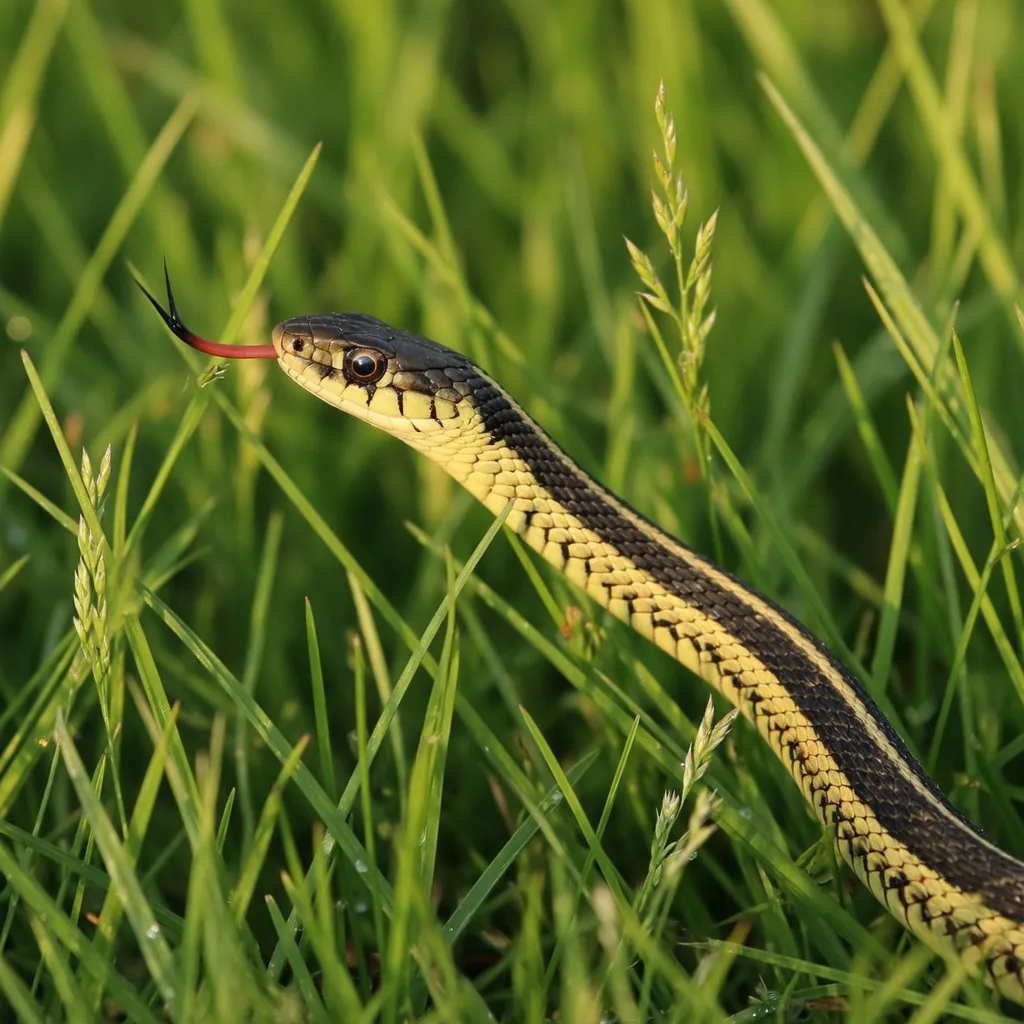
As the name rightly suggests, common garter snakes (Thamnophis sirtalis) have a wide range and are found in many parts of North America. There are several subspecies, but most of them have three vertical stripes that can be white, yellow, blue, or green in color. Their body color can be dark gray, brown, green, olive, black, or even red. The top of their heads are often found to be darker than their bodies.
Blackneck Garter Snake (Thamnophis cyrtopsis)
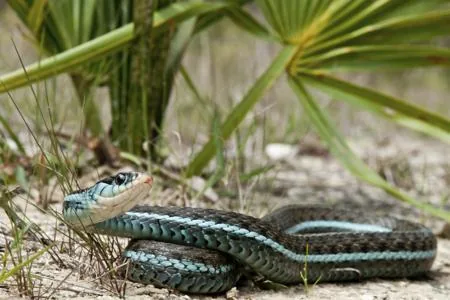
These snakes are seen in some parts of Arizona, Southwest United States, and Mexico. They are often found near water sources. The name is derived from the black patch that is located on both sides of the neck. These garden snakes are brown with a whitish-yellow to orange mid-dorsal stripe. There are two rows of alternating dark spots on either side of the stripe, and they create a checkerboard pattern.
California Red-sided Garter Snake (Thamnophis sirtalis infernalis)
Western Plains Garter Snake (Thamnophis radix)
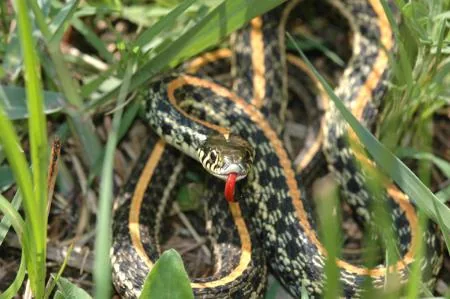
These garter snakes are found in most of the Central United States, Texas, and certain parts of Canada. Their body color may range between greenish-gray to olive green or brown. The mid-dorsal stripe is yellowish-orange. The dark spots on the sides of the stripe form a checkerboard pattern. The stripes on the sides are light-colored. The upper lip scales have black lines.
Coast Garter Snake (Thamnophis elegans terrestris)
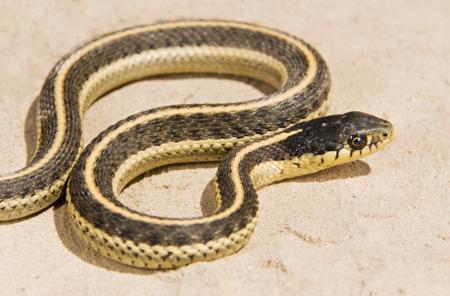
These snakes have varying body colors. But most of them have a mid-dorsal stripe and two yellow stripes on the sides of the body. The underside can be yellowish, bluish-gray, or reddish. The black spots on the sides of the mid-dorsal stripe create a checkerboard pattern. Some of them have reddish hues mixed in with the dots. Some others have red stripes instead of yellow ones. Hues of bluish-gray are seen in some. In short, there are many different color variants of these snakes.
To wrap up, garter snakes are small-sized and colorful. They can be easily identified by their body stripes and checkerboard pattern. Though they produce mild toxins, garter snakebites may cause itching, burning sensation, and swelling. The bite may get infected too. So visit your healthcare provider for prompt treatment. Avoid provoking or picking up these snakes, that is one of the main reasons they bite humans. In fact, these garden snakes are beneficial, as they feed on pests.
Explore More Animals
 Your Complete Guide to Snake IdentificationIdentify any snake by its length, girth, pupils, pattern, head shape, and tail plates, then learn the warning signs of a venomous one. A clear photo field guid
 What Do Garden Snakes Eat? It's Not What You ImaginedWith the blooming of spring flowers, you may have noticed a garden snake slip by and wondered what these pretty reptiles eat. Find out here!
 Types of Snakes With PicturesMeet every type of snake, from the deadliest venom-injecting cobras and vipers to record-breaking constrictors, tiny thread snakes, and ocean-going sea snakes.
 List of Nonvenomous Snakes With PicturesMost snakes won't hurt you: about 85% are nonvenomous. Meet pythons, boas, kingsnakes, rat snakes and more harmless snakes, with pictures of each.

 Fun fact for today!The San Francisco garter snake has been listed as an endangered species since 1967!