

The Basics
The name giraffe is derived from the Arab word zarafa, which means "the one who walks very fast."
The scientific name of the giraffe is Camelopardalis. The name comes from a belief (which is untrue) that the giraffe was a cross between a camel (for its height) and a leopard (for its coat pattern).
A male giraffe is called a bull, a female is called a cow, and a baby giraffe is called a calf.
The species has only nine members. Along with the Camelopardalis or Nubian subspecies mentioned above, they are: Reticulated, Angolan, Kordofan, Masai, Rhodesian, Baringo/Rothschild/Ugandan, South African, and West African/Nigerian.
The average life span of a giraffe in the wild is between 20 to 25 years.
Giraffes usually move in groups of about 30 to 35 individuals, usually mothers and their offspring. Males tend to become more solitary as they age and are generally not part of a group.
Giraffe Physiology
The giraffe is the tallest living animal on land. It stands at about 18 feet in height, while its shoulders stand at 8 feet.
An adult male giraffe weighs between 3,400 lbs and 3,600 lbs. A female weighs between 1,600 lbs and 2,000 lbs. A giraffe's heart weighs between 24 lbs and 26 lbs and is approximately 2 feet in length.
Although giraffes have to support a neck that is between 6 and 8 feet in length (almost 18 times the length of a human neck) they have the same number of cervical vertebrae as a human being: seven!
Both male and female giraffes have small horn-like structures called ossicones. Females and baby giraffes have a small tuft of hair on their ossicones, while males tend to be bald on top.
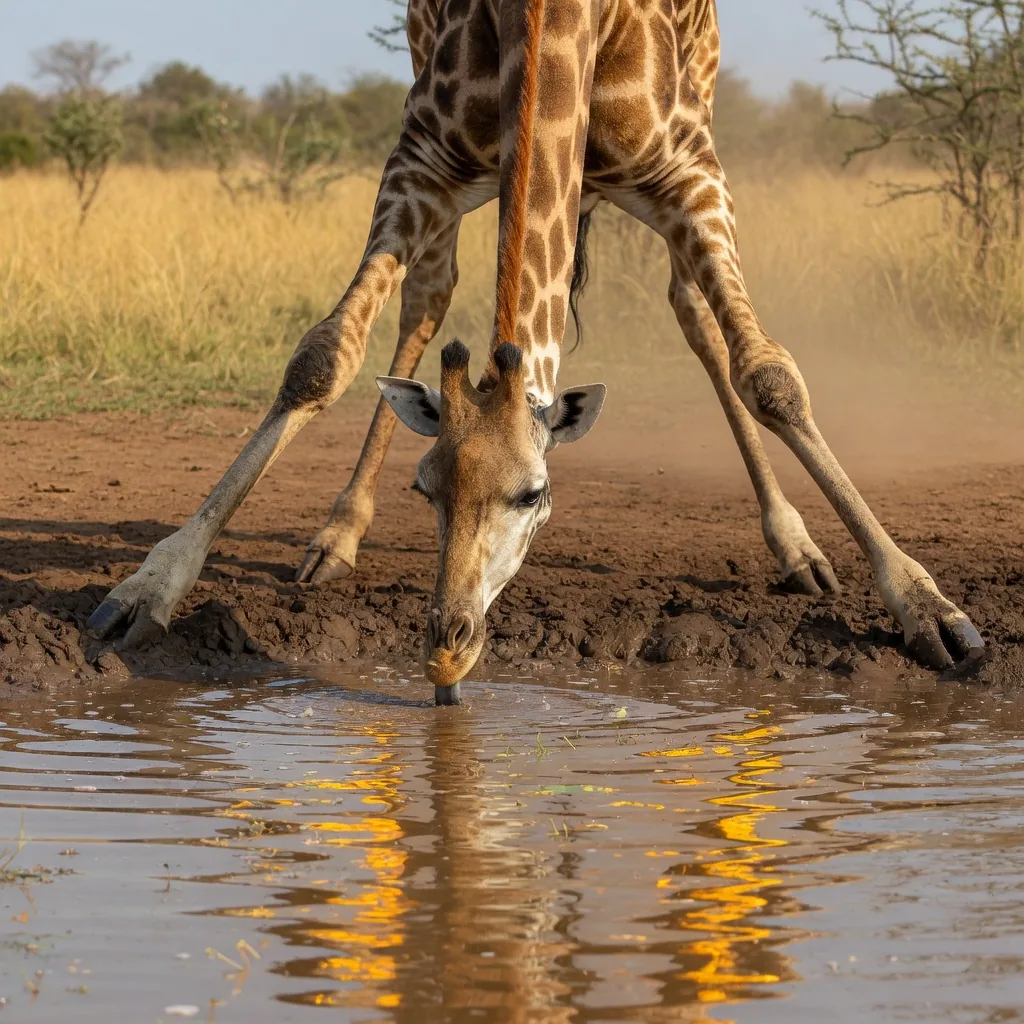
Sometimes their great height can be a problem. Have you ever seen a giraffe drinking from a waterhole? It has to get into a pretty awkward position (spreading its front legs apart and bending its neck all the way down) which makes it very open to attack by predators.
Giraffes have the highest recorded blood pressure of any animal: 280/180 mm Hg on average. They have elastic blood vessels in their necks. This lets them bend their neck to the ground and lift it back up again without fainting.
When they sleep (which is only about 30 minutes a day) they fold their forelegs beneath them, turn their neck back towards their rump, and rest it there. Sleeping while standing has also been recorded.
Reproduction and Care of the Young
Giraffes can have calves after the age of 5 years. Birth takes place standing up. The calf falls headfirst to the ground from a height of about 5 to 6 feet!
Males check the fertility of females by tasting their urine. Males usually prefer young or middle-aged females for mating, rather than the very old or very young ones.
The gestation period of giraffes is around 14 months. A calf is able to run within just a few short hours after being born.
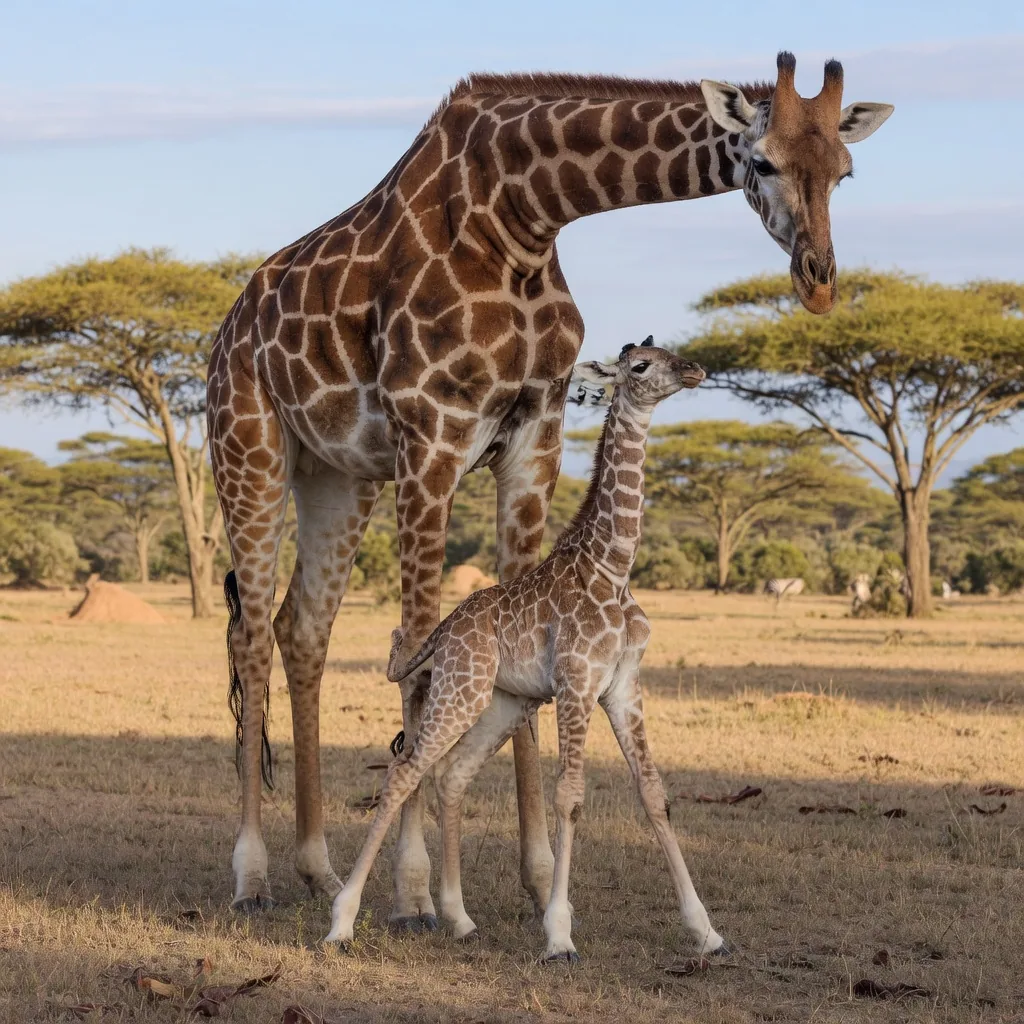
A newborn giraffe stands approximately 6 feet tall. After it is born, its ossicones (which were flattened in the womb) stand erect.
The usually peaceable females will fight to protect their young if they feel threatened.
When it comes to looking after the young, giraffes work as a team. One female watches over the calves of the entire herd, while the others go out to forage for food.
Eating Habits
Giraffes are herbivorous animals. They enjoy eating many types of leaves and grass, with a special love for the thorny acacia leaves.
Their unusually long neck helps them reach the high branches of trees. On top of that, they have an incredibly long tongue (about 20 inches) which helps them grab branches that seem just out of reach even after stretching their neck.
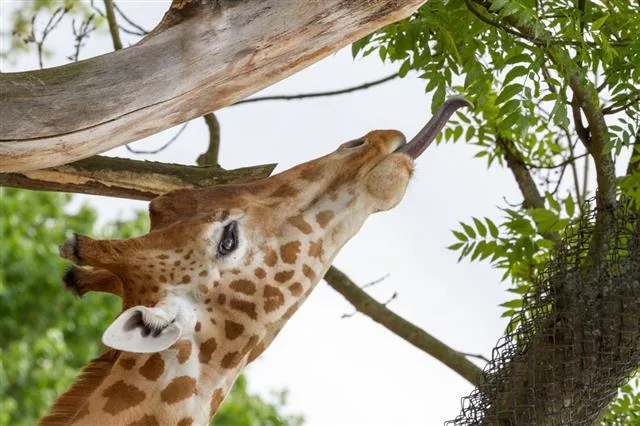
Giraffes have a black-colored tongue and antiseptic saliva! Together with thick lips and strong teeth, this helps protect their mouth from the prickly thorns on African savanna trees.
They are ruminant mammals. This means they first swallow all the food they want (generally more than 30 kg a day) after some quick chewing. Then they bring the half-digested food back up to the mouth later to chew it again.
Even though giraffes can eat huge amounts, they can survive on as little as just 6 kg if they have to. A giraffe can also go a long time without water, just like a camel. Their water needs are mostly met by the high water content in the plants they eat.
Take the Giraffe Facts Quiz!
5 quick questions. How much do you really know about the world's tallest animal?
Lifestyle of a Giraffe
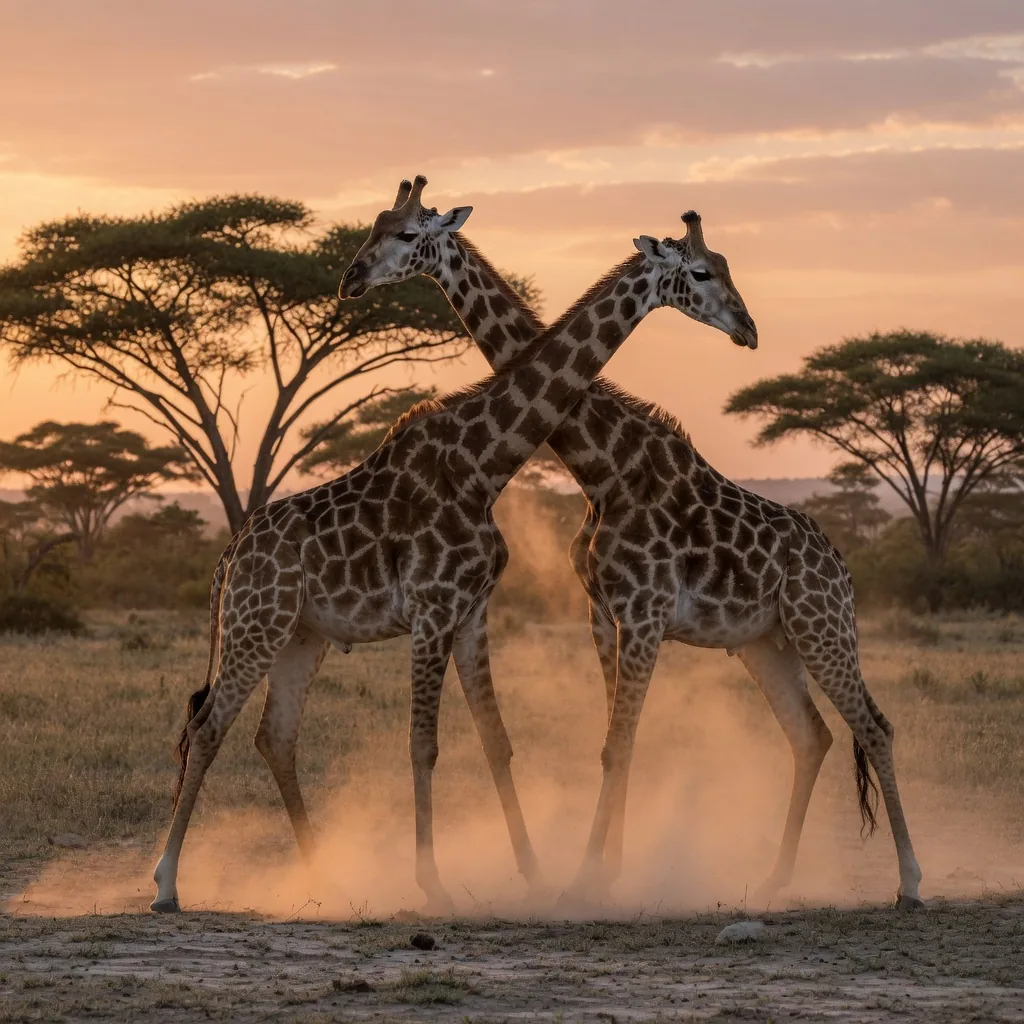
Neck wrestling matches, called "necking," are often held among males to show authority in their herds. The violent versions are still pretty tame compared to other animals, and males often make up afterwards by caressing or nuzzling each other.
Giraffes are social animals, and they live in open herds. When there is plenty of foliage on the trees, they scatter around to enjoy it. But once winter approaches and food starts to run low, they gather together to look for food as a group.
Giraffes are quiet animals, but they are certainly not mute. Sounds similar to those made by cows and goats have been recorded from giraffes too. While males make coughing sounds to attract females, females bellow to call their young! The little ones can mew, bleat, moo, and snort!
Giraffes have color vision and excellent eyesight. This helps them keep an eye on each other from a distance and spot predators early.
Lions and large packs of hyenas are the giraffe's only predators. Their long, strong legs help keep them safe. A single full-force kick from a giraffe can seriously injure (and sometimes even kill) a fully grown lion!
Frequently Asked Questions
How tall is a giraffe?
About 18 feet, the tallest living land animal on Earth.
What does a giraffe eat?
Giraffes are herbivores. Their favorite food is acacia leaves, and they eat more than 30 kg of vegetation a day.
How long do giraffes sleep?
Giraffes sleep for only about 30 minutes a day, split into short 5-10 minute naps.
How many subspecies of giraffe are there?
There are nine subspecies, including the Nubian, Reticulated, Masai, and South African, among others.
Are giraffes endangered?
Some subspecies are listed as Vulnerable by the IUCN.
Random Facts about Giraffes
Giraffes running at top speed can reach about 55 to 60 km/h, but only in short bursts. They sleep for barely half an hour a day, and even that is divided into 5 or 10 minute naps.
Each giraffe has a unique coat pattern. It has been noticed that giraffes in the same herd tend to have similar patterns.
A giraffe's age can be estimated from its spots. The darker the spots, the older the giraffe.
Same-sex coupling has been observed in giraffes. It is much more common among males (and often happens after a necking match) than among females.
Although it was once believed that giraffes cannot cough, scientists have found that males do make a coughing sound to attract females for mating.
While walking, giraffes use the legs on the same side for each step, front and hind leg moving together. Every step is almost 15 feet in length.
Although giraffes were hunted quite heavily many years ago, and driven from their habitats for many reasons, some subspecies are now endangered. They are listed as "Vulnerable" by the IUCN.
These fascinating creatures are probably as peace-loving as they come. While they usually mind their own business when left alone, they can be formidable when threatened. The more one learns about these gentle giants, the more endearing they become!
Explore More Animals
 Giraffe HabitatDid you know that the destruction of their native habitat by humans has seriously affected the giraffe population? Explore where giraffes live, how they feed, a
 African Lion FactsThe numbers of African lions are sadly on a rapid decline. These vulnerable species face constant threat due to loss of habitat and poaching. Here are some inte
 Marvelously Staggering Facts About the CheetahAgile, swift, graceful, lethal...words fail to describe the magnificence of this particular predator from the cat family. A closer run-down of the statuesque ch
 Really Astonishing Facts About African ElephantsGentle to some, threatening to others, African elephants continue to be a subject of interest for many animal lovers. This AnimalSake post provides some interes

 Fun fact for today!Giraffes only sleep about 30 minutes a day, in short naps of 5-10 minutes!