

The Gobi Desert is the largest desert in Asia, and the fifth largest in the world. It stretches across northwestern China and spreads into southern Mongolia. It is both a hot and cold desert. Extreme temperatures can swing wildly, sometimes within a single 24-hour period. Yet for a place with such wild weather, the Gobi is surprisingly rich in wildlife. Animals here range from tiny insects to large mammals like the Bactrian camel. Species like snow leopards also come visiting from the neighboring mountain regions.
Animals of the Gobi Desert
Bactrian Camel
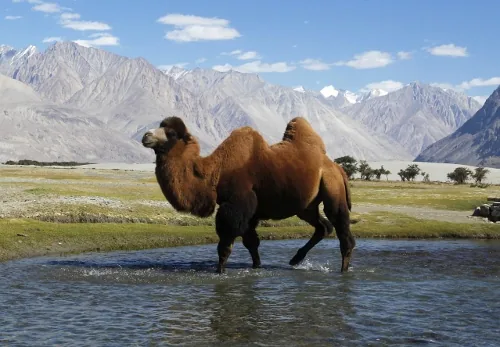
Camels are sometimes called the "ship of the desert." They're one of the most common animals seen in deserts around the world. The Bactrian camel, though, is special. It's restricted to just the Gobi and Taklamakan deserts.
The Bactrian camel has two humps. These humps don't store water, they store food in the form of fat. The camel's body can convert that fat into water when needed. This lets the camel go without food or water for about two weeks.
Bactrian camels have long legs and padded feet to stop them from sinking into sand. This also keeps their body above the hot surface. Their nostrils have flaps that seal shut during a sandstorm, preventing sand from getting in. They can bear extreme heat, and their thick coats reflect the sun's rays.
Gobi Bear
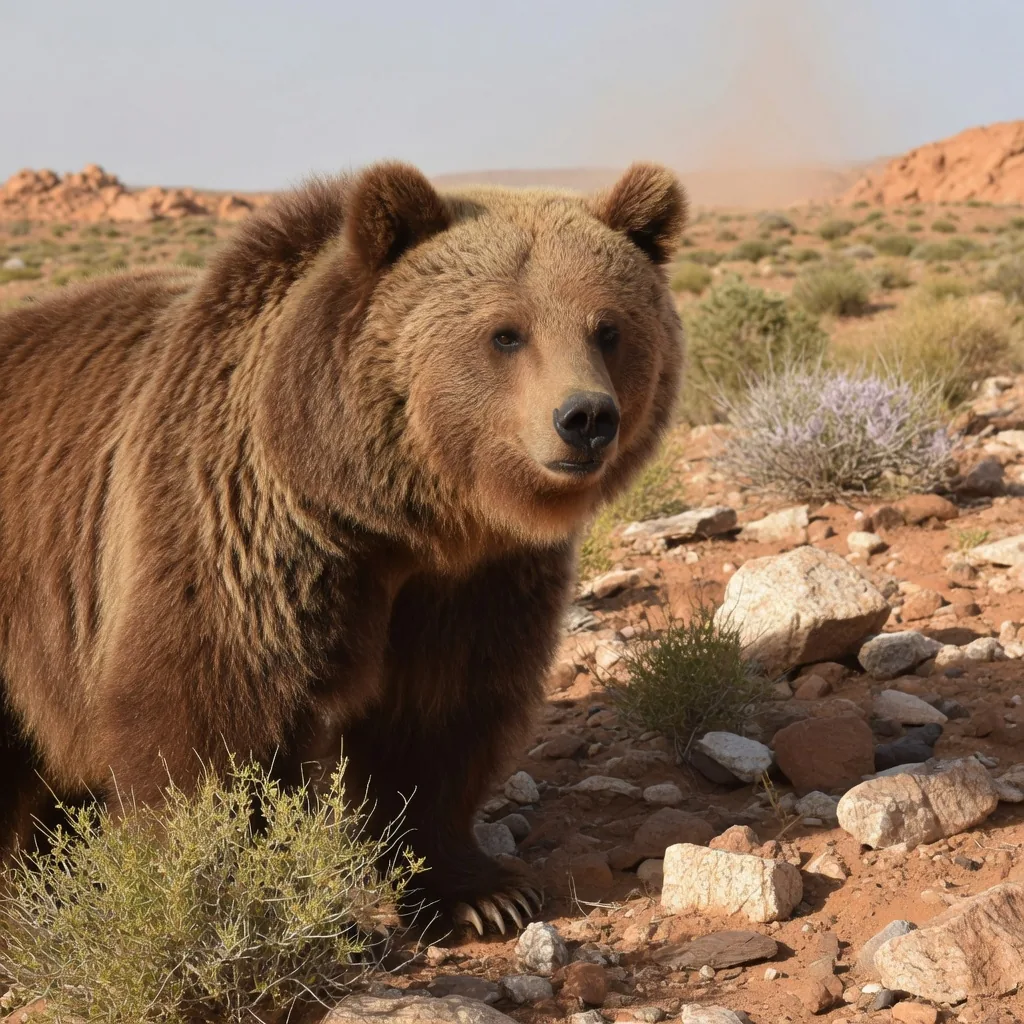
The Gobi bear (Ursus arctos gobiensis) is much smaller than its cousins, the brown bears. In the local Mongolian language, it is called the Mazaalai bear. It lives in the rocky regions of the Gobi desert.
This bear is an omnivore. Its diet includes berries, grass roots, lizards, and mice. It also eats insects and grasshoppers. Like many bears, the Gobi bear hibernates in winter. The Gobi bear is on the endangered animals list, with only about 30 left in the wild.
Desert Tarantula
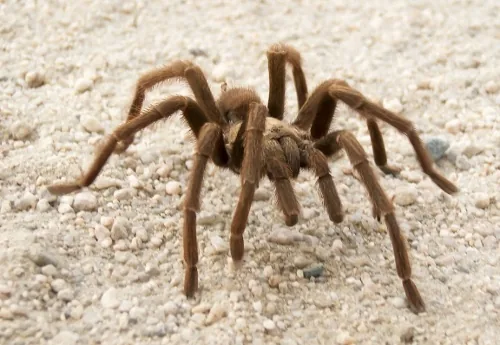
Large and hairy, the desert tarantula is a species of arachnid. It can be found in burrows, creeks, and under rocks. Female tarantulas are usually larger than males. These spiders come out during the day and at dusk.
Tarantulas are carnivores. They eat grasshoppers, beetles, small lizards and snakes, frogs, and other arachnids. They may also catch small birds. The tarantula hunts in a unique way: it grabs prey and injects venom into its body. The venom dissolves the soft tissues. Then the spider eats the flesh, leaving the empty shell behind.
Golden Eagle
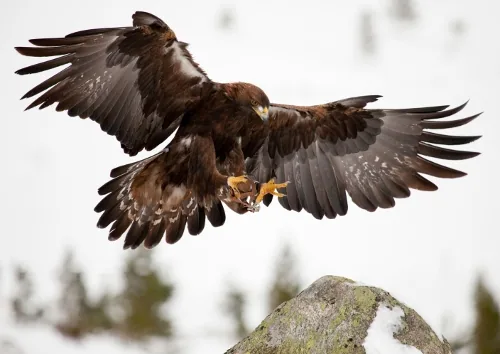
The Gobi desert is also home to the golden eagle, a large and powerful bird of prey. It has a wingspan of 1.8 to 2.3 meters. This raptor has darker plumage with hints of white on the tail. Those white marks may fade as the bird gets older.
In the wild, a golden eagle can live up to the age of 18 years. The eagle normally preys on jerboa, but its diet also includes ground squirrels, large insects, rodents, and reptiles. It also feeds on carrion, which is the decaying remains of a dead animal. These days, golden eagles are tamed and used for hunting.
Take the Gobi Desert Animals Quiz!
5 quick questions. How much do you know about the Gobi's most amazing animals?
Gopher Snake
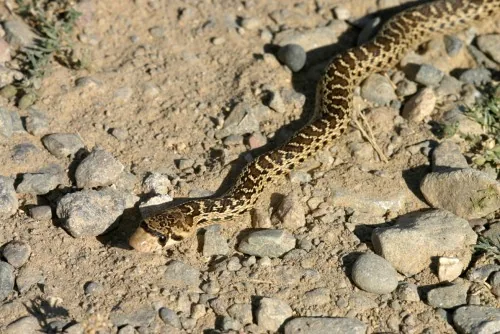
The gopher snake is a non-venomous desert snake. It can grow between 35 and 96 inches long. Its body is cream-yellow to green-gray to tan, with brown patterns running its full length.
These snakes are slow-moving and cold-blooded. You can see them moving around during the day, but in summer, they become nocturnal because of the intense daytime heat. The gopher snake hunts in rocky creeks and burrows, feeding on desert rodents, lizards, and sometimes other snakes.
Gray Wolf
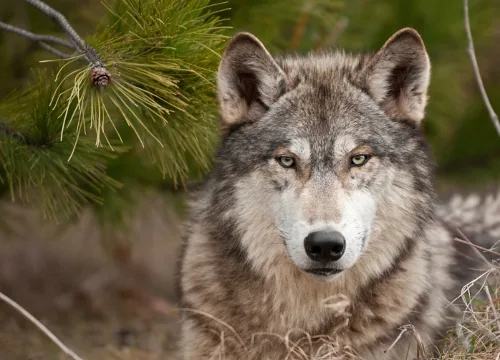
Canis lupus linnaeus, or the gray wolf, can be found throughout the Mongolian desert. It is the largest member of the dog family. Gray wolves are highly territorial, they mark their boundaries to warn away intruders. They roam in packs and normally dwell in mountainous regions, with some scattered across the desert. The life span of this animal is approximately six to eight years.
Gobi desert wolves normally hunt desert-adapted prey including black-tail antelope, khulan (wild ass), wild camel, argali sheep, ibex, hare, some rodents, and other smaller animals in the region.
Ibex
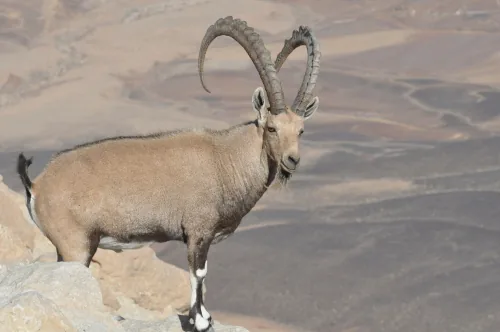
The Asiatic ibex is a type of mountain goat. It has a dark brown coat that helps it survive harsh desert winters. In spring, the coat turns a lighter shade. The most striking feature of this wild goat is its large, curved horns, which can measure up to two feet. Female ibex have smaller horns with pointed tips.
The ibex has hooves that help it keep its balance on rocky surfaces and cliffs, making it an excellent climber. It is a herbivore, feeding on grasses, leaves, stems of shrubs and bushes, and lichens.
Snow Leopard
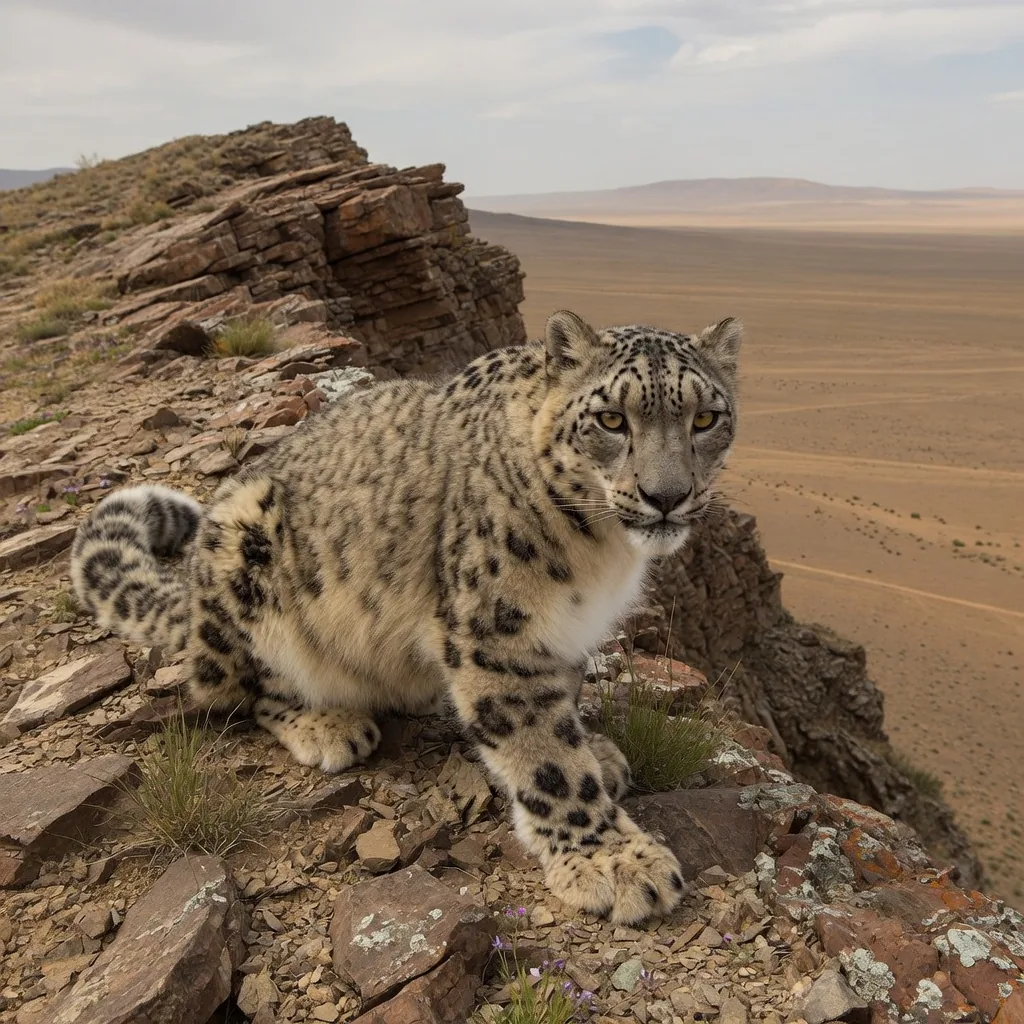
The snow leopard inhabits the higher mountain ridges of the desert. It is the biggest member of the cat family in this region. You can commonly find it on the Eastern Gobi desert steppe. Its thick, lush, light-colored fur acts as camouflage while it hunts.
This powerful predator preys on ibex, wild goat, and sheep. In winter, when food is scarce, the large cat may hunt livestock on the slopes nearby. That brings it into conflict with local farmers and herdsmen. Learn more about these big cats in our article on snow leopard facts.
Gobi Jerboa
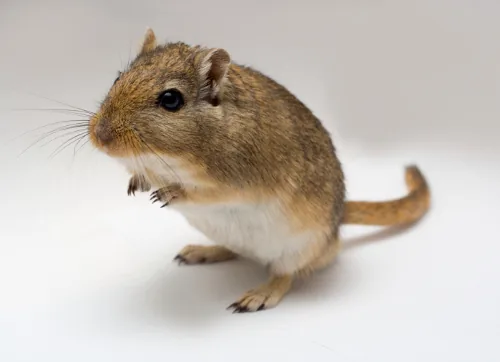
The jerboa is a small rodent similar to a mouse. It lives in deep burrows and hops on long rear legs. It is known to jump up to 10 feet in a single leap. Another distinctive feature is its oversized ears, which help it detect predators nearby.
Tufts of stiff hair on the bottom of the jerboa's feet prevent it from sinking into sand. It is normally active at night and eats grasses, roots, seeds, and bugs.
Kangaroo Rat
The kangaroo rat looks a bit like a miniature kangaroo. It lives in dens or burrows with wide mouths. Its big rear feet are powerful, used for moving and digging. Those feet also stop it from sinking into the sand.
The kangaroo rat is a skilled digger. It can make large burrows with passages leading to different chambers. It sleeps during the day and comes out at night to feed. On either side of its face, it has small pouches lined with fur. These pouches let the animal carry seeds back to its burrow for storage.
Musk Ox
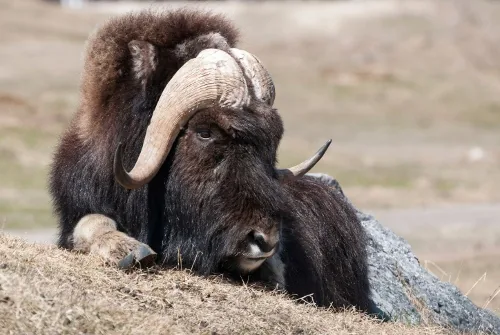
The musk ox is long-haired and thick-skinned. It lives in the northern part of the desert, where the climate is colder. Its thick fur insulates it against the harsh cold. Males are larger than females and have imposing horns they use for defense.
Musk oxen normally travel in herds and graze on willow leaves and grass. In summer, the ox sheds its thick wool. That wool is used to make fine cloth.
Plate-tailed Gecko
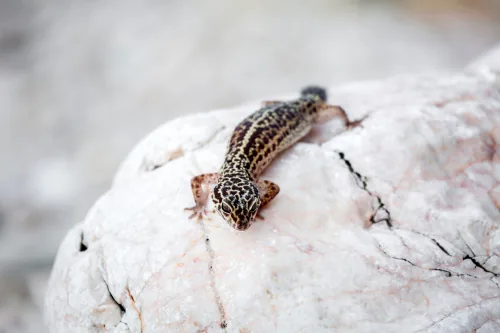
The plate-tailed gecko lives in sandy areas of the desert and is only active at night. It is mostly territorial and stays in deep burrows to escape both heat and cold. This nocturnal lizard feeds on desert insects, especially flying insects.
Its body is the same color as sand, with dark brownish markings. That camouflage helps it hunt and hide from predators. The female lays a clutch of four eggs twice a year.
Wild Ass (Khulan)
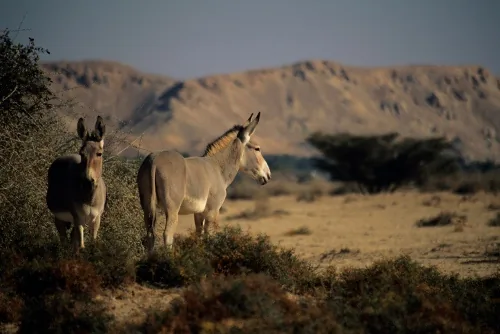
The Mongolian wild ass (also known as khulan) can be found in semi-desert regions, especially in the southern part of the Gobi desert. It looks like a horse but sounds like both a horse and a donkey. Its vocalization is somewhere between a horse's neigh and a donkey's bray. It is sometimes called the Asiatic wild ass.
Khulan can gather in very large herds, sometimes up to 500 animals. The herd grazes on grass found in the desert steppes. These animals can sense when water is present below the surface, and they dig into riverbeds to reach it.
Wild Horse (Przewalski's Horse)
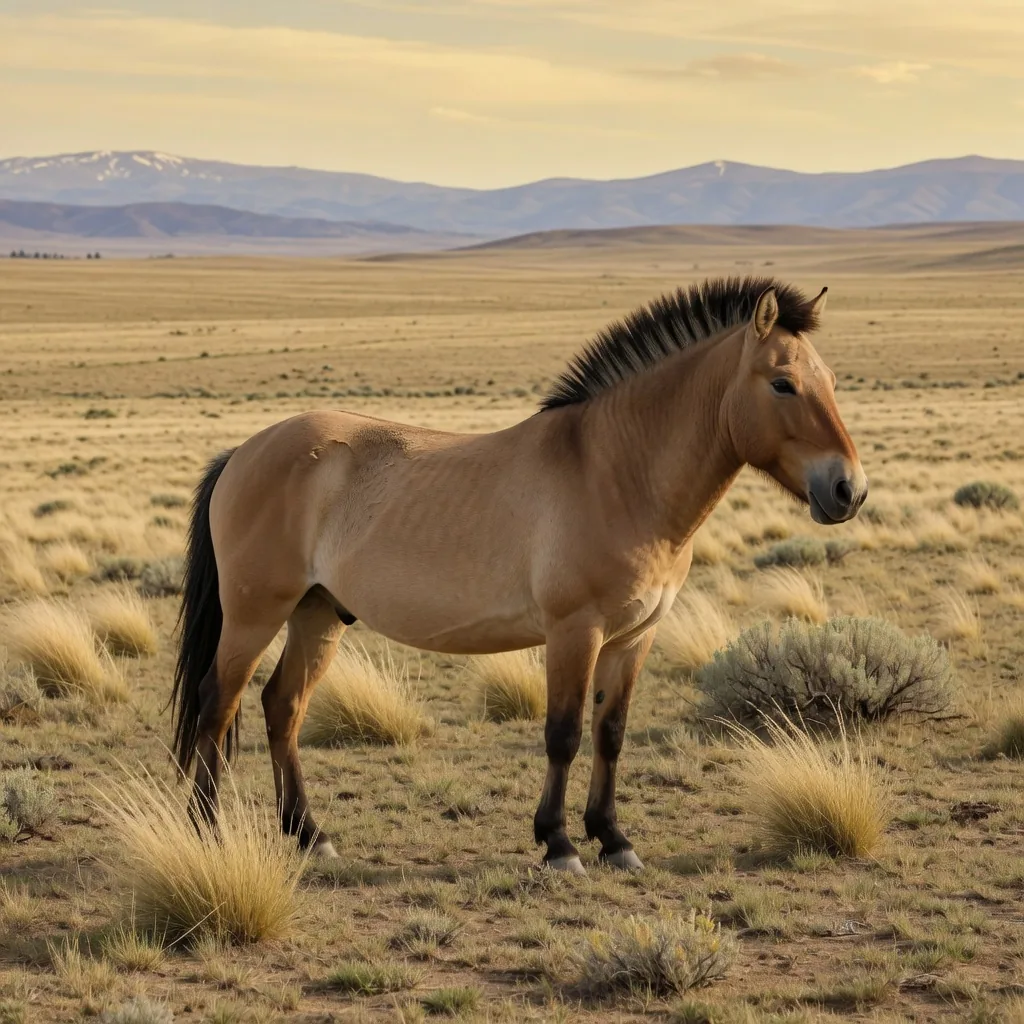
Przewalski's horse (also called Takhi in Mongolia) is the last wild horse species still living on Earth. This endangered horse has a dun coat and stands four feet tall. It has a thicker neck, a zebra-like erect mane, and shorter legs than a typical horse.
This horse normally feeds on the bushes and shrubs growing in the desert. It was once found in huge numbers in the Junggar Basin. But human habitation pushed it toward extinction. Today, these horses are bred in captivity to stop their numbers from falling further.
Gobi Desert Animals Adaptations
Every animal adapts to its environment in order to survive. According to Darwin's Theory of Evolution, only the fittest animals can survive. Because deserts have such an extreme climate, animals have to adapt in special ways. Here are some of the main survival tricks that desert animals use in the Gobi.
- The desert is extremely hot during the day, so mammals, amphibians, and reptiles go underground into holes or burrows to escape the heat. Some rodents, like the desert rat, even plug the entrance of their burrow to block out heat and keep out predators.
- Most reptiles, scorpions, snakes, and smaller mammals are nocturnal, they carry out their activities at night when the air is cooler.
- The Round-tailed Ground Squirrel uses estivation, also called summer sleep. It goes into a dormant state to slow down its metabolism and save energy and water during the hottest days.
- Most desert animals have light-colored bodies to help them release heat. Some, like jackrabbits, have large ears that also help spread body heat out into the air.
- To lose as little water as possible, animals excrete waste as thick urine or dry feces. Some birds, like vultures, use a process called urohydrosis, urine runs down their legs, cooling the blood vessels and reducing body heat.
- Kangaroo rats have special organs in their nasal cavities that filter moisture from the air they breathe out. Some predators and scavengers also store water in fatty tissue or extract water from the bodies of their prey.
The Gobi has a very harsh and hostile climate. Yet even in these conditions, the Gobi desert animals have adapted remarkably well. Every day, they face one of life's most difficult challenges, the challenge of survival of the fittest.
Explore More Animals
 A Complete List of Desert Animals (With Pictures)Meet the hardy animals that survive the world's hot and cold deserts: camels, fennec foxes, meerkats, rattlesnakes, polar bears and dozens more, plus a close-up
 Extremely Rare and Unique Desert Insects You Didn't Know ExistedThe silent surroundings of the desert may give us a feeling that no living thing exists there, but there are various kinds of insects living in the desert that
 Arizona Desert AnimalsSurvival in the scorching Arizona desert is a Herculean task, yet wolves, lions, owls, eagles, rattlesnakes, elk, bears, coyotes, and scorpions all thrive acros
 Facts About the Charming and Elusive Snow LeopardSnow leopards are beautiful grayish-white, thick-furred animals belonging to the cat family. Discover their habitat, diet, behavior, and why they're endangered.

 Fun fact for today!The Gobi Desert is the largest desert in Asia, and the fifth largest in the whole world!