

The geographical range of the gray wolf spans across North America, Eurasia, and the northern regions of Africa. This makes it the only wild mammal species with such a vast range. There are as many as 39 sub-species of the gray wolf. They live in many different environments, from the extremely cold regions of Alaska (the Alaskan wolf) all the way to the warm tropical regions of the Indian subcontinent (the Indian wolf). The gray wolf has such a wide range because of its adaptations, which help it survive in all these places.
Gray Wolf (Canis lupus), An Overview
The gray wolf (or simply "The Wolf") is one of those animals that successfully survived the last ice age. Its physical characteristics helped it adjust to the harsh conditions of that era. Gray wolves belong to the kingdom Animalia, family Canidae, subfamily Caninae, and species C. lupus. The gray wolf is the largest member of the Canidae family. Scientists also believe it is the wolf from which most other wolf subspecies have evolved.
The natural habitat of a gray wolf spans across the northern hemisphere. It includes several of the world's biomes, from the Arctic tundra and North American prairies to the temperate and tropical forests of Eurasia. Different sub-species of wolf are found in different regions of the world. Each sub-species has adapted to the conditions in its native habitat. Like adaptations in other animals, gray wolf adaptations fall into two groups: physical adaptations and behavioral adaptations. Both are explained below.
Physical Adaptations of the Gray Wolf
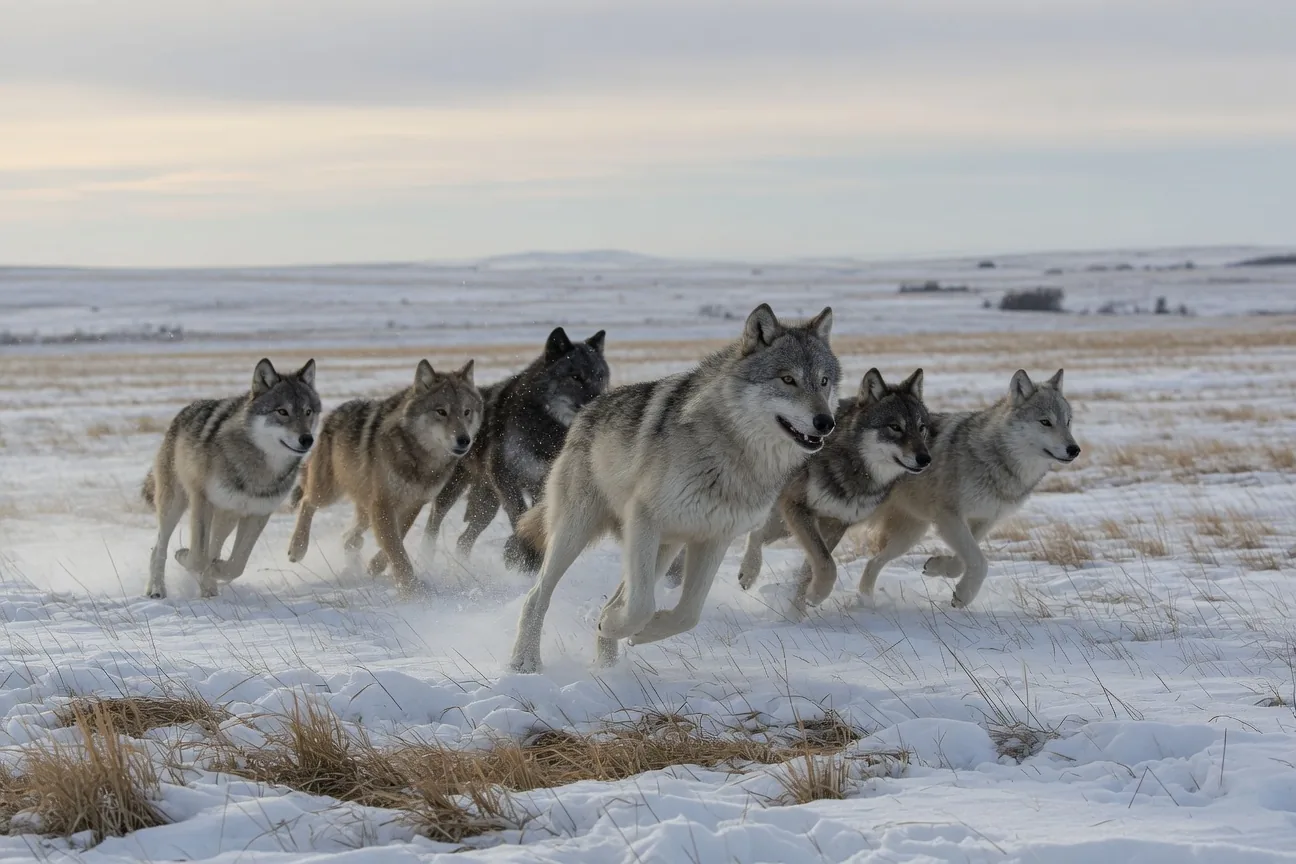
The gray wolf is one of the most amazing sprinters in the animal kingdom. Physical adaptations like its lean body and long limbs are the key to its speed. Its elongated body is shaped like a natural aerodynamic form. The long limbs provide the power to sprint. Together, they help the wolf reach an amazing speed of 40 mph when chasing prey.
The wolf's toes are specially adapted to spread wide when running. This gives the animal grip on slippery surfaces, especially in the snow-covered Arctic. When chasing prey, the gray wolf also uses its sharp nails to grip the ground. This lets it change direction quickly without slowing down.
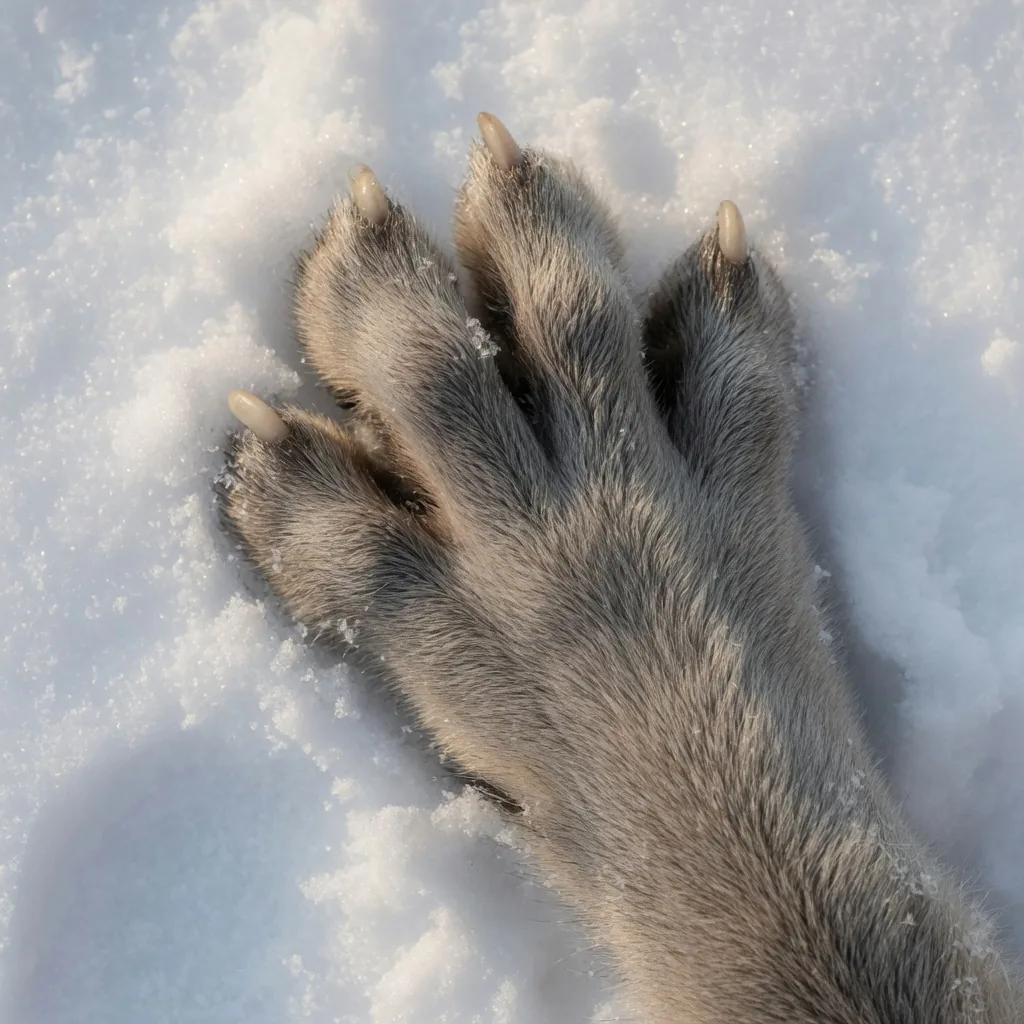
Moisture is a challenge for gray wolves in snow-covered Alaska as well as for those living in the rainy forests of Asia. Their specially adapted fur protects against this. A layer of oily underfur keeps the skin dry even in cold, wet conditions. An outer layer of guard hair stops ice and water from building up on the body. In sub-species like the Arctic wolf (Canis lupus arctos) and the Alaskan wolf (Canis lupus pambasileus), this fur coat is even thicker than in other sub-species, helping them stay warm in freezing temperatures.
Like most carnivores, the gray wolf has razor-sharp teeth adapted to pierce through flesh. More importantly, wolf teeth are designed to strip pieces of meat cleanly from bone. This helps the wolf make the most of every kill. With 500 lbs of pressure per square inch, the wolf's jaws are powerful enough to snap the neck of prey, or to crush bones.
Gray Wolf Behavioral Adaptations
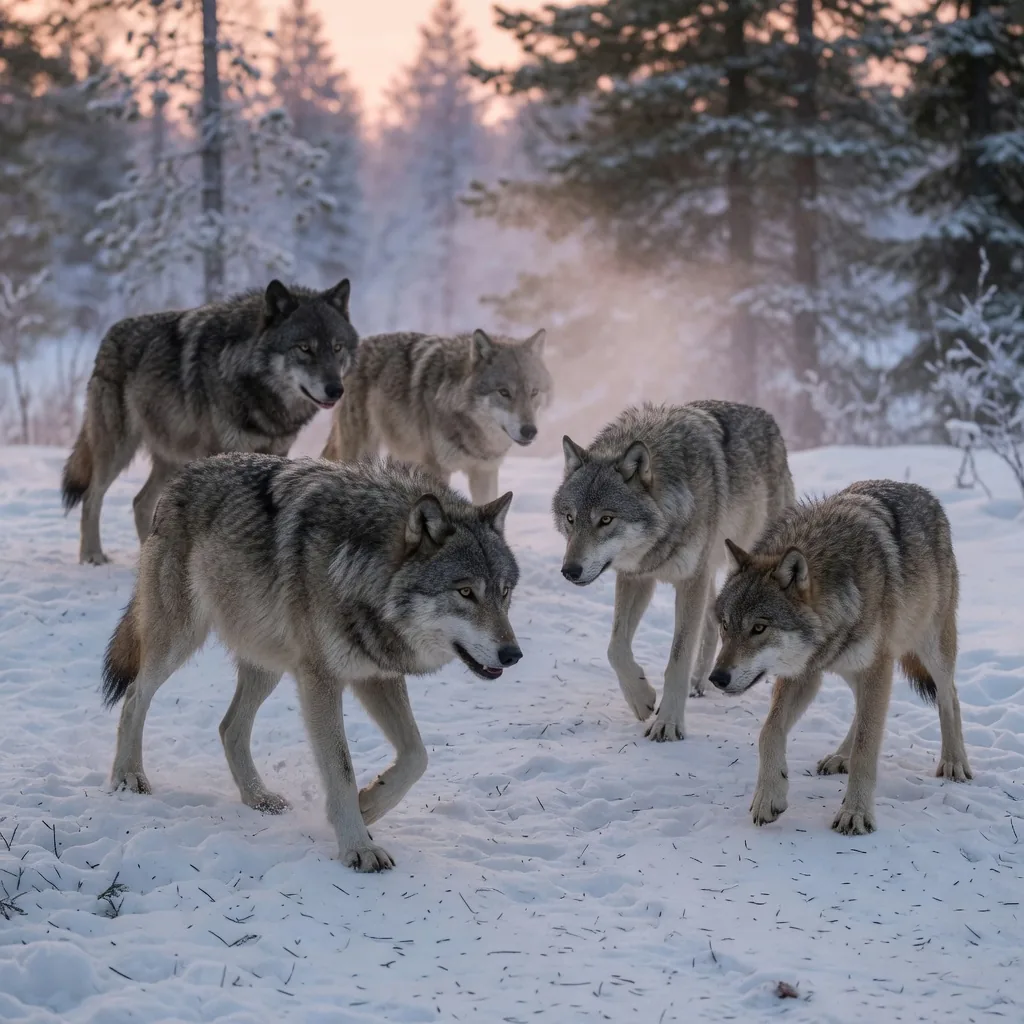
Among the gray wolf's behavioral adaptations, its hunting skills are by far the best in the Canidae family. (The gray wolf is also the largest living member of this family.) When taking on an animal that is as large as (or larger than) itself, a gray wolf does not attack from the front. Instead, it attacks from behind or the side. Wolves do not hesitate to take on animals much bigger than themselves, such as the bison. This is where pack hunting becomes essential.
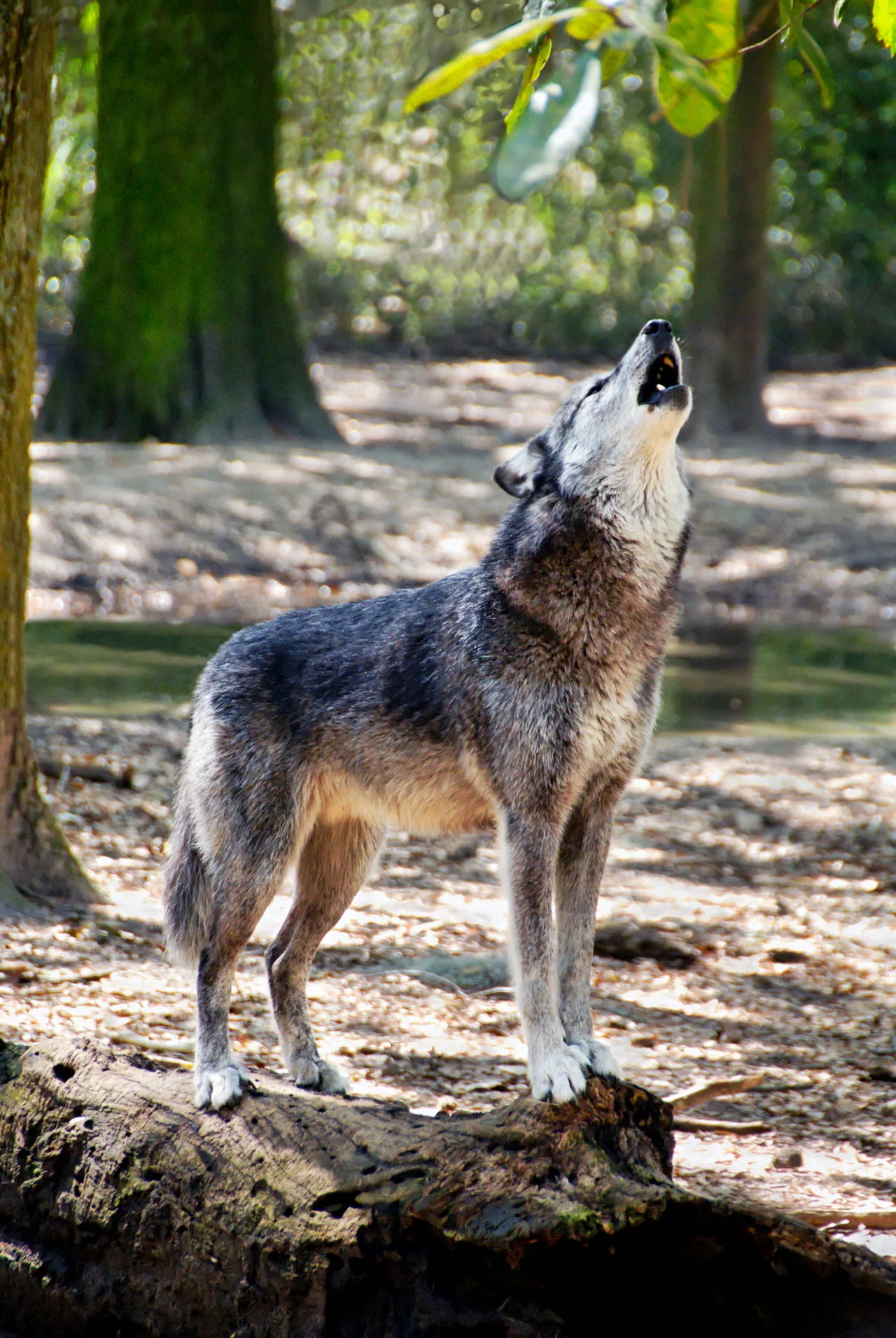
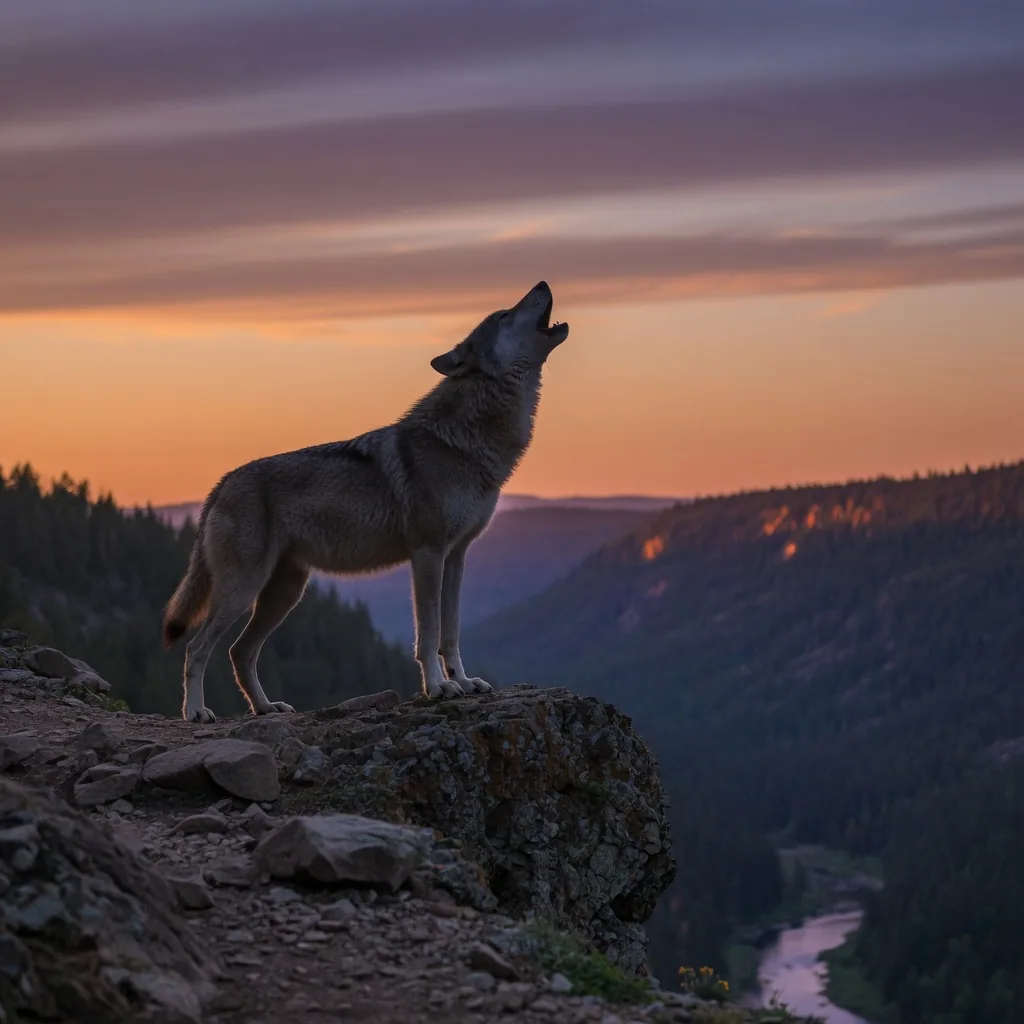
The high-pitched howl of a wolf is well-known. Wolves use it very effectively to warn each other about nearby threats. In fact, a pack of gray wolves howls in a special way that creates the illusion the pack is much larger than it actually is.
Even though the gray wolf has a simple stomach, it is large enough to store as much as 20 lbs of food. This lets the animal go without eating for extended periods, sometimes up to two weeks. When feeding on a kill, the Arctic wolf eats as much as it can and buries the rest under the snow to save for later. Surplus killing is another behavioral adaptation used by gray wolves. They sometimes hunt more animals than they can eat right away and store the extra meat for future use. Because temperatures are so low, the food stays fresh for a long time. This is very helpful when prey is hard to find.
Gray wolves have far better senses than humans. Their amazing sense of smell (which is 100 times better than a human's) lets them detect other animals nearby with ease. Their eyes are also extremely sensitive to movement. The tapetum lucidum (a reflective layer in the retina also found in dogs and many other vertebrates) boosts their night vision and helps them hunt after dark. All these sensory adaptations not only help gray wolves find food, but also help them avoid larger predators such as brown bears and tigers.
Sub-species Adaptations
The adaptations described above apply to gray wolves in general. Some sub-species also have their own specific adaptations. For example, the Arabian wolf (Canis lupus arabs) (native to the Arabian Peninsula) has ears that are large in proportion to its body. This helps it release body heat effectively in the desert heat. Sub-species that live at higher latitudes have thicker fur coats than those living in the tropics. Forest-dwelling wolf species also tend to be smaller than those living in open lands. In the end, every adaptation comes down to one thing: survival.
Where Gray Wolves Live
The gray wolf habitat, in the past, included areas as varied as the deserts of Egypt and the bone-chilling, icy tundras of the Arctic. The gray wolf is almost as adaptable as humans, and it is no wonder that its habitat is spread all over the world.
The gray wolf has longer legs and bigger paws than coyotes and dogs. These features help it spread its weight more evenly, especially when walking or trotting on treacherous ice. Gray wolves also have large, slightly webbed paws. These come in very handy when walking in mud or on loose, powdery snow. In those conditions, the webbed paws let the wolves move faster than their prey, helping the pack find food. This may be their secret for surviving the ice age.
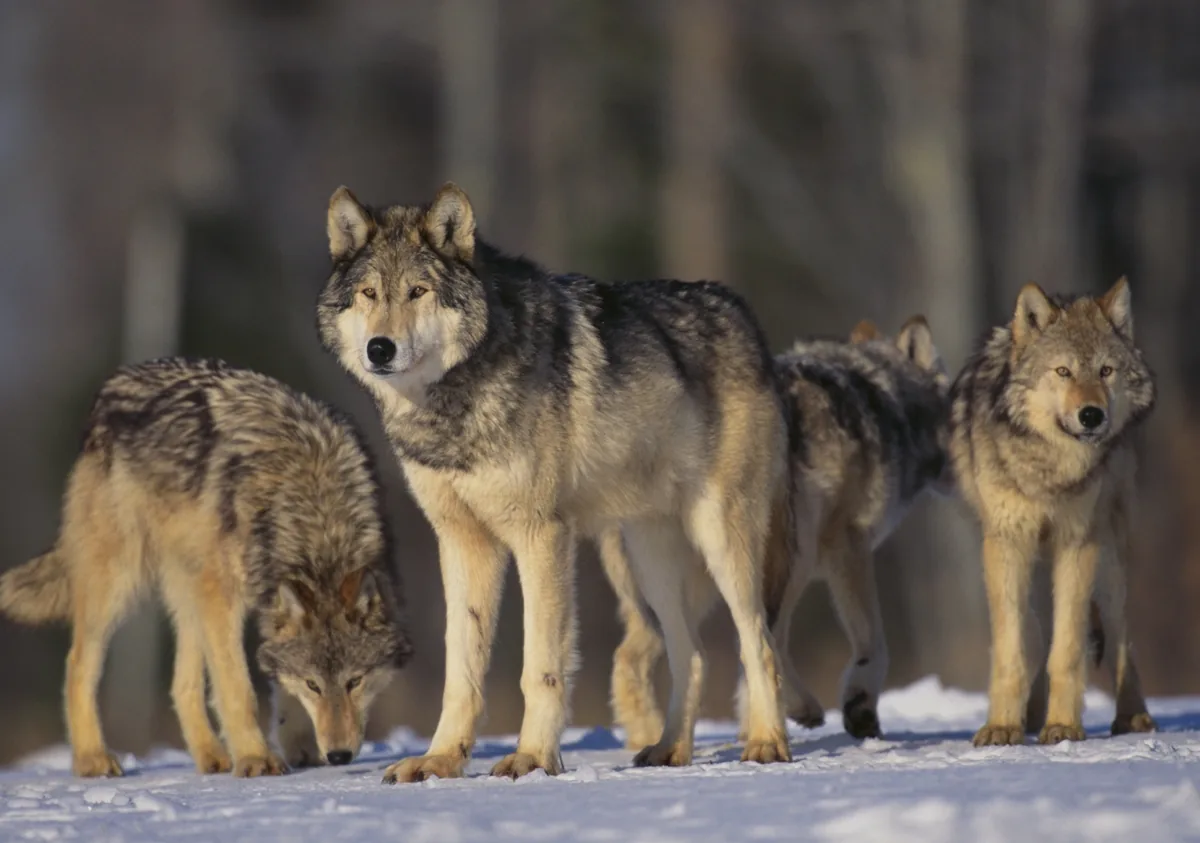
At the end of the ice age, as the ice retreated, gray wolves and other subspecies spread throughout the world. They chose temperate forests, hot deserts, mountains, freezing tundra, taiga, and green grasslands as their habitats. Today, gray wolf habitats can be found in places such as Mexico, Ethiopia, the Arabian Peninsula, Europe, and Asia.
The Great Plains Wolf
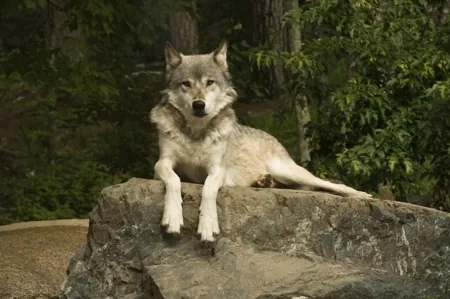
The Great Plains Wolf is a subspecies of the gray wolf and is native to North America. It is also known as the buffalo wolf or the Eastern Timber Wolf. These wolves once dominated vast stretches of the continental U.S.A., especially the western United States and southern Canada. Today, Minnesota, Michigan, and Wisconsin serve as their main habitat. Occasionally, these wolves have also been spotted in the states of Dakota and Nebraska.
The Russian Wolf and the Arctic Wolf
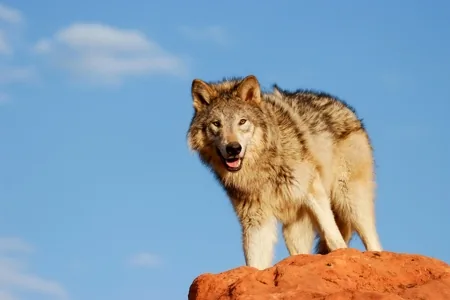
North-central Russia is also a gray wolf habitat. The Russian wolf (one of the largest subspecies) is considered a great hunter and lives in this region. Another subspecies, the Arctic wolf, has chosen the islands of the Canadian Arctic and Greenland as its home. These are extremely isolated gray wolves, and not much is known about them.
Take the Gray Wolf Quiz!
8 quick questions on how wolves survive, where they live, and how they raise their pups. How much do you know?
What Gray Wolves Eat
The gray wolf is a carnivore and hunts in packs. A pack may have 2 to 20 members. These wolves hunt medium to large animals such as elk, caribou, and deer, as well as smaller animals like beavers and hare. They are also known to attack bison. When food is scarce, they may even turn cannibal. In Canada, wolf packs have been seen feeding on salmon.
Wolf Pups and Family Life
The gray wolf is a mammal. A wolf pack most often has only one breeding pair. After a gestation period of 60 to 63 days, the female gives birth to pups. Pups can arrive any time between March and June. The average litter size is 5 to 6 pups. On two occasions recorded in Russia, a litter reached 17 pups.
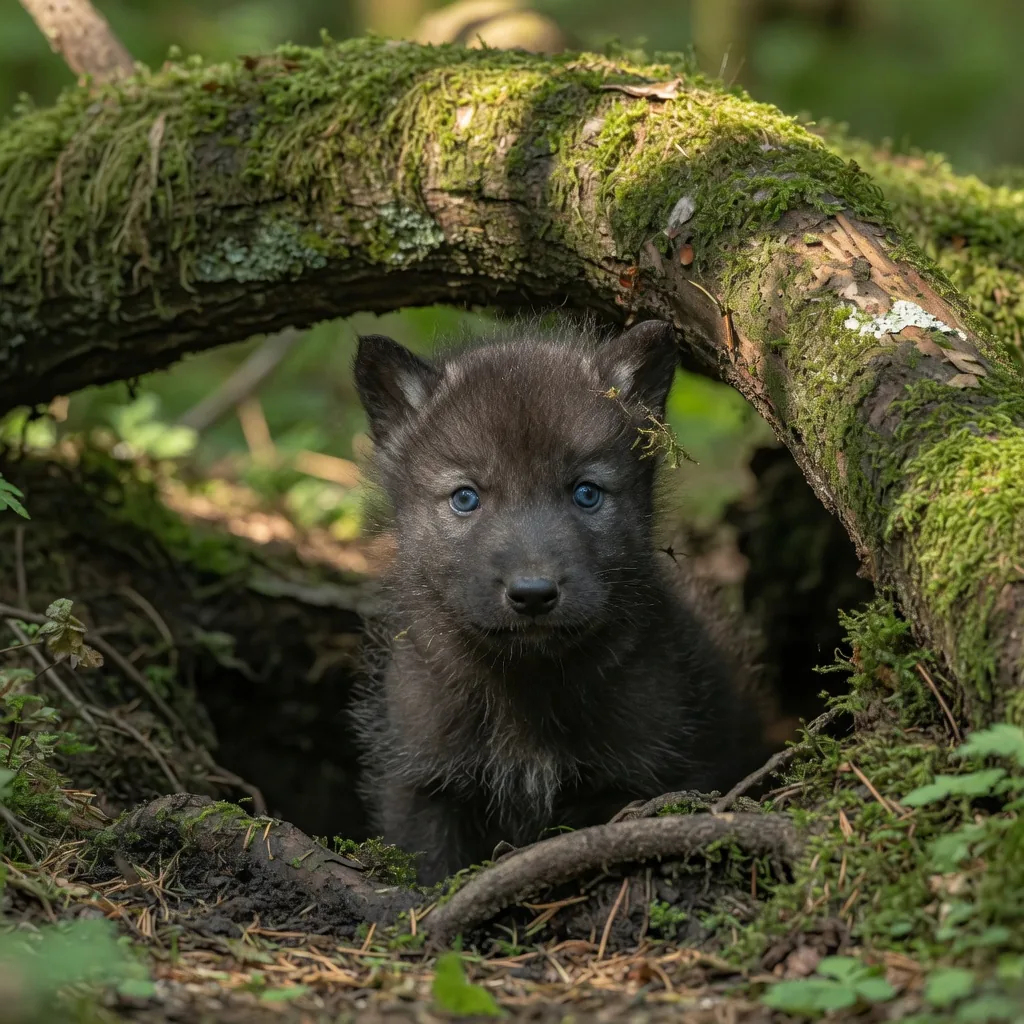
At birth, a pup weighs about 1 lb (0.5 kg). It cannot see or hear and depends completely on its mother. The pup has darker fur and blue irises at birth. The iris color changes to yellow-gold or orange before the pup reaches 16 weeks of age. It takes about two months for the pup to become independent.
Adult gray wolves are easy to tell apart from other members of the Canidae family (especially dogs) by their larger, webbed paws, yellow-colored eyes, longer legs, and strong, bigger teeth. Wolf saliva also has antibacterial properties that help heal wounds by promoting the growth of new body cells.
Size and Weight
The height of a gray wolf varies by subspecies, ranging from 0.6 meters to 0.95 meters. Body length runs from 1.3 meters to 2 meters, or about 4.2 to 6.5 feet. The tail adds roughly a quarter of the body length on top of that.
A typical wolf weighs between 55 and 88 lbs (25 to 40 kg). The North American wolf weighs almost 80 lbs (about 36 kg). In Alaska, Canada, and Russia, wolves weighing 169 lbs (77 kg) have been reported. In 1939, a gray wolf was recorded as the heaviest ever at 179 lbs (79 kg). However, a wolf in Ukraine, Russia was later recorded at an even heavier 189 lbs (86 kg). Female gray wolves weigh about 20 percent less than males.
Frequently Asked Questions
Where do gray wolves live today?
Gray wolves live across North America (Minnesota, Michigan, Wisconsin, Alaska, Canada), Russia, parts of Europe and Asia, and small populations in Mexico, Ethiopia, and the Arabian Peninsula. Their range spans three continents, North America, Eurasia, and northern Africa.
How fast can a gray wolf run?
A gray wolf can reach 40 miles per hour (65 km/hr) when chasing prey, thanks to its lean, aerodynamic body and long, powerful limbs.
How big is a gray wolf pack?
A gray wolf pack can have 2 to 20 members, and most often has only one breeding pair.
How long do gray wolves live?
Gray wolves live approximately 6-8 years in the wild, though some have lived up to 13 years. In captivity, they may live up to 17 years.
How many sub-species of gray wolf are there?
There are as many as 39 sub-species of the gray wolf, ranging from the Arctic wolf in the frozen north to the Indian wolf in tropical regions.
Body, Coat, and Senses
The wolf can reach a speed of 40 miles per hour (65 km/hr) when chasing prey. Scent glands between the toes leave chemical marks in footprints, helping wolves find their way back home. Wolves also have a two-layered coat: a bristly outer layer and a waterproof inner layer that acts as insulation to conserve body heat. Their fur ranges from gray to gray-brown, and can also be found in white, red, black, and brown.
In the wild, gray wolves typically live about 6 to 8 years. Some records show individuals reaching 13 years. In captivity, a gray wolf may live up to 17 years.
These wolves are also susceptible to several diseases, including brucella, deerfly fever, leptospirosis, and foot-and-mouth disease. Some wolf species can carry rabies, and a rabid wolf is far more dangerous than a rabid dog.
Intelligence and Evolution
Compared to dogs, wolves have larger heads, more powerful teeth, and a stronger bite. According to DNA dating, Southern wolves (from South Asia, North Africa, and the Arabian Peninsula) are believed to have inhabited the Earth for the last 800,000 years. Northern wolves (from North America, Europe, and northern Asia) have been around for approximately the last 150,000 years. The brains of northern wolves are 5 to 10 percent larger than those of southern wolves.
The Southern wolf is believed to be the ancestor of dogs. Studies show that a wolf has a 20 percent larger skull and a 10 percent bigger brain than a dog of the same size.
Explore More Animals
 Polar Bear AdaptationsDiscover the amazing physical and behavioral adaptations that let polar bears survive Arctic temperatures of -34°F, swim icy oceans, and thrive where few animal
 Zebra Adaptations & Facts: How Zebras SurviveAfrican savannas are full of predators, and zebras have remarkable adaptations to survive them. Meet all three zebra species and discover how stripes, speed, he
 Where Do Wolves Live?Wolves are intelligent animals that have lived on the planet since many centuries. This article will answer the question where do wolves live.
 Facts about Coyote - Prairie WolfThe interesting facts about coyotes go well beyond the depiction of this species in popular culture. While there is no questioning that, what is even more inter
Hunting and Cultural Mythology
As a hunting pack, gray wolves are not as effective as lions. However, a single gray wolf is fully capable of bringing down large prey such as bison or moose. These hunters prefer to give chase rather than go for a frontal attack when their quarry is large. In addition to humans, wolves are preyed upon by tigers. When attacking humans, wolves are more likely to go after children and women than men.
According to mythology, ancient Norse and Japanese cultures gave the wolf a god-like status. Romans believed that Romulus and Remus (the legendary founders of Rome) were nursed by a she-wolf. Turks, Mongols, and the Ainu people considered themselves descendants of wolves. The Navajo and Avesta cultures, by contrast, saw wolves as witches in disguise or as creations of an evil spirit.
Wolves and the Ecosystem
The gray wolf, which survived the ice age, was later considered a threat to livestock and was nearly hunted to extinction for bounty. It was as if we had forgotten that, as a predator, the gray wolf maintains a balance in the ecosystem.
Wolves not only control the number of herbivores in an area, they also force those animals to move around, giving vegetation a chance to recover and regrow. The effect of Yellowstone losing its gray wolves in the 1930s became clear in 1996. It was found that most of the aspens in Yellowstone had stopped regenerating, and a majority of them were at least 70 years old. Scientists discovered that, without wolves, elk had been feeding on young aspens without any threat to drive them away.
Today, like every other animal on this planet, the wolf faces pressure from human activities in different parts of the world. In certain regions, they are still hunted for sport.

 Fun fact for today!There are as many as 39 sub-species of the gray wolf, ranging from the frozen Arctic to tropical India!