

Within their quiet, dark depths, the vast oceans and seas hold an amazing world full of diverse life. Among all ocean creatures, the most dreaded are the sharks. They are known for their violent temperament and fatal attacks. Out of the 100 shark attacks on human beings reported every year, about 30% to 50% are linked to great white sharks. However, most of these attacks are believed to happen out of curiosity rather than intent to kill. As an apex predator (being at the top of the food chain) the great white itself has very few predators, like killer whales and larger sharks.
Habitat

Great white sharks are found in the cool temperate waters of the oceans and seas of the world. They are most common off the southern coasts of Australia, South Africa, and California. They are also found along the coast of Hawaii, most of South America, the Gulf Coast, New Zealand, and the Mediterranean Sea.
Great whites are rarely found in cold waters. They are rarely found off the coasts of Alaska and Canada. Sometimes they are seen in the seas around Scandinavia and Japan. They are also found along the eastern coastline of China and southern Russia.
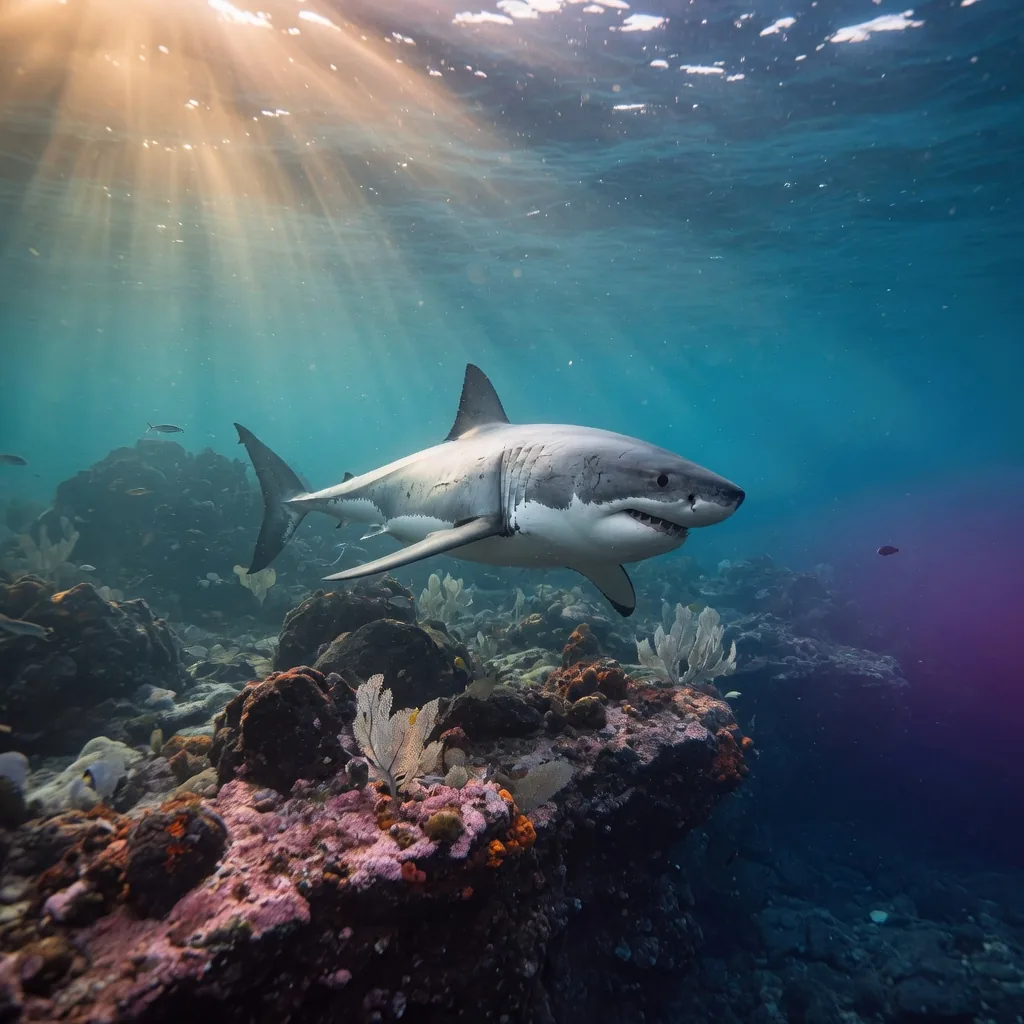
Great whites cruise near the surface and near the shore in search of food. They are also found in the deep waters of the seas, as far down as 820 feet (250 meters), and near offshore reefs. They are normally seen near the surface or near the bottom of the sea, not in the middle section. If the water near the bank is deep, or if the water near rocky headlands close to shore is deep, great whites are likely to be found there.
They patrol small coastal islands in search of prey. Seals, sea lions, and walruses are found in large numbers near small islands. Studies show that great whites travel a lot, they even cross continents. It is not possible to keep them in captivity in aquariums. Studies and past events show that they don't survive the shock of capture and transport. More research has to be done about their food and the type of water and tanks that could accommodate great whites.
Appearance

Scientifically known as Carcharidon carcharius, great whites do not have bones. Instead, they have a cartilaginous skeleton, unlike true fish. It is one of the largest species of sharks that grow up to a length of 15 feet and can weigh up to 5,000 lb.
Their gray dorsal surface helps them camouflage in ocean water while hunting. However, their ventral surface is white. They have a short, conical snout and long gill slits. They have rows of serrated, razor-sharp teeth. When they lose teeth from the front row, teeth from the back rows come forward to take their place.
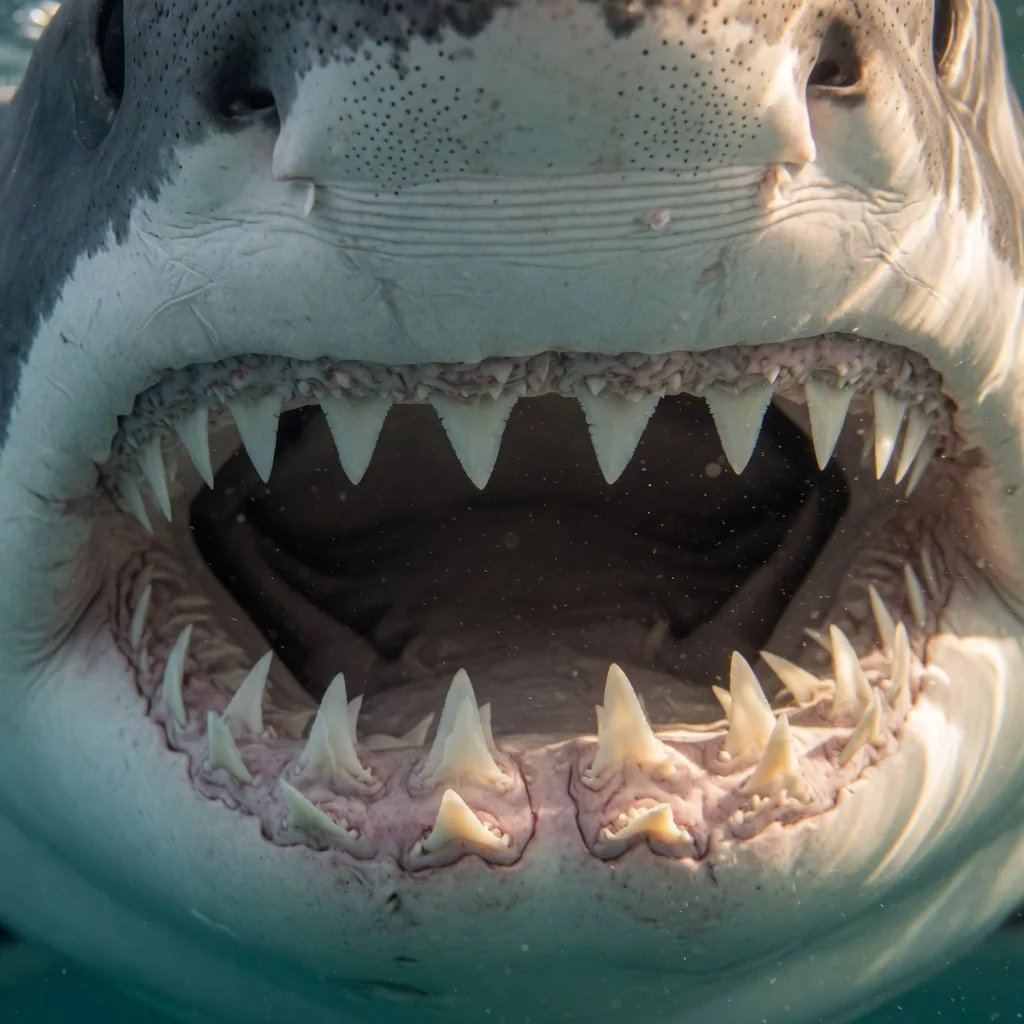
This tooth-replacement system, along with their keen sense of smell and impressive biting force, makes them one of the most skilled hunters of the sea.
Take the Great White Shark Quiz!
5 quick questions. How much do you know about the ocean's top predator?
Food

Great white sharks are carnivorous creatures that hunt during the day. These large fish primarily feed on dolphins, porpoises, seals, sea lions, whale carcasses, sea turtles, and other fish like tuna, rays, and smaller sharks. They have about 3,000 triangular teeth.
They prefer prey that is a good source of energy. They usually bite their prospective prey to check its fat content. If the animal does not have enough fat to be a rich source of energy, the shark does not eat it. In this regard, human beings do not qualify as a favorite prey for these massive hunters.
One hypothesis that tries to explain the high number of attacks by these sharks on humans is that of mistaken identity. It is believed that these predators prefer seal-shaped prey to animals of any other shape. Surfers and divers who have silhouettes similar to seals while swimming are often mistaken by the great sharks as their favorite prey, and hence are attacked.
Great whites are very curious. First, they spy and examine isolated and vulnerable objects they come across. Once they're sure the object is edible, they make their approach. The first bite is so ferocious and lethal that the pinniped (an aquatic carnivorous mammal with limbs modified as flippers, for example, a seal) bleeds to death. The shark then comes back and enjoys the feast. It eats up about 20 to 30 pounds of flesh with one chomp. Being warm-blooded fish, great whites need to eat more than cold-blooded sharks. Sometimes, they reject the prey after biting.
Fishing and Conservation

Trophy fishing for great white sharks was quite popular for decades, particularly during the 1920s. These massive predators have been hunted by fishermen not only for personal glory but also to reduce shark incidents off the coasts of the USA, South Africa, and Australia. These sharks have also been killed for their jaws and teeth. Their flesh is eaten, their skin is used to make leather goods, their liver is used to make oil, and their fins are used as an ingredient in the popular shark fin soup.
Despite a lack of conclusive data, hunting and fishing of great whites is believed to have played a major role in the decline of their population. Besides, these are slow-growing fish with low productivity, which further increases their vulnerability.
South Africa is one of the first countries to have started conservation programs for these fish, which are on the list of endangered animals. In 1991, an act was passed in South Africa that banned killing of these sharks, with heavy penalties in place for those who violated the act. In 1994, the great white sharks were given protected status in California and Australia. New Zealand followed suit in 2007.
According to the International Union for Conservation of Nature and Natural Resources, great whites are listed as vulnerable because they are rarely seen. The exact population of this species is not known.
The great whites are an important part of the marine ecosystem. These sharks clean the marine world of sick, dying, and dead animals. They also feed on larger animals like whales and seals that have fewer predators. Conserving this species is important to maintain the delicate balance of life in the marine world.
Explore More Animals
 Bull Shark vs. Great White Shark: How to Tell Them ApartBull shark or great white? Meet two of the ocean's most feared sharks side by side (habitat, size, teeth, and hunting tricks) plus a quiz, glossary, and myth-
 Habitat of a Tiger Shark: Where Does It Live?The tiger shark lives in warm tropical and subtropical seas worldwide. Discover its habitat, range, physical features, diet, and reproduction, plus a quiz!
 The Amazing Life Cycle of SharksSharks have prowled the oceans for around 400 million years. Discover how great white, hammerhead, bull, and thresher sharks are born, grow, and survive.
 What Do Seals Eat? Diet and Food Habits ExplainedWhat do seals eat? From harp seals crunching cod to leopard seals hunting penguins, discover the surprising diets of seals, plus a quiz, glossary, and fun fact

 Fun fact for today!Great whites derive their name from their typical white underbellies, their backs are actually gray!