

The gray squirrel is known by the scientific name Sciurus carolinensis. The carolinensis part was chosen because this squirrel was first recorded in the Carolinas, and it is still very common there. This is a tree squirrel that is native to the eastern and midwestern parts of the United States. It is also found in the southeastern parts of Canada.
It is very adaptable and has been introduced in several regions in the western United States, where it is thriving very well.
Appearance
As its name suggests, the fur of this squirrel is mainly gray in color, sometimes with an occasional red tinge. There are some genetic variations, you might see gray squirrels with black tails, or black-colored squirrels with white tails. Its belly is white in color, and it has a large, bushy tail.
Some squirrels have been known to live for ten years, but the average life span in the wild is only about 3 to 4 years. It weighs about 1 pound and is 15 centimeters in length, and half of that length is just the tail.
Nest
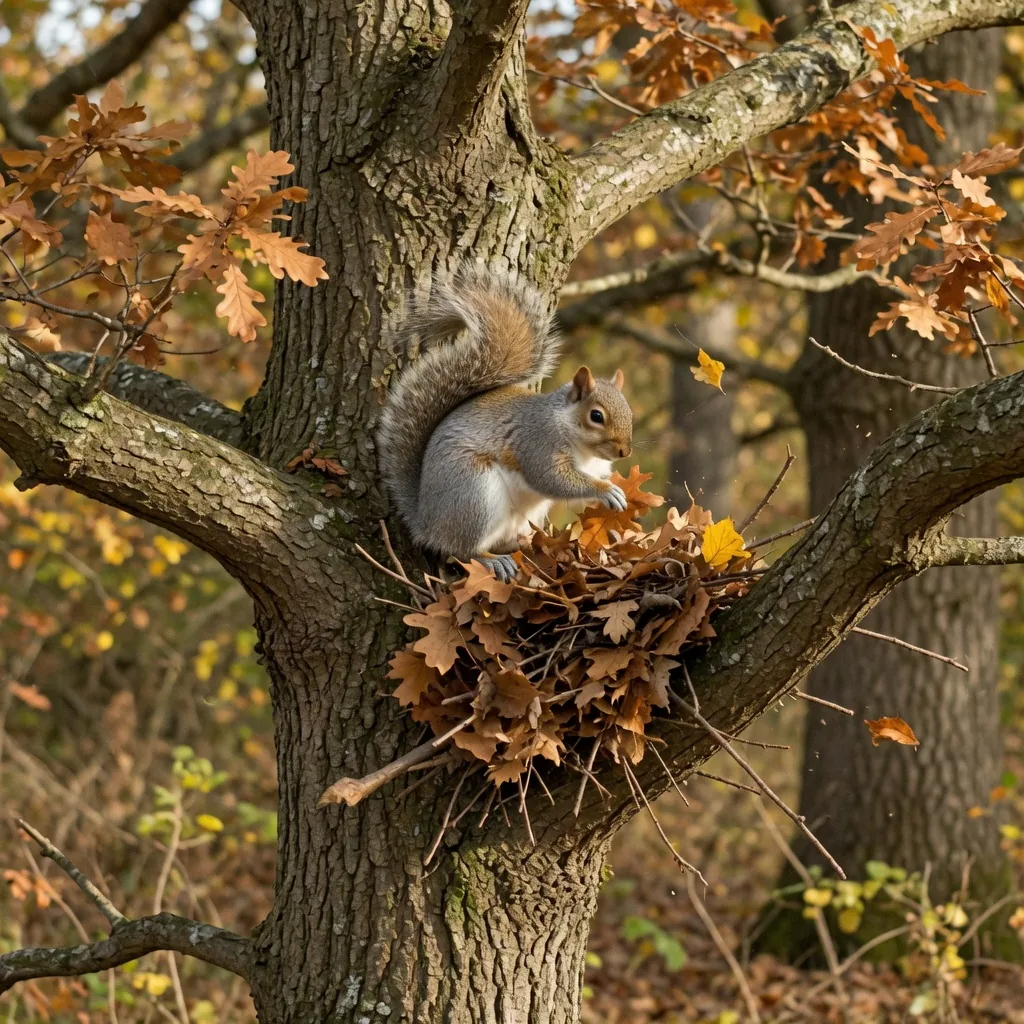
The gray squirrel builds a nest known as the drey in the fork of a tree, using dry leaves and twigs. Sometimes a nest is also built in an attic or in the exterior walls of houses.
This squirrel does not hibernate, because it cannot store enough energy to survive for long periods without food. So the dreys are usually made thicker and bigger in winter, and the squirrel comes out occasionally in search of food. During winter, squirrels share dreys for warmth. When it sleeps, it wraps its tail around it, which serves as a blanket.
Communication and Courting
This squirrel communicates mainly through its tail, using it as a signaling device, although it also has a large variety of calls. It twitches its tail when it is suspicious or uneasy.
The courting season begins in late winter, and the squirrels that start breeding are about a year old. It reproduces twice a year with 2 to 4 young ones each time. In some rare cases, up to 9 litters have been born. The gestation period is six months. The first set of litter is born in January or February, and the second set is born during midsummer.
The young squirrels mature quite slowly and are on their own in about three months. The male squirrels play no role in rearing the young ones.
Take the Gray Squirrel Quiz!
5 quick questions. Find out what you really know about these clever tree climbers.
Diet
The diet of the gray squirrel mainly includes nuts, acorns, seeds, and berries. It occasionally feeds on vegetation, especially during the spring. Sometimes it also eats bird eggs, nestling birds, and small insects. It is diurnal (most active during dawn and dusk) searching for any type of available food.
This squirrel is a scatter hoarder by nature. That means it stores food in small quantities in many different spots for later recovery. Some caches are very temporary and are usually made near the site of abundant food. The food in these temporary caches is retrieved within a few hours or a couple of days, then moved to a more permanent place. Food in the permanent cache is usually not recovered for months.
It has been estimated that one squirrel makes several thousand caches in a single season! It uses spatial memory to remember the locations of the caches, and uses nearby landmarks to find them. The sense of smell is used once the squirrel is a few centimeters away from the cache.
Teeth Problems
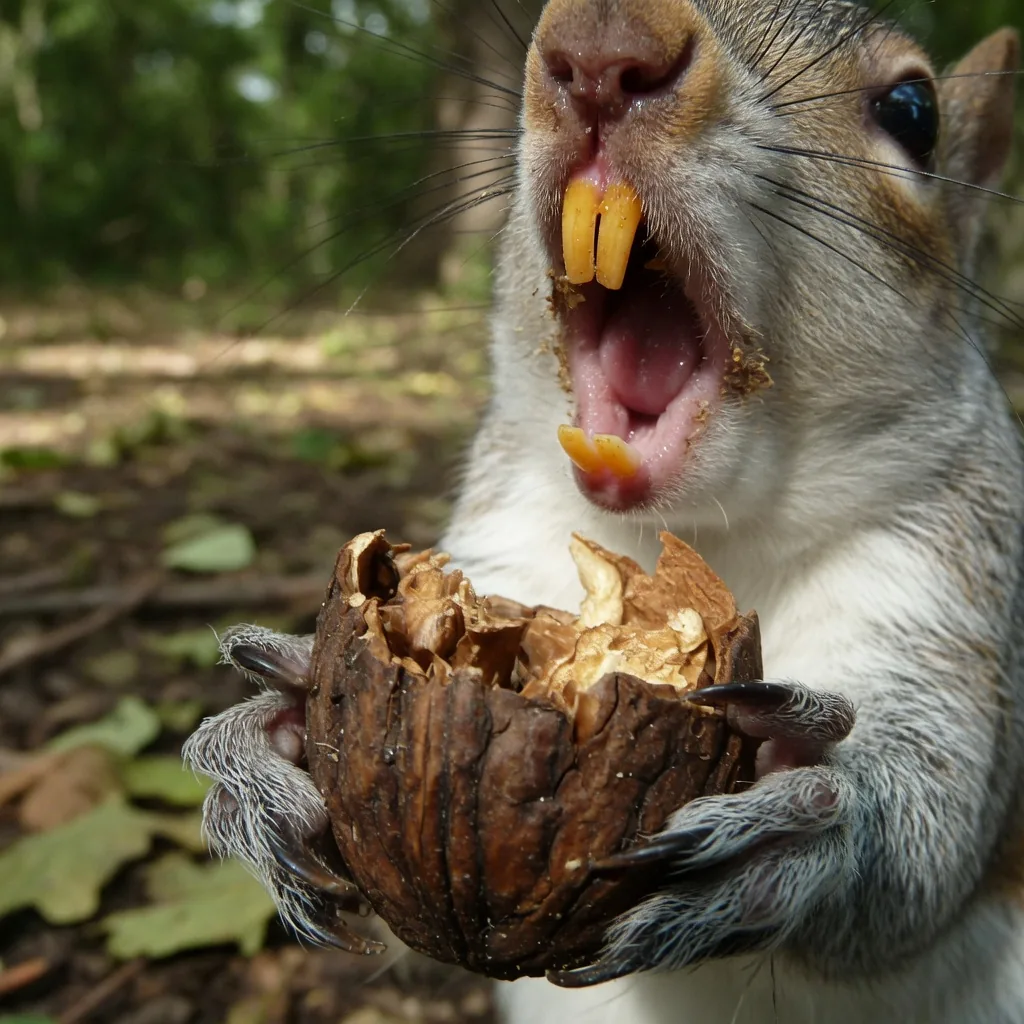
This squirrel is a gnawing animal with well-developed jaw muscles and chisel-shaped front teeth that can chew through just about anything. These teeth are kept sharp by gnawing on hard objects like woody plant materials, seeds, and nuts.
One of the problems that almost all families of squirrels face is that their front teeth grow constantly. They have to be filed down regularly, otherwise they can grow to a point where the squirrel is unable to eat and will starve to death. Gnawing helps file the teeth.
Frequently Asked Questions
What is the scientific name of the gray squirrel?
Sciurus carolinensis
What is a gray squirrel's nest called?
A drey, built from dry leaves and twigs in the fork of a tree
How long does a gray squirrel live?
3 to 4 years on average in the wild, though some have lived up to ten years
Does the gray squirrel hibernate?
No, it cannot store enough energy to hibernate and comes out occasionally during winter to find food
Why does a gray squirrel gnaw constantly?
Its front teeth never stop growing, so it must file them down by gnawing or they will grow too long to eat
Glossary
| Word | What it means |
|---|---|
| Drey | A squirrel's nest, made from dry leaves and twigs and built in the fork of a tree. |
| Scatter hoarder | An animal that hides food in many small, separate caches instead of one big store. |
| Diurnal | Active during the day, especially at dawn and dusk, opposite of nocturnal. |
| Spatial memory | The ability to remember where things are located using a mental map of the surrounding area. |
| Gestation | The time a baby spends growing inside its mother, for gray squirrels, that is six months. |
| Sciurus carolinensis | The scientific name of the eastern gray squirrel; carolinensis means "of the Carolinas." |
Explore More Animals
 Sleeping and Nesting Habits of SquirrelsSquirrels sleep up to 14.9 hours a day! Discover how flying, tree, and ground squirrels build their nests, where they sleep, and how baby squirrels grow up.
 What Do Squirrels Eat?We often come across squirrels around our homes, but seldom do we pay attention to what they eat. Their eating habits go well beyond nuts and corn.
 Cute and Cool Facts About the Relatively Rare Black SquirrelsWhat are black squirrels? Where are they found? What gives them their black color? Are they a separate species? Here, we will answer these and many more questio
 Facts About SquirrelsSquirrels are small tree animals, with a very cute bushy tail and sharp teeth. They are fast, really intelligent, and always alert! It is fun to watch them and

 Fun fact for today!Gray squirrels are the state mammal of North Carolina, but they're also found across the eastern United States and Canada!